
Slow cookers are supposed to make rich, comforting meals with very little effort. However, many home cooks lift the lid after several hours only to discover that the food tastes watery, dull, or surprisingly bland.
So, why does slow cooker food taste bland even when you add plenty of ingredients?
The most common reasons are too much liquid, insufficient salt, a lack of browning, weak aromatics, incorrect seasoning timing, and the absence of acidity or fresh finishing ingredients. Slow cookers retain moisture and cook at a relatively low temperature, which means they do not naturally create the same browning, evaporation, and flavor concentration that happen in a skillet, oven, or Dutch oven.
The good news is that bland slow cooker food is usually easy to fix. Once you understand what is missing, you can improve the flavor in just a few minutes and prevent the same problem in future meals.
Quick Answer: Why Does Slow Cooker Food Taste Bland?
Slow cooker food often tastes bland because the appliance traps moisture, creates very little browning, and allows delicate flavors to fade during long cooking. Excess liquid can dilute salt and spices, while adding all seasonings at the beginning can leave the final dish tasting flat. Browning meat, reducing liquid, seasoning in layers, and adding acid and fresh herbs at the end can create a much richer result.
Is Your Slow Cooker Food Bland, Flat, Watery, or One-Note?
Before adding more seasoning, identify the actual problem. Different flavor problems require different solutions.
Bland
Bland food usually lacks salt, strong aromatics, spices, or concentrated savory ingredients. The dish may taste weak even though the texture is acceptable.
Flat
Flat food may contain enough salt but still feel lifeless. It often needs acidity, fresh herbs, citrus zest, black pepper, or another finishing ingredient.
Watery
Watery food contains too much cooking liquid or has not been reduced. The flavors may be present, but they are diluted.
One-Note
One-note food has flavor, but every bite tastes the same. This often happens when all ingredients cook together for many hours without any fresh, crunchy, spicy, or acidic contrast.
Heavy or Greasy
A rich slow cooker meal can taste heavy when it contains plenty of fat but not enough acidity. Lemon juice, vinegar, mustard, pickled onions, or fresh herbs can restore balance.
Bitter
Bitterness may come from burnt spices, excessive dried herbs, scorched garlic, too much tomato paste, or an ingredient that cooked for too long.
Correctly identifying the problem helps you avoid adding more salt when the meal actually needs acidity, reduction, or freshness.
12 Reasons Your Slow Cooker Food Tastes Bland
1. You Added Too Much Liquid
One of the most common slow cooker mistakes is using too much water, broth, stock, or sauce.
Unlike stovetop cooking, a slow cooker loses very little moisture through evaporation. Meat and vegetables also release liquid as they cook. As a result, a recipe that begins with a large amount of liquid may become thin and diluted after several hours.
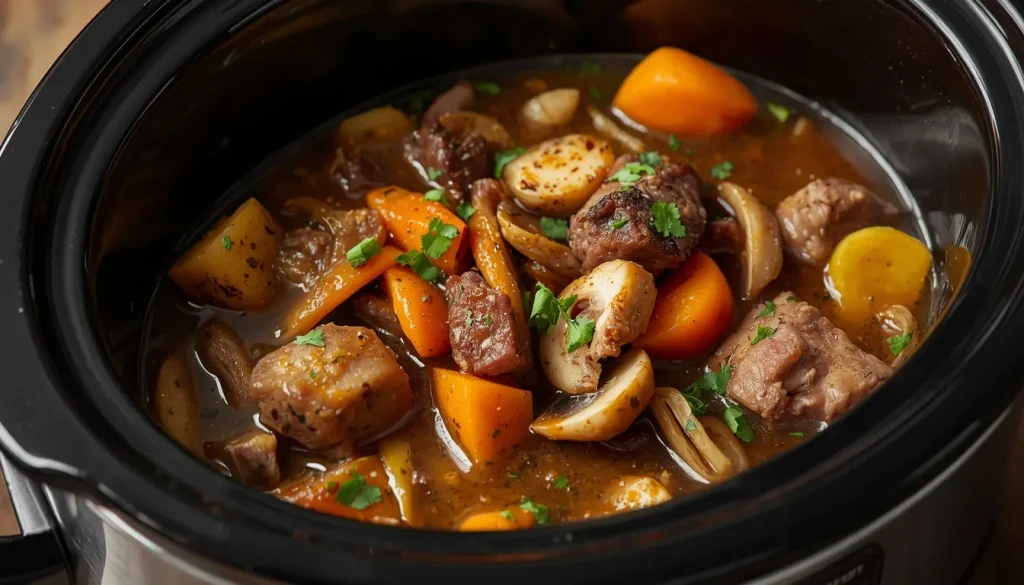
This is especially common when converting a soup, stew, or braised meat recipe from the stovetop to a slow cooker.
To prevent excess liquid:
- Use less liquid than you would in a stovetop recipe.
- Remember that vegetables such as onions, mushrooms, zucchini, tomatoes, and celery release water.
- Avoid completely covering meat unless the recipe specifically requires it.
- Use concentrated stock instead of weak broth when appropriate.
- Reduce the finished sauce if it is too thin.
More liquid does not always produce more flavor. In many cases, it does the opposite.
2. You Skipped Browning the Meat
A slow cooker can tenderize meat, but it cannot create a deeply browned exterior.
Browning meat in a hot pan creates roasted, savory flavors that do not develop when raw meat is placed directly into a moist slow cooker. This is one reason dump-and-go meals sometimes taste less complex than recipes that include a short preparation step.
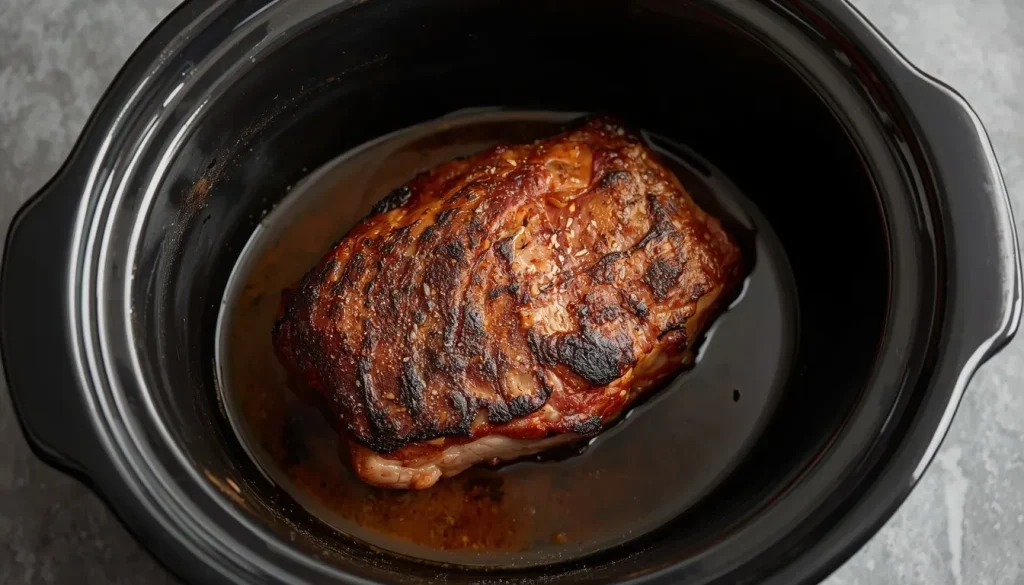
For better flavor:
- Pat the meat dry.
- Season it with salt and pepper.
- Heat a small amount of oil in a heavy pan.
- Brown the meat in small batches.
- Transfer it to the slow cooker.
- Deglaze the pan and add the flavorful liquid to the cooker.
Do not crowd the pan. Crowded meat releases moisture and steams instead of browning.
Browning is optional for food safety when the recipe is properly cooked, but it can make a major difference in flavor.
3. You Did Not Sauté the Aromatics
Raw onions, garlic, ginger, celery, and carrots can cook successfully in a slow cooker, but they may not develop the same sweetness and complexity they would in a skillet.
Sautéing aromatics before slow cooking helps release their natural flavors. It can also remove the harsh raw taste of onions and garlic.
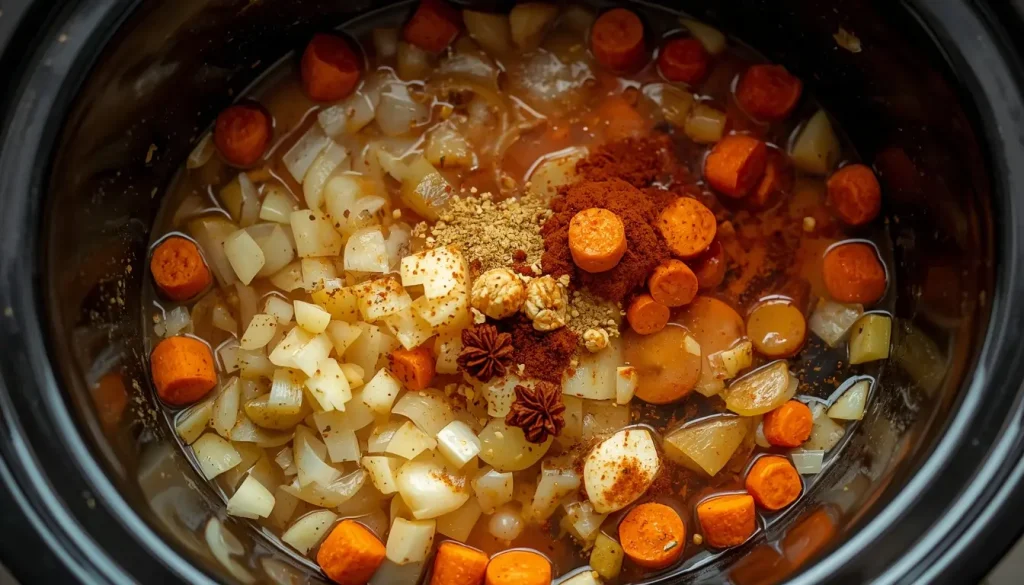
For an even deeper result:
- Cook onions until soft or lightly golden.
- Add garlic near the end so it does not burn.
- Fry tomato paste for one or two minutes.
- Briefly toast dried spices in oil.
- Deglaze the pan with broth, wine, or water.
This short step creates a stronger flavor foundation for the entire meal.
4. There Is Not Enough Salt
A large slow cooker recipe may contain several pounds of meat, vegetables, beans, tomatoes, and liquid. A small pinch of salt may not be enough to season the entire dish.
Salt does more than make food salty. It helps reveal sweetness, reduce bitterness, and bring individual flavors together.
However, add salt carefully if the recipe also contains:
- Bouillon
- Stock concentrate
- Soy sauce
- Worcestershire sauce
- Canned soup
- Cured meat
- Cheese
- Seasoning packets
The best approach is to season in stages. Add some salt at the beginning, taste the sauce when it is safe and nearly finished, and make a final adjustment before serving.
5. You Seasoned Only at the Beginning
Long cooking can soften the flavor of herbs, pepper, garlic, and spices. If every seasoning goes into the slow cooker at the beginning, the dish may taste dull by the time it is served.
Layered seasoning produces a more balanced result.
You can season:
- The meat before browning
- The vegetables while sautéing
- The cooking liquid before slow cooking
- The sauce near the end
- The finished dish immediately before serving
This does not mean adding large amounts at every stage. It means making small, controlled adjustments throughout the cooking process.
6. You Used Water Instead of a Flavorful Cooking Liquid
Water is sometimes appropriate, but it does not contribute flavor.
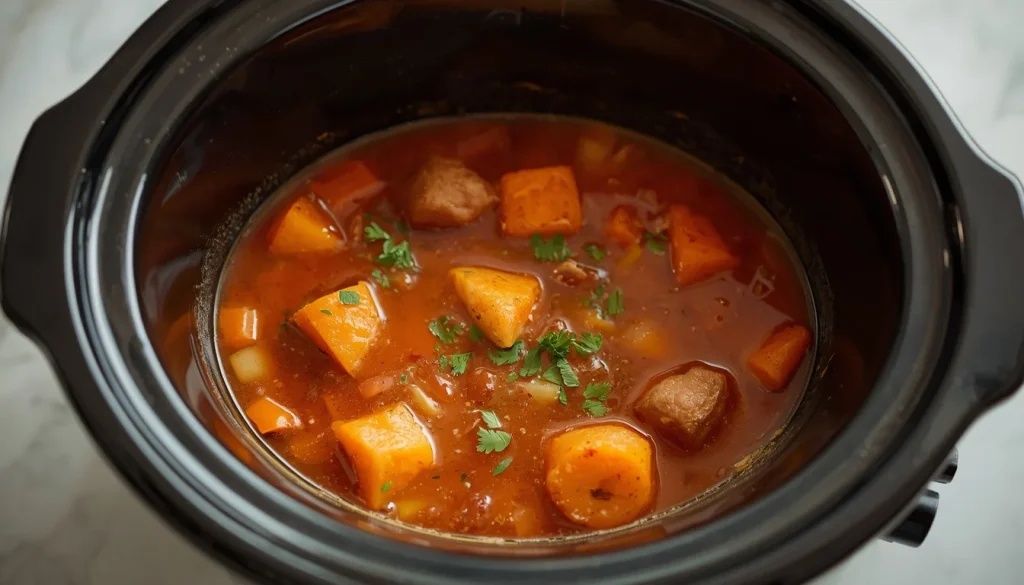
For richer slow cooker meals, consider using:
- Chicken stock
- Beef stock
- Vegetable stock
- Tomato sauce
- Coconut milk
- Bean cooking liquid
- Reduced wine
- Stock concentrate
- Bouillon
- Mushroom soaking liquid
Choose a liquid that supports the recipe. Beef stock may work well in pot roast but overpower a delicate chicken dish. Coconut milk may suit curry but not traditional beef stew.
Also remember that flavorful liquid can still dilute a dish if you use too much of it.
7. Your Herbs and Spices Lost Their Flavor
Fresh herbs such as basil, parsley, cilantro, dill, and chives lose much of their aroma when cooked for several hours.
Some dried herbs tolerate long cooking better, including:
- Bay leaves
- Rosemary
- Thyme
- Oregano
- Sage
Even sturdy herbs can become dull or overpowering when used excessively.
For better flavor, use dried herbs during cooking and add fresh herbs before serving. You can also divide the spice quantity, adding part at the beginning and the rest near the end.
Old spices may also be responsible. Ground spices gradually lose their aroma after opening. If a jar smells weak, dusty, or nearly odorless, it may not add much flavor to the meal.
8. The Dish Needs Acidity
A slow cooker meal can contain enough salt and still taste flat. In that situation, it often needs acid rather than more seasoning.
Acid creates brightness and contrast. It can make rich meat taste less heavy and help vegetables, beans, and sauces taste more defined.
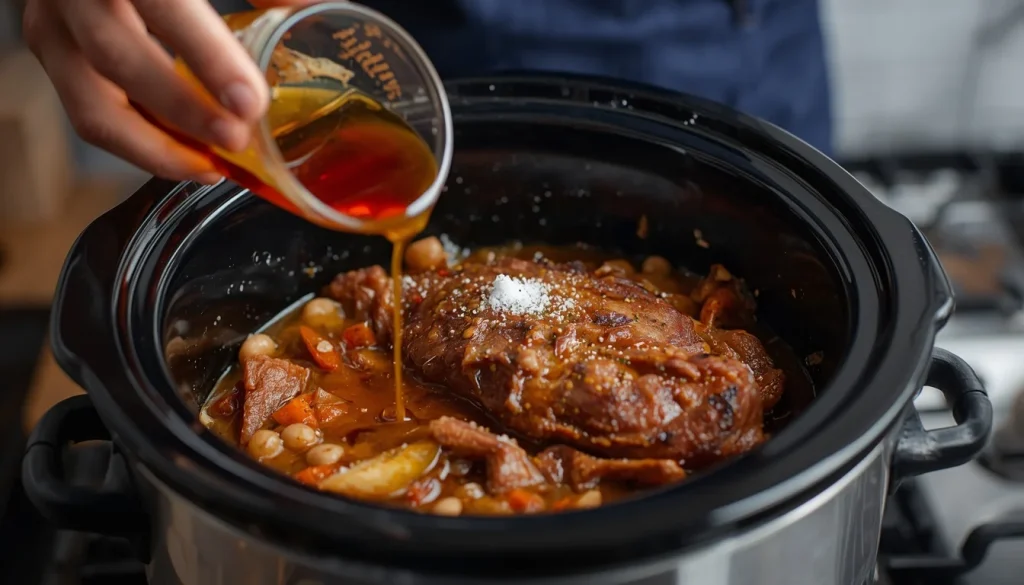
Try adding a small amount of:
- Lemon juice
- Lime juice
- Apple cider vinegar
- Red wine vinegar
- White wine vinegar
- Balsamic vinegar
- Mustard
- Pickle brine
- Hot sauce
Add acid gradually. Start with a teaspoon, stir, and taste before adding more. The goal is not to make the food sour. The goal is to make the existing flavors clearer.
9. The Dish Is Missing Umami
Umami is the deep savory quality found in meat, mushrooms, aged cheese, tomatoes, and fermented ingredients.
When a slow cooker meal tastes thin or incomplete, a small amount of an umami-rich ingredient may help.
Useful options include:
- Worcestershire sauce
- Soy sauce
- Miso
- Tomato paste
- Dried mushrooms
- Parmesan rind
- Fish sauce
- Nutritional yeast
- Mushroom powder
- Stock concentrate
- Monosodium glutamate, commonly known as MSG
Use these ingredients carefully because many also contain salt. Add a small amount, stir thoroughly, and taste.
10. The Flavor Lacks Balance
A satisfying meal often contains a balance of salt, fat, acid, sweetness, heat, and savoriness.
A slow cooker dish may taste bland because one of these elements is missing.
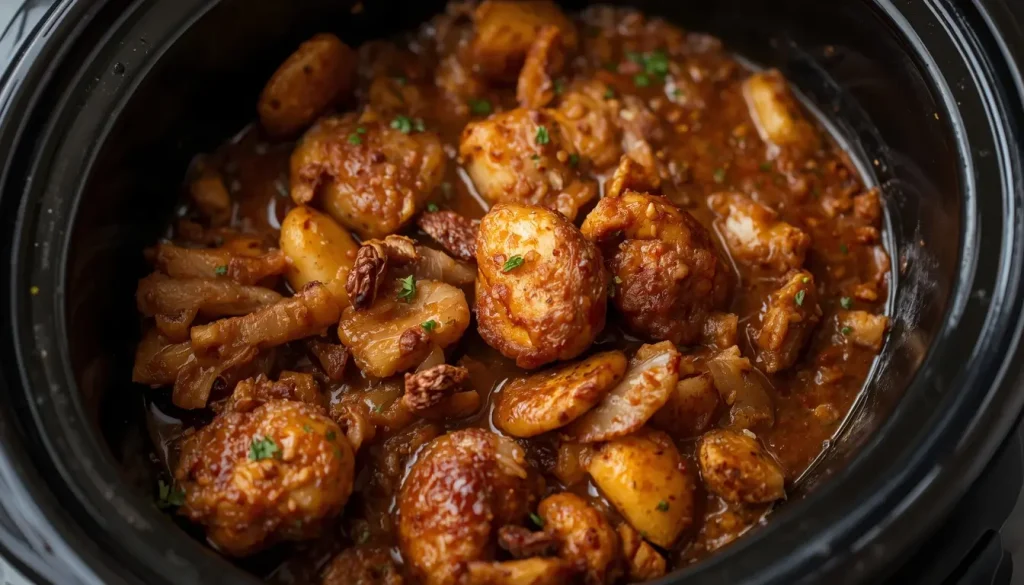
Consider the following:
- Add butter, olive oil, cream, or coconut milk for richness.
- Add lemon juice or vinegar for brightness.
- Add a small amount of sugar, honey, or maple syrup to balance bitterness or sharp acidity.
- Add chili flakes, cayenne, hot sauce, or black pepper for heat.
- Add fresh herbs for aroma.
- Add toasted nuts or crispy onions for contrast.
Do not add every element at once. Identify what the meal lacks and make one adjustment at a time.
11. You Cooked the Food for Too Long
Longer cooking does not always mean better flavor.
Tough meat may benefit from several hours of gentle cooking, but delicate ingredients can become mushy, dry, or flavorless when left too long.
Overcooking can affect:
- Chicken breast
- Pork loin
- Lean beef
- Seafood
- Pasta
- Rice
- Dairy
- Green vegetables
- Fresh herbs
Many slow cooker recipes provide a broad cooking range, but appliances vary. A newer slow cooker may run hotter than an older model.
Check food near the lower end of the recommended cooking time when possible. Once meat is tender and safe to eat, additional hours may damage texture rather than improve it.
12. You Did Not Finish or Reduce the Sauce
The final stage of cooking is often where a good slow cooker meal becomes a great one.
If the sauce is watery, remove the cooked meat and vegetables and reduce the liquid in a saucepan. You can also use the sauté function if your appliance includes one.
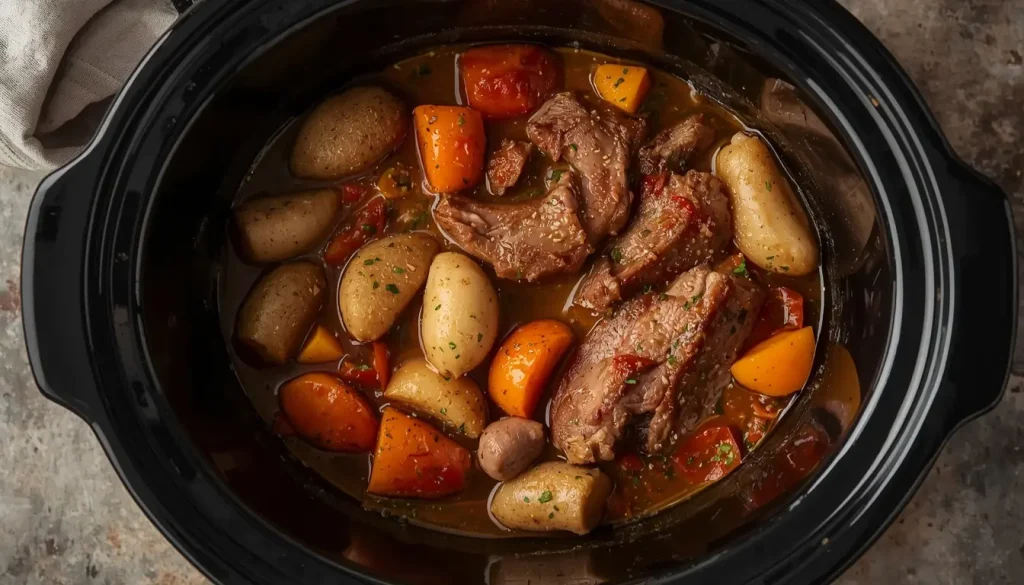
Other thickening options include:
- Cornstarch slurry
- Flour slurry
- Mashed beans
- Mashed potatoes
- Puréed vegetables
- Tomato paste
- Cream
- Grated cheese
After adjusting the texture, taste the sauce again. Reduction concentrates both flavor and salt, so final seasoning should happen afterward.
Why Does Everything Cooked in My Slow Cooker Taste the Same?
Some cooks notice that completely different slow cooker recipes develop a similar taste and texture.
This usually happens because of the cooking method rather than a problem with the appliance.
Several factors can make every meal taste similar:
- All ingredients cook together for the same length of time.
- Vegetables become equally soft.
- Fresh herbs lose their aroma.
- The same broth or seasoning packet is used repeatedly.
- Too much liquid dilutes distinctive ingredients.
- Browning is skipped.
- Every dish lacks fresh garnishes and contrasting textures.
- Garlic, onions, and spices become muted during long cooking.
To avoid the familiar “slow cooker taste,” vary your cooking techniques.
Brown meat for some recipes. Sauté aromatics. Add delicate vegetables later. Finish meals with different acids, herbs, sauces, and toppings. A beef stew finished with red wine vinegar and parsley should taste different from chicken finished with lemon, dill, and yogurt.
How to Fix Bland Slow Cooker Food Right Now
You do not need to throw away a bland slow cooker meal. Follow these steps before serving.
Step 1: Taste the Sauce Carefully
Ask yourself:
- Does it need salt?
- Is it watery?
- Is it rich but flat?
- Is it salty but still boring?
- Is the flavor bitter?
- Does it need heat?
- Is the texture too soft?
Taste diagnosis is more effective than randomly adding seasonings.
Step 2: Adjust the Salt
Add a small pinch of salt, stir thoroughly, and taste again.
For a large batch, give the salt time to distribute before deciding whether more is needed.
Step 3: Add Acid
If the food is salty enough but still tastes flat, add a small amount of lemon juice, vinegar, mustard, or pickle brine.
This is often the fastest way to improve a heavy stew or rich meat dish.
Step 4: Add Umami
Try a small amount of Worcestershire sauce, soy sauce, miso, mushroom powder, or stock concentrate.
Choose an ingredient that fits the recipe.
Step 5: Concentrate the Sauce
If the meal is watery, do not keep adding spices immediately. Reduce or thicken the liquid first. Otherwise, you may use excessive seasoning while the real problem remains.
Step 6: Add Freshness
Finish the meal with one or more of the following:
- Fresh parsley
- Cilantro
- Basil
- Chives
- Scallions
- Citrus zest
- Fresh black pepper
- Grated cheese
- Olive oil
- Butter
- Sour cream
- Yogurt
Step 7: Add Texture
If everything is soft, add a contrasting topping:
- Crispy onions
- Toasted nuts
- Seeds
- Croutons
- Tortilla strips
- Pickled onions
- Fresh cabbage
- Sliced scallions
Texture can make a meal feel more flavorful even when the seasoning does not change dramatically.
Quick Slow Cooker Flavor-Fixing Chart
| Problem | Likely Cause | Fastest Fix |
|---|---|---|
| Watery and bland | Too much liquid | Reduce or thicken the sauce |
| Salty but flat | Missing acidity | Add lemon juice or vinegar |
| Meat tastes bland | Meat was not seasoned or browned | Shred or slice and mix with adjusted sauce |
| Sauce tastes weak | Weak stock or insufficient seasoning | Add stock concentrate or umami |
| Food tastes heavy | Too much richness and no contrast | Add acid, mustard, or fresh herbs |
| Everything tastes the same | Long cooking removed contrast | Add fresh toppings and texture |
| Spices seem invisible | Old spices or excessive cooking time | Add fresh spices near the end |
| Sauce is thin | Minimal evaporation | Reduce in a saucepan |
| Food tastes bitter | Burnt spices or too many herbs | Add fat, sweetness, or more base ingredients |
| Vegetables are flavorless | Overcooking | Add some vegetables later next time |
How to Build More Flavor Before Slow Cooking
The best time to prevent bland food is before you turn on the slow cooker.
Season Meat in Advance
Salt thick cuts of meat before cooking when your schedule allows. Even a brief resting period can help the seasoning stay on the meat instead of flavoring only the surrounding liquid.
Pat meat dry before browning. Wet meat steams and does not develop a strong crust.
Brown in Small Batches
A crowded pan cools quickly and traps steam. Brown meat in several batches so each piece makes direct contact with the hot surface.
Sauté the Vegetables
Cook onions, carrots, celery, peppers, garlic, and ginger before adding them to the slow cooker. This creates sweetness and removes harsh raw flavors.
Toast Spices
Cumin, coriander, chili powder, curry powder, smoked paprika, and other dried spices often taste stronger after being briefly heated in oil.
Do not burn them. Thirty seconds may be enough.
Cook Tomato Paste
Raw tomato paste can taste sharp or metallic. Cooking it in a pan until it darkens slightly creates a deeper, sweeter flavor.
Deglaze the Pan
After browning meat or vegetables, add a small amount of broth, wine, or water and scrape up the browned bits from the bottom of the pan.
Those browned bits contain concentrated flavor and should go into the slow cooker.
Does Cooking on High or Low Affect Slow Cooker Flavor?
The HIGH and LOW settings usually bring food to a safe cooking temperature at different speeds. However, cooking time still affects flavor and texture.
LOW can be ideal for tough cuts that need time to become tender, such as beef chuck or pork shoulder. However, it is not automatically better for every recipe.
A very long cooking time may cause:
- Vegetables to become mushy
- Fresh herbs to disappear
- Chicken breast to dry out
- Garlic to lose its sharpness
- Spices to become dull
- Sauces to taste overcooked
HIGH may work better when you need a shorter cooking time or when the ingredients do not benefit from an all-day cook.
The KEEP WARM setting can also affect quality. It is useful for holding food temporarily, but several extra hours may continue softening ingredients and weakening fresh flavors.
Use the cooking time as a guide, but also consider tenderness, texture, and the type of ingredients in the recipe.
Are You Using the Wrong Cut of Meat?
Slow cookers are especially good at tenderizing cuts that contain connective tissue and enough fat to remain juicy.
Good Cuts for Slow Cooking
- Beef chuck
- Brisket
- Short ribs
- Beef shin
- Pork shoulder
- Lamb shoulder
- Chicken thighs
These cuts usually become more tender and flavorful during long cooking.
Cuts That Can Become Dry or Bland
- Chicken breast
- Pork tenderloin
- Pork loin
- Lean beef steaks
- Delicate fish
- Skinless turkey breast
Lean cuts contain less fat and connective tissue. They may cook successfully, but they often need shorter cooking times, stronger sauces, or later addition to the slow cooker.
When Should You Add Seasonings to a Slow Cooker?
Correct timing helps ingredients keep their intended flavor.
Ingredients to Add at the Beginning
These ingredients usually tolerate long cooking:
- Dried herbs
- Bay leaves
- Whole spices
- Stock
- Tomato paste
- Root vegetables
- Onions
- Celery
- Tough cuts of meat
- A moderate amount of salt
Ingredients to Add During the Last 30 to 60 Minutes
These ingredients can lose texture or separate during long cooking:
- Dairy
- Cream cheese
- Sour cream
- Delicate vegetables
- Peas
- Spinach
- Pasta
- Rice
- Seafood
- Some thickening mixtures
Ingredients to Add Just Before Serving
These ingredients provide freshness and brightness:
- Fresh herbs
- Lemon or lime juice
- Vinegar
- Citrus zest
- Freshly ground pepper
- Butter
- Cheese
- Yogurt
- Hot sauce
- Scallions
Dividing ingredients by cooking time produces a more complex result than adding everything at once.
How Much Liquid Should You Put in a Slow Cooker?
There is no single liquid amount that works for every recipe.
Soup needs more liquid than pulled pork. Stew needs more liquid than a whole chicken. Vegetables and meat also release different amounts of moisture.
Use these general principles:
- Follow a reliable recipe when possible.
- Do not automatically cover all ingredients with liquid.
- Use less liquid when adapting a stovetop recipe.
- Remember that tomatoes, onions, mushrooms, and frozen vegetables release water.
- Keep the lid closed unless the recipe tells you otherwise.
- Respect the fill-level guidance for your appliance.
- Reduce the sauce after cooking when necessary.
When making meat dishes, the liquid may only need to come partway up the ingredients. The enclosed environment will still produce steam and moisture.
Is Your Slow Cooker the Wrong Size for the Recipe?
Slow cooker size can affect cooking time, moisture, and flavor concentration.
A small amount of food in a very large slow cooker may cook differently from the same recipe in a smaller appliance. An overfilled cooker may heat slowly, release too much liquid, and cook unevenly.
For best results:
- Use the cooker size recommended by the recipe.
- Avoid filling it completely to the top.
- Do not use an extremely large cooker for a very small portion.
- Follow the manufacturer’s minimum and maximum fill recommendations.
- Leave enough room for steam and circulation.
If you frequently cook small portions, consider using a smaller slow cooker rather than increasing the amount of liquid unnecessarily.
How to Convert a Stovetop Recipe Without Losing Flavor
A stovetop recipe cannot always be transferred directly to a slow cooker.
Stovetop cooking allows evaporation, browning, frequent stirring, and quick seasoning adjustments. A slow cooker does not provide the same conditions.
When converting a recipe:
- Reduce the amount of added liquid.
- Brown meat before transferring it.
- Sauté onions, garlic, and other aromatics.
- Use concentrated broth or stock.
- Add dairy and delicate vegetables later.
- Add fresh herbs and acid at the end.
- Check food before the maximum cooking time.
- Reduce the finished sauce if necessary.
A stovetop stew that uses several cups of broth may need significantly less in a slow cooker because almost none of the liquid escapes.
How to Fix Bland Slow Cooker Food Without Adding More Salt
Sometimes the dish already contains enough sodium. Adding more salt may make it unpleasant without solving the real problem.
Try these salt-free or low-sodium flavor boosters:
- Lemon juice
- Lime juice
- Vinegar
- Citrus zest
- Fresh herbs
- Garlic
- Ginger
- Toasted spices
- Chili flakes
- Black pepper
- Mustard
- Unsalted tomato paste
- Mushroom powder
- Nutritional yeast
- Caramelized onions
- Roasted peppers
Acid, heat, aroma, and texture can make food taste more intense without greatly increasing sodium.
Best Flavor Boosters for Different Slow Cooker Meals
Beef Stew and Pot Roast
Try:
- Worcestershire sauce
- Tomato paste
- Red wine vinegar
- Mushrooms
- Rosemary
- Thyme
- Black pepper
- Caramelized onions
Chicken Dishes
Try:
- Lemon juice
- Lemon zest
- Garlic
- Mustard
- Thyme
- Tarragon
- Stock concentrate
- Fresh parsley
Chili
Try:
- Toasted chili powder
- Cumin
- Smoked paprika
- Tomato paste
- Cocoa powder
- Coffee
- Lime juice
- Pickled jalapeños
Use cocoa or coffee in very small quantities. They should deepen the flavor rather than dominate it.
Soups
Try:
- Concentrated stock
- Parmesan rind
- Miso
- Lemon juice
- Fresh herbs
- Roasted garlic
- Black pepper
Vegetarian and Vegan Meals
Try:
- Mushrooms
- Soy sauce
- Miso
- Nutritional yeast
- Tomato paste
- Smoked paprika
- Coconut milk
- Roasted vegetables
- Lemon or lime juice
Slow Cooker Curry
Try:
- Toasted curry powder
- Fresh ginger
- Garlic
- Coconut milk
- Garam masala near the end
- Lime juice
- Cilantro
- Chili
Slow Cooker Flavor Mistakes Checklist
Before starting your next meal, check the following:
- Did you use more liquid than necessary?
- Did you season the meat?
- Could the meat or vegetables be browned first?
- Are your herbs and spices fresh?
- Are you using flavorful stock?
- Is the slow cooker the correct size?
- Is the meat suitable for long cooking?
- Are delicate ingredients being added too early?
- Will the sauce need reducing?
- Have you planned a fresh or acidic finishing ingredient?
- Will the meal benefit from a crunchy topping?
- Are you tasting and adjusting before serving?
A Simple Flavor Formula for Slow Cooker Recipes
Use this formula when building or fixing a slow cooker meal:
Salt + Browning + Aromatics + Umami + Acid + Fresh Finish
Salt
Reveals and strengthens the existing flavors.
Browning
Creates roasted, savory depth.
Aromatics
Onions, garlic, ginger, celery, and spices form the flavor base.
Umami
Ingredients such as mushrooms, tomato paste, soy sauce, or Worcestershire sauce add savoriness.
Acid
Lemon juice, vinegar, mustard, or pickles create brightness.
Fresh Finish
Herbs, citrus zest, black pepper, cheese, butter, or crunchy toppings restore contrast after long cooking.
A recipe does not need large amounts of every element, but including each category in some form can produce a more complete flavor.
Frequently Asked Questions
Why does everything I make in my slow cooker taste the same?
Long cooking softens textures and reduces the aroma of fresh ingredients. Meals can also taste similar when you repeatedly use the same broth, seasoning packet, or dump-and-go method. Browning ingredients and adding different herbs, acids, and toppings at the end can make recipes more distinctive.
Why does slow cooker chicken taste bland?
Slow cooker chicken may taste bland if it was not seasoned before cooking, if too much liquid was used, or if lean chicken breast cooked for too long. Season the chicken, use a flavorful sauce, avoid excessive cooking time, and finish with lemon, herbs, mustard, or a reduced sauce.
How do you add flavor to a slow cooker meal?
Brown meat, sauté aromatics, use concentrated stock, season in layers, and add acid and fresh herbs before serving. Umami-rich ingredients such as Worcestershire sauce, mushrooms, miso, or tomato paste can also increase depth.
Can I add more seasoning at the end of slow cooking?
Yes. In fact, final seasoning is often necessary because long cooking can weaken herbs and spices. Add salt, pepper, fresh herbs, acid, or spice gradually and taste after each adjustment.
Do spices lose flavor in a slow cooker?
Some spices and herbs lose aroma during long cooking, especially fresh herbs and older ground spices. Use sturdy dried herbs early and add delicate herbs or a second portion of spices near the end.
Should meat be seasoned before putting it in a slow cooker?
Yes. Seasoning meat before cooking helps it taste flavorful instead of relying entirely on the sauce. For deeper flavor, season and brown the meat before transferring it to the slow cooker.
Is broth better than water in a slow cooker?
Broth usually adds more flavor than water, but the amount matters. Too much broth can still dilute the meal. Use a flavorful, appropriate stock and avoid adding more liquid than the recipe needs.
Why is my slow cooker stew watery and tasteless?
Slow cookers trap steam, and meat and vegetables release additional moisture. Too much added liquid can create a thin, diluted stew. Reduce the sauce, thicken it, and adjust the salt and acidity before serving.
Should food be covered with liquid in a slow cooker?
Not always. Soups may require full coverage, but meat dishes and stews often need only enough liquid to support cooking and create a sauce. Follow the recipe and appliance instructions rather than automatically submerging everything.
When should I add fresh herbs to a slow cooker?
Most fresh herbs should be added near the end or immediately before serving. Long cooking can remove their fresh aroma. Sturdy herbs such as rosemary and thyme can tolerate more cooking than basil, cilantro, parsley, or dill.
How do I fix bland slow cooker food without adding salt?
Add lemon juice, vinegar, fresh herbs, citrus zest, mustard, garlic, ginger, chili, black pepper, or toasted spices. Reducing excess liquid and adding contrasting texture can also improve flavor without more salt.
Does browning meat before slow cooking make a difference?
Yes. Browning creates roasted flavors that a moist slow cooker cannot produce. It also leaves flavorful browned bits in the pan, which can be deglazed and added to the sauce.
Why does slow cooker food taste better the next day?
Overnight storage allows sauces, seasonings, fat, and gelatin to settle and redistribute. Reheating may also concentrate the sauce slightly. Cool leftovers promptly, refrigerate them safely, and reheat them thoroughly.
Final Thoughts
Slow cooker food usually tastes bland because the cooking method retains moisture, produces little browning, and weakens delicate flavors over time. Too much liquid, insufficient seasoning, weak stock, unsuitable meat, overcooking, and poor ingredient timing can all contribute to a disappointing result.
The fastest solution is to diagnose the problem before adding anything.
If the meal is watery, reduce the sauce. If it is under-seasoned, add salt gradually. If it is salty but flat, add lemon juice or vinegar. If it lacks depth, add an umami-rich ingredient. Finish with fresh herbs, pepper, citrus zest, or a crunchy topping.
For future recipes, remember the simple flavor formula:
Salt + Browning + Aromatics + Umami + Acid + Fresh Finish
Before serving any slow cooker meal, taste the sauce and adjust the seasoning, acidity, texture, and freshness. A few careful finishing touches can transform a dull slow cooker dinner into a rich, balanced, and satisfying meal.

“I believe great cooking starts with the right tools, trusted advice, and a little confidence in the kitchen.”
Hi, I’m Emma Carter. My love for cooking began in my grandmother’s kitchen, where I learned that every great meal starts with simple ingredients and the right cookware. Over the years, I’ve spent countless hours researching, testing, and comparing kitchen appliances, cookware, coffee makers, air fryers, and other everyday kitchen essentials.
Here at KiCook, my goal is to make your buying decisions easier with honest product reviews, practical buying guides, and easy-to-follow cooking tips. Whether you’re upgrading your kitchen or searching for the best appliance for your home, I focus on providing clear, reliable, and research-backed information you can trust.
When I’m not testing new kitchen gadgets or writing in-depth guides, you’ll usually find me trying new recipes, visiting local farmers’ markets, or enjoying a quiet cup of coffee while planning my next kitchen project.