

A slow cooker that tastes funny is usually caused by residual soap film, degraded plastic gaskets, or the porous nature of older ceramic inserts absorbing previous strong odors. To fix this, perform a deep clean using white vinegar and baking soda to neutralize odors, and inspect the lid’s silicone gasket for heat-related degradation.
There is nothing quite as disappointing as coming home to the aroma of a slow-cooked beef stew only to take that first bite and realize your meal tastes like something else. Perhaps it’s a distinct chemical tang, a soapy aftertaste, or simply a dull, “off” flavor that doesn’t belong in your hearty dinner. It’s a common frustration for home cooks, and if you’ve ever found yourself asking why your slow cooker tastes funny, you are certainly not alone.
In the world of slow cooking, your equipment is the foundation of flavor. Because these appliances are designed to simmer ingredients for hours on end, they can inadvertently capture and intensify lingering odors from past meals, cleaning agents, or even the materials themselves.
Understanding the root cause is the first step toward getting back to the reliable, delicious meals you expect. Whether you are dealing with a lingering metallic hint or a synthetic soap flavor, this guide will walk you through the troubleshooting steps to restore your appliance to its culinary glory.
By the end of this article, you will understand how to identify the source of the “off” flavor, how to perform a deep-cleaning routine that eliminates residue, and how to maintain your kitchen essentials to ensure your next slow-cooked meal is nothing but savory perfection.
The Chemistry of Off-Flavors: Why It Happens
When your food carries an unexpected flavor, it is rarely the recipe’s fault. Instead, it is usually a physical issue involving the interaction between your ingredients and the slow cooker’s environment.
Most commonly, “slow cooker tastes funny” symptoms point to three culprits: lingering detergent residue, the porous nature of the ceramic stoneware, or the breakdown of the silicone seal on the lid.
The stoneware insert of a slow cooker is technically porous. Over time, particularly if the glaze has developed micro-cracks (crazing) through thermal shock, it can absorb odors from strong ingredients like garlic, curry pastes, or browned meat.
When you cook a neutral dish afterward, these trapped aromas leach back into the food. Furthermore, modern dishwashers can be aggressive. If you are using harsh detergents, that residue can get trapped in the silicone gasket or the porous rim, flavoring every meal until removed.
Addressing these issues is not just about taste—it’s about kitchen organization and maintaining the longevity of your appliances.
“Cooking is a subject you can never know enough about. There is always something new to discover.” — Julia Child, Renowned Chef and Author
Best Solutions for Restoring Flavor Profiles
When troubleshooting a metallic or soapy taste, you need a systematic approach to neutralize the surface of your cookware. Incorporating these kitchen essentials and techniques will help isolate the issue.
- The Vinegar Soak: Fill the insert with water and two cups of white vinegar. Turn it on low for 30 minutes, then scrub. Vinegar is excellent at breaking down soap residue and neutralizing odors.
- Pros: Natural, cheap, highly effective.
- Cons: Lingering vinegar smell (dissipates quickly).
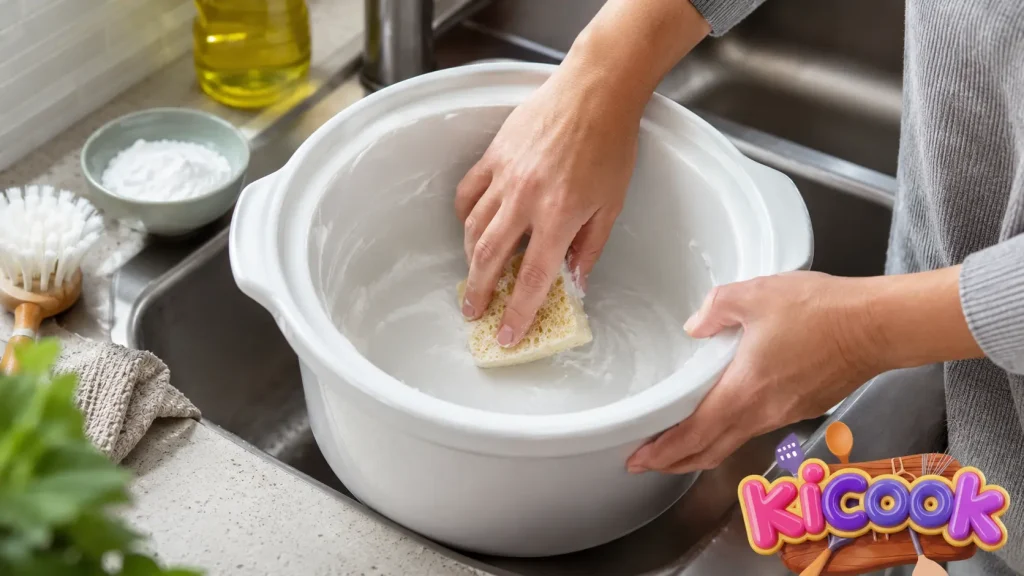
- Baking Soda Paste: Make a thick paste with baking soda and water. Scrub the interior of the ceramic insert. This is a gentle abrasive that pulls out trapped odors from the pores.
- Pros: Non-toxic, removes deep stains.
- Cons: Requires manual effort.
- Boiling Water Rinse: For plastic components or removable gaskets, soak them in boiling water with a splash of lemon juice to cut through grease and chemical smells.
- Pros: Fast and easy.
- Cons: Be careful with plastic heat limits.
- Inspect the Lid Gasket: If your slow cooker has a silicone seal on the lid, remove it. Sometimes food particles get trapped underneath, rotting slowly over time.
- Pros: Eliminates hidden mold/bacteria.
- Cons: Fiddly to remove and re-install.
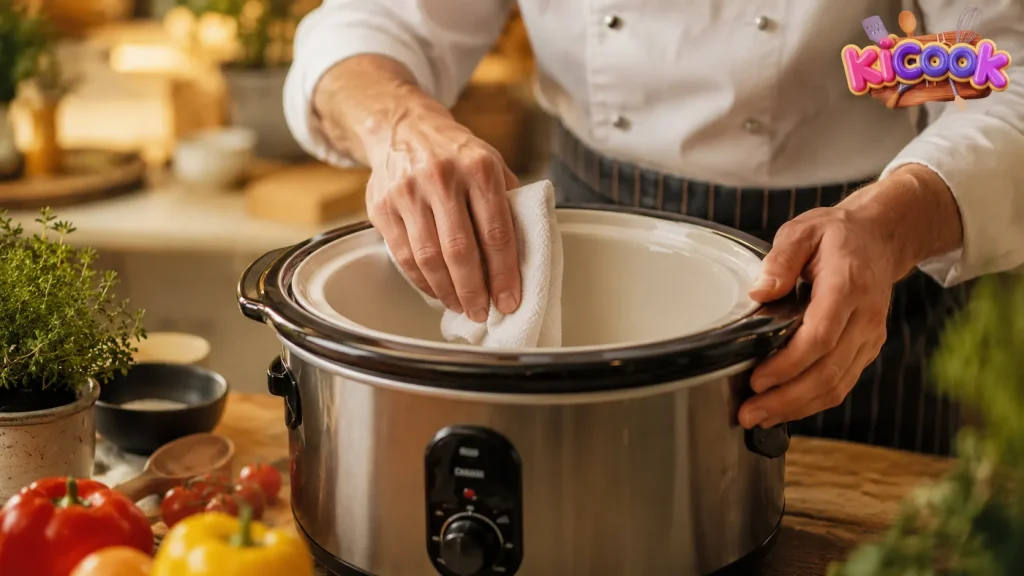
- Check the Heating Element: If the base itself smells “off” when heated without the pot, it may be dust or old food debris on the element. Clean it carefully with a damp cloth when cool.
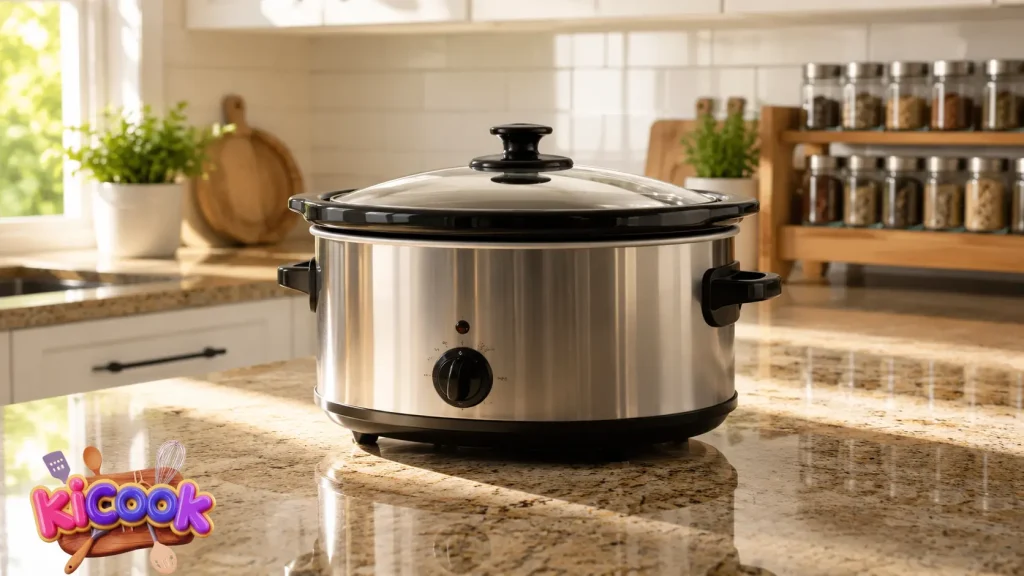
Step-by-Step Guide: Deep Cleaning Your Slow Cooker
Follow these steps to eliminate “off” flavors and return to pure, clean cooking.
- Cool Down: Ensure the appliance is completely cool before attempting any deep cleaning to avoid thermal shock.
- Remove Gaskets: If your lid has a silicone gasket, pry it off gently. Wash it separately in warm, soapy water and check for any signs of mold or deterioration.
- Vinegar Bath: Fill the ceramic insert with water and 2 cups of white vinegar.
- Simmer: Set the slow cooker to “Low” and let the water-vinegar solution heat up for about 1 hour. This steam-cleans the lid and the interior walls.
- Baking Soda Scrub: Once cooled, pour the liquid out. Sprinkle generous amounts of baking soda on the interior and scrub using a non-abrasive sponge.
- Rinse Thoroughly: Use hot water to rinse until no trace of baking soda remains.
- Air Dry: Allow the insert to air dry completely for 24 hours. Do not store it with the lid on, as this traps moisture and creates a “musty” smell.
- The Sniff Test: Give the insert a quick smell. If it still smells “off,” repeat the vinegar soak process.
Expert Tips & Common Mistakes
Avoiding “off” flavors is about consistent maintenance and smart cooking habits. Here is how to keep your slow cooker pristine.
- Don’t ignore the glaze: If your insert has visible cracks (crazing), it may be time to replace the insert, as it can trap bacteria.
- Avoid soaking overnight: Leaving your pot to soak for days can allow water to seep into the porous ceramic material, leading to a stale, “funky” smell.
- Mind the plastics: Avoid using abrasive steel wool on non-stick inserts; scratches hide bacteria and odors.
- Ventilation is key: When storing, always leave the lid slightly ajar or store it upside down to prevent stagnant air from building up inside.
- Don’t overload: Overfilling can cause sauces to bubble over into the base, which eventually burns and creates a metallic/charred smell during future uses.
Common Mistakes to Avoid:
- Using harsh chemical degreasers that aren’t food-safe.
- Storing the lid tightly closed when the unit is damp.
- Ignoring the rubber seal where food particles hide.
- Leaving strong-smelling leftovers (curries, chilies) in the pot in the fridge for too long.
“The secret of success in life is to eat what you like and let the food fight it out inside.” — Mark Twain, American Author
FAQs on Why Does My Slow Cooker Taste Funny
Why does my slow cooker smell like burning plastic?
This is usually due to food residue getting stuck on the heating element or the bottom of the ceramic insert. Clean the heating element thoroughly once cool, and ensure the bottom of the pot is dry before placing it in the base.
Can I put my slow cooker ceramic insert in the dishwasher?
Check your manufacturer’s manual. While many are dishwasher safe, the harsh detergents can etch the glaze over time, leading to more porous surfaces that absorb flavors. Hand washing is safer for longevity.
Is it dangerous if my food tastes metallic?
If it tastes metallic, it is often due to a reaction between acidic ingredients (like tomatoes) and a chipped glaze or cheap metal lid. It is best to avoid eating the meal if the metallic taste is strong, as it indicates a degradation of the pot’s surface.
How do I get curry smells out of my slow cooker?
The vinegar and baking soda soak mentioned in the guide is the most effective method for removing potent spice odors.
Should I replace my slow cooker if it always tastes funny?
If you have deep-cleaned it multiple times and the issue persists, the ceramic glaze is likely compromised beyond repair, and it is time for a replacement.
Conclusion
A “funny” taste in your slow cooker is usually a cry for a deep clean rather than a sign that your appliance has reached the end of its life. By focusing on removing trapped soap residue, sanitizing the lid gaskets, and occasionally simmering a vinegar-water solution, you can neutralize those unwanted flavors and get back to creating delicious, stress-free meals.
Maintenance is the key to longevity, and keeping your kitchen essentials clean ensures your food tastes exactly the way you intended. Try these deep-cleaning tips today, and notice the difference in your very next batch of slow-cooked goodness!
“One cannot think well, love well, sleep well, if one has not dined well.” — Virginia Woolf, Writer
For more expert guidance on maintaining your culinary tools and perfecting your techniques, visit Serious Eats. They provide excellent, science-backed advice on kitchen equipment safety and slow cooking best practices to ensure your meals are always top-tier.

“I believe great cooking starts with the right tools, trusted advice, and a little confidence in the kitchen.”
Hi, I’m Emma Carter. My love for cooking began in my grandmother’s kitchen, where I learned that every great meal starts with simple ingredients and the right cookware. Over the years, I’ve spent countless hours researching, testing, and comparing kitchen appliances, cookware, coffee makers, air fryers, and other everyday kitchen essentials.
Here at KiCook, my goal is to make your buying decisions easier with honest product reviews, practical buying guides, and easy-to-follow cooking tips. Whether you’re upgrading your kitchen or searching for the best appliance for your home, I focus on providing clear, reliable, and research-backed information you can trust.
When I’m not testing new kitchen gadgets or writing in-depth guides, you’ll usually find me trying new recipes, visiting local farmers’ markets, or enjoying a quiet cup of coffee while planning my next kitchen project.