
YES, slow cookers can catch fire, although a properly working appliance used according to its manual should not normally ignite. The main dangers are damaged cords, faulty electrical parts, recalled models, blocked ventilation, flammable items touching the cooker, and leaving an old appliance running without inspection.
Yes, slow cookers can catch fire, but the heat setting alone is rarely the main cause. Modern slow cookers gently heat food for hours, with well-performing models maintaining approximately 195°F to 205°F once fully heated. A sound appliance should control that heat without scorching its housing or wiring.
The biggest catch is that long cooking times can hide an electrical problem. A cracked cable, loose outlet, failing thermostat, damaged heating base, or folded tea towel touching the appliance may overheat while nobody is watching. This is why slow cooker fire risk depends heavily on the condition and placement of the cooker.
This guide explains what creates a crock pot fire hazard, how to inspect your appliance, which setting is safest, and what warning signs mean you should unplug it immediately. You will also learn how to run a slow cooker overnight or during a busy day without ignoring electrical and food-safety risks.
Why Slow Cooker Fire Risk Matters
When people ask, can slow cookers catch fire, they are usually deciding whether they can leave dinner cooking while working, sleeping, shopping, or collecting children from school. Slow cookers are designed for extended cooking, but that does not make every appliance or kitchen setup automatically safe.
According to the National Fire Protection Association (NFPA), cooking causes an average of 138,212 home fires annually in the United States. Of those, slow cookers are responsible for only about 231 fires per year, less than 1% of all cooking fires. That makes slow cookers one of the safest kitchen appliances you can own, provided they are properly maintained.
A common crock pot fire hazard begins outside the food. The cord may be pinched behind a counter, the plug may sit loosely in the outlet, or paper packaging may touch the hot outer casing. A slow cooker placed beneath low cabinets can also expose nearby materials to hours of heat and steam.
Food safety matters too. Raw meat must heat through safely even when the appliance presents no fire risk. Bacteria grow rapidly between 40°F and 140°F, sometimes doubling in as little as 20 minutes. Poultry, casseroles, and leftovers should reach 165°F before serving.
Never treat an appliance that smells burnt, sparks, repeatedly trips a breaker, or has melted plastic as a normal slow cooker. Unplug it and replace or professionally assess it before cooking another meal.
How to Stop Slow Cookers From Catching Fire
The safest setting depends on how long you are cooking, whether you are home, and what the manufacturer allows. Low and High usually reach a similar final cooking temperature; High normally gets there faster. Temperature control, appliance condition, and ventilation matter more than simply choosing Low.
| Setting or Situation | Typical Use | Main Safety Concern | Recommended? |
|---|---|---|---|
| Warm | Holding fully cooked food | Food may fall below 140°F on a faulty unit | Yes, for short holding periods |
| Low | Stews, roasts, beans, soups | Long operating time can expose cord faults | Yes, after a full inspection |
| High | Faster slow-cooker recipes | Cooker reaches peak heat sooner | Yes, preferably while home |
| Empty cooker | Preheating only when instructed | Ceramic insert may overheat or crack | Usually no |
| Extension cord | Moving the cooker from an outlet | Underrated cord may overheat | No |
| Damaged or recalled unit | Any recipe | Electrical failure and fire risk | Never |
Note: Exact temperatures and operating rules vary by brand and model. Serious Eats found that its best-tested slow cookers maintained about 195°F to 205°F at peak, but your cooker may behave differently. Review its manual rather than assuming every model uses identical heating cycles. You can also review this slow cooker testing and temperature guidance when comparing newer appliances.
Electrical Safety First advises using Low rather than High when leaving the house, while Health Canada gives more conservative advice against leaving cooking appliances unattended. For the broadest safety margin, stay home while the cooker operates or follow the stricter local guidance and your manufacturer’s instructions.
Step-by-Step Guide
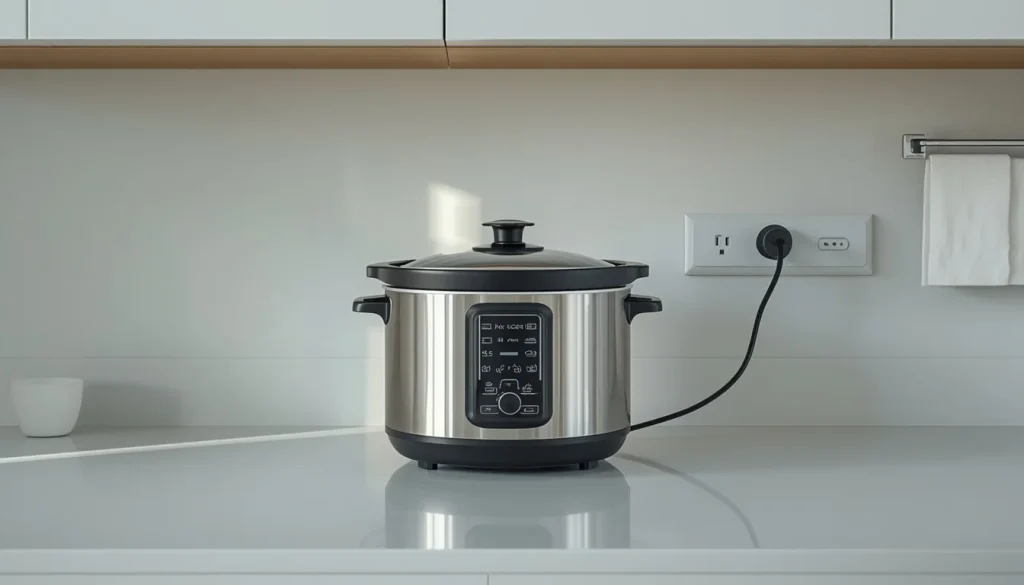
- Inspect the power cord. Run your fingers along the unplugged cable. Replace the cooker if you find cracks, exposed wire, scorch marks, or a loose connection near the base.
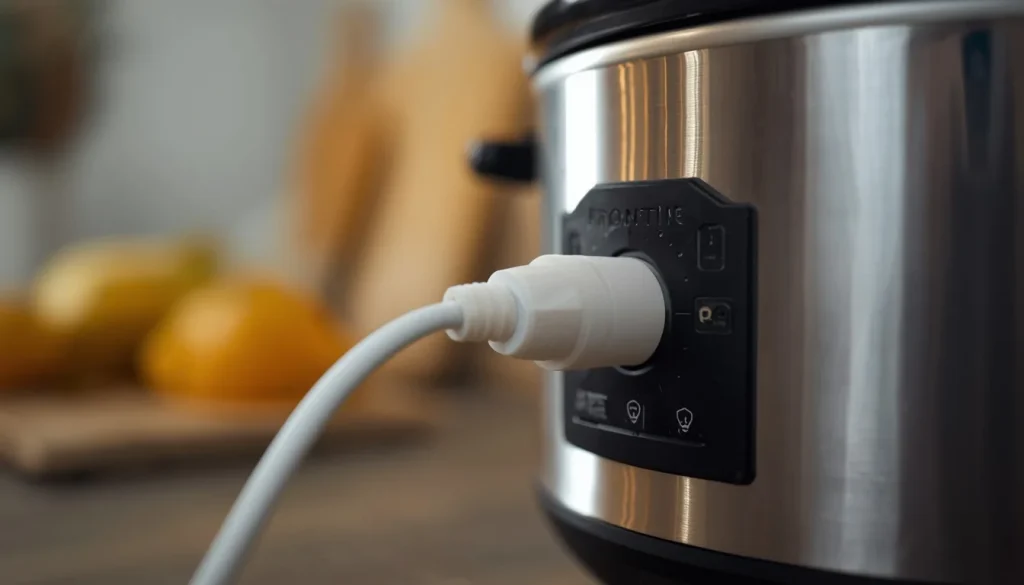
- Check the plug and outlet. The plug should fit firmly without wobbling. Stop using the outlet if it feels hot, buzzes, sparks, or shows brown marks.
- Confirm the model is not recalled. Search the product name and model number through your national product-safety database before using an inherited or second-hand cooker.
- Create a clear heat zone. Leave at least 6 inches or 15 centimetres between the appliance and towels, paper, curtains, packaging, wooden boards, or other heat-sensitive items.
- Add the correct amount of food. Fill the insert roughly one-half to two-thirds full unless the manual says otherwise.
Pro tip: Avoid tightly overfilling the pot because bubbling liquid can reach the lid or rim. - Start with thawed ingredients. Refrigerate prepared meat and vegetables until cooking time. Frozen meat can keep the cooker in the 40°F–140°F danger zone for too long.
- Check the first operating hour. Look for smoke, electrical smells, unusual clicking, or excessive heat around the plug.
Pro tip: Use a kitchen timer so the inspection is not forgotten. - Unplug after serving. Switch the cooker off, disconnect it from the wall, and let the base cool completely before cleaning or storing it.
Expert Tips & Common Mistakes
Pro Tips
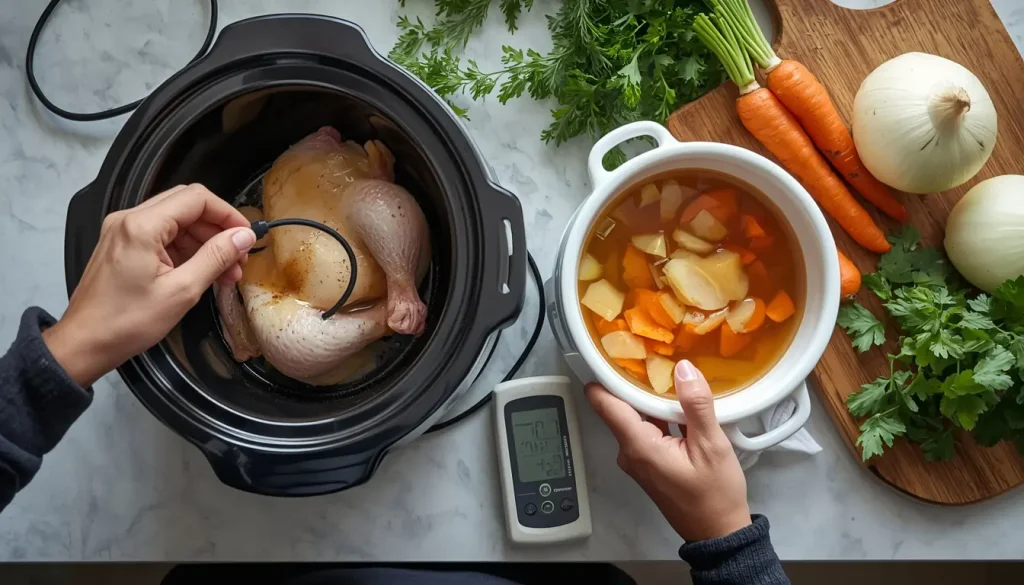
- Test an older cooker while you are home. Add 2 quarts or about 2 litres of water, run it according to the manual, and watch for irregular heating, odours, or a hot plug.
- Use a food thermometer. Check chicken, turkey, casseroles, and reheated leftovers in the thickest area. They should reach at least 165°F or 74°C.
- Keep the lid in its normal cooking position. Do not fasten travel clamps while cooking unless the manual specifically permits it. Locked transport lids can interfere with steam release and may damage the lid or crock.
- Choose built-in smart controls. Newer programmable models may offer automatic Warm mode, temperature probes, timers, and app alerts. Avoid adding an unapproved third-party smart plug just to control the cooker remotely.
- Use AI meal planners as reminders, not safety monitors. An app can calculate when dinner should finish, but it cannot smell melting insulation or confirm that an outlet is working correctly.
“Slow cookers are a gateway to get people to cook from scratch again.”
— Hugh Acheson, James Beard Award-winning chef and cookbook author
Common Mistakes
- Using an extension cord or overloaded power strip: The cord may not support the appliance’s continuous electrical load, causing heat to build at the connection.
- Putting a towel beneath the cooker: Fabric can restrict airflow, trap heat, and create direct contact between combustible material and the hot base.
- Ignoring a burning-plastic smell: New appliances may release a mild manufacturing odour during initial use, but a strong, worsening, or electrical smell can indicate overheating insulation.
- Continuing after the breaker trips: Resetting the breaker without finding the fault may energise a damaged cooker again. Repeated trips can signal a short circuit, overloaded circuit, or failing heating component.
FAQs About Slow Cooker Fire Hazards
Can slow cookers catch fire when left on Low?
Yes, slow cookers can catch fire on Low if the appliance has damaged wiring, a failed thermostat, a defective plug, or combustible objects touching it. Low is not a fireproof mode; it simply heats more gradually. Inspect the cord and outlet, clear the surrounding counter, and follow the manufacturer’s rules before running the cooker for several hours.
Can I leave a slow cooker on while I am at work?
Some manufacturers design slow cookers for long cooking periods, and UK electrical guidance recommends Low rather than High when leaving home. However, Canadian guidance advises against leaving cooking appliances unattended. The safest approach is to remain home, use a modern programmable model, keep smoke alarms working, and never leave a damaged, unfamiliar, or recalled cooker running.
Can slow cookers catch fire while cooking chicken overnight?
They can, although properly maintained slow cookers should control their heat during an overnight recipe. Use fully thawed chicken, place the cooker on a clear heat-resistant surface, and confirm the plug stays cool during an earlier daytime test. The chicken must reach 165°F or 74°C before eating. Never start an overnight cook with a damaged cord or loose outlet.
Why does my crock pot smell like burning plastic?
A strong burning-plastic smell may come from overheated insulation, food touching the heating base, residue on the exterior, or a failing electrical component. Switch the cooker off and unplug it immediately. After it cools, inspect the cord, plug, base, and outlet. Do not continue cooking merely because the appliance still heats; an electrical fault can worsen without visible flames.
Can a slow cooker catch fire if it runs dry?
An empty or dry cooker may expose the ceramic insert and heating system to unnecessary prolonged heat. Some models permit brief preheating, while others do not. Dry ingredients can also scorch if the recipe needs liquid. Follow your manual, use the required amount of moisture, and never run an empty cooker simply to test whether it becomes hot.
Is it safe to use a slow cooker at a potluck?
Yes, provided the cooker, cord, and destination outlet are in good condition. Transport the cooker unplugged and use lid clamps only for transport. At the event, plug it directly into a suitable outlet and keep hot food above 140°F. If food drops below that temperature, reheat it to 165°F before returning it to Warm.
Can I plug a slow cooker into an extension cord?
Direct wall connection is the safer choice. Extension cords and power strips can overheat when they are damaged, coiled, underrated, or shared with other kitchen appliances. They also add another loose connection near liquids and hot surfaces. When the cooker’s cable cannot reach safely, move the appliance to another clear counter rather than extending the electrical connection.
What should I do if my slow cooker starts smoking?
Switch off the electricity only if you can do so without approaching flames or touching a hot plug. Leave the area and call emergency services if smoke continues, flames appear, or the fire spreads. Do not pour water onto an electrical appliance. Do not reuse the cooker afterward, even if the smoke stops and the exterior looks undamaged.
Can I leave a slow cooker on overnight safely?
Yes, in most cases but only if your slow cooker passes three checks first. The cord must have no cracks or scorch marks, the plug must fit firmly without wobbling, and the model must not appear on any recall list. Place it on a heat-resistant, clear surface at least 6 inches from walls, towels, and cabinets. Use fully thawed ingredients and set it to Low. Fire safety experts at the NFPA confirm that modern UL-certified slow cookers with auto shut-off features can safely run unattended overnight. If your model is older than 10 years or lacks auto shut-off, cook during the day when you are home.
Conclusion
Can slow cookers catch fire? Yes, but the greatest slow cooker fire risk usually comes from damaged equipment, poor placement, overloaded electrical connections, or ignored warning signs rather than normal slow cooking itself.
Before every long recipe, examine the cord, plug, outlet, ceramic insert, and heating base. Keep the appliance away from paper, cloth, curtains, and crowded countertop items. Plug it directly into the wall, use thawed ingredients, and confirm that meat reaches its safe internal temperature. An automatic timer, probe, or app alert can improve convenience, but smart technology cannot replace a physical inspection.
Stop using the cooker immediately if you notice smoke, sparks, melting plastic, a burning electrical smell, or a hot plug. Safe slow cooking begins before the ingredients enter the pot.
Inspect your slow cooker and clear its surrounding counter before starting today’s meal.
A meal can cook slowly, but your response to a warning sign should always be fast.
Habib is a kitchen safety writer and home appliance researcher with 10 years of experience covering fire prevention and cooking equipment safety. This article was reviewed for accuracy against NFPA data
– Habib
and manufacturer guidelines.

“I believe great cooking starts with the right tools, trusted advice, and a little confidence in the kitchen.”
Hi, I’m Emma Carter. My love for cooking began in my grandmother’s kitchen, where I learned that every great meal starts with simple ingredients and the right cookware. Over the years, I’ve spent countless hours researching, testing, and comparing kitchen appliances, cookware, coffee makers, air fryers, and other everyday kitchen essentials.
Here at KiCook, my goal is to make your buying decisions easier with honest product reviews, practical buying guides, and easy-to-follow cooking tips. Whether you’re upgrading your kitchen or searching for the best appliance for your home, I focus on providing clear, reliable, and research-backed information you can trust.
When I’m not testing new kitchen gadgets or writing in-depth guides, you’ll usually find me trying new recipes, visiting local farmers’ markets, or enjoying a quiet cup of coffee while planning my next kitchen project.