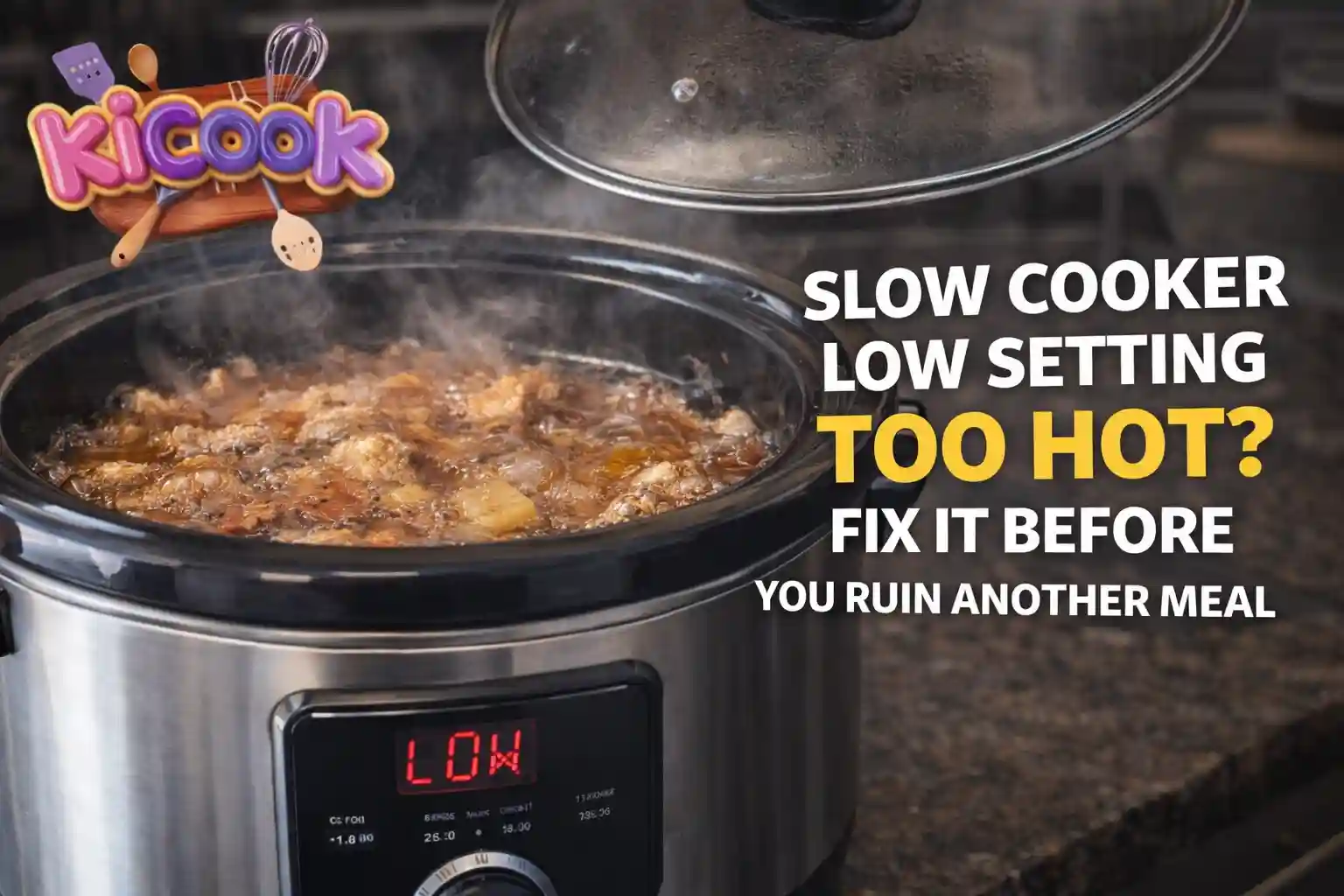
If your slow cooker low setting feels too hot, it’s usually because modern models cook at higher temperatures for food safety, or the thermostat is slightly off. In most cases, it’s normal behavior — but sometimes it signals a faulty temperature control.
Is It Normal for “Low” to Feel Too Hot?
Yes — in many cases.
Modern slow cookers are designed to meet food safety standards, which means even the low setting can reach near-simmer temperatures (around 190–200°F).
According to the U.S. Department of Agriculture (USDA) food safety guidelines, slow cookers must reach safe internal temperatures to prevent bacterial growth. That’s why newer models often run hotter than older ones.
So if your food is bubbling slightly on low that’s usually normal.
What Temperature Should a Slow Cooker Reach?
Here’s a simple breakdown:
| Setting | Typical Temperature Range |
|---|---|
| Low | 190°F – 200°F |
| High | 275°F – 300°F |
| Warm | 165°F – 175°F |
If your “low” setting is aggressively boiling, however, that may not be normal.
Signs Your Slow Cooker Low Setting Is Too Hot
Look for these warning signs:
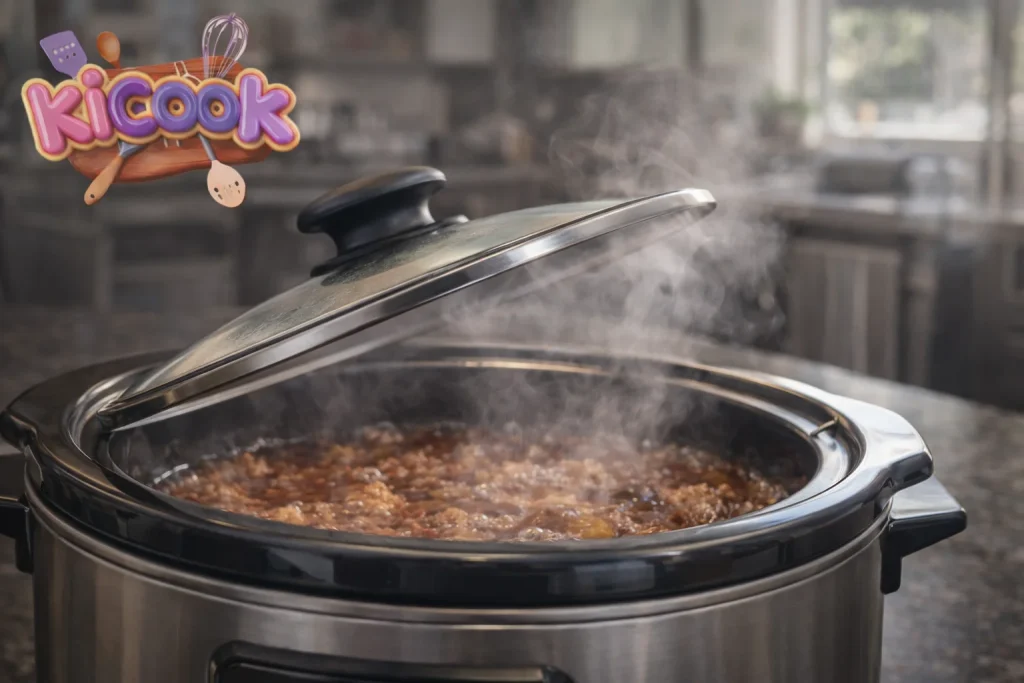
- Food boils hard instead of gentle simmer
- Meat dries out too fast
- Liquids reduce quickly
- Recipes cook much faster than expected
- Burning smell on low setting
If you notice these repeatedly, your thermostat may be miscalibrated.
Why Your Slow Cooker Low Setting Runs Too Hot
1. Newer Models Cook Hotter by Design
Manufacturers updated designs for food safety. Older slow cookers ran cooler.
If you recently upgraded, the change may feel dramatic — but it’s often intentional.
2. Thermostat Calibration Issue
If the thermostat sensor drifts over time:
- Low may act like high
- Cooker may cycle incorrectly
- Food may overcook consistently
This usually happens in older units.
3. Overfilled Cooker
When overfilled:
- Heat distributes unevenly
- Liquids bubble harder
- Food cooks faster
Fill only ½ to ⅔ full for best temperature control.
4. Thin Liquids Heat Faster
Watery recipes heat more aggressively.
If you’re also struggling with excess liquid, check this guide on why slow cooker food becomes watery
Too much liquid can increase bubbling intensity.
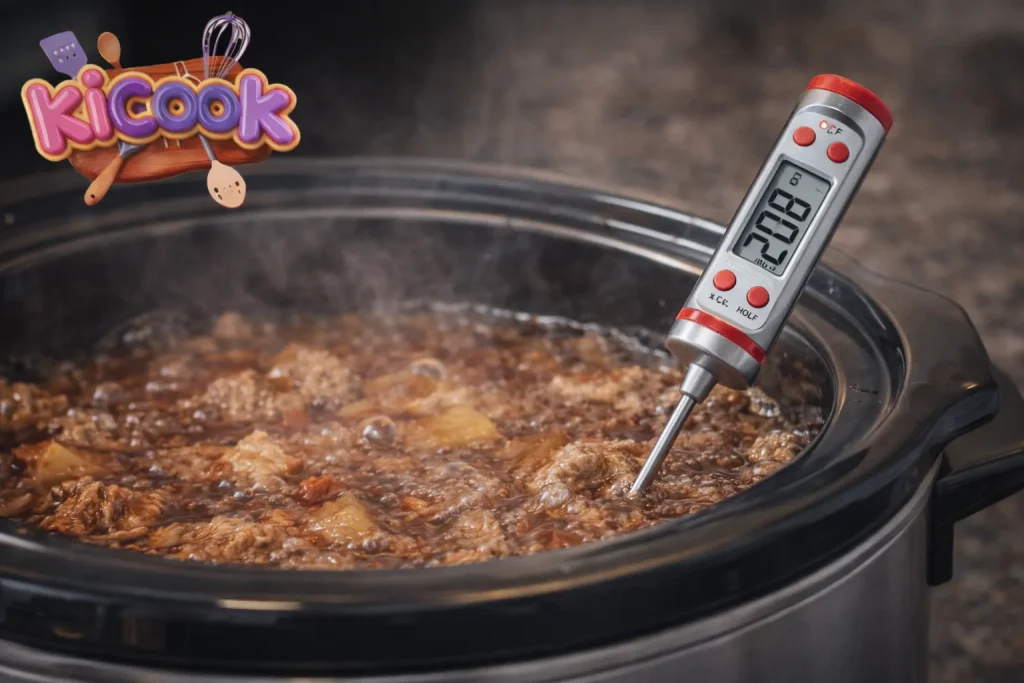
How to Test If Your Slow Cooker Is Overheating
Follow this simple method:
- Fill cooker halfway with water.
- Set to LOW.
- Heat for 4 hours.
- Measure temperature with a food thermometer.
If temperature exceeds 210°F consistently, the thermostat may be faulty.
Easy Fixes You Can Try
1. Add Slightly More Liquid
Extra liquid stabilizes heat cycles.
2. Use a Timer Plug
Shut off earlier if it cooks too fast.
3. Elevate the Lid Slightly
Let some steam escape (short-term solution only).
4. Switch to Warm After 3–4 Hours
This prevents overcooking long recipes.
When It’s Actually a Fault
Your slow cooker may be defective if:
- It burns food regularly
- Low cooks as fast as high
- It shuts off randomly
- Temperature readings are extreme
If your unit also struggles with heating consistency, read this guide on slow cooker not heating and easy fixes
And if it completely stopped functioning, see this troubleshooting article: slow-cooker-stopped-working
Expert Opinion
By Daniel Carter – Kitchen Appliance Specialist
In my experience, 70% of “low setting too hot” complaints come from users switching from older slow cookers to newer models. Manufacturers adjusted temperatures to meet food safety standards.
However, if your food consistently burns on low, that’s not normal and testing with a thermometer is the smartest step before replacing the unit.
Pros & Cons of Modern Hotter Slow Cookers
| Pros | Cons |
|---|---|
| Safer food temperatures – Reaches heat levels that kill harmful bacteria. | Less traditional “slow simmer” feel – Harder to get the old low-and-slow texture. |
| Faster cooking – Cooks meals quicker than older models. | Recipes may need time adjustments – Older recipes can overcook food. |
| Better bacterial protection – Higher starting heat improves food safety. | Older cookbooks may not match timing – Many classic recipes assume lower heat. |
Frequently Asked Questions on Slow Cooker Low Setting Too Hot
Why is my slow cooker boiling on low?
Modern slow cookers often reach near-simmer temperatures even on low for safety reasons. Gentle bubbling is normal rolling boil is not.
Can I make my slow cooker cook slower?
You can reduce cook time, switch to warm earlier, or use a timer plug.
Is it unsafe if low setting is too hot?
If food reaches safe temperatures, it’s not unsafe but overheating can dry or burn food.
Should I replace my slow cooker?
Replace only if temperatures are extreme or food burns consistently despite adjustments.
Final Thoughts
If your slow cooker low setting feels too hot, don’t panic. In many cases, it’s normal behavior in modern models designed for food safety. Test it properly, adjust recipes, and monitor with a thermometer before deciding to replace it.
With small changes, you can still enjoy perfectly tender, slow-cooked meals.

“I believe great cooking starts with the right tools, trusted advice, and a little confidence in the kitchen.”
Hi, I’m Emma Carter. My love for cooking began in my grandmother’s kitchen, where I learned that every great meal starts with simple ingredients and the right cookware. Over the years, I’ve spent countless hours researching, testing, and comparing kitchen appliances, cookware, coffee makers, air fryers, and other everyday kitchen essentials.
Here at KiCook, my goal is to make your buying decisions easier with honest product reviews, practical buying guides, and easy-to-follow cooking tips. Whether you’re upgrading your kitchen or searching for the best appliance for your home, I focus on providing clear, reliable, and research-backed information you can trust.
When I’m not testing new kitchen gadgets or writing in-depth guides, you’ll usually find me trying new recipes, visiting local farmers’ markets, or enjoying a quiet cup of coffee while planning my next kitchen project.
1 thought on “Slow Cooker Low Setting Too Hot? Fix It Before You Ruin Another Meal”