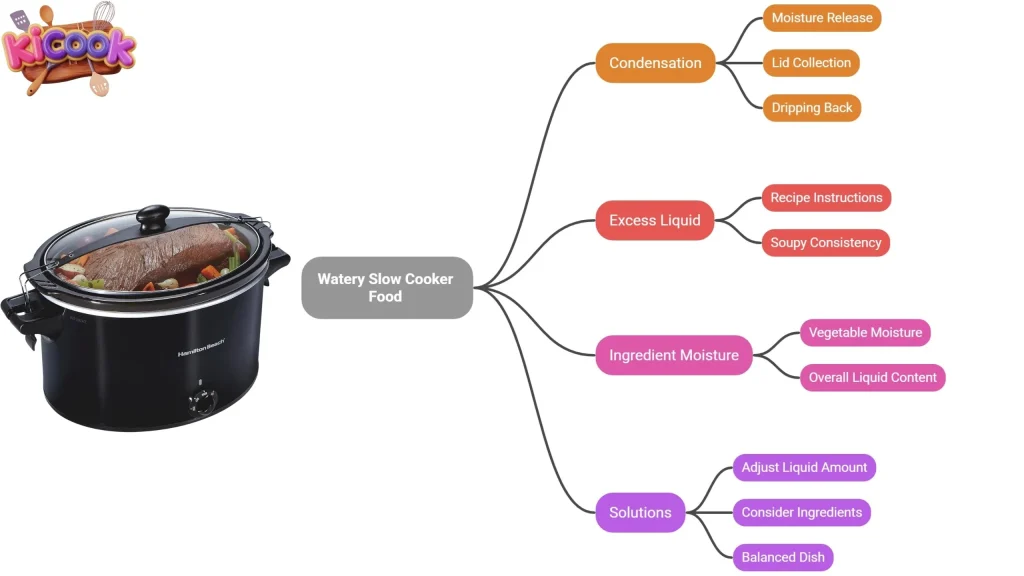
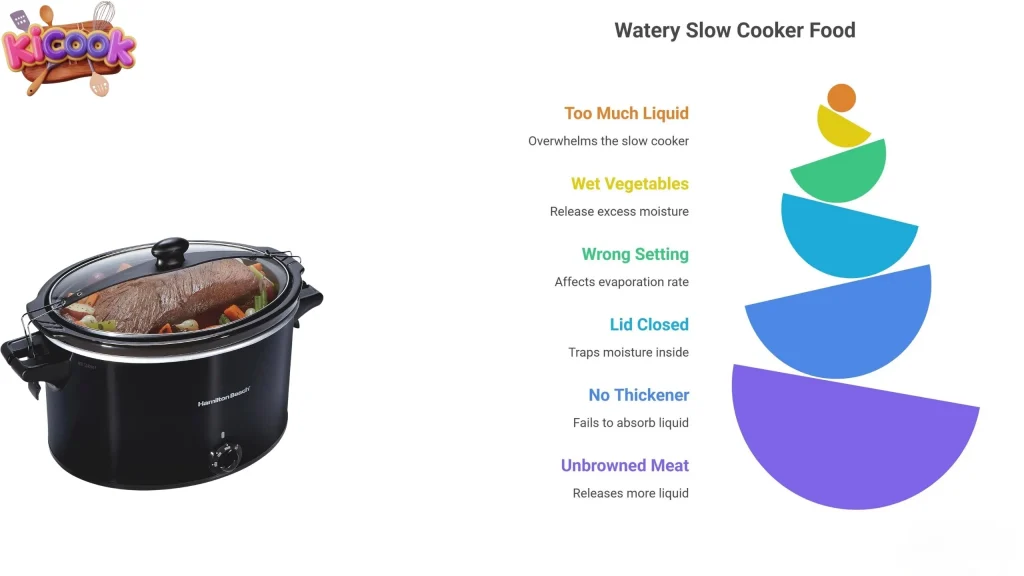
Slow cooker food becomes too watery because liquid does not evaporate during long, low-heat cooking, and many ingredients release extra moisture as they cook. In most cases, the fix is simple and starts with using less liquid and choosing the right cooking settings.
I still remember the first time I lifted the lid of my slow cooker after eight hours, excited for a rich stew, only to find a thin, soupy mess. If you’ve ever felt that same disappointment, you’re not alone. Many home cooks in the USA, UK, Canada, and even busy London apartments face this problem.
In this article, I’ll share my real experience with watery slow cooker meals, explain why slow cooker food is too watery, and show you practical fixes that actually work. My goal is simple: help you serve thick, flavorful meals without stress.
My Personal Experience With Watery Slow Cooker Meals
When I first started using a slow cooker, I treated it like a pot on the stove. I added lots of broth, water, and sauces. Big mistake. Slow cookers work very differently, and I learned that the hard way.
Over time, after many trials (and a few failed dinners), I discovered small changes that made a big difference. Now my soups, stews, and sauces come out rich instead of runny.
“Cooking is about patience and balance, not rushing the process.” — Julia Child
The Main Reason Slow Cooker Food Gets Too Watery
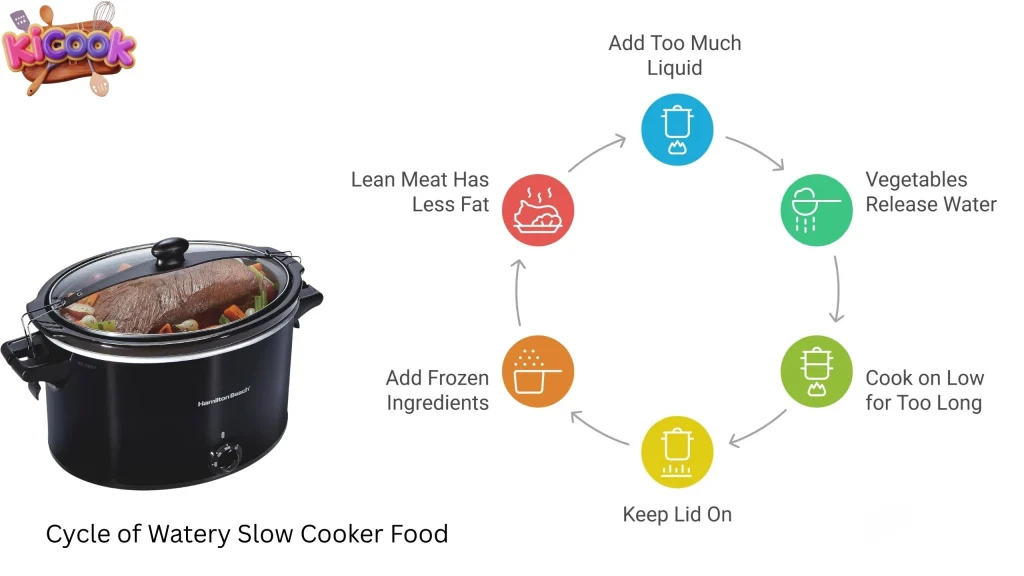
1. Too Much Liquid at the Start
This is the most common reason. Slow cookers are sealed environments. Very little liquid escapes during cooking. If you add too much broth, water, or sauce at the start, it will stay there.
On the stovetop, liquid boils away. In a slow cooker, it stays.
2. Vegetables Release a Lot of Water
Fresh vegetables like onions, zucchini, mushrooms, tomatoes, and bell peppers hold a lot of moisture. As they cook slowly, they release that water into your dish.
This is a big pain point for people cooking vegetable stews or chicken recipes with lots of produce.
3. Cooking on Low for Too Long
Low heat for long hours is great for tender meat, but it also means more moisture builds up. In many cases, cooking on high for a shorter time gives better texture.
4. Keeping the Lid On the Whole Time
Every slow cooker guide says, “Don’t lift the lid,” and that’s true for cooking time. But keeping the lid closed also traps steam, which turns into water and drips back into the food.
5. Frozen Ingredients Add Extra Water
Frozen chicken, beef, or vegetables release ice as they cook. That extra liquid often surprises people and leads to watery sauces.
6. Lean Meat Has Less Fat
Lean cuts like chicken breast or turkey don’t release much fat. Fat adds body to sauces. Without it, dishes can feel thin.
“Good food is built layer by layer.” — Gordon Ramsay
Common Customer Pain Points (You Might Feel These Too)
High for 4–5 hours works better than low for 8 hours.
Meat still becomes tender, but the sauce stays thicker.
4. Leave the Lid Slightly Open at the End
During the last 30–45 minutes, I crack the lid slightly (if safe for your model). This helps excess moisture escape.
Always check your manufacturer’s safety advice.
5. Thicken Naturally (Without Ruining Flavor)
Here are my favorite ways:
Mashed potatoes
Blended beans
Cornstarch slurry (used carefully)
Oat flour
Greek yogurt (added at the end)
These methods work well for UK, US, and Canadian-style comfort foods.
6. Brown Meat Before Slow Cooking
Browning meat adds flavor and helps reduce excess moisture. I always sear beef or chicken first if I have time.
“A recipe has no soul. You bring soul to the recipe.” — Thomas Keller
Country-Specific Tips (USA, UK, Canada)
USA: Many American slow cooker recipes use large amounts of broth. Cut it back, especially for chili and pot roast.
UK & London homes: Smaller slow cookers need even less liquid. One extra cup can ruin the texture.
Canada: Frozen ingredients are common in winter. Always adjust liquid if using frozen meat or vegetables.
Safe Cooking Reminder
Always follow food safety rules. According to the USDA, slow cookers should reach safe temperatures for meat and poultry.
Frequently Asked Questions for Why Slow Cooker Food Is Too Watery
Why is my slow cooker soup watery?
You likely added too much liquid or used vegetables that released water. Use less broth next time and cook uncovered near the end if possible.
Can I fix watery food after cooking?
Yes. Simmer on high with the lid off, mash some ingredients, or add a thickener like cornstarch.
Does opening the lid ruin cooking?
Opening it early increases cook time, but opening near the end helps reduce excess liquid.
Should I drain meat?
Fresh meat doesn’t need draining, but frozen meat should be thawed and patted dry.
Is slow cooker watery food unsafe?
No, watery food is usually safe but affects taste and texture.
Mistakes I Stopped Making
Adding water “just in case”
Using frozen vegetables without adjustment
Trusting every recipe exactly
Ignoring cooking size vs liquid amount
Once I fixed these, my meals improved fast.
Final Thoughts: You’re Not Doing Anything Wrong
If you’ve been asking, “Why slow cooker food too watery?”, please know this: it’s not your fault. Slow cookers work differently than stovetops or ovens. Once you understand how moisture behaves, everything clicks.
I’ve been there, frustrated and confused. With a few simple changes, you can turn thin, bland meals into rich, comforting dishes your family will love.
Cooking should feel rewarding, not disappointing. I hope my experience saves you time, money, and frustration—and helps you enjoy your slow cooker again.
“I believe great cooking starts with the right tools, trusted advice, and a little confidence in the kitchen.”
Hi, I’m Emma Carter. My love for cooking began in my grandmother’s kitchen, where I learned that every great meal starts with simple ingredients and the right cookware. Over the years, I’ve spent countless hours researching, testing, and comparing kitchen appliances, cookware, coffee makers, air fryers, and other everyday kitchen essentials.
Here at KiCook, my goal is to make your buying decisions easier with honest product reviews, practical buying guides, and easy-to-follow cooking tips. Whether you’re upgrading your kitchen or searching for the best appliance for your home, I focus on providing clear, reliable, and research-backed information you can trust.
When I’m not testing new kitchen gadgets or writing in-depth guides, you’ll usually find me trying new recipes, visiting local farmers’ markets, or enjoying a quiet cup of coffee while planning my next kitchen project.