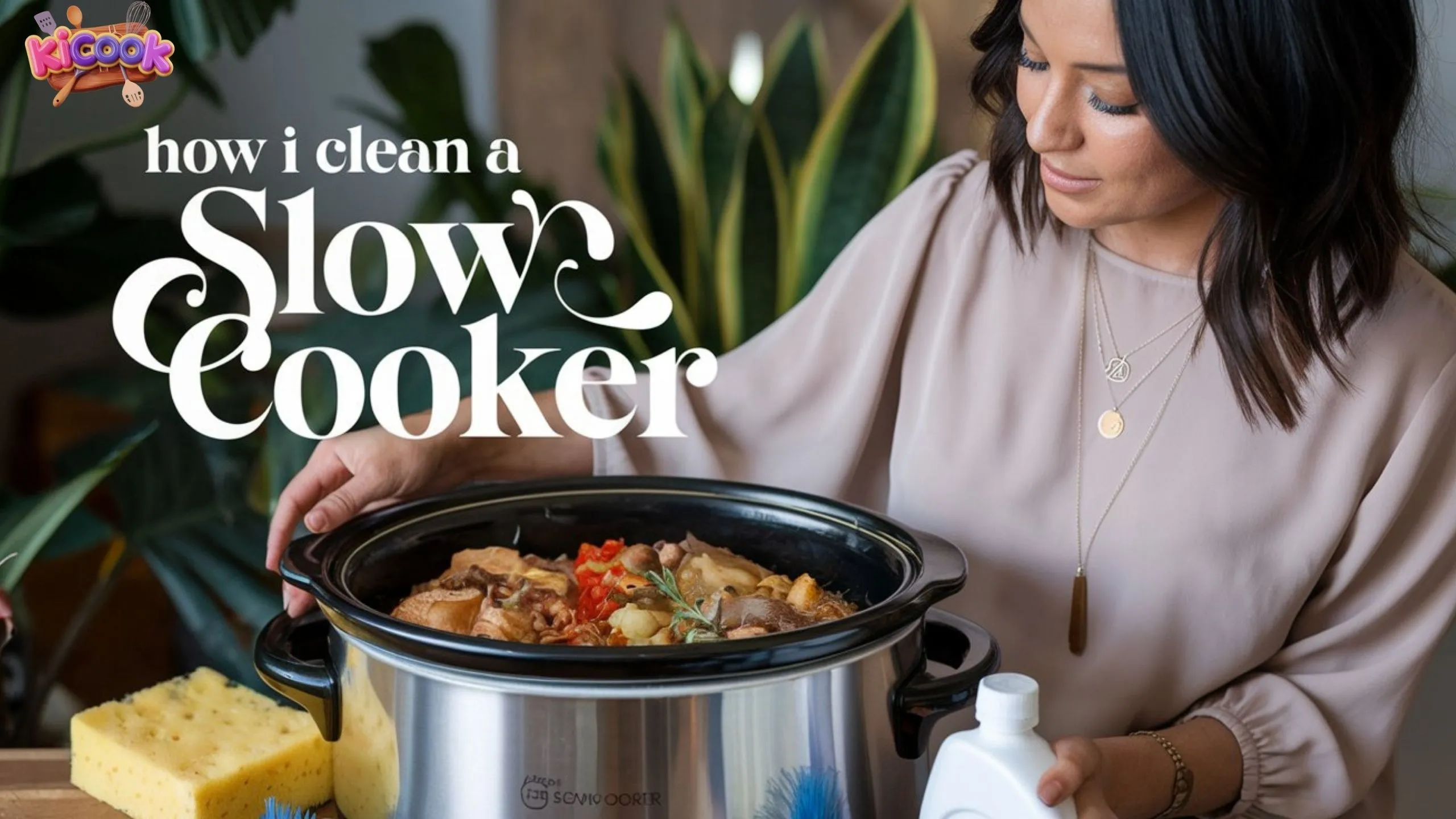
I clean my slow cooker by soaking the removable pot with warm water and dish soap, then gently scrubbing away food with a soft sponge before wiping the base clean. Regular cleaning after each use prevents odors, stains, and stuck-on food.
I use my slow cooker a lot for soups, stews, pulled chicken, beans, and family meals. Over time, I noticed common problems, burnt food at the bottom, strong smells, cloudy stains, and greasy sides. If you are facing the same issues, you are not alone. I wrote this guide to help you clean your slow cooker safely, easily, and without stress.
This article is written for home cooks in the USA, UK, Canada, and London households who want clear steps, simple words, and real solutions. Everything here comes from personal use, tested methods, and food safety guidance.
Why Cleaning a Slow Cooker Matters (My Experience)
I once ignored a slow cooker for two days after making beef stew. The smell stayed, the stains hardened, and cleaning became much harder. That experience taught me something important: slow cooker care saves time, food taste, and money.
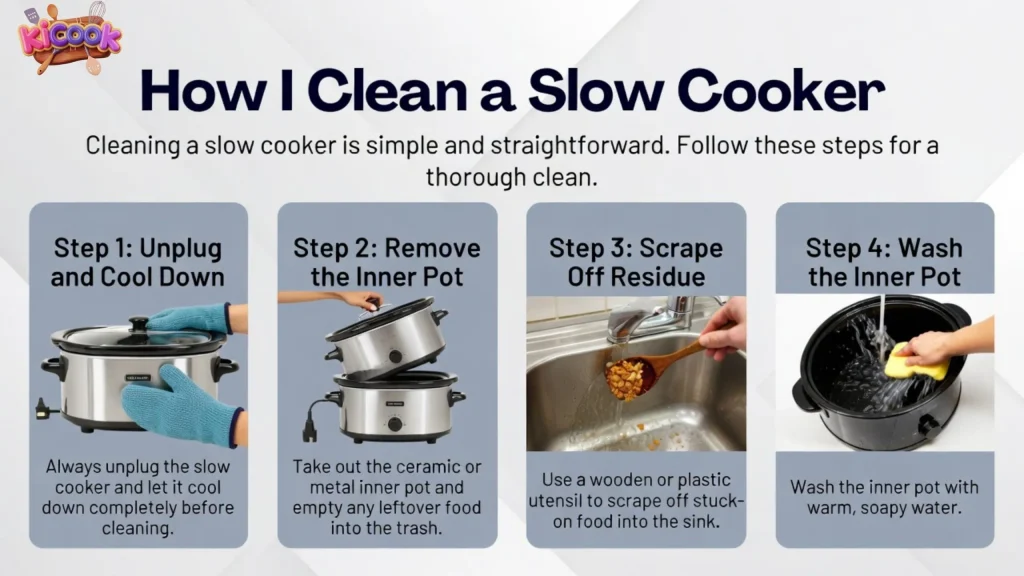
A clean slow cooker:
- Prevents food smells
- Stops bacteria buildup
- Keeps meals tasting fresh
- Makes cooking stress-free
- Helps the appliance last longer
Parts of a Slow Cooker You Must Clean
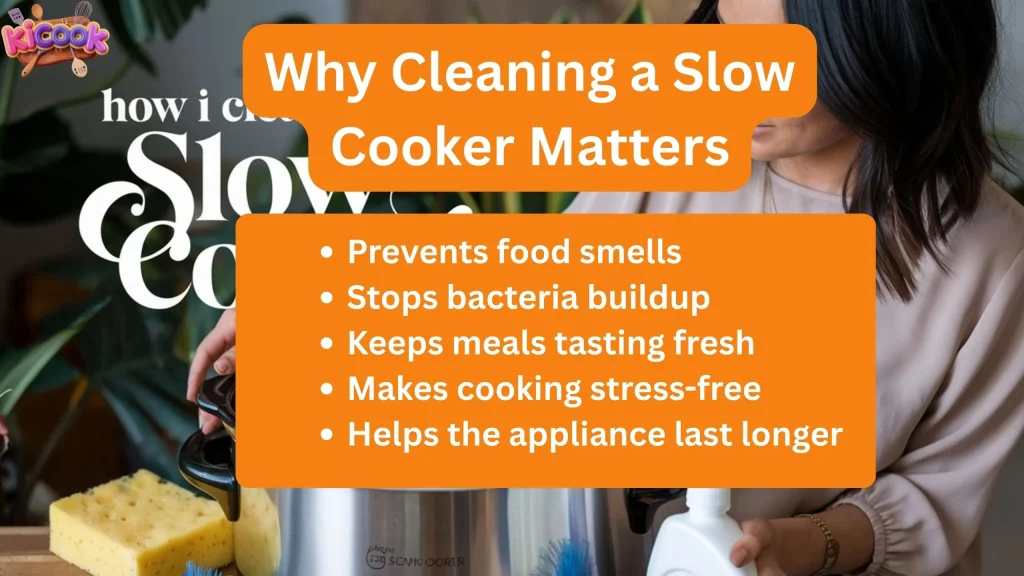
Before cleaning, I always unplug the unit and let it cool fully.
1. Removable Crock (Ceramic or Stoneware)
This part touches food and needs deep cleaning.
2. Lid (Glass or Plastic Handle)
Steam leaves residue here and causes odor.
3. Heating Base
This should never go in water.
My Step-by-Step Way to Clean a Slow Cooker After Use
Step 1: Let It Cool
Never clean a hot slow cooker. Sudden temperature change can crack the pot.
Step 2: Soak With Warm Soapy Water
I fill the pot with warm water and dish soap and let it sit for 20–30 minutes.
Step 3: Gentle Scrub
I use a soft sponge or silicone brush. No steel wool.
Step 4: Rinse and Dry
I rinse with clean water and air dry fully.
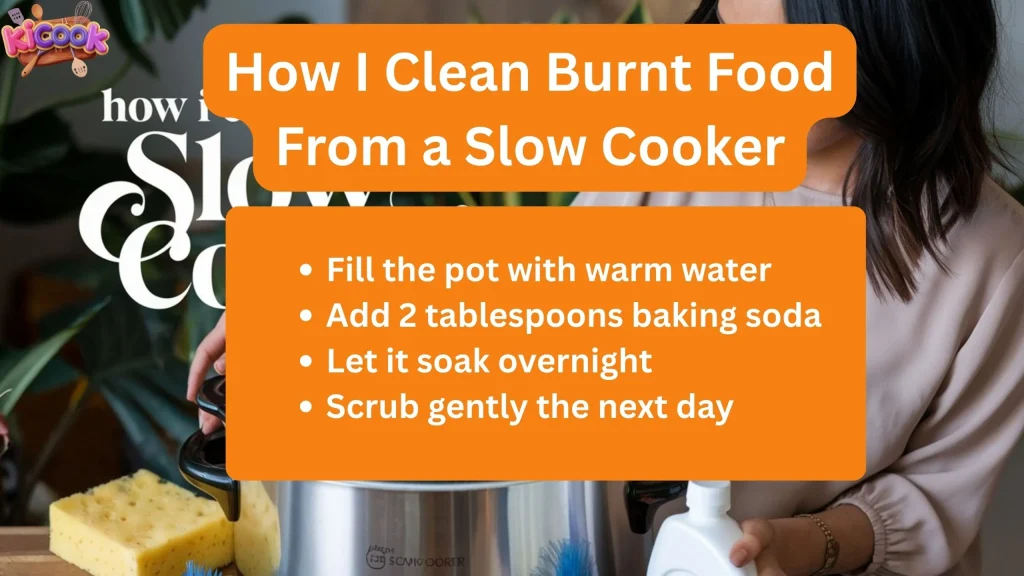
How I Clean Burnt Food From a Slow Cooker
Burnt food is a common pain point. I deal with it using this method:
- Fill the pot with warm water
- Add 2 tablespoons baking soda
- Let it soak overnight
- Scrub gently the next day
This works for stuck rice, beans, sauces, and cheese-based meals.
Removing Strong Smells From a Slow Cooker
Slow cooker odor can ruin your next meal. I use this natural fix:
Vinegar Method
- Add 1 cup white vinegar
- Add warm water
- Let it sit for 1 hour
- Rinse well
Lemon Method
- Add lemon slices
- Fill with water
- Cook on low for 1 hour
- Cool, then clean
Both methods remove curry, garlic, onion, and meat smells.
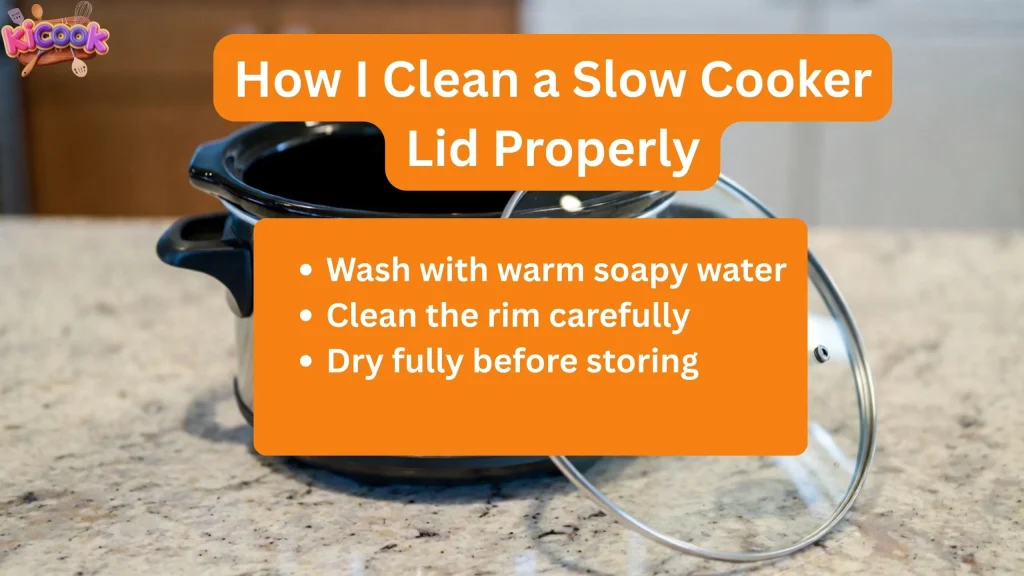
How I Clean a Slow Cooker Lid Properly
The lid traps grease and steam stains.
- Wash with warm soapy water
- Clean the rim carefully
- Dry fully before storing
For cloudy glass, I use vinegar and a soft cloth.
Cleaning the Slow Cooker Base (Very Important)
Never submerge the base in water.
What I do:
- Unplug the unit
- Wipe with a damp cloth
- Use mild soap if needed
- Dry with a towel
This keeps the heating element safe.
Can You Put a Slow Cooker in the Dishwasher?
This depends on the brand.
- Many ceramic pots are dishwasher safe
- Lids usually are safe
- Always check the manual
In the USA, UK, and Canada, popular brands like Crock-Pot and Morphy Richards often allow dishwasher use for the pot only.
“A clean slow cooker improves food quality and safety.” — Sarah Lewis, Home Cooking Educator
How Often I Clean My Slow Cooker
- After every use: light wash
- Weekly: deep clean
- Monthly: odor removal
Regular care avoids heavy scrubbing later.
Preventing Mess Before It Starts (My Best Tips)
- Use slow cooker liners sometimes
- Spray light oil before cooking
- Avoid overfilling
- Stir thick sauces halfway
These small habits save cleaning time.
“Gentle cleaning protects ceramic cookware for years.” — Mark Thompson, Kitchen Appliance Specialist
Safe Cleaning Products I Trust
I stick to food-safe items:
- Dish soap
- Baking soda
- White vinegar
- Lemon
I avoid harsh cleaners inside the pot.
Food Safety Notes (Important for Families)
According to food safety guidance from the U.S. Food & Drug Administration, clean cookware helps reduce bacteria growth and food contamination risks.
This advice also applies to UK and Canadian kitchens.
Common Slow Cooker Cleaning Mistakes I Avoid
- Using metal scrubbers
- Washing the base with water
- Cleaning while hot
- Using bleach inside the pot
Avoiding these protects the appliance.
Real Customer Pain Points (And My Fixes)
“Food sticks every time”
Use oil spray and soak right after cooking.
“My slow cooker smells bad”
Use vinegar or lemon steam cleaning.
“The pot looks stained”
Baking soda paste works well.
“Cleaning takes too long”
Clean right after meals cool down.
“Natural cleaners work best for daily kitchen care.” — Emily Carter, Nutrition & Food Safety Writer
Frequently Asked Questions
Can I soak my slow cooker overnight?
Yes, I do this often for stuck food. Make sure it is unplugged and cooled.
Is baking soda safe for ceramic pots?
Yes, it is gentle and food-safe.
How do I clean a slow cooker used for curry?
Vinegar or lemon water removes spice smells well.
Can I use oven cleaner?
No, I avoid it. It can damage the surface.
Should I clean after every use?
Yes, light cleaning after each meal keeps it fresh.
How I Store My Slow Cooker After Cleaning
- Make sure it is fully dry
- Store with lid slightly open
- Keep in a dry cabinet
This prevents moisture smell.
Final Thoughts: My Honest Advice
Cleaning a slow cooker does not need to be hard or time-consuming. I follow simple steps, use safe products, and clean regularly. This keeps my meals tasting better and my kitchen stress-free.
If you cook often for family or meal prep, caring for your slow cooker is worth the effort. A clean appliance means better food, fewer odors, and longer use.
I hope this guide helps you feel confident and relaxed about slow cooker cleaning. If I can do it after long cooking days, you can too.
Happy cooking and clean cooking!

“I believe great cooking starts with the right tools, trusted advice, and a little confidence in the kitchen.”
Hi, I’m Emma Carter. My love for cooking began in my grandmother’s kitchen, where I learned that every great meal starts with simple ingredients and the right cookware. Over the years, I’ve spent countless hours researching, testing, and comparing kitchen appliances, cookware, coffee makers, air fryers, and other everyday kitchen essentials.
Here at KiCook, my goal is to make your buying decisions easier with honest product reviews, practical buying guides, and easy-to-follow cooking tips. Whether you’re upgrading your kitchen or searching for the best appliance for your home, I focus on providing clear, reliable, and research-backed information you can trust.
When I’m not testing new kitchen gadgets or writing in-depth guides, you’ll usually find me trying new recipes, visiting local farmers’ markets, or enjoying a quiet cup of coffee while planning my next kitchen project.