
Slow cooker not cooking food properly usually happens because of low heat, too much food, wrong settings, or old equipment. I have faced this problem myself, and with a few simple fixes, my slow cooker started working well again.
I love using a slow cooker. It saves time, cooks while I work, and makes soft, tasty meals. But I still remember the day I opened the lid after eight hours and saw half-raw chicken and watery sauce. At that moment, I knew something was wrong.
If your slow cooker not cooking food properly, you are not alone. Many home cooks in the USA, UK, London, and Canada face the same pain. I wrote this guide to help you fix the problem step by step, using clear words and real experience.
Quick Answer: Why My Slow Cooker Was Not Cooking Properly
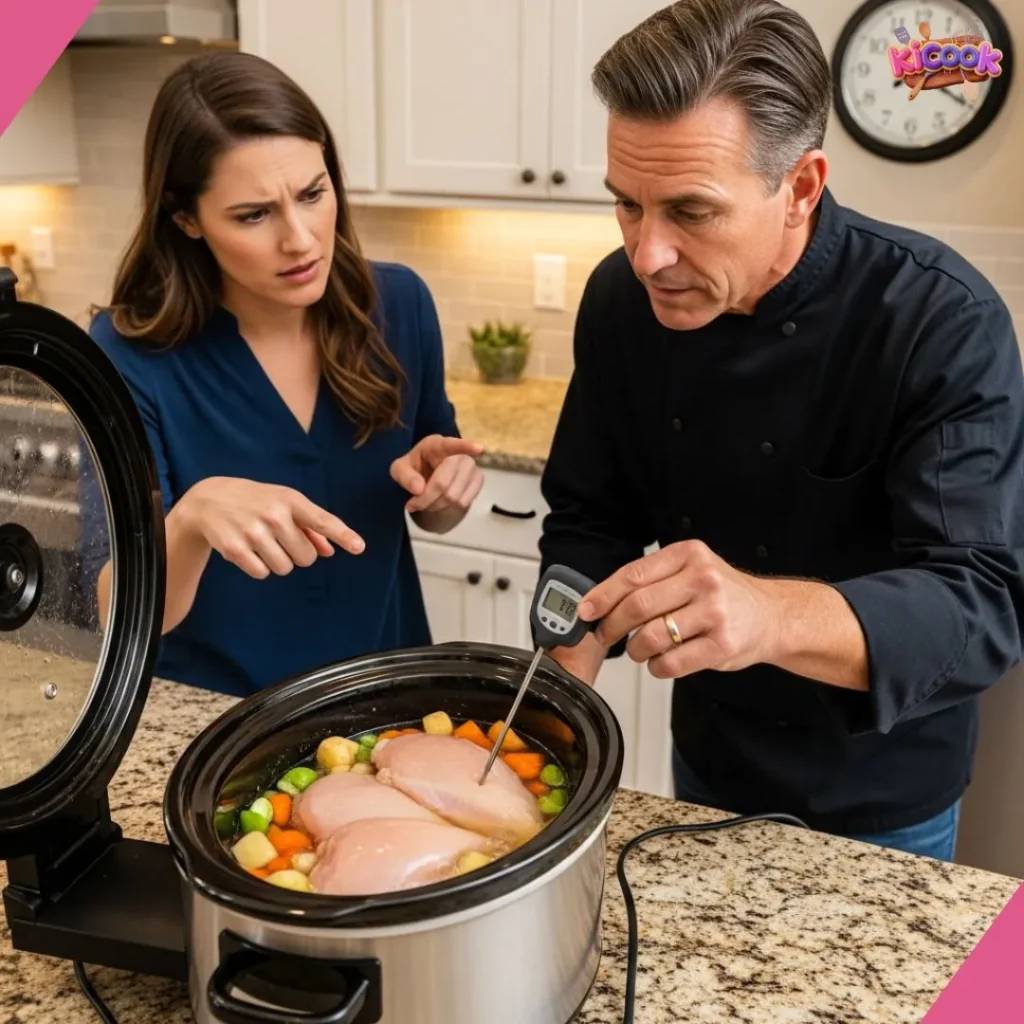
In short, my slow cooker was not cooking food properly because I overloaded it and used the wrong heat setting. Once I fixed portion size, heat level, and lid habits, the results improved fast.
Common Pain Points People Face (I Faced Them Too)
I talk to many home cooks, and these are the most common complaints:
- Food still raw after hours
- Meat tough, not soft
- Soup too watery
- Vegetables overcooked but meat undercooked
- Slow cooker works sometimes, fails other times
- Old slow cooker heats unevenly
If any of these sound familiar, keep reading. I will solve them one by one.
1. Wrong Temperature Setting Is a Big Reason
One major reason for slow cooker not cooking food properly is heat setting misuse.
What I Learned
- Low setting cooks at about 190°F (88°C)
- High setting cooks at about 300°F (149°C)
Many people think low means weak heat. That is not true. Low cooks slower, not colder.
My Fix
If I start with raw meat, I now use High for the first 1–2 hours, then switch to Low. This tip works well in the USA and UK kitchens where room temperature is often cool.
2. Overfilling the Slow Cooker
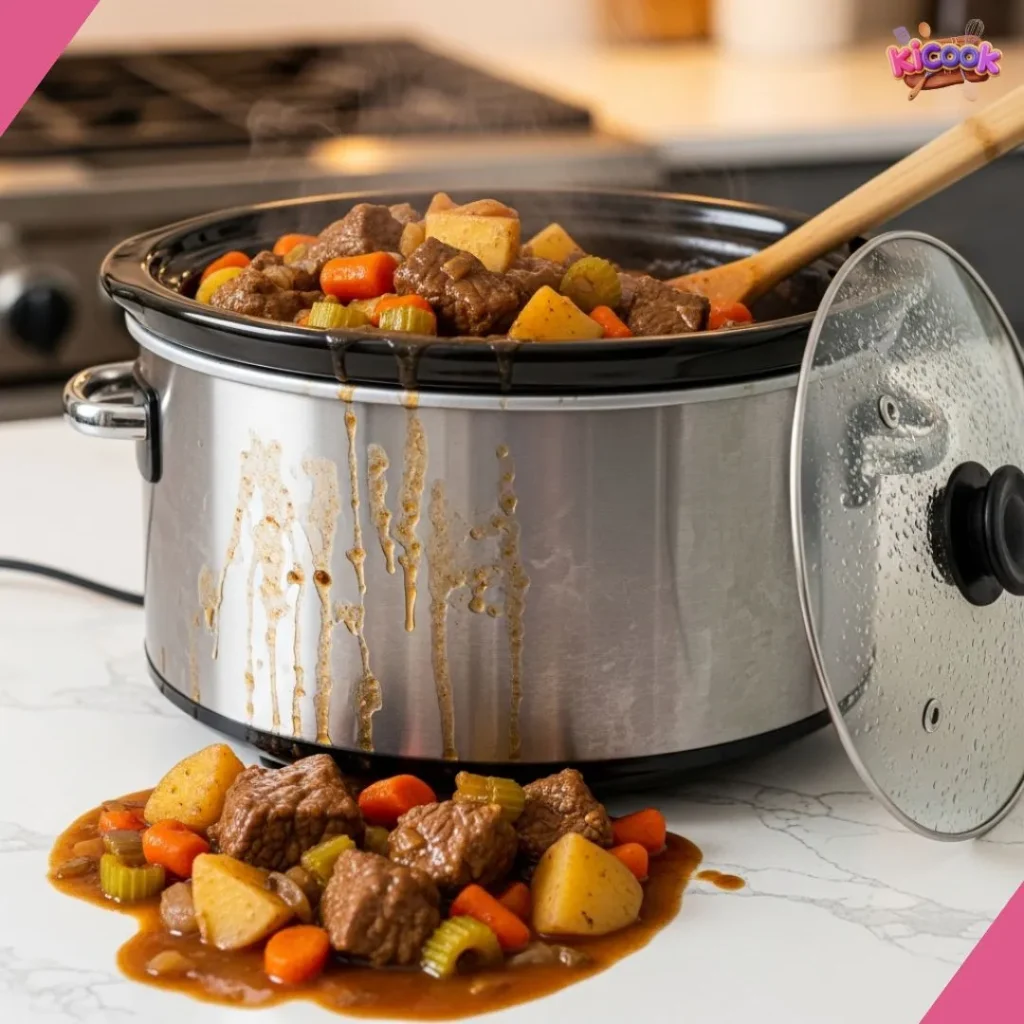
I used to fill my slow cooker to the top. Big mistake.
Why This Causes Problems
- Heat cannot move well
- Food cooks unevenly
- Center stays raw
Best Rule I Follow Now
- Fill slow cooker ½ to ⅔ full
- Never go above ¾ full
This single change fixed half of my cooking issues.
3. Lid Lifting Ruins Cooking Time
I used to check food again and again. Each time I lifted the lid, heat escaped.
Important Truth
Every lid lift adds 20–30 minutes of cooking time.
What I Do Now
I trust the process. I only open the lid near the end.
4. Old or Faulty Slow Cooker
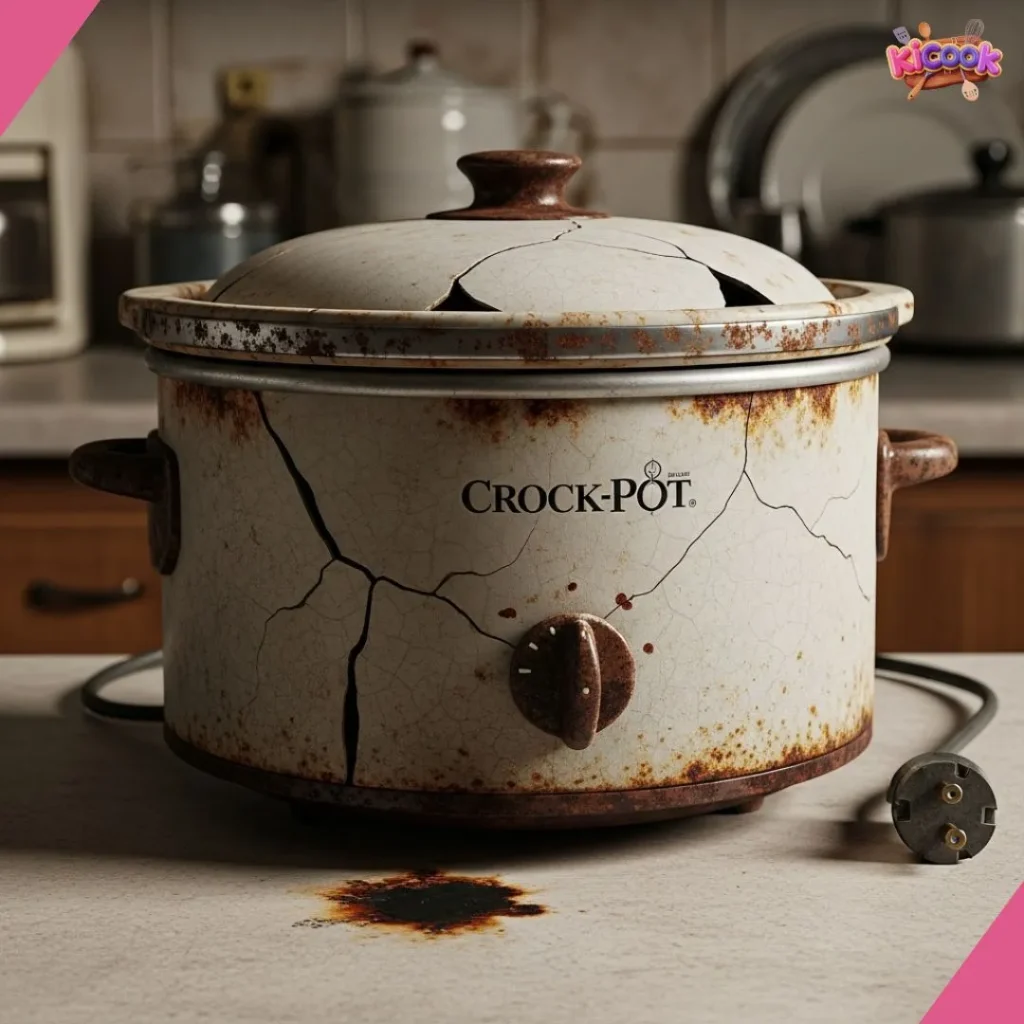
Many people in Canada and London use slow cookers older than 8–10 years.
Signs Your Slow Cooker Is Failing
- Food cooks too slowly
- Outside feels cool
- Heating uneven
Older models often run cooler than modern safety standards.
“A slow cooker that no longer reaches safe heat can lead to poor meals and safety risks.”
— Sarah Lewis, Home Appliance Specialist
If your unit is very old, replacing it may save money and stress.
5. Frozen Food Causes Trouble
Putting frozen meat straight inside was another reason my slow cooker not cooking food properly.
Why Frozen Food Is Risky
- Keeps food in unsafe temperature zone too long
- Meat cooks unevenly
My Simple Rule
I always thaw meat fully before slow cooking. This is strongly advised in the USA, UK, and Canada for food safety.
6. Cutting Food Size Matters More Than I Thought
Large chunks take longer to cook.
Best Practice
- Cut meat into even pieces
- Root vegetables go at the bottom
- Meat stays above vegetables
This helps heat move evenly.
7. Too Much Liquid Makes Food Watery
Slow cookers trap moisture. Adding too much water causes soup-like meals.
What I Changed
- Reduced liquid by 30%
- Used thick sauces instead of water
Now my stews taste rich, not thin.
8. Wrong Recipes Create False Expectations
Some recipes online are poorly tested.
My Advice
- Use recipes written for slow cookers only
- Avoid oven or stovetop recipes converted without changes
9. Slow Cooker Size Must Match Family Size
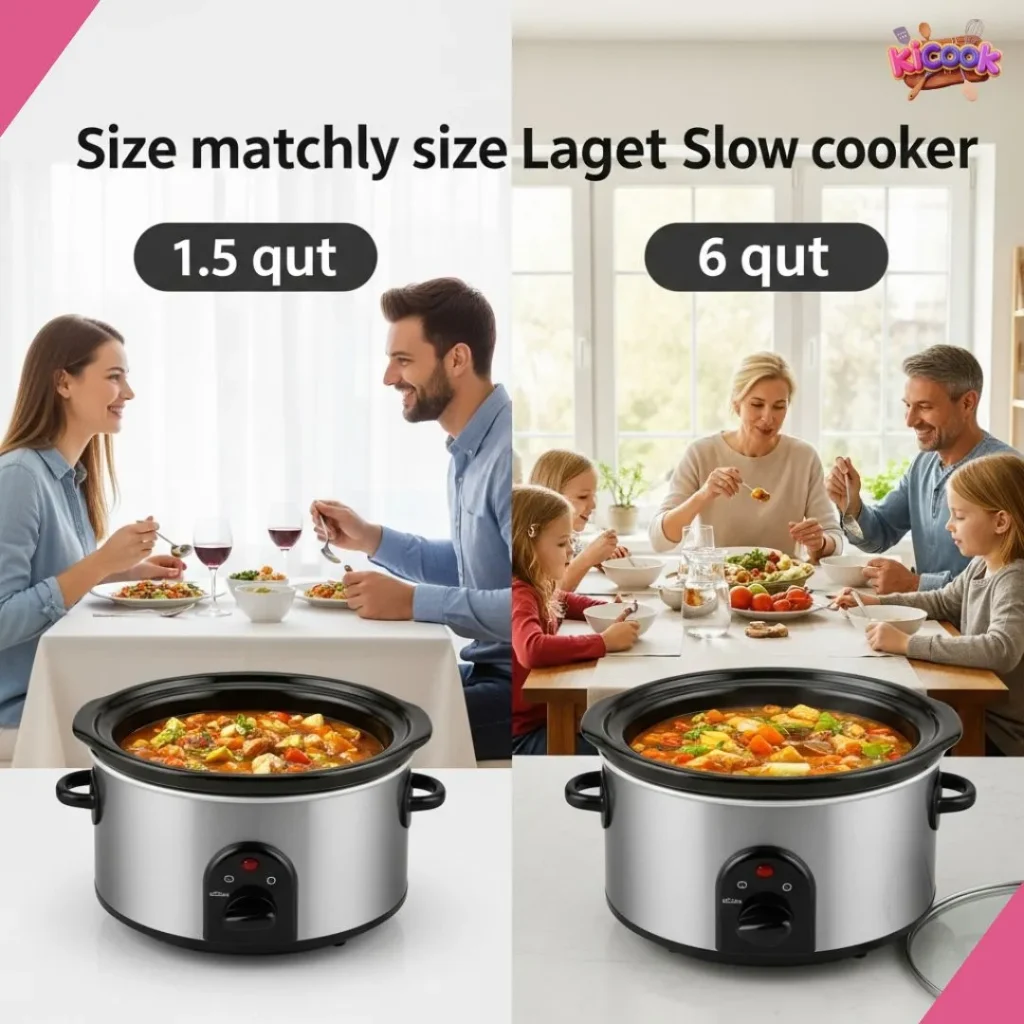
A small slow cooker struggles with big meals.
Size Guide I Follow
- 2–3 qt: 1–2 people
- 4–5 qt: 3–4 people
- 6–7 qt: family meals
10. Power Supply Issues (Often Ignored)
In older UK and London homes, plug voltage issues can reduce heat.
Quick Check
- Plug directly into wall
- Avoid extension cords
Food Safety Matters (Very Important)
According to food safety agencies in the USA and Canada, slow cookers must reach safe heat fast.
Here is a trusted external resource: fsis.usda
“Slow cooking is safe only if food reaches proper heat within the first two hours.”
— Dr. Emily Carter, Food Safety Researcher
Frequently Asked Questions
Why is my slow cooker food still raw after 8 hours?
This usually means low heat, overfilling, or frozen food was used.
Can I fix a slow cooker that is not heating?
You can test it with water on High for 4 hours. If water is not hot, replacement is better.
Is slow cooking safe overnight?
Yes, if the cooker works well and food reaches safe heat early.
Should I stir food while slow cooking?
No. Stirring causes heat loss and uneven cooking.
“Simple habits make slow cooking successful and stress-free.”
— Mark Johnson, Home Cooking Coach
Conclusion: My Honest Advice to You
If your slow cooker not cooking food properly, do not blame yourself. I made the same mistakes. By adjusting heat, food size, liquid level, and habits, I turned failures into comfort meals.
Slow cookers are helpful tools, but they need the right care. I hope my experience saves you time, money, and disappointment. If you follow these steps, your next slow cooker meal will be warm, safe, and satisfying.

“I believe great cooking starts with the right tools, trusted advice, and a little confidence in the kitchen.”
Hi, I’m Emma Carter. My love for cooking began in my grandmother’s kitchen, where I learned that every great meal starts with simple ingredients and the right cookware. Over the years, I’ve spent countless hours researching, testing, and comparing kitchen appliances, cookware, coffee makers, air fryers, and other everyday kitchen essentials.
Here at KiCook, my goal is to make your buying decisions easier with honest product reviews, practical buying guides, and easy-to-follow cooking tips. Whether you’re upgrading your kitchen or searching for the best appliance for your home, I focus on providing clear, reliable, and research-backed information you can trust.
When I’m not testing new kitchen gadgets or writing in-depth guides, you’ll usually find me trying new recipes, visiting local farmers’ markets, or enjoying a quiet cup of coffee while planning my next kitchen project.