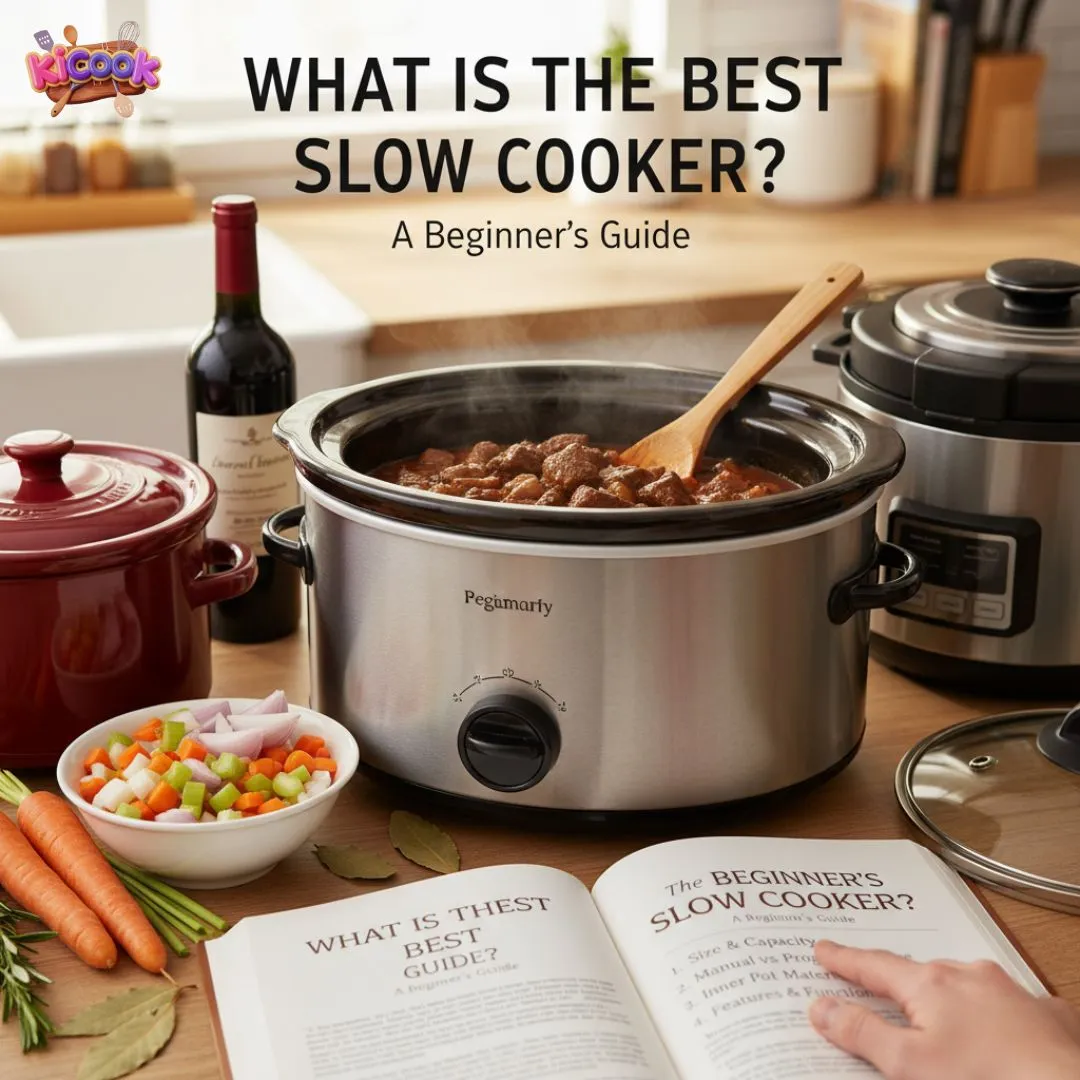
The best slow cooker is the one that fits your specific lifestyle, cooking habits, and budget, balancing features like size, shape, and control type. There isn’t one single “best” model for everyone, but there is a perfect one for you.
I remember staring at the wall of slow cookers in the store, feeling completely lost. There were so many brands, sizes, and buttons! I just wanted something to make my weeknight dinners easier, but the choice was paralyzing. If you’ve ever felt that way, you’re in the right place.
After years of using, testing, and sometimes even burning a meal or two in various models, I’ve learned what truly matters in a slow cooker. This isn’t about pushing one specific product; it’s about giving you the knowledge to choose a kitchen helper you’ll love for years.
Why a Slow Cooker is a Kitchen Game-Changer
Before we get into the specifics, let’s talk about why you want one. For busy families, students, or anyone with a packed schedule, a slow cooker is a lifeline. It’s about coming home to a house that smells incredible and a hot, home-cooked meal that’s ready to serve.
The convenience is unmatched. You can use less expensive cuts of meat, and the long, slow cooking process turns them into tender, fall-apart masterpieces. It’s also fantastic for meal prepping, making large batches of soup, chili, or even desserts with minimal active effort.
Your Slow Cooker Buying Guide: The Key Decisions
Finding your ideal slow cooker comes down to a few simple choices. Let’s break them down.
1. Size and Capacity: How Much Do You Cook?
This is the first and most important question. Get this wrong, and the appliance will either gather dust or frustrate you.
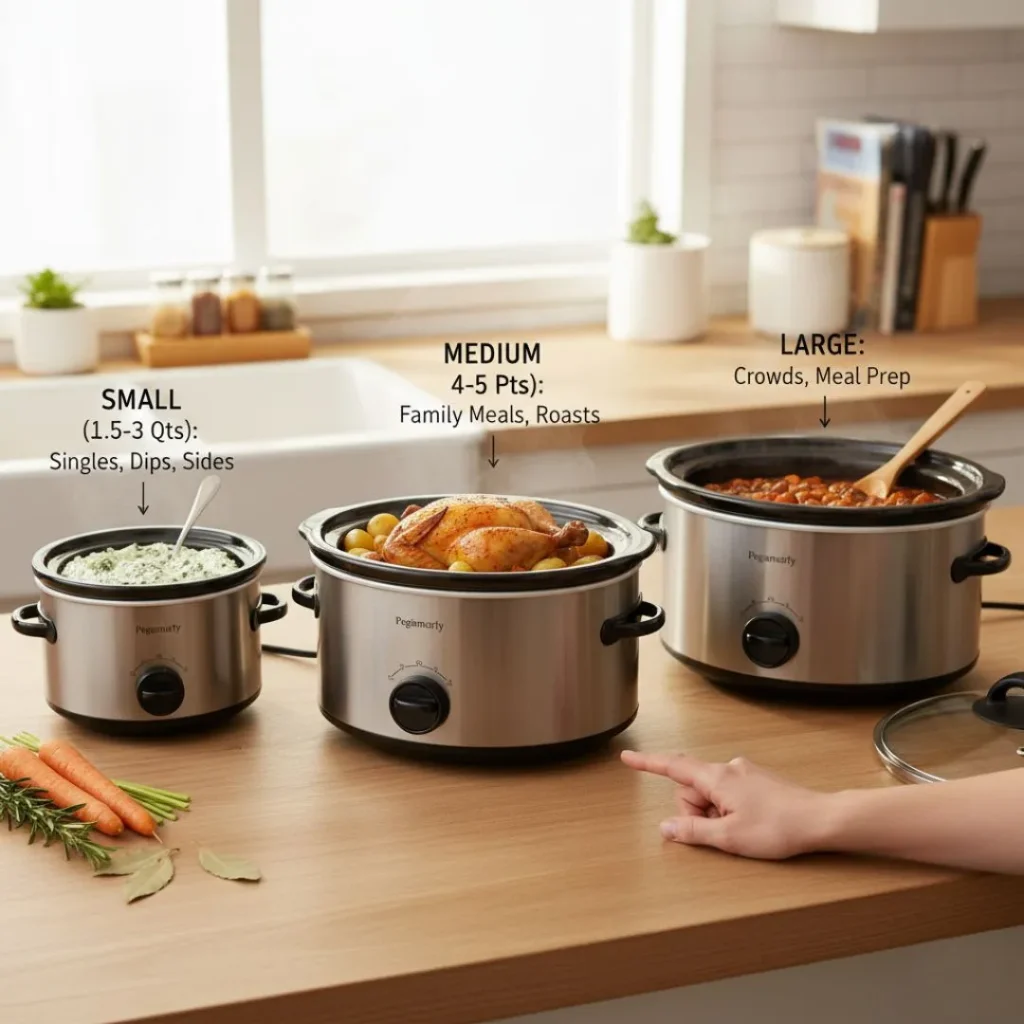
- Small (1.5 to 3 Quarts): Perfect for singles, couples, or small households. Great for dips, sides, oatmeal, or cooking for one or two people. If you’re mainly cooking for yourself, this size is your best friend.
- Medium (4 to 5 Quarts): The sweet spot for a typical family of three to four people. It can handle a whole chicken, a decent-sized pot roast, a family-sized portion of stew, or a big batch of pasta sauce.
- Large (6 to 8 Quarts): Ideal for large families, serious meal preppers, or anyone who loves to entertain. You can make a massive chili for a crowd, a large turkey breast, or big-batch freezer meals.
“A slow cooker is like a good friend; it’s there for you when you need it, working quietly in the background to make your life better.” – Sarah S., Home Cook
Pain Point Solved: No more guessing if a recipe will fit. Choosing the right size means no wasted space and no overflowing pots.
2. Oval vs. Round: It’s All About Shape
The shape of your slow cooker’s stoneware pot is more important than you might think.
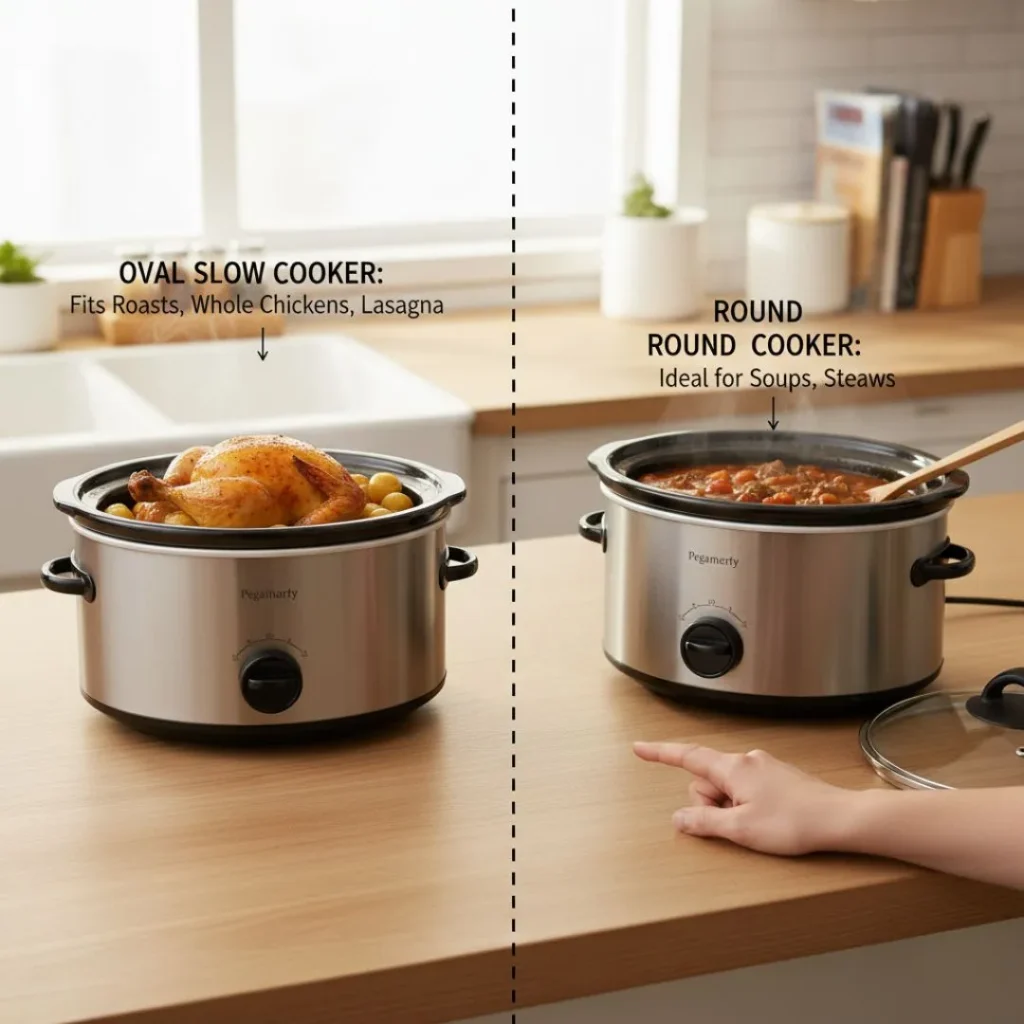
- Oval Slow Cookers: These are my personal favorite for versatility. An oval pot comfortably fits a small roast, a whole chicken, a meatloaf, or even a small lasagna. The elongated shape is much better for larger or irregularly shaped foods.
- Round Slow Cookers: Excellent for soups, stews, beans, and dips. They are often more compact on the countertop. However, fitting a large roast or a whole chicken can be a tight squeeze.
Pain Point Solved: An oval model prevents the frustration of trying to cram a 4-pound chicken into a round pot. Think about what you cook most often.
3. Programmable vs. Manual: Set It and Forget It?
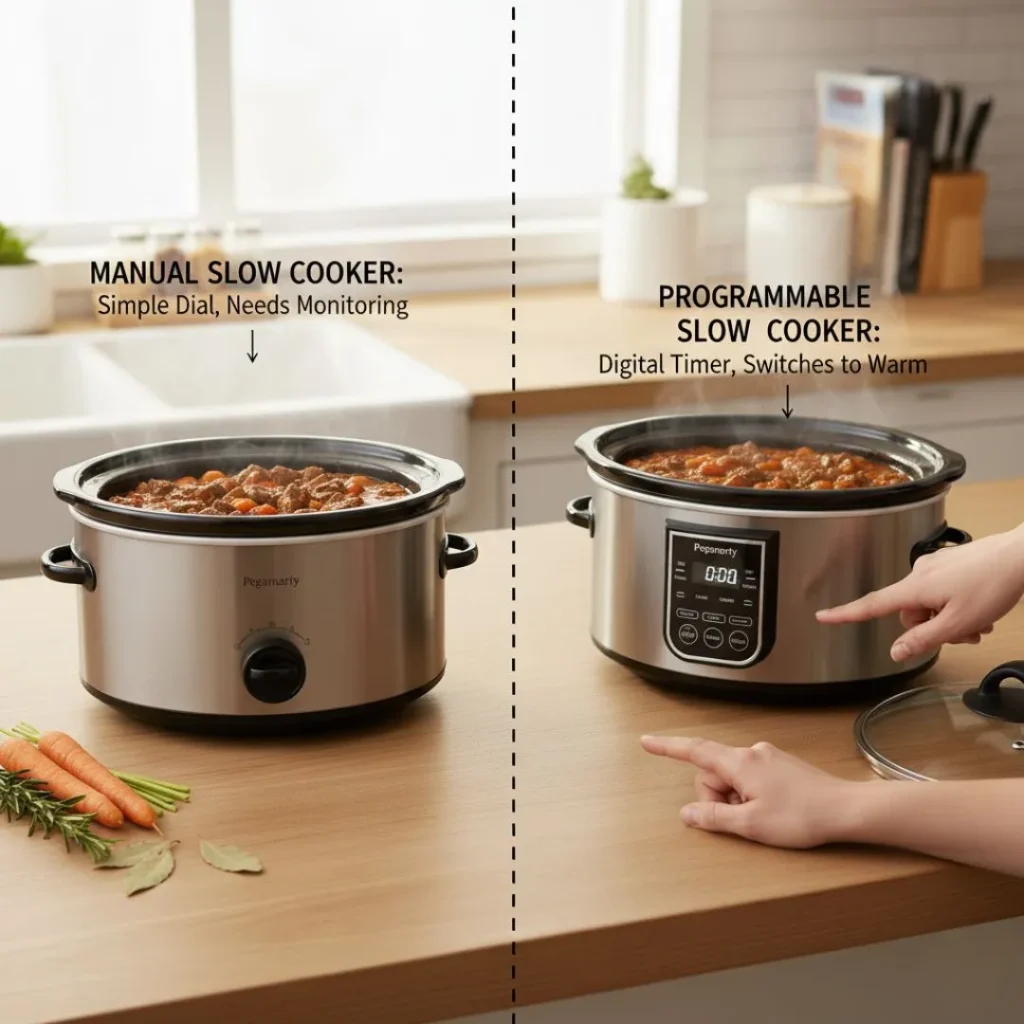
- Manual Slow Cookers: These are the classic models with a simple dial—usually Low, High, and Warm. They are straightforward, reliable, and often more affordable. The downside? You need to be home to turn them off or switch them to warm.
- Programmable Slow Cookers: This is where modern convenience shines. You can set a specific cooking time (e.g., 6 hours on Low). Once the time is up, it automatically switches to a “Keep Warm” setting. This is a crucial safety and convenience feature if you have a long workday. You can leave the house knowing your food won’t overcook.
Pain Point Solved: The anxiety of your pot roast cooking for 10 hours when the recipe called for 8 is eliminated with a programmable timer. For most busy people, this feature is worth the extra investment.
4. The Heating Element: How It Cooks Your Food
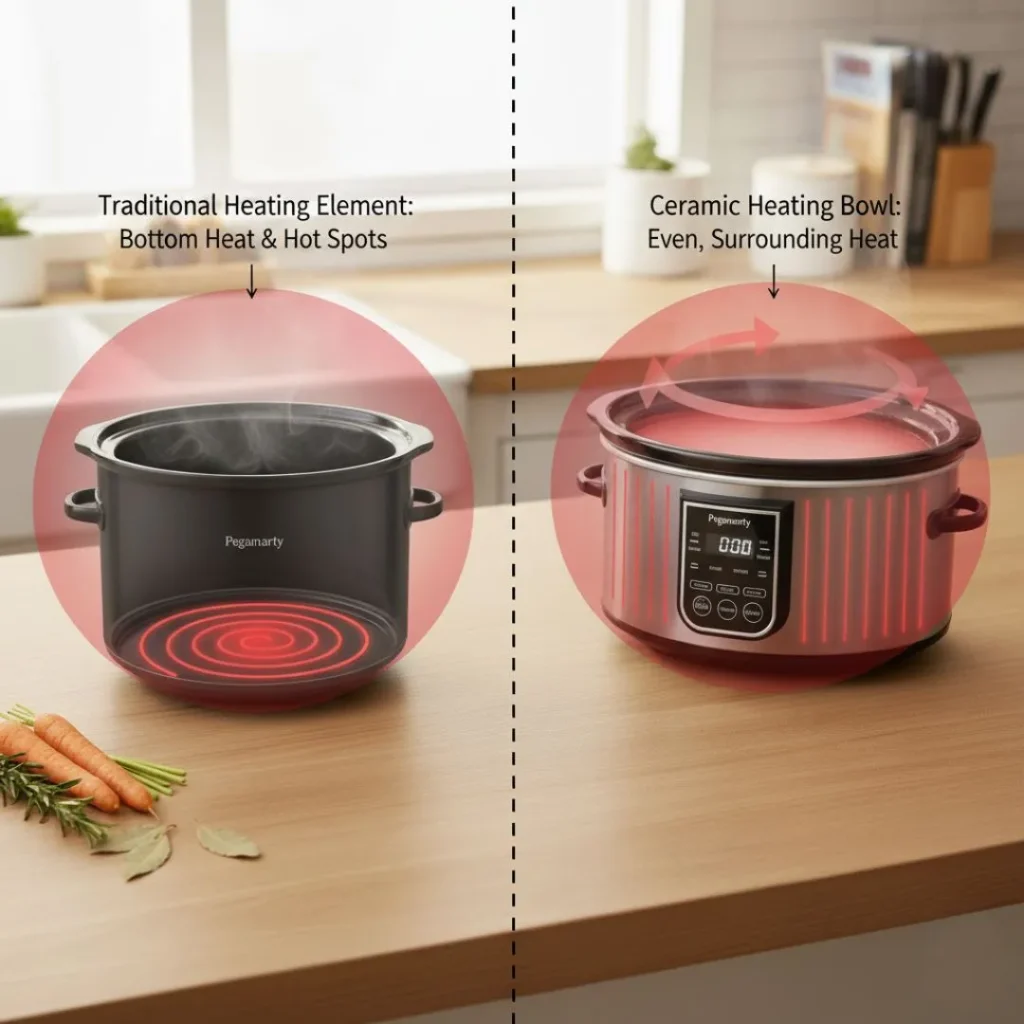
Not all slow cookers heat the same way. This is a subtle but important difference, especially for consistent results.
- Traditional Heating Elements: These typically have a heating coil in the base that heats the stoneware from the bottom. Some older or basic models can have “hot spots,” which might cause burning if you don’t stir occasionally.
- Ceramic Heating Bowls (like in many Crock-Pot models): These elements are often built into the walls, providing more even, surrounding heat. This is the classic “slow cooking” method that many of us grew up with.
Top Slow Cooker Brands You Can Trust
When you’re looking for a reliable appliance, brand reputation matters. These are the names you’ll see most often, and for good reason.
- Crock-Pot: This is the iconic brand that became a household name. In fact, many people use “Crock-Pot” to mean any slow cooker! They offer a huge range of models, from simple manual pots to high-end programmable ones with digital interfaces. Their Crock-Pot Cook & Carry is a bestseller for its portability and locking lid, making it perfect for taking hot food to potlucks.
- Hamilton Beach: Known for innovation and value, Hamilton Beach often includes clever features like a built-in spoon clip on the lid or a temperature probe for cooking meat to a perfect internal temperature. Their Hamilton Beach Set & Forget is a popular programmable model that rivals more expensive brands.
- Instant Pot (and Other Multi-Cookers): While technically a pressure cooker first, the Instant Pot has a very effective “Slow Cook” function. If you have a small kitchen and want one appliance that can do the job of seven, this is a great option. However, purists might find the slow cooking function isn’t quite as consistent as a dedicated Crock-Pot. Consumer Reports has a great comparison of multi-cookers versus dedicated slow cookers
“My slow cooker didn’t just change my cooking; it changed my relationship with my busy week. Dinner is no longer a stressful event.” – David L., Father of Two
Features That Add Real Value (And Ones That Don’t)
Beyond the basics, here are some extra features to consider.
- A Locking Lid: Essential if you ever plan to transport your slow cooker. It prevents messy and dangerous spills.
- A Removable Stoneware Pot: This is pretty much standard now, but make sure yours has it! It makes cleaning so much easier.
- A “Keep Warm” Function: This is a must-have. It keeps your food at a safe, serving temperature for hours after cooking finishes.
- A Browning Function: Some higher-end models let you sear meat directly in the stoneware pot before slow cooking. This adds fantastic flavor and saves you from washing a separate skillet.
Addressing Common Slow Cooker Pain Points
I’ve heard all the complaints, and I’ve had a few myself. Let’s solve them.
- “My food is always dry and overcooked.” This usually means you’re cooking too long or on too high a heat. Use the recommended cooking times as a guide, but get to know your own appliance. Also, avoid lifting the lid! Each time you do, you release heat and add 15-20 minutes to the cooking time.
- “Everything turns to mush.” Delicate vegetables like zucchini and fresh herbs should be added in the last 30-60 minutes of cooking. Root vegetables like potatoes and carrots should go at the bottom, near the heat source.
- “It’s a pain to clean.” Use a slow cooker liner for super easy cleanup, or fill the used pot with hot, soapy water and let it soak. A non-stick cooking spray can also help.
Frequently Asked Questions (FAQ) for What is the Best Slow Cooker
Can I put frozen food in my slow cooker?
For safety, it is best to avoid this. Putting frozen food, especially large pieces of frozen meat, can cause the food to stay in the “danger zone” (40°F – 140°F) for too long, allowing bacteria to grow. Always thaw food in the refrigerator first.
Why is there liquid around the lid while cooking?
This is completely normal! It’s condensation. The lid is designed to be a tight seal, and the moisture that evaporates during cooking collects there. It helps create a self-basting environment.
Do I need to brown my meat before putting it in the slow cooker?
You don’t have to, but I highly recommend it. Browning (the Maillard reaction) creates a deeper, richer flavor and better texture in the final dish. It’s an extra step that pays off.
Is a slow cooker energy efficient?
Yes! They use significantly less electricity than a conventional oven. Cooking a pot roast in a slow cooker can cost a fraction of what it would to run your oven for several hours.
“Good food is the foundation of genuine happiness. A slow cooker makes that foundation accessible to everyone, no matter their skill level.” – Auguste Escoffier
Conclusion: Finding Your Best Slow Cooker
So, after all this, what is the best slow cooker? I hope you see now that the answer is personal. For a family of four on a budget, the best might be a 6-quart oval Crock-Pot with a simple programmable timer. For a single person in an apartment, a 2-quart round Hamilton Beach could be the perfect, space-saving solution.
Think about your life. How many people are you feeding? What shapes of food do you like to cook? Will you be home to turn it off? Your answers will point you directly to the machine that will become your most trusted kitchen companion. Don’t overthink it. Embrace the convenience, enjoy the process, and get ready for some of the easiest, most comforting meals of your life. Happy slow cooking

1 thought on “What is the Best Slow Cooker? A Beginner’s Guide”
Comments are closed.