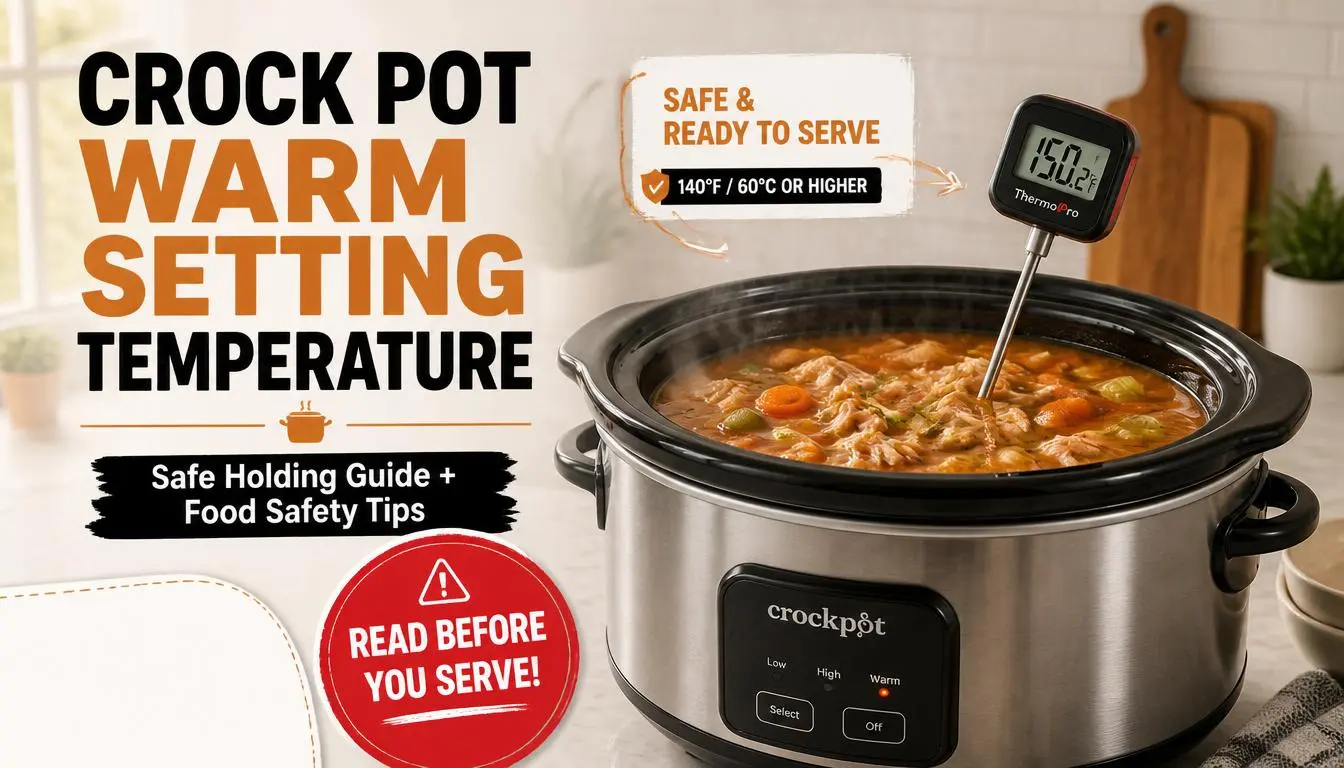
YES, the warm setting on a Crock-Pot is designed to hold fully cooked food, not cook raw ingredients. Crock-Pot lists 165–175°F (74–79°C) for the warm mode on one current 4.5-quart model, but the food itself must remain at 140°F (60°C) or above for safe hot holding.
The crock pot warm setting temperature is usually hot enough to keep dinner ready for serving, but it is lower and gentler than the Low or High cooking modes. Exact temperatures vary by model, how full the crock is, the food’s moisture level, and how often you lift the lid. That is why the safest number to watch is the temperature of the food, not the appliance label.
The biggest catch is that “Warm” does not mean “reheat” or “finish cooking.” Cold leftovers, raw chicken, undercooked meat, or chilled soup can spend too long warming through and remain in the bacterial danger zone. Crock-Pot also advises using Warm only for already-cooked food and limiting it to four hours.
Below, you will learn how the warm setting compares with Low and High, how to test your slow cooker, how long food can stay warm, and how to avoid dried-out meat, split sauces, and unsafe serving temperatures.
Why Crock Pot Warm Setting Temperature Matters
The warm setting on a Crock-Pot matters because there is a major difference between food that feels warm and food that is safely held hot. USDA guidance says cooked food should stay at 140°F (60°C) or above during hot holding. Between 40°F and 140°F (4°C and 60°C), bacteria can multiply rapidly, sometimes doubling in as little as 20 minutes under favorable conditions.
This becomes important during real kitchen situations. You may finish pulled pork at 4:30 p.m., but your family may not eat until 6:00. A pot of chili may sit on a buffet during a game. Mashed potatoes may need to wait while the roast rests. In each case, the crock pot keep warm temperature must hold the entire dish safely, including the cooler food near the surface and edges.
Texture matters too. A setting that keeps chili safely hot may slowly dry chicken breasts, thicken gravy, scorch cheese dip around the rim, or turn pasta soft. Thick foods also heat unevenly. The center of a dense casserole can read differently from the liquid near the edge.
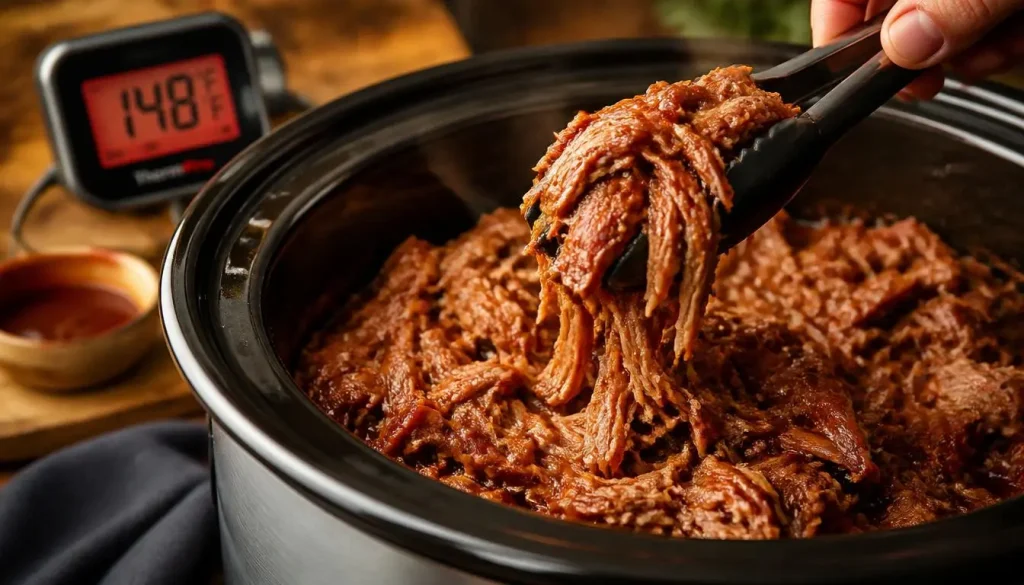
The practical answer is to check the food with a clean instant-read thermometer. Stir thick dishes first, then test in two or three places. This is more reliable than guessing from steam or touching the outside of the crock. For a deeper explanation of why a few degrees can change texture and safety, Serious Eats offers a useful guide to temperature control in cooking.
How to Use Crock Pot Warm Setting Temperature Safely
The warm setting on a Crock-Pot works best after the meal has already reached a safe cooking temperature. Warm, Low, and High are not interchangeable. Crock-Pot says its Low and High settings both eventually stabilize near 209°F (98°C). The main difference is that Low takes about 7–8 hours to reach the simmer point, while High takes about 3–4 hours. Warm is a separate holding mode.
| Setting | Typical Temperature Behavior | Best Use | Recommended? |
|---|---|---|---|
| Warm | One Crock-Pot model lists 165–175°F (74–79°C); actual food temperature can vary | Holding fully cooked food for serving | Yes, when food stays at or above 140°F |
| Low | Gradually reaches about 209°F (98°C) over 7–8 hours | Long cooking for roasts, stews, beans, and braises | Yes, for cooking |
| High | Reaches about 209°F (98°C) in roughly 3–4 hours | Faster slow cooking | Yes, for cooking |
| Off | Food temperature begins falling toward room temperature | Only after serving and prompt storage | No, for holding perishable food |
Note: Temperatures vary by brand, model, crock size, room temperature, fill level, and recipe. Check your manual and verify the food with a thermometer rather than assuming every warm setting runs at 165–175°F.
Do not switch a cold pot of leftovers directly to Warm. Reheat leftovers by stove, microwave, or oven to 165°F (74°C), then transfer them to a preheated slow cooker for holding at 140°F or above.
A useful 2026-style setup pairs a programmable slow cooker with a wireless probe or app alert. The technology is convenient, but the same rule applies: the sensor should measure the food, and you should confirm the reading in another spot before serving.
Step-by-Step Guide
- Finish cooking completely. Confirm chicken reaches 165°F (74°C) or that your recipe has reached its required safe temperature before selecting Warm.
- Preheat the crock when transferring food. Add 1 cup of hot water, cover, and run High for 15 minutes. Empty and dry it before adding hot food.
- Transfer food while steaming hot. Do not let the cooked dish cool on the counter before moving it into the crock.
- Fill the crock at least halfway. Very small amounts lose heat faster.
Pro tip: Use a smaller slow cooker for dips or side dishes under 2 quarts. - Cover tightly. Every lid lift releases heat and can lengthen recovery time by several minutes.
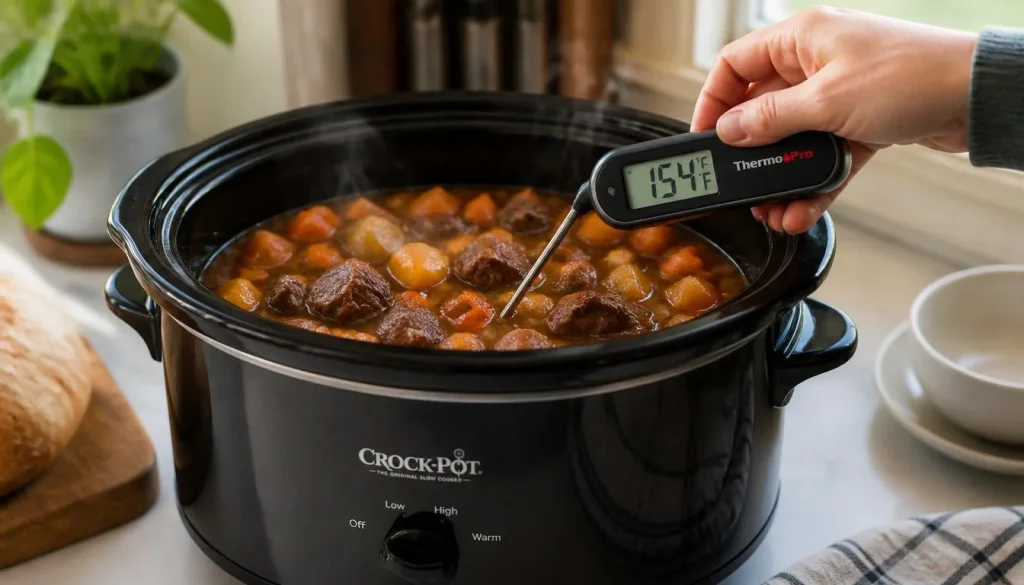
- Check after 30 minutes. Stir thick foods and measure the center plus one edge. Both readings should stay at 140°F (60°C) or above.
- Adjust moisture for long holding. Add 2–4 tablespoons of hot stock to shredded meat, chili, or stuffing if it begins drying.
Pro tip: Keep pasta and dairy-heavy sauces on Warm for the shortest practical time. - Stop at four hours. Serve, then refrigerate leftovers in shallow containers within two hours rather than leaving the crock running all evening.
Expert Tips & Common Mistakes
Pro Tips
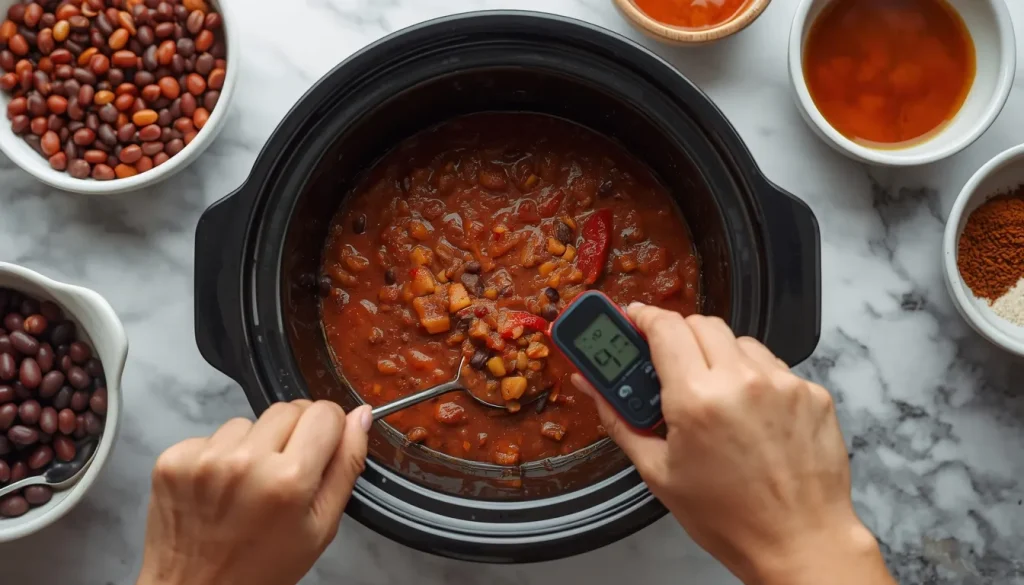
- Measure the food, not the crock. Insert an instant-read thermometer 1–2 inches into the thickest area and avoid touching the stoneware, which can give a misleadingly high reading.
- Stir every 30–60 minutes when practical. Thick chili, queso, gravy, and mashed potatoes develop hotter edges and cooler centers.
- Add hot liquid only. Use 2 tablespoons at a time so you restore moisture without dropping the temperature or making the dish watery.
- Hold delicate foods briefly. Chicken breast, fish, cream sauce, rice, and pasta lose quality faster than pulled pork, stew, or beans.
- Use a smaller vessel for small batches. A half-full crock retains heat more evenly than a large 7-quart insert holding one cup of dip.
Common Mistakes
- Using Warm to cook raw food: Warm heats too gently and may leave meat or poultry below a safe cooking temperature for too long.
- Reheating refrigerated leftovers on Warm: The center may remain between 40°F and 140°F while the edges feel hot. Reheat to 165°F first.
- Trusting steam instead of a thermometer: Steam only proves that some moisture is hot. It does not confirm the entire dish is above 140°F.
- Leaving food on Warm all day: Meat can dry out, pasta can turn mushy, dairy sauces can split, and the food may eventually fall below the safe holding threshold.
“Great cooks don’t leave temperature to chance.” — J. Kenji López-Alt, culinary consultant and author of The Food Lab
FAQs About Crock Pot Warm Setting Temperature
What temperature is the warm setting on a Crock-Pot?
Crock-Pot lists 165–175°F (74–79°C) for the warm mode on its 4.5-quart Manual Design Series model. Other models may cycle differently, so there is no single guaranteed temperature for every Crock-Pot. The important measurement is the food: it should remain at 140°F (60°C) or higher while being held for serving.
How long can food stay on the warm setting on a Crock-Pot?
Crock-Pot recommends using the warm setting for no more than four hours. Quality may decline sooner for pasta, rice, fish, chicken breast, cheese sauce, and cream-based dishes. Check the food every hour with a thermometer, keep the lid closed, and refrigerate leftovers promptly once serving ends.
Can I leave chicken on the Crock-Pot warm setting overnight?
No. Overnight holding can exceed the manufacturer’s four-hour guidance, dry the chicken, and create uncertainty about whether the entire dish stayed above 140°F. Cook chicken fully, use Warm only during the serving window, then divide leftovers into shallow containers and refrigerate them within two hours.
Can I reheat chili on the warm setting on a Crock-Pot?
No. Reheat refrigerated chili on the stove, in a microwave, or in the oven until it reaches 165°F (74°C) throughout. Stir it well, then transfer it to a preheated Crock-Pot and use Warm to maintain at least 140°F. This reduces the time the dense center spends heating slowly.
Why is my Crock-Pot warm setting boiling food?
A gentle bubble can happen around the hot edge, especially with thin soup, a nearly empty crock, or a model that cycles toward the upper end of its holding range. Check the center temperature, stir the food, and add a small amount of hot liquid if needed. If vigorous boiling continues, consult the model manual or test the unit with water.
Is the warm setting on a Crock-Pot the same as Low?
No. Low is a cooking setting that eventually reaches the same simmer point as High, about 209°F (98°C) on Crock-Pot slow cookers, but it gets there more slowly. Warm is designed only to maintain already-cooked food at serving temperature. Using Warm instead of Low can leave raw ingredients undercooked.
Conclusion
The most important fact about crock pot warm setting temperature is that the number printed on the appliance matters less than the temperature inside the food. A current Crock-Pot model lists Warm at 165–175°F, but safe holding depends on keeping every part of the dish at 140°F (60°C) or above. Use Warm only after food has cooked fully or leftovers have reheated to 165°F.
For the best results, keep the lid closed, stir thick foods, test more than one area, and stop holding after four hours. Moist roasts, chili, beans, and stews tolerate the warm setting better than pasta, rice, fish, lean chicken, and dairy-heavy sauces. Smart timers and connected thermometers can make monitoring easier, but they do not replace a quick manual temperature check.
A warm meal is only truly ready when both flavor and temperature are under control.
Check your slow cooker with an instant-read thermometer the next time you use Warm.
“I believe great cooking starts with the right tools, trusted advice, and a little confidence in the kitchen.”
Hi, I’m Emma Carter. My love for cooking began in my grandmother’s kitchen, where I learned that every great meal starts with simple ingredients and the right cookware. Over the years, I’ve spent countless hours researching, testing, and comparing kitchen appliances, cookware, coffee makers, air fryers, and other everyday kitchen essentials.
Here at KiCook, my goal is to make your buying decisions easier with honest product reviews, practical buying guides, and easy-to-follow cooking tips. Whether you’re upgrading your kitchen or searching for the best appliance for your home, I focus on providing clear, reliable, and research-backed information you can trust.
When I’m not testing new kitchen gadgets or writing in-depth guides, you’ll usually find me trying new recipes, visiting local farmers’ markets, or enjoying a quiet cup of coffee while planning my next kitchen project.