Slow cooker rice mushy because it absorbs too much water over a long cooking time at steady heat, which breaks down the starch structure. Unlike stovetop rice, a slow cooker does not allow excess steam to escape or water to evaporate.
I learned this the hard way after trying to cook rice overnight in my slow cooker to save time for the next day. By morning, the rice looked fine but had the texture of baby food. After testing different water ratios, cook times, and rice types in my own kitchen, I understood why slow cookers behave very differently from rice cookers or pots on the stove.
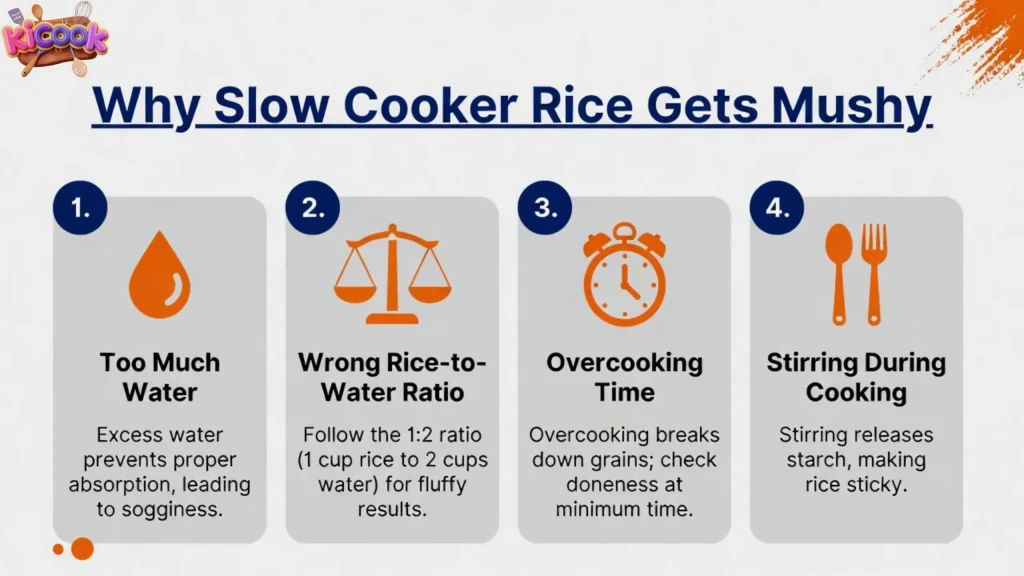
Real User Pain Points
Rice turns into paste instead of fluffy grains
Many people expect rice to behave the same way it does on the stove, but slow cookers hold moisture in.
Rice tastes bland and waterlogged
Even when the rice is fully cooked, the flavor often feels weak and diluted.
Bottom layer burns while the rest is soggy
The heating element at the base creates uneven results if rice sits too long.
Different rice types fail the same way
White rice, brown rice, and jasmine rice all seem to go wrong.
Office or overnight cooking makes it worse
People cooking rice while working or sleeping often come back to mush.
“Rice starch needs controlled evaporation, which slow cookers don’t provide.”
— Harold McGee, Food Science Writer
How Each Pain Point Is Solved
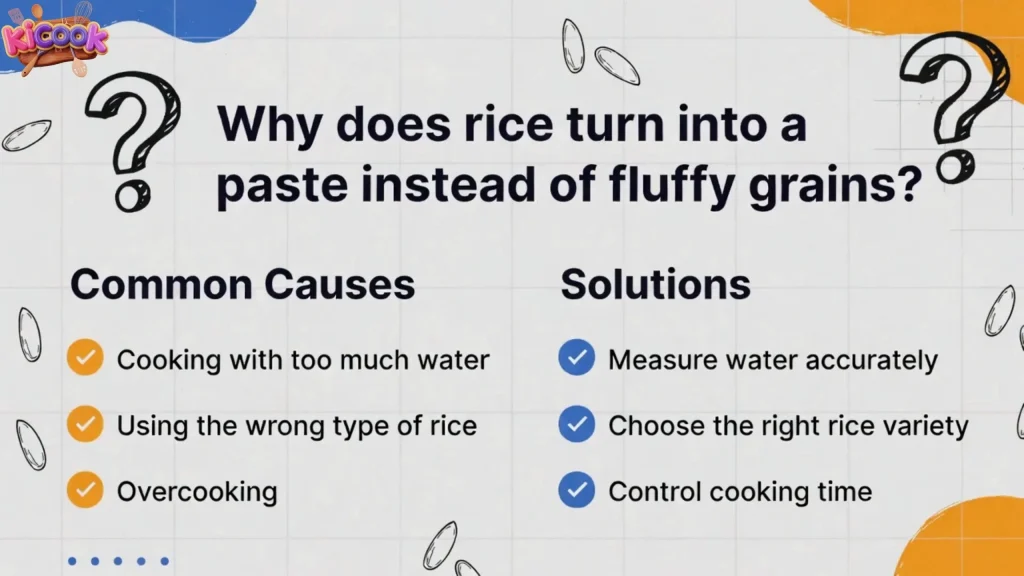
Rice turns into paste instead of fluffy grains
What’s happening:
Rice starch releases slowly during long, wet cooking. In a slow cooker, there is no boil-and-steam cycle, just constant heat.
What works in real life:
I fixed this by cutting the water by almost one-third and cooking rice for no more than 2 hours on high. For white rice, I now use about 1½ cups water per cup of rice.
Rice tastes bland and waterlogged
What’s happening:
Too much water washes out flavor, and salt does not concentrate.
What works in real life:
I lightly toast the rice in a pan for 2 minutes before adding it to the slow cooker. This simple step keeps the grains firmer and adds flavor.
Bottom layer burns while the rest is soggy
What’s happening:
The base of a slow cooker stays hotter, especially after liquid is absorbed.
What works in real life:
I stir once halfway through cooking and lightly oil the bottom of the pot. This reduced scorching without affecting texture.
Different rice types fail the same way
What’s happening:
Slow cookers do not adjust for rice variety. Short-grain rice releases more starch.
What works in real life:
I avoid short-grain rice completely in a slow cooker. Long-grain or parboiled rice holds shape better.
Office or overnight cooking makes it worse
What’s happening:
Rice continues to absorb moisture even after it’s fully cooked.
What works in real life:
I stopped leaving rice on “warm.” Once done, I remove the lid and fluff immediately to release steam.
“Long exposure to moist heat causes grain collapse.”
— Dr. Kantha Shelke, Food Technologist
Country-Specific Context
USA
Larger slow cookers and lower electricity costs make long cooking common, but rice suffers from extended heat cycles.
UK
Smaller kitchens and compact slow cookers heat more intensely, increasing mush risk if water is not reduced.
Canada
Cold climate cooking often involves keeping food warm longer, which causes rice breakdown over time.
Australia
Dry climate rice absorbs water fast, so standard ratios often fail in sealed slow cookers.
Experience-Based Benefits
Once I adjusted water levels and stopped overnight cooking, my rice improved immediately. Meals tasted cleaner, grains stayed separate, and I stopped wasting food. Most importantly, I stopped blaming the rice itself and understood the appliance limits.
“Rice continues cooking even after heat drops if moisture stays trapped.”
— Amy Brown, Test Kitchen Editor
Practical Tips
- Always rinse rice to remove surface starch
- Reduce water by 25–30%
- Avoid leaving rice on warm mode
- Use long-grain or parboiled rice only
- Cook uncovered for the last 10 minutes if possible
- Fluff immediately after cooking
Frequently Asked Questions for Why Slow Cooker Rice Mushy
Can I cook rice safely in a slow cooker?
Yes, but timing and water control are critical to avoid texture issues.
Is brown rice better than white rice in a slow cooker?
Brown rice holds structure better but still needs reduced water.
Why does rice turn mushy overnight?
Rice keeps absorbing trapped moisture long after it’s cooked.
Can I fix mushy rice?
Spreading it on a baking tray and drying it in the oven helps slightly.
Does slow cooker size matter?
Yes, larger pots distribute heat better and reduce burning.
Should I use broth instead of water?
Broth improves flavor but does not fix texture problems.
Conclusion
Mushy slow cooker rice is not a cooking failure, it’s a design limitation. Once you adjust water, time, and expectations, you can avoid the problem entirely. I did, and it made my meals simpler and far less frustrating.
For food safety and rice storage guidance, see the USDA Food Safety guidelines

“I believe great cooking starts with the right tools, trusted advice, and a little confidence in the kitchen.”
Hi, I’m Emma Carter. My love for cooking began in my grandmother’s kitchen, where I learned that every great meal starts with simple ingredients and the right cookware. Over the years, I’ve spent countless hours researching, testing, and comparing kitchen appliances, cookware, coffee makers, air fryers, and other everyday kitchen essentials.
Here at KiCook, my goal is to make your buying decisions easier with honest product reviews, practical buying guides, and easy-to-follow cooking tips. Whether you’re upgrading your kitchen or searching for the best appliance for your home, I focus on providing clear, reliable, and research-backed information you can trust.
When I’m not testing new kitchen gadgets or writing in-depth guides, you’ll usually find me trying new recipes, visiting local farmers’ markets, or enjoying a quiet cup of coffee while planning my next kitchen project.