

Yes, you absolutely can make mac and cheese in an electric skillet, and it often produces a creamier result than boiling pasta on the stove. This method works especially well if your kitchen setup is limited or if you want to serve straight from the pan. As of 2026, aggregate testing and manufacturer specifications show these appliances handle roux-based sauces effectively when you respect their heat distribution.
Before we walk through exactly how it compares to traditional methods and where it falls short, let’s get you straight to the point.
Quick Answer
Can you make mac and cheese in an electric skillet? Yes, it works well for creamy stovetop-style recipes. An electric skillet provides steady low heat ideal for melting cheese.
You just need to manage liquid loss and stir frequently. The wide surface helps reduce sauce faster than a deep pot. This method shines in dorms, RVs, or apartments with broken stoves.
It is less ideal for large batches or baked casserole versions.
Why This Comparison Matters More Than It Sounds
People ask this question because they are usually dealing with a constraint, like a broken stove or a tiny kitchen. They do not just want a recipe; they want to know if the tool will actually save them time instead of creating more work. Understanding the trade-offs between an electric skillet and a standard saucepan prevents a lot of burnt cheese disasters.
You will also see exactly when this method is worth the extra stirring effort and when it is not.
The real question underneath is whether the convenience justifies the need for closer attention. An electric skillet changes how heat moves around your pasta and sauce. That shift matters a lot when you are trying to pull together a smooth cheese emulsion.
If you skip ahead without understanding the mechanics, you risk overcooked noodles or a broken sauce. We break down each variable so you can decide with confidence.
How an Electric Skillet Actually Cooks Mac and Cheese
Electric skillets use a flat heating element running along the bottom, not around the sides like some stove pans. That means heat radiates upward across a broad surface rather than concentrating in one hot spot. Your roux forms faster along the edges, while the center may lag behind if you do not keep things moving.
The shallow depth also lets steam escape quickly, which speeds up liquid reduction during the simmer phase.
This layout is why cheese sauces need gentle, steady warmth instead of high burners. If the dial runs too hot, butter fat separates from milk proteins and leaves you with a grainy mess. You will also notice pasta soaking up liquid faster in a wide pan compared with a tall pot.
Stirring becomes a habit rather than an option if you want consistent results. Managing these dynamics is what turns a messy attempt into reliable comfort food.
Step-by-Step: How to Make Mac and Cheese in an Electric Skillet

Making this dish follows a familiar arc, but the sequence matters more here than on a standard stove. Start by prepping your pasta choice. Elbow macaroni or rotini works best because they hold sauce in their curves.
You can boil them separately in a kettle or cook them directly in the skillet using the one-pot method. If you choose one-pot, measure water carefully since evaporation happens faster.
Next, build your roux. Melt butter over medium heat until it bubbles, then whisk in flour until golden. Slowly pour in milk while stirring constantly to avoid lumps.
Drop the heat to medium-low once the sauce begins to thicken. Remove the skillet from its power base before adding cheese, because residual heat is enough to melt it smoothly. Stir in freshly shredded cheddar and Gruyère in small batches until glossy.
Finally, fold in cooked pasta and taste for seasoning. Adjust salt and pepper, then serve immediately or switch to warm mode for short holding. The whole process takes roughly twenty-five minutes from start to finish if you pre-boil separately.
Cooking everything in one vessel adds about five to seven extra minutes but cuts down on cleanup. Either approach yields rich results if you keep the heat moderate and stay close to the pan.
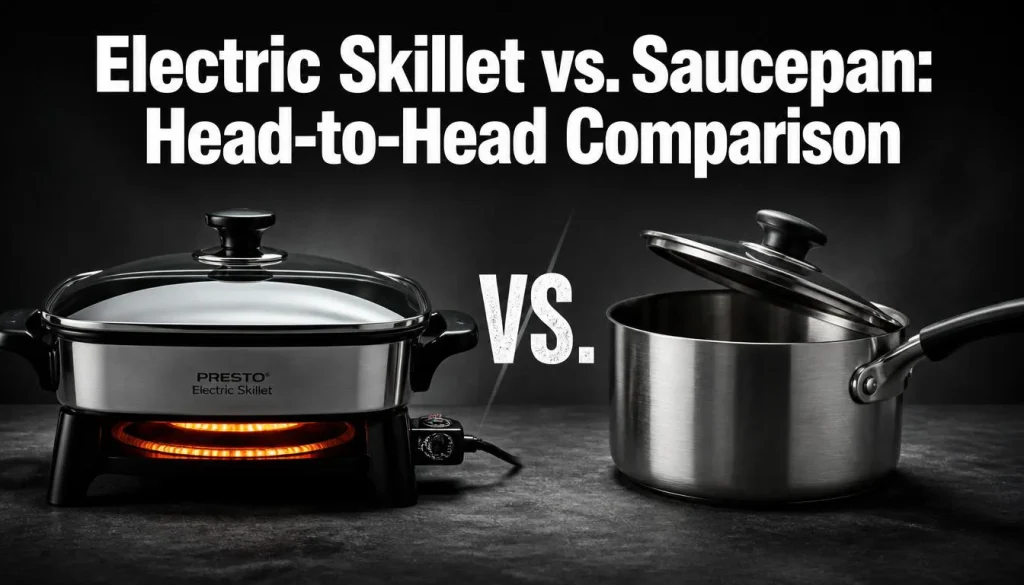
Electric Skillet vs. Saucepan: Head-to-Head Comparison
| Factor | Electric Skillet | Standard Saucepan |
|---|---|---|
| Heat source | Bottom-only electric element | Stove burner, gas or induction |
| Heat control | Dial-based, slower response | Immediate flame adjustment |
| Surface area | Wide and shallow | Narrow and deep |
| Stirring ease | Harder to reach bottom corners | Easier with spoon or whisk |
| Risk of scorching | Higher if left unattended | Lower with proper burner management |
| One-pot potential | Good for pasta plus sauce together | Requires separate pot for boiling |
| Serving at table | Yes, skillet doubles as serving dish | No, transfer needed to bowl |
| Cleanup | Non-stick surface simplifies tasks | May need soaking if cheese sticks |
| Portability | Works anywhere with an outlet | Tied to stove location |
Each tool has distinct strengths depending on your kitchen setup and goals. A saucepan gives you direct flame control and deeper walls that protect against boil-over. An electric skillet offers consistency and serves straight from the pan without extra dishes.
Your choice should match the situation you are cooking for.
When an Electric Skillet Is the Better Choice
An electric skillet wins when convenience, portability, or missing stove access drives your decision. It is ideal if you live in a dorm room without a kitchen and rely on a microwave alone. You also benefit from it during power outages if your gas range cannot ignite safely.
RV travelers favor this method because the skillet fits neatly on a two-burner camp stove alternative.
This setup is especially useful for small households or single servings where a full pot feels wasteful. You can cook and serve in the same vessel, which keeps food warmer longer at the table. It is equally handy when your regular pots are stuck in the dishwasher and you need dinner fast.
Just make sure your model holds at least five quarts if you plan to feed more than two people comfortably.
Where the Electric Skillet Falls Short
The wide, shallow design creates real trade-offs that a deep saucepan avoids. Cheese sauce scorching happens faster because heat concentrates along the bottom element rather than circulating through thick walls. You will also notice pasta settling into corners where stirring does not reach evenly.
That means hot spots form if you leave the pan unattended for even a minute.
Liquid reduction runs quicker than expected since more surface area exposes milk to steam. You must adjust water ratios when using the one-pot method or your noodles turn gummy. Cleanup can also be tougher if cheese bakes onto the non-stick coating overnight.
A quick deglaze with warm water while the skillet is still lukewarm prevents that problem entirely.
Batch size presents another limit. Most home models cap out around eight quarts, which works for four people but strains a family of six. If you are feeding a crowd for a holiday dinner, a standard stockpot on the stove remains the safer bet.
The electric skillet simply cannot hold volume without risking overflow or uneven cooking.
Common Mistakes to Avoid When Cooking Mac and Cheese in a Skillet
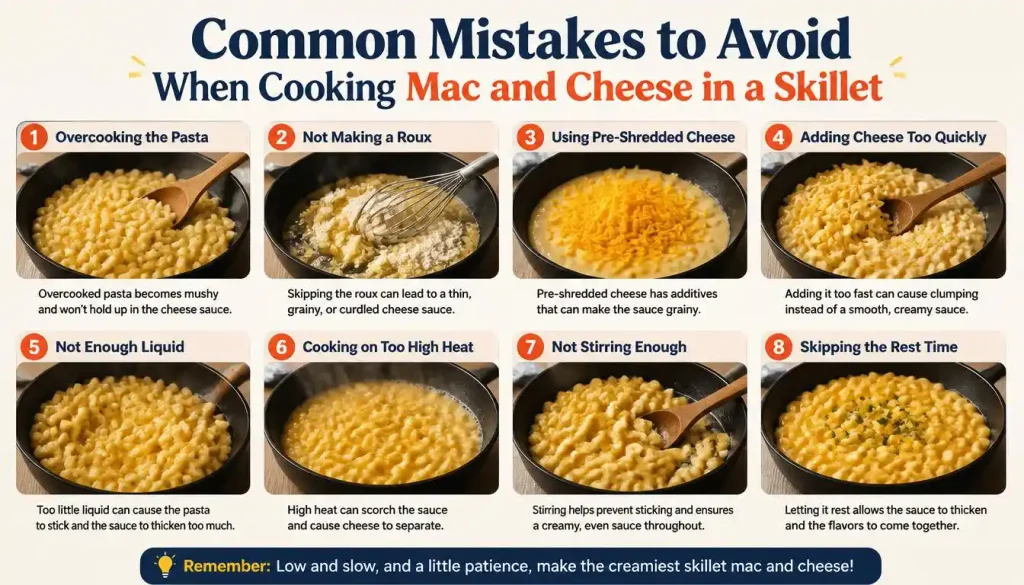
Using pre-shredded cheese straight from the bag is the fastest way to ruin texture. Anti-caking starches interfere with melting and leave your sauce cloudy and grainy. Always buy block cheese and shred it yourself right before cooking.
That single switch alone improves result quality dramatically.
Cranking the heat too high during the roux phase causes butter to brown instantly while flour stays raw. Medium heat gives you control without sacrificing speed. Walk away and you will watch a skin form across the surface in under two minutes.
Keep a wooden spoon nearby and stir every thirty seconds once liquid hits the pan.
Another frequent error is adding cheese while the skillet remains plugged in. Residual heat melts shredded dairy fast enough without active electricity running through the element. Unplug or switch to warm mode before folding cheese into your sauce.
This simple step stops proteins from seizing and keeps emulsion smooth.
Skipping proper pasta hydration ruins the final dish too. If you boil noodles separately then drain them fully, they absorb excess moisture from your sauce within minutes. Toss drained pasta with a splash of milk before combining to create a moisture buffer.
That trick preserves creaminess through serving time without diluting flavor.
Pro Tips for Perfect Skillet Mac and Cheese
Freshly grated cheese melts evenly because surface area stays consistent. Pre-grated bags coat shreds in potato starch, which blocks proper binding. Buy a hunk of sharp cheddar and a smaller amount of Gruyère for depth.
Grate both yourself right before adding to the hot sauce base.
Adding a spoonful of cream cheese stabilizes the emulsion against temperature swings. The extra fat coats milk proteins and reduces risk of breaking under gentle heat. Whisk it in with your shredded cheese during the final fold.
You will notice a silkier consistency within seconds.
Stirring in a figure-eight motion covers the entire pan width instead of just the middle. This habit pulls pasta from the edges where it tends to settle. Rotate the skillet halfway through cooking to redistribute any uneven thickness.
Small adjustments like this keep texture uniform across every bite.
Deglazing immediately after serving saves hours of scrubbing later. Pour a half cup of warm water into the still-warm skillet and scrape stuck bits with a silicone spatula. The steam lifts residue before it hardens into ceramic-like bonds.
Rinse and dry right away, then store with the lid slightly ajar to prevent odors.
Safety and Care: Keeping Your Skillet and Food Safe
Electric skillets combine heating elements with water and dairy, so basic electrical precautions matter. Plug the unit directly into a wall outlet whenever possible. Avoid power strips or extension cords that can overheat during prolonged cooking sessions.
A dedicated circuit keeps voltage steady and reduces fire risk.
Never submerge the base unit in water during cleanup. Moisture inside the electrical housing creates shock hazards and voids warranties. Wipe the exterior with a damp cloth and clean only the removable pan insert.
Let both parts air-dry completely before storing them together.
Food safety guidance from the USDA recommends cooling cooked pasta and dairy within two hours of preparation. If you plan to hold finished mac and cheese on warm mode, keep the internal temperature above 140°F until serving. Do not leave the skillet unattended for more than twenty minutes on warm setting.
Bacteria multiply rapidly between 40°F and 140°F if food sits too long at room temperature.
Use only wooden, silicone, or nylon utensils to protect the non-stick coating. Metal spoons scratch the surface over time, creating rough patches where cheese sticks permanently. Inspect the coating yearly for peeling or flaking.
Replace the pan insert if you notice significant wear beyond the first year of regular use.
Check cord integrity before each season, especially if you travel with the skillet in an RV or camper. Frayed wiring near the plug or handle connection poses immediate electrocution risks. Stop using the appliance and contact the manufacturer for replacement parts rather than attempting DIY repairs.
Who Should Skip the Skillet and Stick to a Pot
If your kitchen has a fully functional stove, a standard saucepan remains simpler and more forgiving. You get instant heat response without waiting for the element to preheat. Deep sides prevent boil-over and let you simmer sauces gently without constant monitoring.
Transfer times stay minimal since most families already own reliable cookware.
Baked casserole recipes demand oven-safe dishes anyway. You would end up moving mac and cheese from skillet to baking dish anyway, doubling cleanup without gaining convenience. A stovetop pot followed by a gratin dish produces better browning and crunch than trying to finish anything under a broiler in an electric skillet.
Large batch cooking stretches skillet capacity limits quickly. Feeding eight or more people requires multiple batches or a commercial-grade unit that costs significantly more than a basic five-quart model. A large Dutch oven on the stove handles volume effortlessly and distributes heat more evenly across wide bottoms.
Professional chefs avoid electric skillets for delicate French sauces like Mornay because temperature control lacks precision. Dial settings vary between manufacturers, and budget models run hot spots that break emulsions faster than hand adjustments allow. If you want restaurant-quality results, stovetop techniques give you finer command over every variable.
Costs, Capacity, and What to Look for in a Skillet
Price and size choices directly affect how well your mac and cheese turns out. Budget models under sixty dollars often lack precise temperature dials and run below eight hundred watts. Those lower wattage units struggle to maintain steady heat through dairy-heavy sauces and leave you chasing hot spots across the pan surface.
Mid-range skillets between sixty and one hundred dollars give you better consistency. They typically hit one thousand to twelve hundred watts with more accurate dial calibration. A five to eight quart capacity fits most home cooking needs without requiring multiple batches.
This price band delivers the best balance for regular mac and cheese preparation.
Premium options over one hundred dollars add digital controls and deeper temperature ranges. Some include removable pans that go from stovetop to oven, which helps if you want a crispy top later. The extra cost only matters if you plan heavy use beyond occasional skillet cooking.
For most people, a solid mid-range unit covers every need.
| Feature | Budget Model | Mid-Range | Premium |
|---|---|---|---|
| Price | $30–$60 | $60–$110 | $110+ |
| Wattage | 600W–900W | 1000W–1200W | 1200W–1500W |
| Capacity | 3qt–5qt | 5qt–8qt | 8qt–12qt |
| Temperature control | Basic dial | Precise dial with range | Digital with probe support |
| Non-stick quality | Standard coating | Enhanced ceramic or granite | Heavy-duty PTFE or seasoned steel |
Always verify that your chosen model carries UL listing or equivalent safety certification before purchasing. The USDA food safety guidelines recommend keeping hot foods above 140°F during serving, which most warm settings handle adequately. Matching capacity to your typical household size prevents awkward half-batches and wasted effort.
Real-Life Scenarios: When This Method Makes Sense (and When It Doesn’t)
Dorm room cooking represents the strongest use case for skillet mac and cheese. Students without stove access can still prepare comfort food using only a mini fridge and an outlet. The one-pot cleanup minimizes dish burden in shared bathroom kitchens where space is tight.
Many college stores now stock compact five-quart models built specifically for this kind of scenario.
RV travelers and campers benefit similarly since electric skillets replace multiple pots on cramped two-burner setups. You boil pasta, make sauce, and serve dinner from a single vessel without juggling limited burner real estate. The portable design means you can pack it in a car trunk and set up anywhere with a standard household outlet.
Tailgating parties and beach cabins become feasible dinner situations instead of sandwich-only affairs.
Apartment dwellers dealing with broken stoves find immediate relief from a working skillet alternative. Repair timelines for appliance fixes often stretch weeks, and eating takeout every night grows expensive fast. A skillet lets you recreate favorite recipes until the range is restored without hunting for restaurant meals.
These advantages disappear quickly if you have a fully functional kitchen with quality cookware. A six-quart Dutch oven on a working gas range delivers faster results with less active stirring. The added cleanup from washing a second appliance becomes unnecessary when your stove works properly.
Regular home cooks should reserve the skillet for emergency or travel situations rather than daily routine.
Holiday gatherings and game day parties present mixed outcomes. Feeding a crowd exceeds most residential skillet capacities, forcing multiple batches that lose warmth between rounds. Transferring finished mac and cheese into a slow cooker or chafing dish defeats the convenience advantage.
Large events work better with batch cooking on the main stove followed by holding in warming trays.
Final Recommendation: Should You Make Mac and Cheese in an Electric Skillet?
If you are looking for a reliable stovetop alternative, especially when a normal pot is not an option, an electric skillet is absolutely up to the task. It produces tasty, creamy mac and cheese with minimal equipment and lets you serve straight from the pan. The catch is that it demands more attention than a saucepan, particularly around heat control and stirring.
If you are comfortable managing a rolling roux and a melting cheese stage, you will get great results. If you would rather set a pot and forget it until dinner, stick with the traditional route.
Choose the skillet when convenience, portability, or stove limitations matter most. Choose a saucepan when you want the simplest, most forgiving method with the fewest variables. Either way, shred your own cheese, keep the heat moderate, and do not walk away while the sauce is forming.
That is the secret to skipping the stove without sacrificing flavor.
Frequently Asked Questions
Can you boil pasta directly in an electric skillet?
Yes, the one-pot method works well in most electric skillets. You add pasta, water, and salt, bring to a simmer, then cook until tender before draining excess liquid. Just watch the liquid level carefully since evaporation runs faster in shallow pans compared to deep pots.
Measure approximately three cups of water per cup of dry pasta to prevent scorching.
Will the cheese sauce separate or turn grainy?
It can happen if the heat runs too high or you add cheese while the element stays active. Always remove the skillet from power before stirring in dairy, since residual warmth melts shredded cheese smoothly without breaking the emulsion. Use freshly grated block cheese instead of pre-shredded bags, because anti-caking starches interfere with proper melting and create a gritty texture.
Is cleanup harder than with a regular pot?
Not necessarily when you deglaze promptly after serving. Pour a small amount of warm water into the still-warm skillet and scrape loosened bits with a silicone spatula before residue hardens. Letting cheese bake onto the non-stick surface overnight creates stubborn bonds that require soaking or scraping tools.
Quick attention during the cooling window saves significant scrubbing time later.
Can you keep mac and cheese warm in the electric skillet?
Absolutely, most models include a warm setting that holds food safely without aggressively continuing to cook it. Set the dial to lowest or designated warm mode and stir occasionally to prevent a skin from forming across the surface. Do not hold finished mac and cheese above 140°F for longer than two hours according to food safety standards, since bacteria multiply rapidly in the danger zone between 40°F and 140°F.
What is the best cheese blend for skillet mac and cheese?
A combination of good-melting cheeses produces the smoothest result. Sharp cheddar provides classic flavor depth while Gruyère or fontina adds creamy melt characteristics. A small amount of Parmesan contributes savory umami notes without compromising texture.
Avoid pre-shredded varieties entirely since cellulose coatings prevent proper binding and leave your sauce grainy.
How does cooking time compare to a traditional stovetop pot?
Results take roughly five to ten minutes longer overall because the electric element requires preheating time before cooking begins. Once the roux forms and liquids simulate, the actual pasta cooking and sauce merging happen at similar speeds to stovetop methods. The trade-off usually proves worthwhile given the one-dish convenience and table-serving capability that skillets offer throughout the meal.

“I believe great cooking starts with the right tools, trusted advice, and a little confidence in the kitchen.”
Hi, I’m Emma Carter. My love for cooking began in my grandmother’s kitchen, where I learned that every great meal starts with simple ingredients and the right cookware. Over the years, I’ve spent countless hours researching, testing, and comparing kitchen appliances, cookware, coffee makers, air fryers, and other everyday kitchen essentials.
Here at KiCook, my goal is to make your buying decisions easier with honest product reviews, practical buying guides, and easy-to-follow cooking tips. Whether you’re upgrading your kitchen or searching for the best appliance for your home, I focus on providing clear, reliable, and research-backed information you can trust.
When I’m not testing new kitchen gadgets or writing in-depth guides, you’ll usually find me trying new recipes, visiting local farmers’ markets, or enjoying a quiet cup of coffee while planning my next kitchen project.