If you want to make hot pot at home but do not own a dedicated hot pot cooker, there is a good chance you already have an appliance that can do the job.
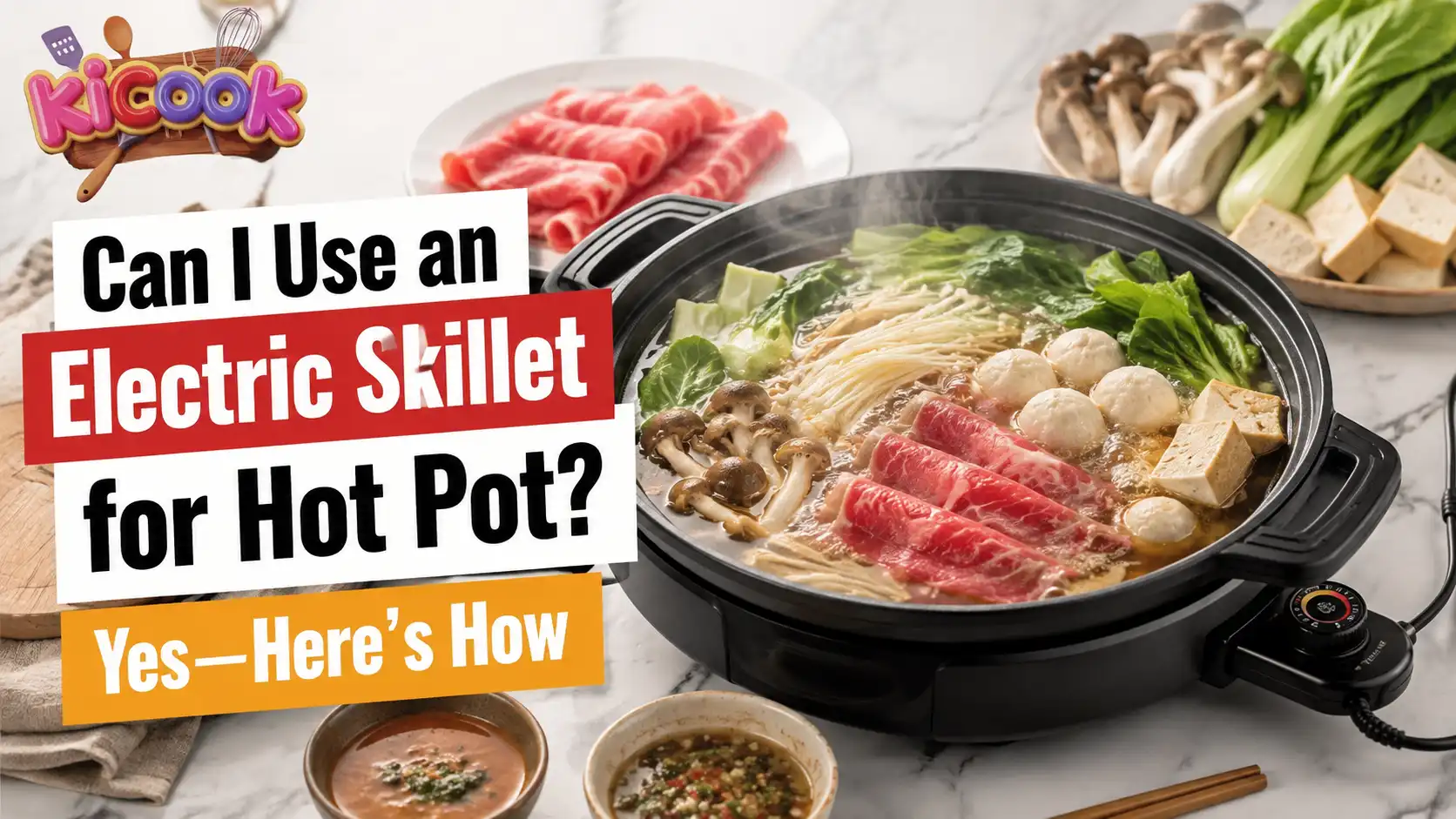
So, can I use an electric skillet for hot pot? Yes, in most cases. A deep electric skillet with adjustable temperature control can heat broth, maintain a steady simmer, and cook thinly sliced meat, seafood, tofu, vegetables, noodles, and dumplings right at the table.
The important part is choosing the right skillet and using it correctly. A shallow skillet can overflow, an underpowered model may struggle to recover heat after cold ingredients are added, and improper handling of raw meat can create a food-safety problem.
This guide explains exactly how to use an electric skillet for hot pot, including skillet size, temperature settings, broth level, ingredient order, safety precautions, troubleshooting, and cleaning.
Can I Use an Electric Skillet for Hot Pot?
Yes. An electric skillet can work surprisingly well as a hot pot cooker, particularly if it has deep sides, a lid, adjustable heat, and enough capacity for both broth and ingredients.
Hot pot does not require complicated cooking technology. You mainly need a vessel that can bring broth to a boil and then maintain enough heat to keep it gently simmering while people add and cook ingredients.
That is something many electric skillets are already designed to do.
In fact, some electric skillets are specifically designed for soup-style cooking. Zojirushi even makes an electric skillet specifically equipped for Yin-Yang hot pot with a deep divided pan, adjustable temperature control, and a glass lid.
If you are curious about how versatile the appliance can be beyond hot pot, KiCook’s guide to what you can cook in an electric skillet covers everything from pasta and rice to meat, vegetables, casseroles, and one-pan meals.
Can Any Electric Skillet Be Used for Hot Pot?
Not every electric skillet is equally suitable for hot pot.
Before pouring several cups of broth into yours, check the manufacturer’s instructions. The cooking pan should be designed to hold and heat liquids safely.
A skillet intended for simmering, stewing, soup, or similar liquid-based cooking is a much better candidate than an extremely shallow model designed mainly for frying.
You should also inspect the skillet before using it. Do not use an appliance with a damaged electrical cord, loose temperature-control connection, severely warped pan, damaged heating base, or other obvious electrical problem.
Most importantly, never exceed a manufacturer’s maximum fill level if one is provided.
What Makes an Electric Skillet Suitable for Hot Pot?
A good hot pot skillet does not need to be expensive, but a few features make a big difference.
Deep Sides
Depth may be more important than overall width.
You need enough room for broth plus vegetables, meat, noodles, tofu, and other ingredients without liquid constantly splashing over the edge.
As a real-world reference, Zojirushi’s dedicated electric hot-pot skillet uses a deep pan measuring about 3 1/8 inches deep.
That does not mean your skillet must have exactly the same depth. It simply shows why deeper pans are generally more practical for broth-based cooking.
Adjustable Temperature Control
Hot pot requires at least two different heat levels.
First, you need relatively high heat to bring the broth up to temperature. Once it reaches a boil, you normally reduce the heat enough to maintain a lively simmer without making the broth violently boil or splash.
A thermostat makes this much easier.
If the numbers on your temperature dial are confusing, KiCook’s electric skillet medium-heat temperature guide explains how low, medium, and high settings generally relate to actual cooking temperatures.
Enough Heating Power
Hot pot becomes frustrating when the broth takes forever to heat or stops simmering every time you add food.
Wattage is one factor that affects heating performance, although it is not the only one. Pan size, broth volume, thermostat design, room temperature, and the amount of cold food being added also matter.
For perspective, Zojirushi’s dedicated hot-pot electric skillet is rated at 1,300 watts.
There is no universal minimum wattage that every hot pot setup must meet. Instead, look for an electric skillet capable of bringing a reasonable amount of liquid to a boil and recovering heat after ingredients are added.
You can learn more about typical appliance power requirements in KiCook’s guide to how many watts an electric skillet uses.
A Glass Lid
A lid is useful during the initial heating stage because it reduces heat loss and helps the broth heat more efficiently.
A glass lid is especially convenient because you can see what is happening without repeatedly lifting it.
Once everyone starts adding and removing ingredients, you will probably leave the lid off much of the time.
A Stable Tabletop Base
Traditional hot pot is social cooking, so the skillet will often sit in the middle of a dining table.
That makes stability important. The appliance should sit flat without rocking, and everyone should be able to reach it without pulling on the skillet or cord.
Electric Skillet vs. Electric Hot Pot: What’s the Difference?
Both appliances can accomplish the same basic task, but they are built with slightly different priorities.
| Feature | Electric Skillet | Electric Hot Pot |
|---|---|---|
| Hot pot cooking | Usually possible | Designed for it |
| Pan depth | Varies by model | Usually deeper |
| Temperature control | Common | Common |
| Frying and searing | Excellent | Depends on model |
| Tabletop cooking | Good | Excellent |
| Dual-broth divider | Uncommon | Available on some models |
| Best use | Multipurpose cooking | Dedicated hot pot and soups |
If you already own a suitable electric skillet, there is little reason to buy another appliance just to try hot pot.
A dedicated electric hot pot becomes more attractive if you make hot pot frequently, want a particularly deep vessel, or want a divided pot so two broths can cook at the same time.
What Size Electric Skillet Is Best for Hot Pot?
There is no perfect size because it depends on how many people are eating and how much food you plan to cook at once.
As a rough practical guide, a deep 10- to 12-inch skillet can work for one or two people. A 12- to 14-inch skillet gives two to four diners more room, while larger groups generally benefit from a wider and deeper model.
Depth matters just as much as diameter.
A large but shallow skillet can actually be less convenient than a slightly smaller deep skillet because vegetables and noodles quickly increase the liquid level.
Whatever size you use, avoid packing the skillet full before cooking begins. Hot pot works better when ingredients are cooked in batches.
How to Make Hot Pot in an Electric Skillet
The basic process is simple, and once the broth is hot, most of the cooking happens at the table.
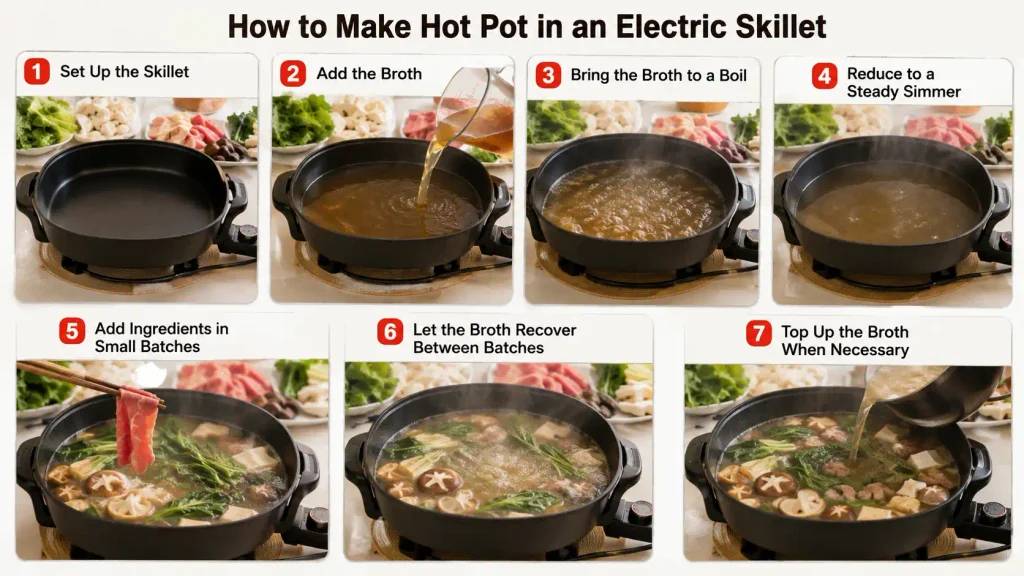
1. Set Up the Skillet
Place the electric skillet on a flat, dry, stable, heat-resistant surface.
Arrange ingredients around it so nobody needs to reach awkwardly across the hot pan. Keep the electrical cord where it cannot be pulled, tripped over, or pushed into the cooking area.
2. Add the Broth
Pour your chosen hot pot broth into the skillet while leaving plenty of space at the top.
Do not start with a completely full skillet. Vegetables, tofu, meat, noodles, and dumplings will displace liquid and raise the broth level.
If your skillet has a maximum-fill line, stay below it.
3. Bring the Broth to a Boil
Cover the skillet with its lid and select a medium-high or high setting appropriate for your model.
Wait until the broth reaches a boil.
Heating time will depend on skillet wattage, pan size, broth volume, and starting temperature.
4. Reduce to a Steady Simmer
Once the broth boils, turn the temperature down.
You want enough movement in the liquid to cook food efficiently but not such an aggressive boil that broth splashes onto the table.
There is no single temperature-dial number that works for every skillet. Use the actual behavior of the broth as your guide.
5. Add Ingredients in Small Batches
Start adding ingredients according to cooking time.
Dense vegetables and foods that need longer cooking should go in first. Thin meat slices and delicate leafy vegetables can usually be added later because they cook much faster.
Do not dump everything into the skillet at once.
6. Let the Broth Recover Between Batches
Cold ingredients absorb heat.
If the simmer disappears after adding food, wait until the broth returns to temperature before adding another large batch.
You can temporarily increase the skillet setting if necessary.
7. Top Up the Broth When Necessary
Hot pot broth gradually evaporates and is also absorbed by noodles, tofu, mushrooms, and other foods.
Keep some extra hot broth or hot water nearby so you can replenish the skillet without dramatically reducing its temperature.
What Temperature Should an Electric Skillet Be for Hot Pot?
Instead of focusing on one exact thermostat number, think about the stage of cooking.
| Cooking Stage | Practical Setting |
|---|---|
| Initial broth heating | Medium-high to high |
| Bringing broth to a boil | High enough to boil steadily |
| Active hot pot cooking | Medium or whatever maintains a simmer |
| Recovering after cold food is added | Temporarily increase heat |
| Keeping fully cooked food warm | Low or keep-warm setting if appropriate |
The most important distinction is between cooking raw ingredients and simply keeping already-cooked food warm.
A keep-warm setting should not be treated as a substitute for proper cooking heat when raw meat, poultry, or seafood is still being added.
How Much Broth Should You Put in an Electric Skillet?
Use enough broth to cook ingredients comfortably while leaving generous headspace above the liquid.
Starting slightly low is usually better than starting too full. You can always add more hot broth later.
Remember that mushrooms, cabbage, tofu, noodles, dumplings, and meat all take up space. A skillet that looks comfortably filled before ingredients are added can become dangerously close to overflowing afterward.
Never exceed a manufacturer’s fill line, and avoid allowing boiling liquid to reach the electrical control connection or heating components.
Do You Need a Lid for Electric Skillet Hot Pot?
A lid is helpful but not necessary during the entire meal.
Use it while initially heating the broth because trapping heat generally helps the liquid reach a boil faster.
It can also help the skillet recover temperature after you add a large amount of cold vegetables or other ingredients.
During active hot pot eating, however, leaving the lid off is usually more convenient because everyone is continuously adding and removing food.
Only use a lid that is intended for your skillet.
Best Hot Pot Broths for an Electric Skillet
Almost any broth you would normally use for hot pot can work in an electric skillet.
A mild chicken or vegetable broth is easiest for beginners because it pairs with nearly everything. Mushroom broth gives the pot deeper savory flavor without meat, while kombu-based dashi works particularly well for Japanese-style shabu-shabu.
For stronger flavors, you can use a spicy Sichuan-style base containing chili and aromatics. Store-bought hot pot soup bases are also convenient—simply prepare them according to the package directions and make sure the final volume fits safely inside your skillet.
If you are hosting people with different spice preferences, a dedicated divided hot pot is useful. Most ordinary electric skillets do not have a safe way to separate two broths.
Best Ingredients for Electric Skillet Hot Pot
One of the best things about hot pot is that there is no rigid ingredient list.
Thinly sliced beef, pork, chicken, shrimp, fish, fish balls, tofu, dumplings, mushrooms, napa cabbage, bok choy, spinach, green onions, carrots, and other vegetables can all work.
For starches, consider udon noodles, rice noodles, ramen-style noodles, or other noodles designed to cook in broth.
The key is cutting ingredients into manageable pieces and understanding that different foods cook at different speeds.
What Order Should You Add Hot Pot Ingredients?
Start with foods that take the longest.
Firm vegetables, mushrooms, tofu, and some dumplings usually benefit from going into the broth early. Once they begin cooking, add thinner vegetables and proteins.
Very thinly sliced meat often cooks quickly, so adding a huge pile at once is unnecessary. Cook a few pieces, eat them, and then cook another batch.
Noodles are often best toward the end. They absorb flavor from the broth, but they also release starch and can make the liquid thicker or cloudier.
There is no need to follow one strict order for the whole meal. Think in terms of cooking time rather than a fixed recipe.
What If the Broth Stops Simmering After You Add Ingredients?
This is one of the most common electric skillet hot pot problems.
Every time cold food enters the broth, its temperature drops. If you add a large bowl of refrigerated vegetables, frozen dumplings, and meat all at once, even a good skillet may temporarily stop simmering.
The easiest solution is smaller batches.
Wait for the broth to recover before adding more food. If necessary, temporarily increase the heat and put the lid on.
If the problem happens constantly even with small batches, you may be using too much broth for your appliance or the skillet may not be producing enough heat.
Can You Add Frozen Ingredients to Electric Skillet Hot Pot?
Some frozen foods can go directly into hot pot when their package instructions allow cooking from frozen.
Frozen dumplings, fish balls, seafood balls, and similar hot pot products are common examples.
However, adding a large quantity of frozen food at once can cause a significant temperature drop. Add frozen ingredients in smaller batches and allow the broth to return to a safe cooking temperature between additions.
For frozen raw meat, poultry, fish, or seafood, follow the product’s preparation instructions. Partially frozen pieces can cook unevenly, which is especially important with thicker foods. Health Canada notes that partly frozen raw meat, poultry, fish, or seafood can cook unevenly and may fail to reach a safe internal temperature in some areas.
How to Safely Cook Raw Meat, Chicken, and Seafood in Hot Pot
Hot pot is enjoyable because diners cook their own food, but that also means everyone needs to handle raw ingredients carefully.
Keep utensils used for raw meat separate from chopsticks, forks, bowls, and serving tools used for cooked food. Do not put cooked meat back onto a plate that previously held it raw.
Most importantly, do not judge food safety only by color.
For readers in the United States, the USDA safe minimum internal temperature chart recommends 165°F (74°C) for poultry, 160°F (71°C) for ground meats, and 145°F (63°C) for fish. Whole cuts of beef, pork, veal, and lamb have additional temperature and rest-time guidance.
Because recommendations vary somewhat by country, readers outside the U.S. should follow their local food-safety authority. Useful references include the UK Food Standards Agency cooking guidance, Health Canada’s safe cooking temperature guidance, and Food Standards Australia New Zealand food-safety guidance.
With very thin hot pot slices, checking every individual piece with a thermometer may not be practical. That makes maintaining properly hot broth, cooking food thoroughly, avoiding overcrowding, and preventing cross-contamination especially important.
Is It Safe to Use an Electric Skillet on a Dining Table?
Yes, provided the skillet is intended for tabletop use and you set it up carefully.
Place it on a stable, heat-resistant surface with plenty of room around it. Keep the power connection dry and make sure nobody can catch a foot, chair, sleeve, or hand on the cord.
Children should not be able to reach or pull the cord.
Do not move an electric skillet while it contains boiling broth. If you need to reposition it, turn it off, unplug it, and wait until it is safe to handle.
Be especially cautious with extension cords. Follow your skillet manufacturer’s instructions and make sure any approved extension setup is appropriately rated for the appliance’s electrical load.
Can You Make Shabu-Shabu in an Electric Skillet?
Yes. Shabu-shabu is actually one of the better hot pot styles for an electric skillet.
The ingredients are typically cooked in simmering broth, and the meat is sliced very thinly. That means individual pieces cook quickly without requiring an extremely powerful heat source.
A deep skillet with adjustable heat works particularly well.
Keep the broth simmering, cook only a few slices of meat at a time, and allow the liquid to recover when necessary.
Can You Make Chinese Hot Pot in an Electric Skillet?
Yes. An electric skillet can handle both mild and spicy Chinese-style hot pot broth as long as the cooking pan is suitable for liquid cooking.
The main limitation is divided broth.
Many Chinese hot pot restaurants offer a split pot containing two soup bases. A standard electric skillet usually has only one open cooking chamber, so you will need to choose one broth.
If serving two broths at the same time is important, a purpose-built divided electric hot pot is a better option.
Can You Use a Shallow Electric Skillet for Hot Pot?
You can, but you will need to adjust your cooking style.
Use less broth, cook smaller amounts of food at a time, and be particularly careful about the liquid level.
A shallow skillet may work better for sukiyaki-style cooking or other dishes where ingredients simmer in a smaller quantity of seasoned liquid rather than floating in a deep pot of broth.
Avoid trying to turn a very shallow skillet into a full-size soup pot.
If you own an electric griddle instead, it is generally a poor hot pot substitute because the cooking surface is too shallow to safely hold much broth. KiCook’s comparison of an electric skillet vs. electric griddle explains the difference in depth and cooking style.
Common Electric Skillet Hot Pot Mistakes
The most common problems are easy to avoid. Do not fill the pan close to the rim before ingredients are added, and do not overload the broth with refrigerated or frozen food all at once.
Avoid leaving the thermostat at maximum after the broth starts boiling. A violent boil creates more splashing, speeds up evaporation, and can overcook delicate ingredients.
Do not allow the skillet to run dry as broth evaporates. Keep additional hot liquid nearby and top it up gradually.
Finally, avoid using metal utensils on a nonstick cooking surface unless the manufacturer specifically permits them. Scratched nonstick coatings are difficult to repair and may shorten the useful life of the pan.
What If Your Electric Skillet Is Not Getting Hot Enough for Hot Pot?
Start with the simple possibilities.
There may be too much cold broth in the skillet, too many ingredients may have been added at once, or the temperature control may simply be set too low. Cover the skillet briefly, increase the setting, and wait for the broth to recover before adding more food.
Also remember that thermostatically controlled electric skillets do not necessarily provide constant maximum power. The heating element can cycle as the thermostat regulates temperature.
If your skillet repeatedly shuts off for unusually long periods, fails to heat even at a high setting, or behaves inconsistently, further troubleshooting may be necessary. KiCook’s guide to why an electric skillet keeps shutting off while cooking covers several common causes.
If the dial temperature seems completely different from what the skillet is actually producing, read the guide on how to tell if an electric skillet thermostat is broken.
Stop using the appliance if there are electrical warning signs such as sparking, smoke, burning smells, a damaged cord, or an unusually hot electrical connection.
Electric Skillet Alternatives for Hot Pot
If your electric skillet is too shallow or cannot maintain enough heat, you still have several options.
A dedicated electric hot pot is the easiest replacement and is especially useful for frequent hot pot meals. A portable induction burner with a compatible pot is another excellent choice because it gives you freedom to choose the depth and size of the pot.
A slow cooker can keep soup hot, but it is generally much slower to respond when cold ingredients are added. That makes it less convenient for the continuous cook-and-eat rhythm of traditional hot pot.
If you already own both appliances and are deciding which is more useful for other meals, KiCook has a detailed electric skillet vs. slow cooker comparison.
How to Clean an Electric Skillet After Hot Pot
Turn off the skillet and unplug it before cleaning. Let the appliance cool completely rather than carrying a pan of very hot broth to the sink.
Remove leftover food and broth, then wash the removable cooking pan and lid according to the manufacturer’s instructions.
Do not assume the entire skillet is dishwasher safe. Electrical heating bases, plugs, temperature controls, and power cords should never be placed in water unless your specific manufacturer’s instructions explicitly state otherwise.
Some removable cooking pans and lids may be dishwasher safe, while others require hand washing.
For a full breakdown, see KiCook’s guide on whether electric skillets are dishwasher safe and how to clean them properly.
Avoid abrasive scrubbers on nonstick surfaces. A soft sponge, warm water, and mild dish soap are usually the safer approach when permitted by the manufacturer.
Frequently Asked Questions
Can You Boil Water in an Electric Skillet?
Many electric skillets can bring a moderate amount of water to a boil, particularly deeper models with lids and adjustable temperature controls. Check your owner’s manual before using the appliance for liquid-based cooking.
Can You Boil Broth in an Electric Skillet?
Yes, a suitable deep electric skillet can heat broth to a boil and then maintain it at a simmer. This is the basic reason an electric skillet can work for hot pot.
Can You Cook Soup in an Electric Skillet?
Many deep electric skillets can be used for soup, stew, and similar liquid-based dishes. Some models are specifically advertised for soup-style foods.
What Temperature Should an Electric Skillet Be for Hot Pot?
Use medium-high or high heat to bring the broth to a boil, then reduce the setting until you maintain a steady simmer. The exact dial setting differs between models, so watch the broth rather than relying on one universal temperature number.
Can You Use an Electric Skillet for Shabu-Shabu?
Yes. A deep electric skillet is well suited to shabu-shabu because thinly sliced ingredients cook quickly in simmering broth.
Can You Cook Raw Chicken in Electric Skillet Hot Pot?
Yes, but chicken must be cooked thoroughly. Keep raw-chicken utensils separate from cooked-food utensils and verify safe doneness according to the food-safety guidance for your country.
Can You Use an Electric Skillet Instead of an Electric Hot Pot?
For many households, yes. The main differences are usually depth, shape, capacity, and whether the appliance has specialty features such as a divided broth pan.
How Deep Should an Electric Skillet Be for Hot Pot?
There is no mandatory depth, but deeper is generally better. A pan around 2.5 to 3 inches deep or more is much easier to manage than a shallow frying surface because it provides more room for broth and ingredients. Always prioritize your skillet’s stated capacity and manufacturer’s instructions.
Can I Use an Electric Skillet for Hot Pot for Two People?
Absolutely. In fact, an electric skillet can be especially convenient for two people because you do not need an enormous volume of broth. A smaller deep skillet can heat quickly and keeps ingredients within easy reach.
Can I Use an Electric Skillet for Hot Pot Without a Lid?
Yes, once the broth is hot. However, a lid can help during initial heating and when the skillet needs to recover temperature after cold ingredients are added.
Why Does My Hot Pot Broth Keep Stopping Its Boil?
The most likely cause is adding too many cold ingredients at once. Reduce batch size, let the broth recover, use the lid temporarily, or raise the temperature setting slightly.
Is an Electric Skillet Better Than a Hot Pot Cooker?
Neither is automatically better. A dedicated hot pot is usually deeper and may have a divided broth compartment, while an electric skillet is more versatile because you can also fry, sear, sauté, simmer, and prepare many other meals.
Final Verdict: Is an Electric Skillet Good for Hot Pot?
Yes, an electric skillet can be an excellent hot pot substitute.
You do not need specialized equipment to enjoy a good tabletop hot pot. If your electric skillet is deep enough for broth, approved for liquid cooking, stable on the table, and capable of maintaining a steady simmer, it can handle the job very well.
The biggest things to watch are simple: leave enough headspace so the broth cannot overflow, add cold ingredients in small batches, maintain adequate cooking heat, handle raw meat carefully, and follow the manufacturer’s cleaning and safety instructions.
For an occasional hot pot night, a suitable electric skillet may be all you need. If hot pot becomes a regular meal or you want two different broths at once, that is when a dedicated electric hot pot starts to make more sense.

“I believe great cooking starts with the right tools, trusted advice, and a little confidence in the kitchen.”
Hi, I’m Emma Carter. My love for cooking began in my grandmother’s kitchen, where I learned that every great meal starts with simple ingredients and the right cookware. Over the years, I’ve spent countless hours researching, testing, and comparing kitchen appliances, cookware, coffee makers, air fryers, and other everyday kitchen essentials.
Here at KiCook, my goal is to make your buying decisions easier with honest product reviews, practical buying guides, and easy-to-follow cooking tips. Whether you’re upgrading your kitchen or searching for the best appliance for your home, I focus on providing clear, reliable, and research-backed information you can trust.
When I’m not testing new kitchen gadgets or writing in-depth guides, you’ll usually find me trying new recipes, visiting local farmers’ markets, or enjoying a quiet cup of coffee while planning my next kitchen project.