
I’ve seen this problem more times than I can count. You plug in your electric skillet, the power light turns on, but the pan stays cold. No sizzling. No heat. Just confusion.
If you’re here, you want real answers not guesses. Let me walk you through exactly why an electric skillet turns on but doesn’t heat, what’s actually wrong inside, and what you can realistically do about it.
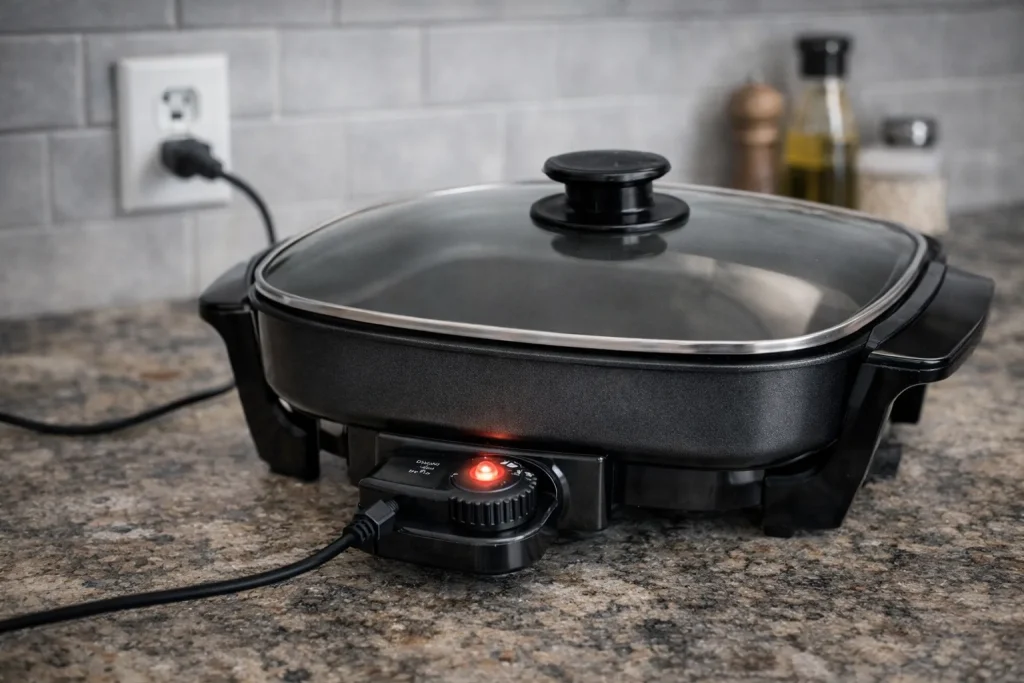
Why Your Electric Skillet Has Power but No Heat
When the indicator light is on, electricity is reaching the skillet. But power does not always mean heat.
In my experience, this issue usually comes down to a failed internal part, not user error.
Here are the most common causes ranked from most to least likely.
1. Faulty Temperature Control Probe (Most Common)
This is the #1 reason I see.
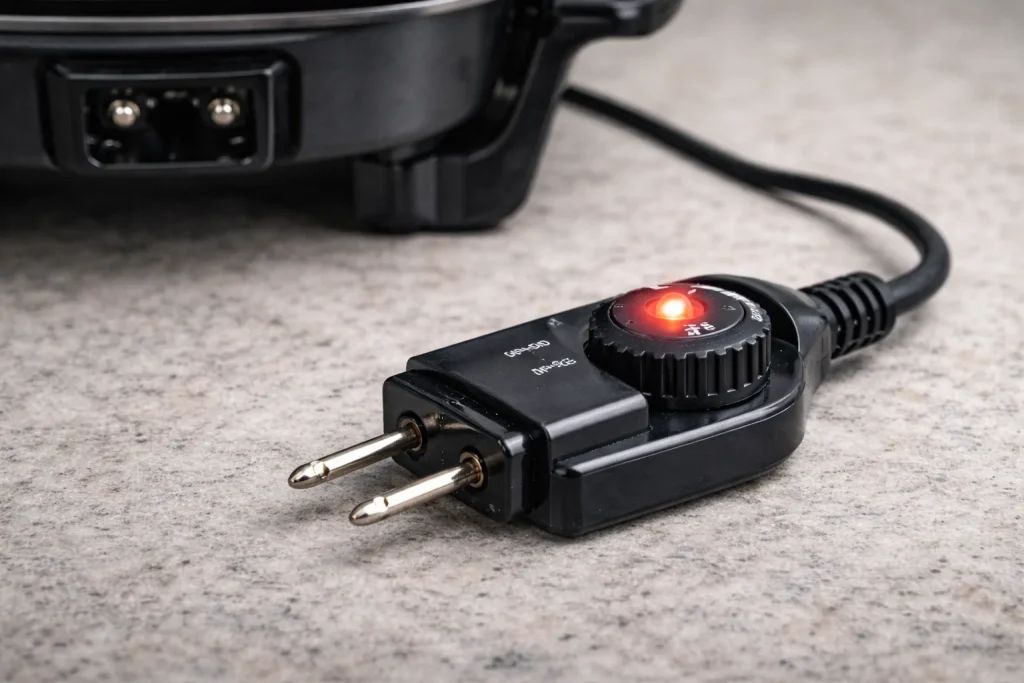
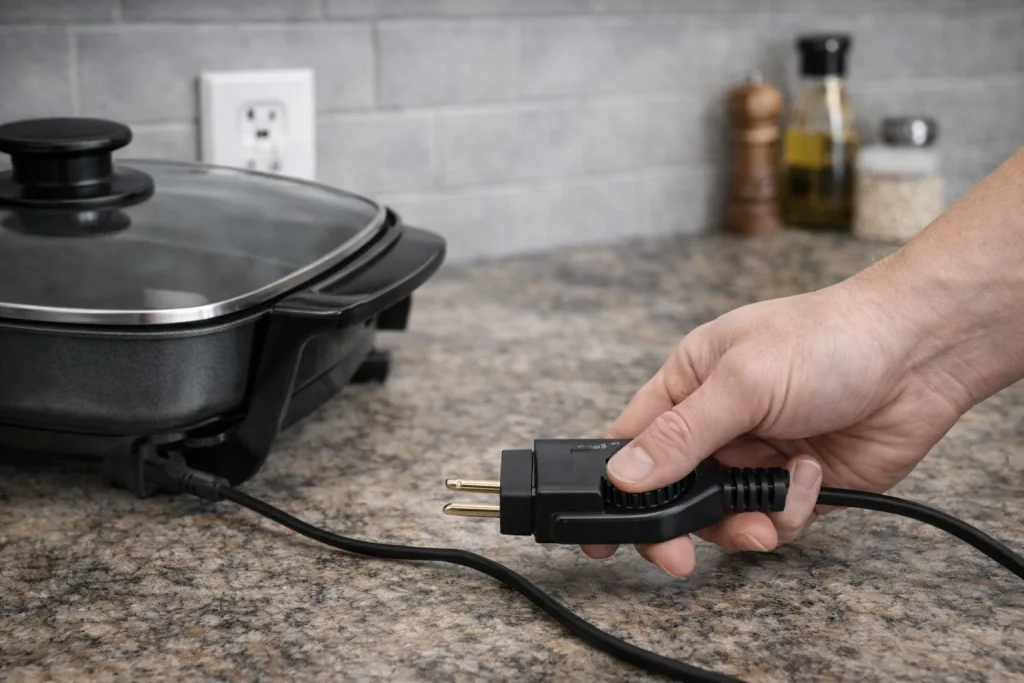
The temperature control probe is the part you plug into the skillet.
It controls how much power reaches the heating element.
What goes wrong
- Internal sensor fails
- Burned or loose electrical contacts
- Worn-out probe from years of use
Signs this is the problem
- Power light turns on
- Skillet stays completely cold
- Wiggling the probe sometimes makes it work briefly
What to do
- Unplug the skillet
- Remove the probe and inspect the metal prongs
- Clean gently with a dry cloth
- If no change, replace the probe (often cheaper than a new skillet)
Many brands sell replacement probes separately.
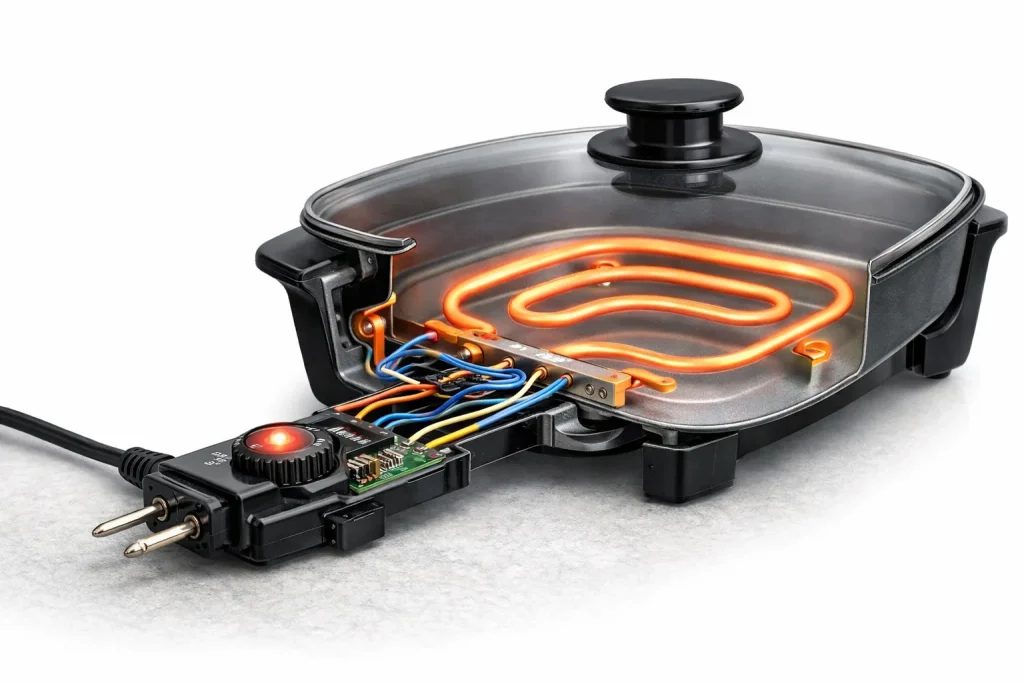
2. Burned-Out Heating Element Inside the Skillet
If the probe is fine, the problem is likely inside the pan.
What happens
Over time, the heating coil can:
- Burn out
- Crack internally
- Lose continuity
When this happens, the skillet gets power—but produces no heat.
Signs
- Skillet suddenly stopped heating one day
- No warmth at all, even after 10 minutes
- No burning smell or sparks
Can it be fixed?
Honestly?
Usually no.
Most electric skillets have sealed heating elements. Repairing them costs more than replacing the skillet.
3. Loose or Damaged Internal Wiring
This is common in older skillets or ones that were dropped.
Causes
- Internal wire disconnected
- Heat damage over time
- Manufacturing defect
Symptoms
- Light turns on
- No heat
- Skillet may heat randomly, then stop
I do NOT recommend opening the skillet unless you’re trained.
It’s a shock and fire risk.
4. Defective Thermostat or Thermal Fuse
Electric skillets have safety parts that stop overheating.
What can fail
- Thermostat stuck open
- Thermal fuse blown permanently
Once triggered, the skillet will never heat again.
Why this happens
- Overheating
- Cooking with no food or oil
- Power surges
This is a safety feature—but it means the skillet is done.
5. Outlet or Power Supply Issues (Less Common)
This is rare—but easy to check.
Try this
- Plug the skillet into another outlet
- Avoid extension cords
- Test with another high-power appliance
If everything else works fine, the issue is inside the skillet.
Quick Diagnosis Table
| Symptom | Most Likely Cause | Fix |
|---|---|---|
| Light on, no heat | Bad control probe | Replace probe |
| Worked before, now dead | Burned heating element | Replace skillet |
| Random heating | Loose internal wiring | Not repairable |
| Suddenly stopped after overheating | Blown thermal fuse | Replace skillet |
Can You Fix an Electric Skillet That Won’t Heat?
Here’s my honest, real-world answer.
You can fix it if:
- The temperature probe is faulty
- Replacement probe is available
You should not fix it if:
- Heating element is burned
- Internal wiring is damaged
- Thermal fuse is blown
In those cases, replacement is safer and cheaper.
Pros and Cons of Repair vs Replacement
Repairing
Pros
- Cheaper if it’s just the probe
- Less waste
Cons
- Limited repair options
- Not always safe
- Short-term fix
Replacing
Pros
- Safer
- Better temperature control
- New safety features
Cons
- Higher upfront cost
Expert Opinion (From Real Use)
After using electric skillets for years, here’s my take:
If your electric skillet turns on but doesn’t heat, 70% of the time the temperature probe is the problem. If replacing the probe doesn’t work, it’s time to move on. Internal heating failures are not worth repairing.
Safety always comes first with high-heat appliances.
How to Prevent This Problem in the Future
I follow these rules personally:
- Never plug or unplug the probe while hot
- Avoid cooking on max heat for long periods
- Clean probe connections regularly
- Don’t immerse the control probe in water
- Let the skillet cool fully before storage
These habits seriously extend lifespan.
FAQs on Electric Skillet Turns On but Doesn’t Heat
Why does my electric skillet light turn on but not heat?
Because power is reaching the unit, but the heating element or control system has failed—most often the temperature probe.
Can I replace the heating element in an electric skillet?
No. Most electric skillets have sealed heating elements that are not designed to be replaced safely.
Is it dangerous to use an electric skillet that won’t heat properly?
Yes. Electrical faults can cause short circuits or fire risks. Stop using it once heating fails.
How long do electric skillets usually last?
With proper use, 3–7 years. Overheating and probe damage shorten lifespan fast.
Should I repair or replace my electric skillet?
If a new probe fixes it, repair is fine. Otherwise, replacement is the safest option.
Final Thoughts
When an electric skillet turns on but doesn’t heat, it’s frustrating—but it’s rarely mysterious.
In most cases:
- The temperature control probe has failed
- Or the internal heating system is done
Start with the probe.
If that doesn’t work, don’t risk safety, replace the skillet.

“I believe great cooking starts with the right tools, trusted advice, and a little confidence in the kitchen.”
Hi, I’m Emma Carter. My love for cooking began in my grandmother’s kitchen, where I learned that every great meal starts with simple ingredients and the right cookware. Over the years, I’ve spent countless hours researching, testing, and comparing kitchen appliances, cookware, coffee makers, air fryers, and other everyday kitchen essentials.
Here at KiCook, my goal is to make your buying decisions easier with honest product reviews, practical buying guides, and easy-to-follow cooking tips. Whether you’re upgrading your kitchen or searching for the best appliance for your home, I focus on providing clear, reliable, and research-backed information you can trust.
When I’m not testing new kitchen gadgets or writing in-depth guides, you’ll usually find me trying new recipes, visiting local farmers’ markets, or enjoying a quiet cup of coffee while planning my next kitchen project.



1 thought on “Electric Skillet Turns On but Doesn’t Heat – What’s Actually Wrong?”