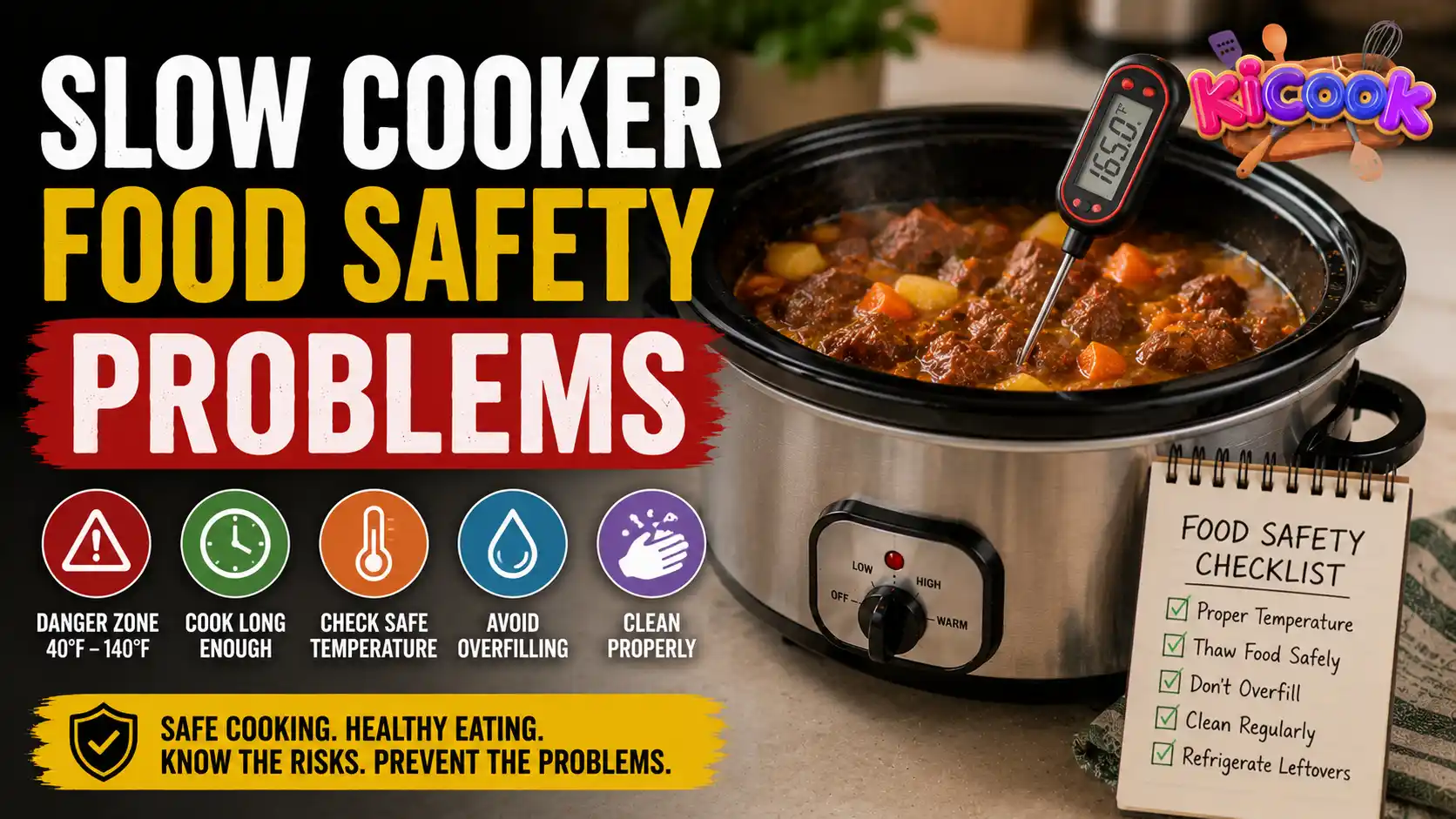
Slow cooker food safety problems usually happen because of low cooking temperatures, poor food handling, or leaving food in the danger zone for too long. I learned that safe slow cooking is simple once you understand proper temperature control, storage, reheating, and cleaning habits.
Why Slow Cooker Food Safety Matters
I have used slow cookers for years because they save time and make cooking easier. I can prepare dinner in the morning and come back home to a warm meal. But over time, I also learned that slow cooker food safety is something people often ignore.
Many people worry about:
- Food poisoning
- Undercooked meat
- Bacteria growth
- Unsafe reheating
- Power outages during cooking
- Leaving food out too long
These are real concerns. A slow cooker can be safe, but only if it is used correctly.
In this guide, I will explain the most common slow cooker food safety problems, how I avoid them, and what food safety experts recommend in the USA, UK, and Canada.
Common Slow Cooker Food Safety Problems
Food Staying in the Danger Zone Too Long
One of the biggest problems with slow cookers is food sitting at unsafe temperatures.
The “danger zone” is between 40°F and 140°F (4°C to 60°C). Bacteria grow very fast in this range.
If a slow cooker heats too slowly, harmful bacteria may multiply before the food becomes hot enough.
I once made a large beef stew with frozen meat. The center stayed cold for too long, and the texture felt strange later. That experience taught me an important lesson: never place large frozen meat directly into the slow cooker.
How I Prevent This Problem
- I thaw meat completely before cooking
- I preheat the cooker for a few minutes
- I use smaller meat portions
- I avoid overfilling the pot
- I check food temperature with a thermometer
Using Frozen Meat in a Slow Cooker
Many people ask if frozen meat is safe in a crockpot.
From my experience, it is risky.
Frozen meat takes too long to reach a safe internal temperature. During that time, bacteria can grow.
According to food safety guidance from the USDA Food Safety and Inspection Service, thawing meat first is the safer option.
Better Option
I move frozen meat from the freezer to the fridge the night before cooking.
This simple habit greatly improves slow cooker safety.
Cross-Contamination Problems
Cross-contamination is another major issue.
Raw meat juices can spread bacteria to:
- Cutting boards
- Countertops
- Vegetables
- Kitchen towels
- Utensils
I used to place cooked ingredients back onto the same plate that held raw chicken. Thankfully, I realized the mistake early.
Now I always:
- Use separate cutting boards
- Wash hands with warm soapy water
- Sanitize surfaces after handling raw meat
- Keep raw poultry away from ready-to-eat foods
These habits reduce foodborne illness risks.
Slow Cooker Lid Safety Mistakes
I know it is tempting to lift the lid often while cooking. I used to do this every hour.
But each time the lid opens, heat escapes.
This can:
- Lower cooking temperature
- Increase cooking time
- Keep food in the danger zone longer
Now I only open the lid when absolutely necessary.
What Works Better
I use a glass-lid slow cooker so I can check food without opening it.
Overfilling the Slow Cooker
A slow cooker should never be packed completely full.
When overcrowded:
- Heat cannot circulate properly
- Food cooks unevenly
- Some areas may stay undercooked
I try to fill my slow cooker between half and two-thirds full.
This gives the best and safest results.
Underfilled Slow Cooker Problems
Too little food can also create issues.
Food may:
- Cook too fast
- Dry out
- Burn at the edges
A balanced amount of food helps maintain steady heat and moisture.
Unsafe Reheating in a Slow Cooker
One mistake many people make is reheating leftovers directly in the slow cooker.
I did this once with leftover chili. It took hours to become hot enough.
That delay can allow bacteria growth.
What I Do Instead
I reheat leftovers on the stove or in the microwave first. Then I move them into the slow cooker to stay warm.
This method is much safer.
Leaving Food on Warm Too Long
The warm setting is helpful, but it is not meant for endless holding.
Food left for many hours may:
- Lose quality
- Dry out
- Become unsafe if temperature drops
I try to eat slow cooker meals within two hours after cooking finishes.
Then I refrigerate leftovers quickly.
Improper Cooling of Leftovers
Large amounts of hot food cool slowly.
If leftovers stay at room temperature too long, bacteria can grow fast.
My Simple Cooling Routine
I divide leftovers into:
- Small shallow containers
- Thin portions
- Fast-cooling batches
Then I place them in the refrigerator within two hours.
This method works very well for soups, stews, and casseroles.
Slow Cooker Temperature Problems
Not all slow cookers heat the same way.
Older models sometimes cook at inconsistent temperatures.
I noticed this with an old unit I owned years ago. The food cooked unevenly, especially near the center.
Signs Your Slow Cooker May Be Unsafe
- Food stays watery after hours
- Meat remains tough and cool
- Cooking takes much longer than recipes suggest
- The outside becomes extremely hot
- The appliance has cracked parts
If I notice these problems, I replace the cooker.
Using a Food Thermometer
A food thermometer changed the way I cook.
Instead of guessing, I can confirm food is safe.
Safe Internal Temperatures
Here are common temperature targets:
- Chicken: 165°F (74°C)
- Ground meat: 160°F (71°C)
- Beef roast: 145°F (63°C)
- Pork: 145°F (63°C)
I always check the thickest part of the meat.
Power Outages During Slow Cooking
This problem worries many people.
If the power goes out while cooking, food safety becomes uncertain.
What I Follow
If food stayed below safe temperatures for over two hours, I throw it away.
It feels wasteful, but food poisoning is worse.
If I am home during the outage, I sometimes transfer the food to the stove or oven immediately.
Slow Cooker Cleaning Problems
A dirty slow cooker can hold bacteria and old food residue.
I pay close attention to:
- Lid seals
- Handles
- Heating edges
- Cracks in ceramic inserts
My Cleaning Routine
After every use:
- I unplug the cooker
- Let it cool slightly
- Wash the insert with hot soapy water
- Clean the lid carefully
- Dry completely before storage
I never place the heating base into water.
Cracked Ceramic Inserts Can Be Unsafe
A cracked crock should not be used.
Cracks may:
- Trap bacteria
- Cause uneven heating
- Break during cooking
I replace damaged inserts immediately.
Safe Meat Choices for Slow Cooking
Some meats work better than others.
I usually choose:
- Beef chuck roast
- Chicken thighs
- Pork shoulder
These cuts cook slowly and safely over long periods.
Thin fish fillets or delicate seafood may overcook too quickly.
Dairy Safety in Slow Cookers
Milk, cream, and cheese need special care.
I learned that adding dairy too early can cause:
- Curdling
- Separation
- Texture problems
Now I add dairy products during the final 30 minutes.
This improves both safety and flavor.
Safe Bean Cooking in Slow Cookers
Raw kidney beans can actually be dangerous.
They contain a natural toxin called phytohaemagglutinin.
Slow cookers may not reach high enough temperatures to destroy it quickly.
What I Always Do
I boil kidney beans for at least 10 minutes before adding them to the slow cooker.
This step is very important.
High-Risk Foods and Vulnerable Groups
Some people face higher food poisoning risks:
- Pregnant women
- Older adults
- Young children
- People with weakened immune systems
I am extra careful when cooking for family members in these groups.
I pay closer attention to:
- Cooking temperatures
- Fresh ingredients
- Storage times
- Expiration dates
Food Storage Safety Tips
Good storage habits matter as much as cooking.
What I Follow
- Refrigerate leftovers within two hours
- Store food below 40°F
- Use leftovers within 3–4 days
- Freeze extra portions quickly
I also label containers with dates.
This helps me avoid eating old food accidentally.
Common Slow Cooker Myths
“Low Heat Means Unsafe Cooking”
This is not always true.
A properly working slow cooker eventually reaches safe cooking temperatures.
The problem happens when people:
- Use frozen meat
- Overfill the cooker
- Interrupt cooking too often
“You Can Leave Food Cooking All Day No Matter What”
Cooking too long can damage texture and food quality.
Some meals become dry or mushy after excessive cooking.
I follow recipe timing carefully.
“Warm Mode Keeps Food Safe Forever”
Warm mode helps temporarily, but it is not a long-term storage method.
Food still needs refrigeration after serving.
Slow Cooker Safety Tips I Use Every Week
Here are the habits that help me avoid slow cooker food safety problems:
Before Cooking
- Wash hands
- Clean surfaces
- Thaw meat safely
- Check ingredient freshness
During Cooking
- Keep the lid closed
- Avoid overcrowding
- Cook at recommended times
- Use a thermometer
After Cooking
- Refrigerate leftovers quickly
- Store in shallow containers
- Reheat properly
- Clean the cooker thoroughly
These simple steps make a huge difference.
Best Ingredients for Safer Slow Cooking
Some ingredients hold up better during long cooking times.
Ingredients I Trust Most
- Root vegetables
- Beans
- Tough meat cuts
- Broths
- Lentils
- Onions
- Potatoes
- Carrots
These ingredients cook evenly and stay safe for long periods.
Signs Food May No Longer Be Safe
I never take chances with suspicious food.
Warning Signs
- Sour smell
- Slimy texture
- Mold
- Bubbling when cold
- Strange taste
If something feels wrong, I throw it away.
Food Safety Rules in the USA, UK, and Canada
Food safety agencies across these countries give similar advice:
- Keep foods out of the danger zone
- Cook meat fully
- Refrigerate leftovers quickly
- Avoid cross-contamination
Helpful resources include:
I often check these sites when I want updated guidance.
Expert Quotes About Slow Cooker Food Safety
“Food thermometers are the best way to know food is safely cooked.” — Meredith Carothers
“Keeping hot food hot and cold food cold is essential for preventing foodborne illness.” — Ben Chapman
“When in doubt, throw it out.” — Sandra Eskin
Frequently Asked Questions
Is it safe to leave a slow cooker on while at work?
Yes, if the cooker is working properly and the recipe follows safe cooking guidelines. I still avoid overfilling and always use thawed ingredients.
Can I put frozen chicken in a slow cooker?
I do not recommend it. Frozen chicken may stay in the danger zone too long before reaching safe temperatures.
How long can food stay on warm in a slow cooker?
I try not to leave food on warm for more than 2–4 hours after cooking finishes.
Can slow cookers cause food poisoning?
Yes, improper use can increase the risk. Unsafe temperatures, poor hygiene, and incorrect storage are common causes.
Is it safe to reheat leftovers in a slow cooker?
I prefer reheating on the stove or microwave first because it heats food faster and more safely.
What temperature should slow-cooked chicken reach?
Chicken should reach 165°F (74°C) internally.
How often should I clean my slow cooker?
I clean it after every use, including the lid and outer edges.
Can I leave soup in the slow cooker overnight?
No. Leftovers should be refrigerated within two hours after cooking.
My Personal Experience With Slow Cooker Food Safety
Over the years, I made several mistakes:
- Cooking frozen meat
- Leaving soup out too long
- Reheating food slowly
- Opening the lid too often
Thankfully, I learned from those experiences before anyone became seriously ill.
Now my slow cooker feels much safer because I follow simple food safety habits every time I cook.
The good news is that most slow cooker food safety problems are preventable.
Conclusion
Slow cooker food safety problems usually happen because of temperature mistakes, unsafe food handling, or improper storage. Once I learned safe cooking habits, my slow cooker became one of the safest and easiest appliances in my kitchen.
By thawing meat properly, using a food thermometer, refrigerating leftovers quickly, and keeping the cooker clean, you can enjoy slow cooker meals with confidence. Small safety habits make a big difference for protecting your family and preventing foodborne illness.
“I believe great cooking starts with the right tools, trusted advice, and a little confidence in the kitchen.”
Hi, I’m Emma Carter. My love for cooking began in my grandmother’s kitchen, where I learned that every great meal starts with simple ingredients and the right cookware. Over the years, I’ve spent countless hours researching, testing, and comparing kitchen appliances, cookware, coffee makers, air fryers, and other everyday kitchen essentials.
Here at KiCook, my goal is to make your buying decisions easier with honest product reviews, practical buying guides, and easy-to-follow cooking tips. Whether you’re upgrading your kitchen or searching for the best appliance for your home, I focus on providing clear, reliable, and research-backed information you can trust.
When I’m not testing new kitchen gadgets or writing in-depth guides, you’ll usually find me trying new recipes, visiting local farmers’ markets, or enjoying a quiet cup of coffee while planning my next kitchen project.