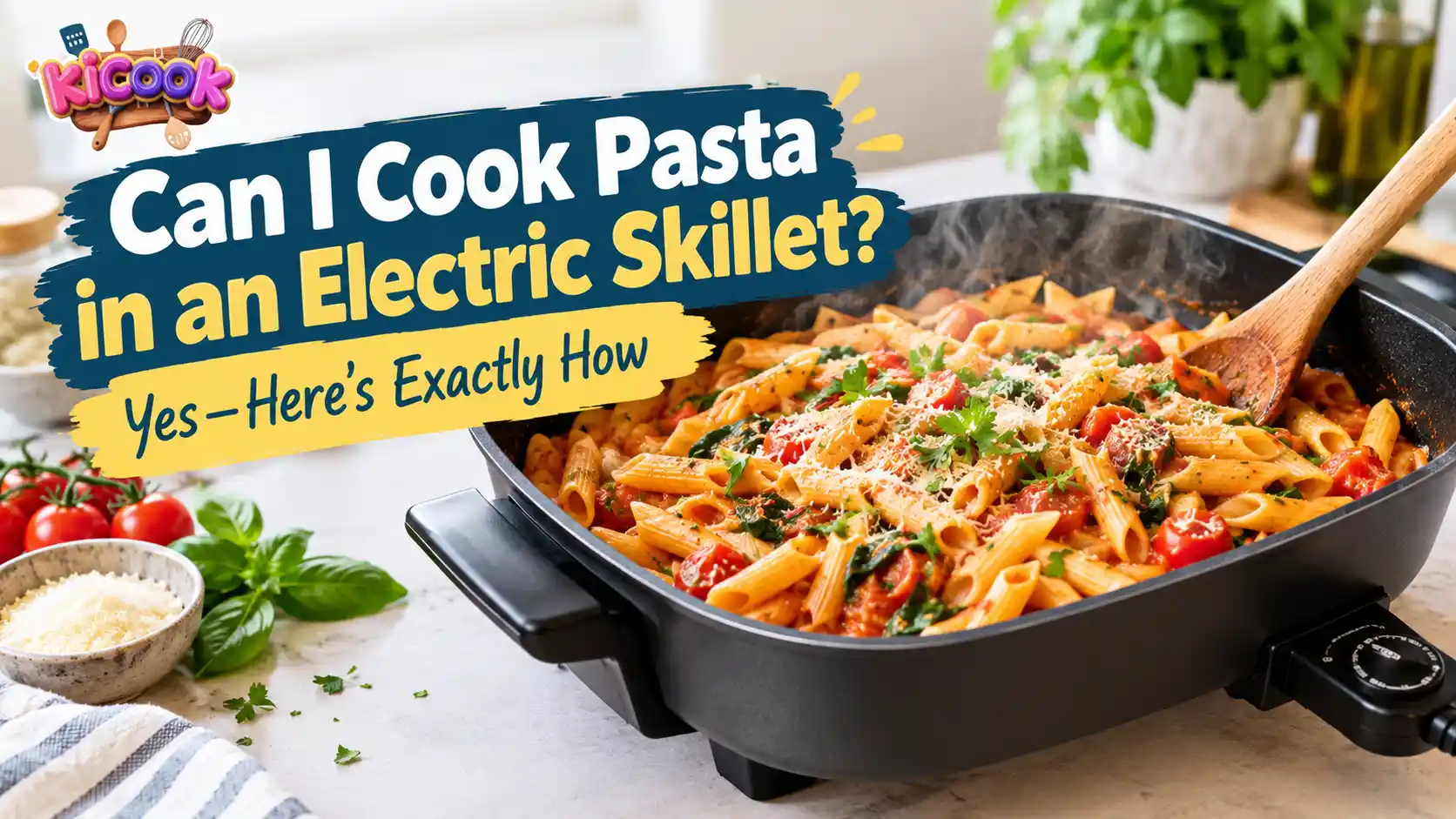
Yes, you can cook pasta in an electric skillet, and it is easier than you might expect.
A deep electric skillet can heat water, maintain a steady boil or simmer, cook pasta until tender, and even let you finish the noodles directly in the sauce. You can use the traditional boil-and-drain method or make a one-pan pasta meal where the noodles absorb most of the cooking liquid.
The main difference compared with using a regular pot is space. An electric skillet is usually wider and shallower, so you need to pay closer attention to the amount of water, evaporation, temperature, and skillet capacity.
This guide walks you through both methods, the best temperature to use, how much water you need, how to prevent sticking, and what to do if your pasta is not cooking properly.
Can You Really Cook Pasta in an Electric Skillet?
Absolutely.
An electric skillet has its own heating element and thermostat, so it can do much more than fry eggs or cook pancakes. Deeper models can simmer sauces, cook rice, make casseroles, and prepare one-pan pasta meals.
If you are curious about everything else this appliance can handle, see our guide to what you can cook in an electric skillet.
You may also hear the appliance called an electric frying pan or electric frypan, especially in the UK and Australia. For practical pasta cooking, these terms usually refer to the same general type of appliance.
The key requirement is depth. Your skillet needs enough room to hold the pasta and cooking liquid without bubbling over.
What You Need to Cook Pasta in an Electric Skillet
You do not need any unusual equipment.
For a basic batch of pasta, gather:
- An electric skillet with reasonably deep sides
- A fitted lid
- Dry or fresh pasta
- Water
- Salt
- Wooden, silicone, nylon, or another utensil approved for your skillet
- Tongs or a slotted spoon
- A heat-resistant measuring cup
- Pasta sauce, if desired
- Colander, if using the traditional draining method
If your skillet has a nonstick coating, avoid metal utensils unless the manufacturer specifically says they are safe.
Two Ways to Cook Pasta in an Electric Skillet
There are two practical ways to do it.
Method 1: Traditional Boil-and-Drain Pasta
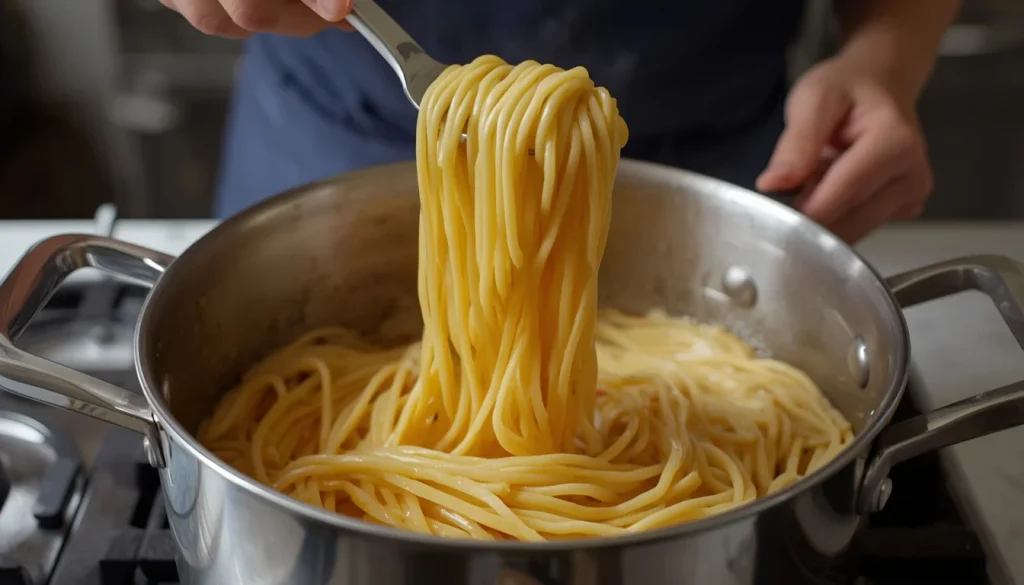
This is closest to cooking pasta in a regular saucepan.
You heat enough water to cover the noodles, bring it to a boil, add the pasta, cook until al dente, and drain.
This method gives you the most control over pasta texture and works especially well for:
- Spaghetti
- Penne
- Macaroni
- Fusilli
- Rotini
- Farfalle
- Linguine
Method 2: One-Pan or No-Drain Pasta
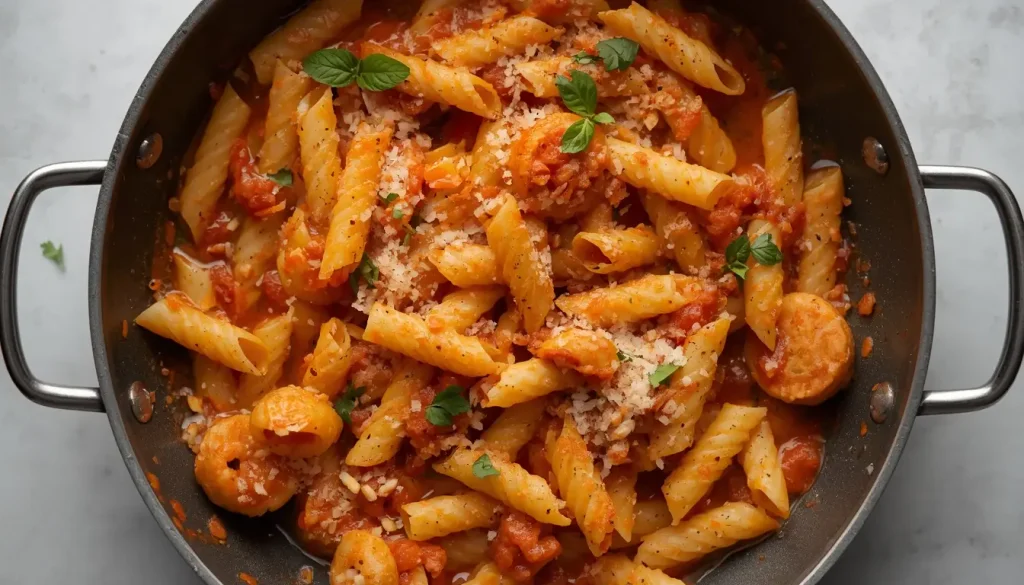
With this method, the pasta cooks directly in a measured amount of water, broth, tomato sauce, or a combination of liquids.
Instead of draining away the cooking water, the pasta absorbs much of it.
This method is useful when you want:
- Fewer dishes to wash
- A quick weeknight dinner
- Pasta cooked directly with sauce
- A one-pan meal with vegetables or meat
Neither method is always better. The right choice depends on the dish you are making.
How to Cook Pasta in an Electric Skillet Step by Step
Here is the simplest traditional method.
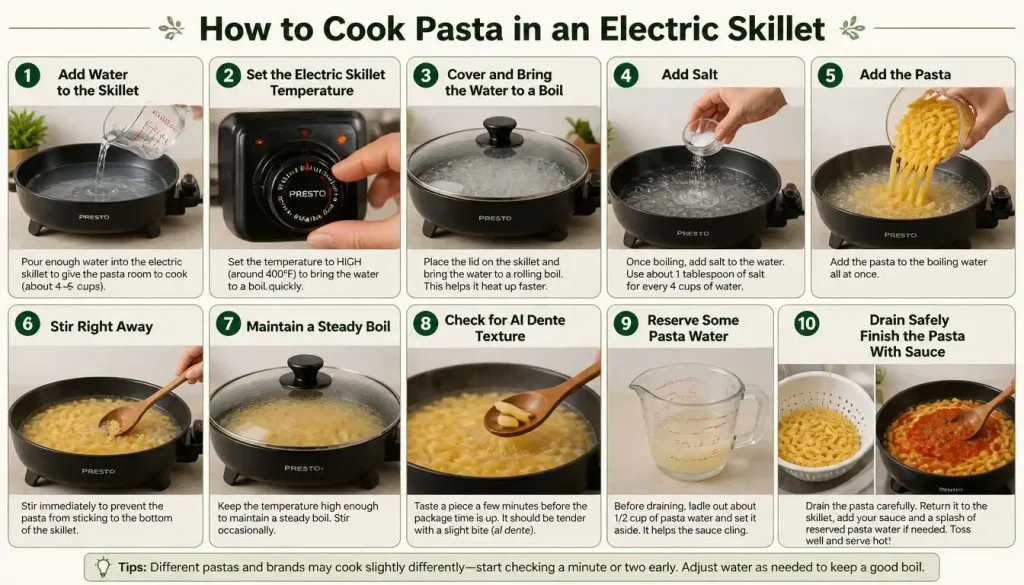
Step 1: Add Water to the Skillet
Pour enough water into the skillet for the pasta to remain submerged once it begins to soften.
Do not automatically fill the skillet to the top.
Electric skillets are shallower than stockpots, and boiling water can foam rapidly once pasta releases starch.
Leave plenty of space between the water level and the rim.
If your appliance has a maximum-fill recommendation, follow it.
Step 2: Set the Electric Skillet Temperature
A good starting point for heating the water is around 350°F or 177°C.
Some skillets may require a slightly higher setting to get a large amount of water boiling efficiently.
The temperature printed on the skillet dial is the appliance setting—it does not mean the water itself reaches 350°F. At normal sea-level pressure, boiling water remains around 212°F or 100°C.
Official Presto electric skillet instructions recommend heating food at 350°F until it boils and then lowering the setting when a simmer is needed. Different appliances can behave differently, so your model’s manual should always take priority.
If you often find electric skillet temperature settings confusing, our guide to what medium heat means on an electric skillet explains Fahrenheit and Celsius settings in more detail.
Step 3: Cover and Bring the Water to a Boil
Place the lid on the skillet while the water heats.
A lid reduces heat loss and generally helps the water reach a boil sooner.
Once the water is bubbling steadily, remove or partially open the lid before adding pasta so you can watch for foaming.
Step 4: Add Salt
Salt the water once it is hot or boiling.
The amount you use comes down partly to taste, but you do not need excessively salty water to cook pasta successfully.
Barilla’s traditional pasta guidance recommends adding salt to boiling water before the pasta goes in.
You can read their full pasta cooking guide for conventional stovetop pasta technique.
Step 5: Add the Pasta
Add the dry pasta carefully.
For short pasta such as penne or macaroni, spread it across the skillet rather than dumping everything into one pile.
For spaghetti or linguine, the noodles may not fit under the water immediately. Place them across the skillet and wait for the submerged ends to soften. Then gently bend or press the remaining strands into the water using tongs.
Do not snap spaghetti unless you actually prefer shorter noodles.
Step 6: Stir Right Away
Give the pasta a good stir during the first minute.
This matters because freshly added noodles release surface starch and are especially likely to stick to one another at the beginning.
Continue stirring occasionally throughout cooking.
Traditional pasta guidance also recommends regular stirring to improve even cooking and reduce sticking.
Step 7: Maintain a Steady Boil
You do not need violent bubbling.
Once the pasta is cooking, adjust the thermostat so the water continues bubbling steadily without splashing or foaming over the sides.
If the skillet starts boiling too aggressively, lower the temperature.
If the bubbling stops completely and the pasta is sitting in barely warm water, increase the temperature slightly.
Step 8: Check for Al Dente Texture
Begin checking your pasta around one or two minutes before the package’s suggested cooking time ends.
Take out one piece and bite into it.
Ideally, pasta should be tender but still have a little firmness in the center rather than becoming soft and mushy.
The package cooking time is more reliable than a universal pasta chart because different brands, shapes, thicknesses, and ingredients cook at different rates. Barilla likewise recommends following the cooking time printed on the package.
Step 9: Reserve Some Pasta Water
Before draining, scoop out about half a cup to one cup of the cooking water.
You might not need all of it, but having some nearby makes it much easier to loosen your sauce later.
Pasta water contains starch released by the noodles. Adding a small amount to sauce can help create a smoother, better-coated pasta dish.
Step 10: Drain Safely
This is where an electric skillet needs more care than a normal saucepan.
Do not automatically grab a large skillet full of boiling water and carry it across the kitchen.
Electric skillets can be wide, heavy, and awkward to handle when full.
Some appliance manuals specifically warn against moving the appliance while it contains hot liquid because of the burn risk.
Safer options include:
- Removing pasta with a slotted spoon
- Using tongs for long noodles
- Scooping pasta into a colander in smaller amounts
- Carefully removing water using a heat-resistant cup or ladle
If your skillet is designed to be safely detached and drained, follow its manufacturer’s instructions.
Step 11: Finish the Pasta With Sauce
Once the excess water is gone, reduce the temperature.
Add your sauce directly to the skillet and toss it with the pasta for a minute or two.
If the sauce becomes too thick, add a splash of your reserved pasta water.
Finishing pasta with sauce and a little pasta water is also recommended in Barilla’s pasta guidance.
What Temperature Should You Cook Pasta at in an Electric Skillet?
There is no single setting that works perfectly for every model.
A practical starting guide is:
| Cooking Stage | Electric Skillet Setting |
|---|---|
| Heating the water | Around 350°F / 177°C |
| Bringing water to a boil | Around 350°F or adjust upward if needed |
| Cooking pasta | Adjust to maintain a steady boil |
| Gentle one-pan simmer | Usually below the boiling setting |
| Finishing pasta with sauce | Low to medium-low |
Do not confuse the skillet thermostat setting with the actual temperature of the water.
For example, setting an electric skillet to 350°F helps supply enough heat to bring the water to a boil, but the boiling water itself does not become 350°F.
Presto’s instructions specifically describe heating at 350°F until boiling and then reducing the thermostat for simmering.
How Much Water Do You Need for Pasta in an Electric Skillet?
The answer depends on which cooking method you use.
For Traditional Boil-and-Drain Pasta
Use enough water so that the pasta can remain submerged and move around as you stir it.
Traditional pasta instructions often use much more water than an electric skillet can safely hold. For example, Barilla’s conventional method uses a large pot with plenty of water so the pasta has room to move freely.
Do not try to duplicate a large stockpot’s water volume if your electric skillet cannot safely accommodate it.
Instead:
- Cook a smaller batch.
- Use the deepest skillet you have.
- Keep the pasta covered with water.
- Stir regularly.
- Add a little hot water if the level drops too far.
For One-Pan Pasta
You intentionally use much less liquid.
The goal is for the noodles to absorb most of the water or sauce by the time they are tender.
There is no universal water-to-pasta ratio for every one-pan recipe because tomatoes, broth, vegetables, meat, pasta shape, and skillet width all affect how much liquid is needed.
If the pasta is still firm and the skillet is dry, add a little hot water at a time rather than pouring in a large amount all at once.
How Much Pasta Can You Cook in an Electric Skillet?
Skillet depth and total capacity matter more than diameter alone.
A shallow 12-inch skillet may have a wide cooking surface but still hold much less liquid than a deep 12-inch skillet.
As a practical rule, avoid packing the skillet tightly.
Your pasta needs room for:
- Water
- Bubbling
- Foam
- Stirring
- Expansion as the noodles hydrate
If you are unsure whether your skillet can comfortably cook a full 1-pound or 450-gram package, start with half the package.
A deep 16-inch skillet generally gives you more room for family-sized meals than a compact model, but you should still follow the capacity limits of your specific appliance.
How Long Does Pasta Take in an Electric Skillet?
Once the water is boiling, pasta usually takes roughly the same amount of time it would in a regular pot.
Approximate times are:
| Pasta Type | Approximate Cooking Time |
|---|---|
| Spaghetti | 8–12 minutes |
| Penne | 10–13 minutes |
| Elbow macaroni | 7–10 minutes |
| Fusilli or rotini | 9–12 minutes |
| Linguine | 9–12 minutes |
| Fresh pasta | 2–5 minutes |
These are only starting points.
Always check the package because pasta thickness and ingredients vary.
Also remember that this does not include the time required for the electric skillet to heat the water.
Can You Cook Pasta in an Electric Skillet Without Draining It?
Yes.
This is one of the best reasons to make pasta in an electric skillet.
Instead of using a large amount of water and pouring it away, you can cook the pasta in a smaller amount of liquid and let the noodles absorb most of it.
A simple method looks like this:
- Add your sauce or cooking liquid.
- Add enough water or broth for the pasta to cook.
- Bring the mixture to a gentle boil.
- Add dry pasta.
- Reduce to a controlled simmer.
- Cover as needed.
- Stir regularly.
- Add small amounts of hot liquid if the pan becomes dry.
- Stop cooking when the pasta is tender and the sauce has reached the consistency you want.
Because the starch stays in the skillet, no-drain pasta can produce a naturally thicker sauce.
Can You Cook Pasta Directly in Sauce?
Yes, provided the sauce contains enough liquid.
Trying to cook dry pasta in a very thick jar of tomato sauce without additional liquid is likely to leave you with scorched sauce and undercooked noodles.
Instead, combine the sauce with water, broth, milk, or another liquid appropriate for the recipe.
As the pasta cooks, it absorbs liquid and releases starch.
Stir frequently because thicker sauces are more likely to stick to the bottom than plain water.
For creamy sauces, it is often easier to cook the noodles until almost done before adding ingredients that can scorch or separate.
Why Does Water Evaporate Faster in an Electric Skillet?
Electric skillets usually have a wide cooking surface.
That gives water more surface area from which to evaporate than a narrow saucepan.
You may notice evaporation even faster when:
- The lid is off
- The temperature is too high
- You are cooking a small amount of water
- Your skillet is especially wide and shallow
If the pasta is still firm and the water level is getting low, add a small amount of hot water.
Cold water works too, but it can temporarily reduce the cooking temperature and slow things down.
Using the lid for part of the cooking process can also reduce evaporation, although you need to watch closely for foaming.
Boiling Pasta vs One-Pan Pasta in an Electric Skillet
Both methods work, but they produce slightly different results.
| Method | Traditional Boil-and-Drain | One-Pan / No-Drain |
|---|---|---|
| Texture control | Excellent | Good |
| Cleanup | More | Less |
| Liquid needed | More | Less |
| Sauce thickness | Separate control | Naturally thickened |
| Risk of sticking | Moderate | Higher |
| Requires draining | Yes | Usually no |
| Best for | Classic pasta dishes | Quick one-pan dinners |
Choose boil-and-drain when pasta texture is your priority.
Choose one-pan pasta when convenience and fewer dishes matter more.
Which Types of Pasta Work Best in an Electric Skillet?
Most pasta shapes can work.
Short Pasta
Penne, rotini, fusilli, macaroni, shells, and farfalle are especially easy because they fit comfortably inside the skillet.
They are also easier to stir than long noodles.
Spaghetti
Spaghetti works well, but a small skillet may not accommodate the dry strands at first.
Let the submerged ends soften, then gently guide the remaining noodles into the water.
Linguine and Fettuccine
These can also be cooked successfully, although wider noodles need enough room to move without clumping.
Fresh Pasta
Fresh pasta cooks very quickly.
Watch it carefully because a minute or two can be the difference between pleasantly tender pasta and an overcooked texture.
Gluten-Free Pasta
You can cook gluten-free pasta in an electric skillet too.
However, different gluten-free blends behave differently. Some release more starch, foam more aggressively, or become soft quickly.
Follow the package directions and check the pasta early.
How to Keep Pasta From Sticking in an Electric Skillet
Pasta sticking together is usually easy to prevent.
Stir During the First Minute
This is the most important time.
Noodles that sit motionless after being dropped into hot water can quickly stick together.
Keep Enough Water in the Skillet
If the water level becomes too low, noodles crowd together and starch becomes more concentrated.
Add extra hot water if necessary.
Maintain Enough Heat
If the water stops bubbling completely, noodles may sit together in warm, starchy water rather than cooking properly.
Adjust the thermostat as needed.
Do Not Overload the Skillet
Trying to force too much pasta into a small appliance makes stirring difficult.
Cook in batches if necessary.
Avoid Overcooking
Overcooked pasta releases more starch and becomes softer, which can make it feel sticky.
Should You Add Oil to Pasta Water?
Usually, no.
Adding oil to boiling pasta water is not the best solution for sticky noodles.
Regular stirring works better, and oil can make it harder for sauce to cling to the pasta.
Barilla specifically recommends skipping oil in pasta water and relying on proper cooking and stirring instead.
If you are having sticking problems with the appliance itself rather than with the noodles, see our guide to why food sticks to an electric skillet.
Can You Cook Pasta, Vegetables, and Meat Together?
Yes, and an electric skillet is particularly useful for complete one-pan meals.
You could combine pasta with:
- Ground beef
- Chicken
- Sausage
- Meatballs
- Mushrooms
- Bell peppers
- Onions
- Spinach
- Broccoli
- Zucchini
- Tomatoes
The order matters.
Raw meat should usually be browned or cooked appropriately before you move on to the pasta and sauce.
For example, you could brown ground beef and onions, drain excess fat if necessary, add tomato sauce and water, then cook dry pasta directly in the mixture.
If using raw chicken or other meat, use a food thermometer rather than relying on appearance alone.
For U.S. readers, the USDA safe minimum internal temperature chart recommends 165°F/73.9°C for poultry and 160°F/71.1°C for ground meats. Whole cuts of beef, pork, lamb, and veal have different recommendations.
Readers in the UK, Canada, and Australia should also follow their local food-safety authority’s guidance.
Common Electric Skillet Pasta Problems
A few problems come up more often than others.
| Problem | Likely Cause | What to Do |
|---|---|---|
| Water will not boil | Setting too low, too much water, weak appliance | Cover, increase heat, or reduce batch size |
| Water keeps boiling over | Too much water or excessive heat | Lower setting and partially remove lid |
| Water disappears too quickly | Wide pan, high heat, lid off | Add hot water and reduce heat |
| Pasta sticks together | Not enough stirring or water | Stir more frequently and add liquid |
| Pasta cooks unevenly | Crowding or insufficient stirring | Separate noodles and stir |
| Pasta stays hard | Not enough liquid or heat | Add hot water and continue cooking |
| Pasta becomes mushy | Cooked too long | Check before package time ends |
| Bottom starts burning | Too little liquid or excessive heat | Reduce temperature and add liquid |
| Skillet cycles on and off | Normal thermostat cycling in some cases | Watch cooking performance |
Electric skillets normally cycle their heating elements on and off to maintain a selected temperature. However, repeated shutdowns or major temperature problems can also indicate appliance trouble.
If your skillet behaves unusually, our guide to common electric skillet problems and fixes can help you narrow down the cause.
Is an Electric Skillet Better Than a Pot for Pasta?
Not necessarily, but it has several advantages.
Advantages of an Electric Skillet
An electric skillet can be especially useful when:
- Your stovetop is unavailable
- All your burners are occupied
- You live in a small kitchen
- You are cooking in an RV where permitted
- You want a one-pan dinner
- You want to brown ingredients and simmer pasta in the same appliance
Disadvantages
A regular pot is usually better when:
- You are cooking a large amount of pasta
- You need lots of boiling water
- You want easy draining
- Your electric skillet is shallow
- You are cooking very long noodles in a small skillet
If you are choosing between countertop appliances, our electric skillet vs electric griddle comparison explains why a skillet is more suitable for pasta and other dishes containing liquid.
Is It Safe to Boil Water and Pasta in an Electric Skillet?
It can be safe when the appliance is designed for cooking with liquid and you follow its instructions.
A few precautions matter.
Check the Manual
Electric skillet designs vary.
Do not assume every model has the same capacity or operating instructions.
Do Not Overfill the Skillet
Leave enough space for boiling, foaming, and stirring.
Keep Electrical Components Dry
Never allow the temperature controller, plug, or electrical connection to sit in water.
Presto’s electric skillet instructions specifically warn against immersing the heat control, cord, or plug in liquid.
Be Careful Moving Hot Liquid
A wide electric skillet filled with boiling water can be difficult to carry safely.
Whenever possible, remove the pasta or water without moving the entire hot appliance.
Use a Stable Surface
Place the skillet on a dry, level, heat-resistant surface with enough clearance around it.
The manufacturer’s instructions should take priority over general cooking advice.
How to Clean an Electric Skillet After Cooking Pasta
Pasta is not particularly difficult to clean up, but dried starch and sauce become much harder to remove if you leave them overnight.
A simple routine is:
- Turn the skillet off.
- Unplug it.
- Allow it to cool.
- Remove the temperature controller if your model allows it.
- Wash approved cooking surfaces with warm, soapy water.
- Use a soft cloth or non-abrasive sponge on nonstick coatings.
- Rinse and dry thoroughly.
Do not assume the complete appliance can go into a dishwasher.
Cleaning rules vary widely between models. Our guide explaining whether electric skillets are dishwasher safe covers removable pans, lids, heating bases, and temperature controls in more detail.
For example, the Presto model instructions reviewed for this guide tell users not to immerse the heat control and advise washing the skillet and cover according to the manual’s specific cleaning procedure.
Tips for Better Electric Skillet Pasta
A few small changes make the process much easier:
- Use a deep skillet whenever possible.
- Do not fill the appliance to the rim.
- Heat the water with the lid on.
- Watch closely once pasta is added because starch can increase foaming.
- Stir immediately after adding dry pasta.
- Stir long noodles more frequently during the first few minutes.
- Follow the pasta package for cooking time.
- Taste the pasta before draining.
- Reserve a little cooking water.
- Add hot water if evaporation leaves the pasta exposed.
- Reduce the heat before finishing pasta in thick sauce.
- Cook smaller batches if the skillet feels crowded.
- Never move a heavy skillet of boiling water unless necessary.
- Follow your appliance manual over generic temperature advice.
Frequently Asked Questions About Can I Cook Pasta in an Electric Skillet
Can you boil pasta in an electric skillet?
Yes. If your electric skillet is deep enough and its manufacturer allows cooking with water, you can bring water to a boil and cook pasta much like you would in a saucepan.
Can you boil water in an electric skillet?
Many electric skillets can heat water to boiling. However, capacity and manufacturer instructions differ, so check your specific model before filling it with a large amount of liquid.
Can you cook pasta in an electric frying pan?
Yes. An electric frying pan or electric frypan is generally the same type of appliance people in the U.S. commonly call an electric skillet. A deep model with temperature control and a lid is best for pasta.
What temperature should an electric skillet be for pasta?
Around 350°F/177°C is a practical starting point for heating water. Once boiling begins, adjust the setting as necessary to maintain steady bubbling without boiling over. Some models may need a different setting.
How long does pasta take in an electric skillet?
After the water reaches a boil, most dried pasta takes roughly 7 to 13 minutes, depending on the shape and brand. Follow the package cooking time for the most accurate result.
How much water should I put in the skillet?
For boil-and-drain pasta, use enough water to keep the noodles submerged and moving freely without exceeding the skillet’s safe capacity.
For no-drain pasta, use only the amount required by your recipe and add more hot liquid if necessary.
Do I need to boil pasta before putting it in an electric skillet?
No.
If you are making one-pan pasta, dry noodles can go directly into sauce and cooking liquid inside the skillet.
If you already have cooked pasta and simply want to combine it with sauce, you can add the cooked noodles near the end.
Can you cook pasta without draining it?
Yes. Use a smaller, measured amount of liquid and allow the pasta to absorb it while cooking. Stir frequently and add more liquid gradually if the noodles remain firm.
Can you cook spaghetti in an electric skillet?
Yes. Spaghetti works well, particularly in a large skillet. If the uncooked noodles do not fit at first, let the submerged ends soften and then gently guide the rest into the water.
Can you cook macaroni in an electric skillet?
Yes. Macaroni is actually one of the easiest pasta shapes to cook in an electric skillet because it is small and easy to stir.
Can you make mac and cheese in an electric skillet?
Yes.
You can cook the macaroni first and then prepare the cheese sauce in the same skillet, or use a carefully measured one-pan method.
A deeper skillet is preferable because milk and cheese sauces can bubble and scorch if the temperature is too high.
Can you cook pasta directly in tomato sauce?
Yes, but you need additional liquid.
Tomato sauce alone is usually too thick to hydrate dry pasta properly. Add water or broth and simmer gently while stirring regularly.
Should I cover pasta while cooking it?
Use the lid while heating the water because it can speed up the process.
After the pasta goes in, you can cook uncovered or partially covered. If you keep the lid fully closed, watch carefully because starchy water may foam and boil over.
Can you reheat cooked pasta in an electric skillet?
Yes.
Add the pasta with a small amount of sauce, water, or broth and warm it over low to medium-low heat.
Stir regularly so the bottom does not dry out or burn.
If reheating pasta containing meat, dairy, or other perishable ingredients, follow appropriate food-safety guidance. USDA recommends reheating leftovers to 165°F/73.9°C. (USDA Food Safety and Inspection Service)
Does altitude affect pasta cooking time?
It can.
At higher elevations, water boils at a lower temperature, so foods cooked in boiling water may require more time. If your pasta remains firm after its usual cooking time, continue checking it rather than relying only on the timer.
Final Answer: Is an Electric Skillet Good for Cooking Pasta?
Yes, an electric skillet can be a very practical way to cook pasta.
For a traditional result, use enough water to cover the noodles, bring it to a steady boil, stir regularly, and cook according to the package directions.
For an easier one-pan meal, cook the pasta directly in sauce, broth, or measured cooking liquid and let the noodles absorb most of it.
The biggest things to watch are skillet capacity, water evaporation, temperature, sticking, and safe handling of hot liquid.
Once you learn how your particular skillet responds to temperature changes, pasta is one of the easiest one-pan meals you can make with it.

“I believe great cooking starts with the right tools, trusted advice, and a little confidence in the kitchen.”
Hi, I’m Emma Carter. My love for cooking began in my grandmother’s kitchen, where I learned that every great meal starts with simple ingredients and the right cookware. Over the years, I’ve spent countless hours researching, testing, and comparing kitchen appliances, cookware, coffee makers, air fryers, and other everyday kitchen essentials.
Here at KiCook, my goal is to make your buying decisions easier with honest product reviews, practical buying guides, and easy-to-follow cooking tips. Whether you’re upgrading your kitchen or searching for the best appliance for your home, I focus on providing clear, reliable, and research-backed information you can trust.
When I’m not testing new kitchen gadgets or writing in-depth guides, you’ll usually find me trying new recipes, visiting local farmers’ markets, or enjoying a quiet cup of coffee while planning my next kitchen project.