
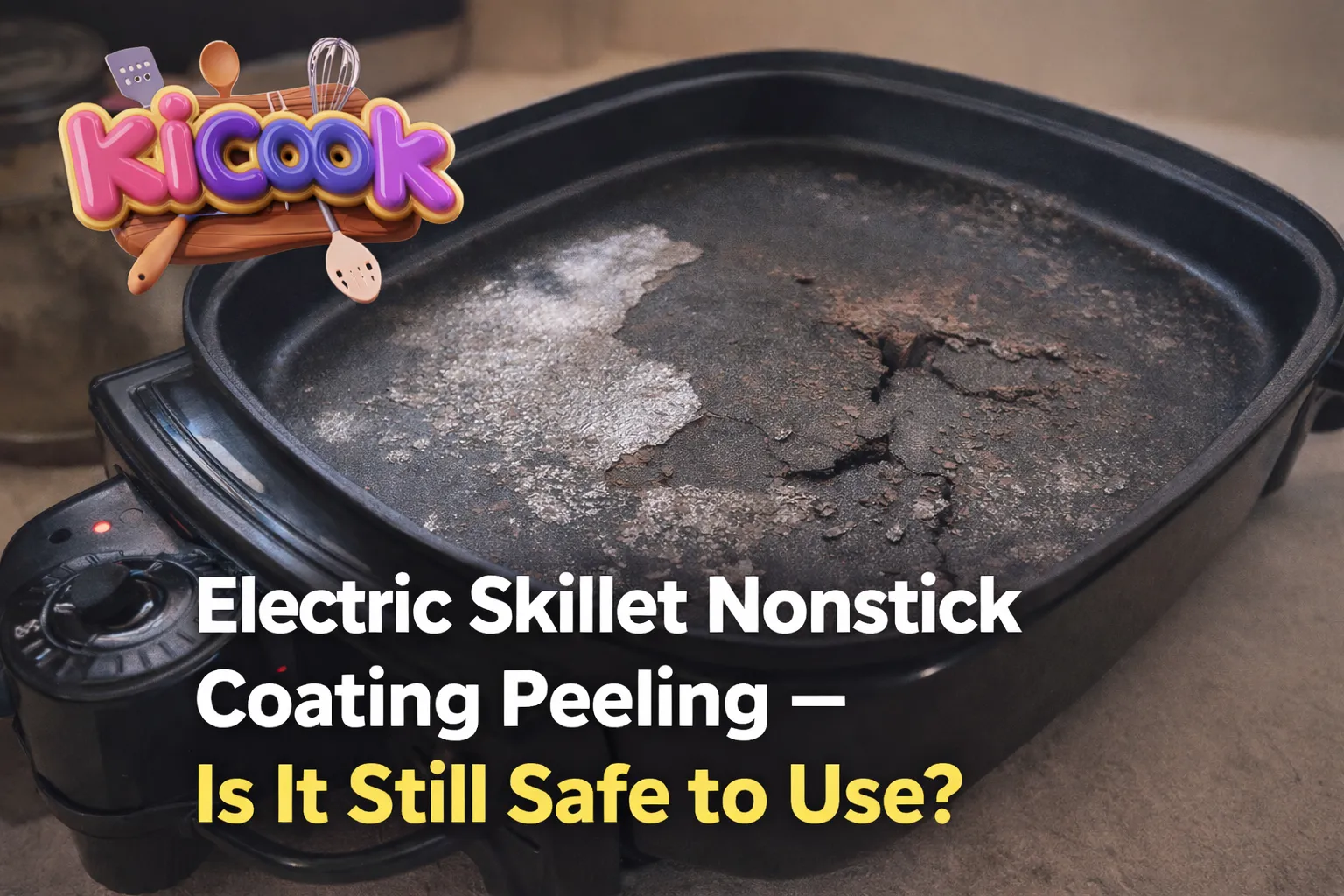
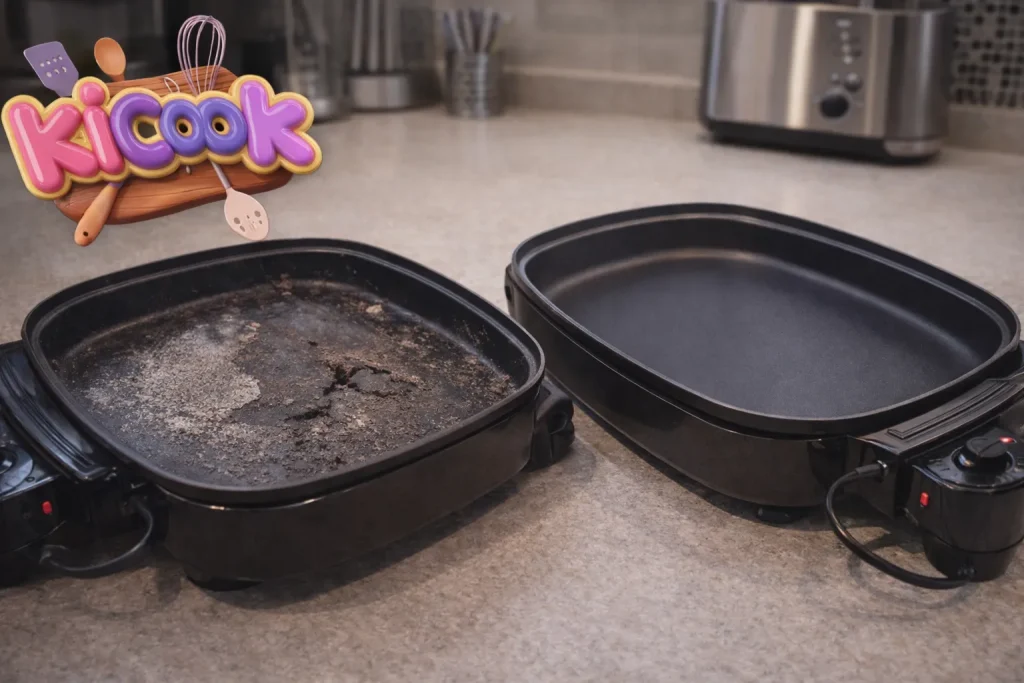
If your electric skillet nonstick coating peeling, it is no longer safe to use for everyday cooking. Peeling coating can mix with food, reduce heat control, and signal deeper safety issues—replacement is usually the safest choice.
Why Is the Nonstick Coating on My Electric Skillet Peeling?
I’ve seen this problem a lot, especially with skillets that are used daily. Nonstick coating does not peel overnight. It usually happens because of long-term stress on the surface.
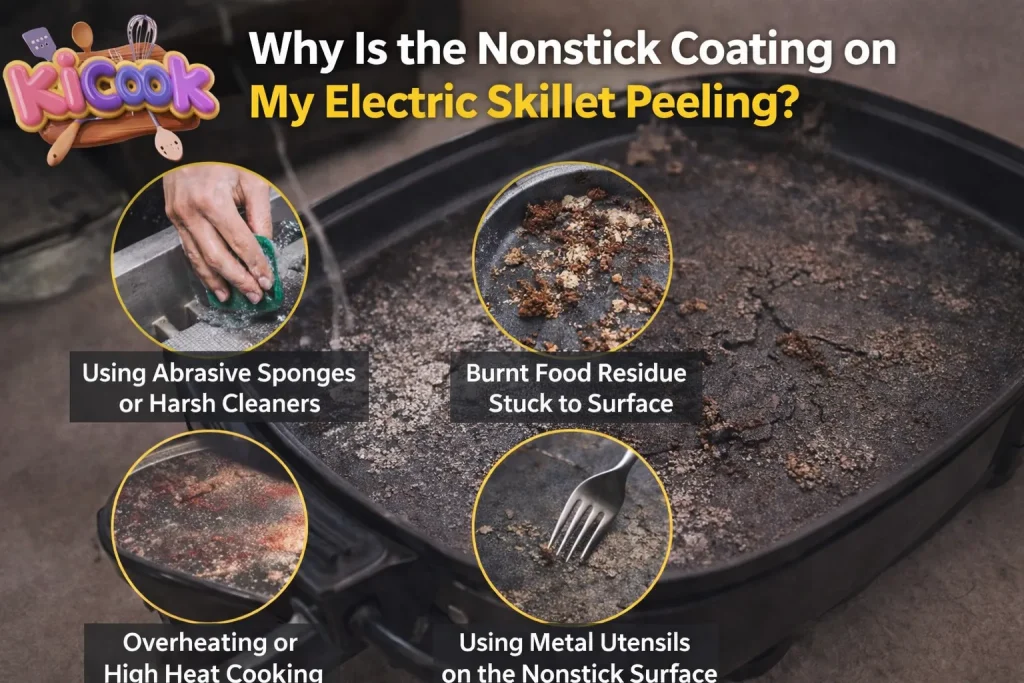
Common Causes of Peeling
- Using metal utensils instead of silicone or wooden ones
- Cooking on high heat too often
- Scrubbing with abrasive sponges or steel wool
- Putting the skillet in the dishwasher (even if it says dishwasher-safe)
- Age and normal wear over time
Once the coating starts peeling, it will only get worse.
Is a Peeling Nonstick Electric Skillet Safe to Use?
Short answer: No, it’s not recommended.
Here’s why I don’t advise continuing to use it.
Health Concerns
- Tiny flakes of coating can mix with your food
- Older nonstick coatings may release harmful fumes when overheated
- Even newer coatings lose safety once damaged
Cooking Performance Issues
- Food starts sticking and burning
- Heat becomes uneven
- Temperature control becomes unreliable
If your skillet is already burning food even on low heat, peeling coating is often part of the problem.
What Happens If You Keep Using It Anyway?
Using a peeling electric skillet can lead to:
- Burnt food and bad taste
- Hot spots and uneven cooking
- Higher risk of electrical issues over time
- Faster failure of the heating element
This often connects with other problems like the skillet turning on but not heating, or shutting off while cooking.
Can You Fix or Recoat a Peeling Electric Skillet?
I get this question a lot, and I’ll be honest.
Recoating Options
- DIY recoating sprays: Not recommended, unsafe for electric skillets
- Professional recoating: Rare, expensive, and usually costs more than a new skillet
Once the coating peels, there is no safe permanent fix.
When Should You Replace Your Electric Skillet?
Replace your skillet if:
- The coating is peeling or flaking
- Food sticks no matter what
- The skillet overheats or won’t heat properly
- You notice electrical issues like power loss or cord heating
In most cases, replacing it is safer and cheaper in the long run.
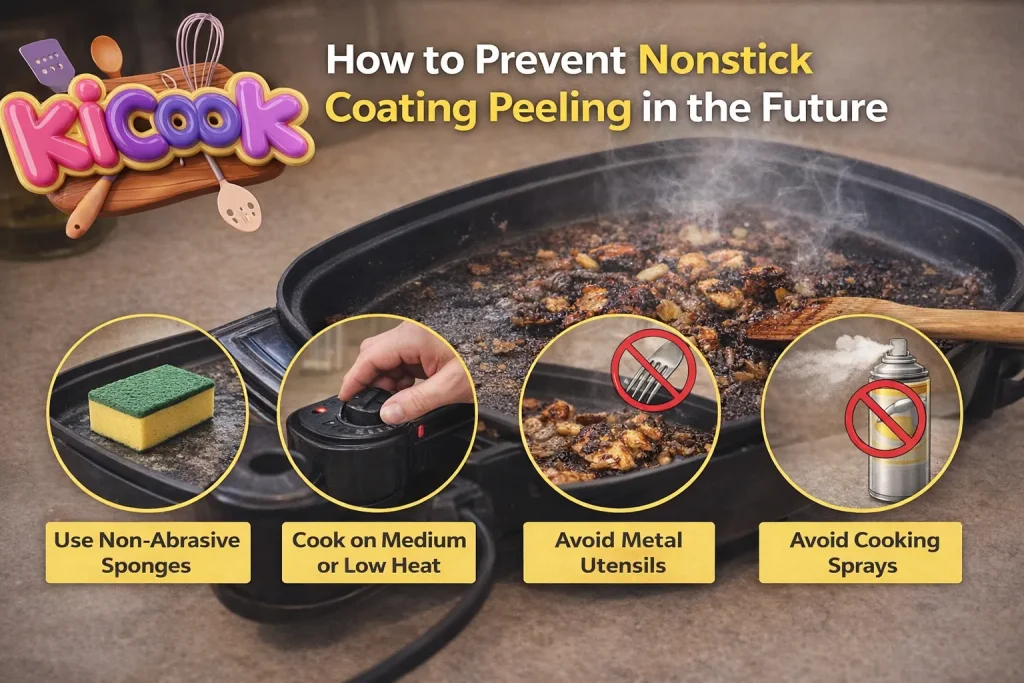
How to Prevent Nonstick Coating Peeling in the Future
If you’re buying a new electric skillet, here’s what I personally recommend:
Smart Usage Tips
- Use medium heat whenever possible
- Only use wood, silicone, or nylon utensils
- Hand wash with a soft sponge
- Let the skillet cool before cleaning
- Lightly oil the surface before cooking
These small habits can double the life of your skillet.
Pros and Cons of Nonstick Electric Skillets
Pros
- Easy to clean
- Uses less oil
- Great for everyday cooking
- Even heat when new
Cons
- Coating wears over time
- Sensitive to high heat
- Can become unsafe when damaged
- Needs gentle care
Expert Opinion
James Carter – Home Appliance Safety Analyst
“Once a nonstick coating begins to peel, the skillet should be retired. Continued use increases health and electrical risks, especially when combined with overheating or temperature control issues.”
FAQs on Electric Skillet Nonstick Coating Peeling
Can nonstick coating flakes harm you?
Small flakes usually pass through the body, but repeated exposure is not recommended and should be avoided.
Is it safe to scrape off peeling coating and keep using it?
No. Removing coating exposes raw metal and worsens heat and safety issues.
How long should an electric skillet last?
With proper care, most last 3–5 years. Heavy use may shorten that time.
Are ceramic-coated electric skillets better?
Ceramic coatings resist peeling better, but they still wear out eventually.
Final Verdict: Should You Keep Using It?
If your electric skillet’s nonstick coating is peeling, it’s time to stop using it. The safety risks, poor cooking results, and long-term damage simply aren’t worth it. A new skillet will cook better, safer, and save you frustration.
Related Topics You May Find Helpful
If you’re deciding whether to replace or troubleshoot your skillet, these guides can help:
- Learn how to choose a reliable model in this guide on finding the best electric skillet for everyday cooking
- If your skillet shows multiple issues, this breakdown of common electric skillet problems and causes is worth reading
- Experiencing power or heating issues along with peeling? This article explains why electric skillets stop working and what to do next
- For safety-focused users, don’t miss this detailed look at electric skillet safety issues most people ignore
- Still unsure if replacement is worth it? This honest guide discusses whether electric skillets are actually worth buying today
- For deeper diagnosis, this electric skillet troubleshooting guide walks through common failures step by step

“I believe great cooking starts with the right tools, trusted advice, and a little confidence in the kitchen.”
Hi, I’m Emma Carter. My love for cooking began in my grandmother’s kitchen, where I learned that every great meal starts with simple ingredients and the right cookware. Over the years, I’ve spent countless hours researching, testing, and comparing kitchen appliances, cookware, coffee makers, air fryers, and other everyday kitchen essentials.
Here at KiCook, my goal is to make your buying decisions easier with honest product reviews, practical buying guides, and easy-to-follow cooking tips. Whether you’re upgrading your kitchen or searching for the best appliance for your home, I focus on providing clear, reliable, and research-backed information you can trust.
When I’m not testing new kitchen gadgets or writing in-depth guides, you’ll usually find me trying new recipes, visiting local farmers’ markets, or enjoying a quiet cup of coffee while planning my next kitchen project.