
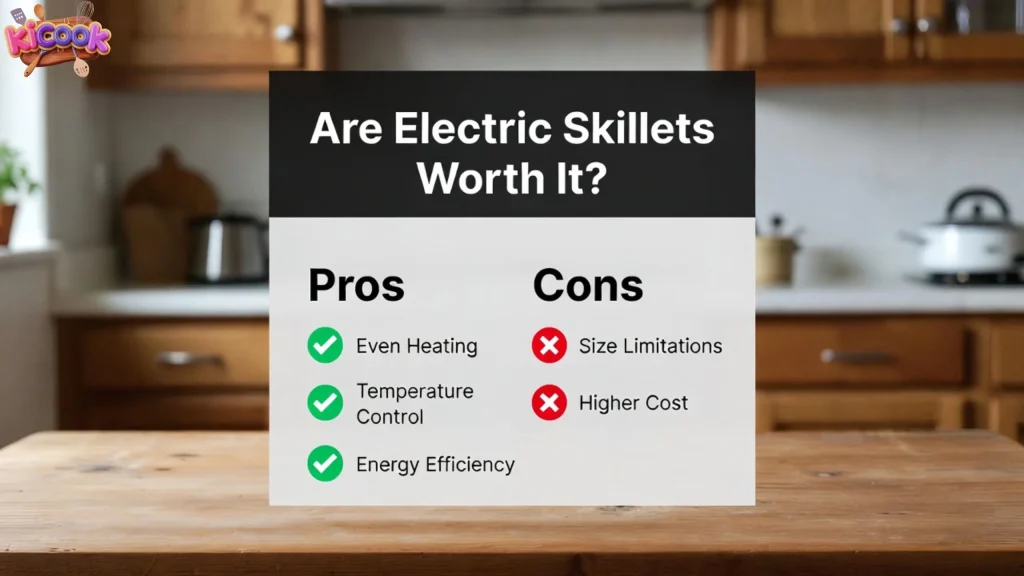
Electric skillets are worth it for households needing extra cooking space, precise temperature control, and versatility for one-pot meals, often outperforming stovetops for consistent heating.
However, they can be bulky to store and tricky to clean if not fully immiscible, making them less ideal for tiny kitchens with limited cabinet space.
Why This Matters to Me
I grew up watching my grandmother fry chicken in a square electric skillet every Sunday, but I didn’t appreciate the appliance until I moved into a flat with a finicky electric stove. That stove had two settings: “barely warm” and “lava.”
Buying a dedicated electric skillet changed how I cooked dinner, allowing me to simmer sauces without burning them and freeing up burners during holiday meals. It wasn’t perfect washing it was a hassle at first but the control it gave me was undeniable.
Real User Pain Points
Before we get into the details, let’s talk about why you are actually looking for this. Most people who consider an electric skillet are dealing with specific kitchen frustrations:
- Stovetop Inconsistency: Your stove burners have hot spots or don’t maintain a steady simmer.
- Overcrowded Kitchens: You often run out of burner space when cooking for groups or during holidays.
- Dorm or RV Living: You don’t have access to a full kitchen or gas range.
- One-Pot Meal Fatigue: You want to cook and serve from the same vessel to minimize cleanup, but your current pans don’t look good on the table.
- Heat Control Anxiety: You struggle with burning food (like pancakes or grilled cheese) because you can’t dial in a specific temperature.
Solving Your Kitchen Frustrations
Fixing the “Hot Spot” Problem
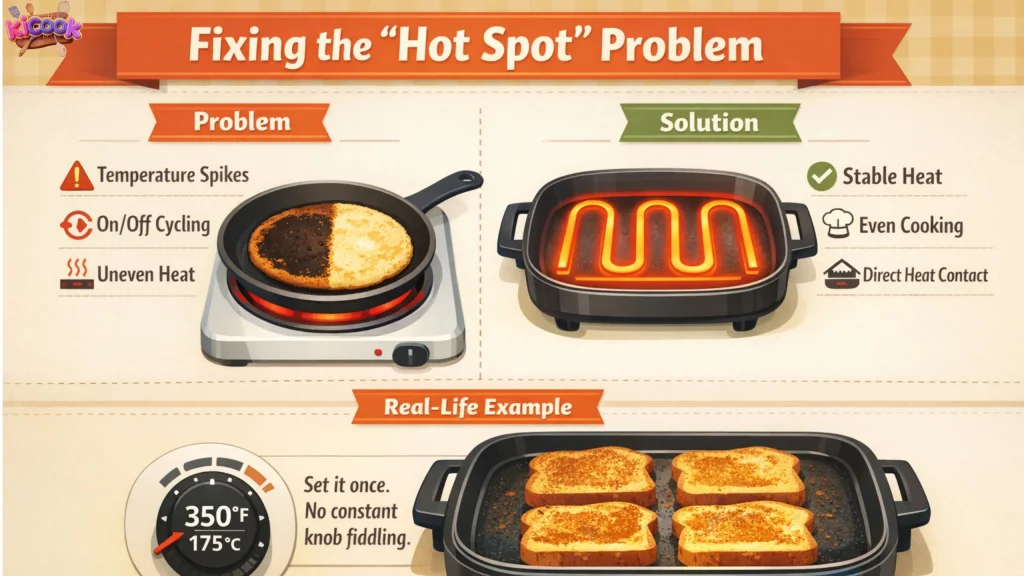
If you’ve ever had a pancake that is burnt on one side and raw on the other, you know the pain of cheap stovetop burners. Most electric stoves cycle on and off to maintain heat, creating temperature spikes.
- The Solution: Electric skillets use a heating element embedded in the bottom, often in a loop or M-shape. Because the heat source is directly attached to the cooking surface, the temperature remains much more stable.
- Real Life: When I make French toast, I set the dial to 350°F ($175^\circ$C). It cooks golden brown every time without me having to fiddle with a knob constantly.
Expanding Your Cooking Real Estate
Thanksgiving or Sunday Roast is stressful when you have four pots and four burners.
- The Solution: An electric skillet acts as a portable fifth burner. You can plug it in on an island or a side table.
- Real Life: I use mine exclusively for glazing carrots or keeping mashed potatoes warm during big dinners. It keeps the stovetop free for the gravy and main protein.
Cooking Without a Kitchen
For students in dorms or families in RVs, a full stove isn’t an option.
- The Solution: This appliance is a self-contained kitchen. You can sear, braise, fry, and even bake (with the lid on) using a single outlet.
- Real Life: During a kitchen renovation where we had no gas for three weeks, we made everything from stir-fry to sloppy joes in the skillet. It saved us from ordering takeout every night.
Simplifying Cleanup
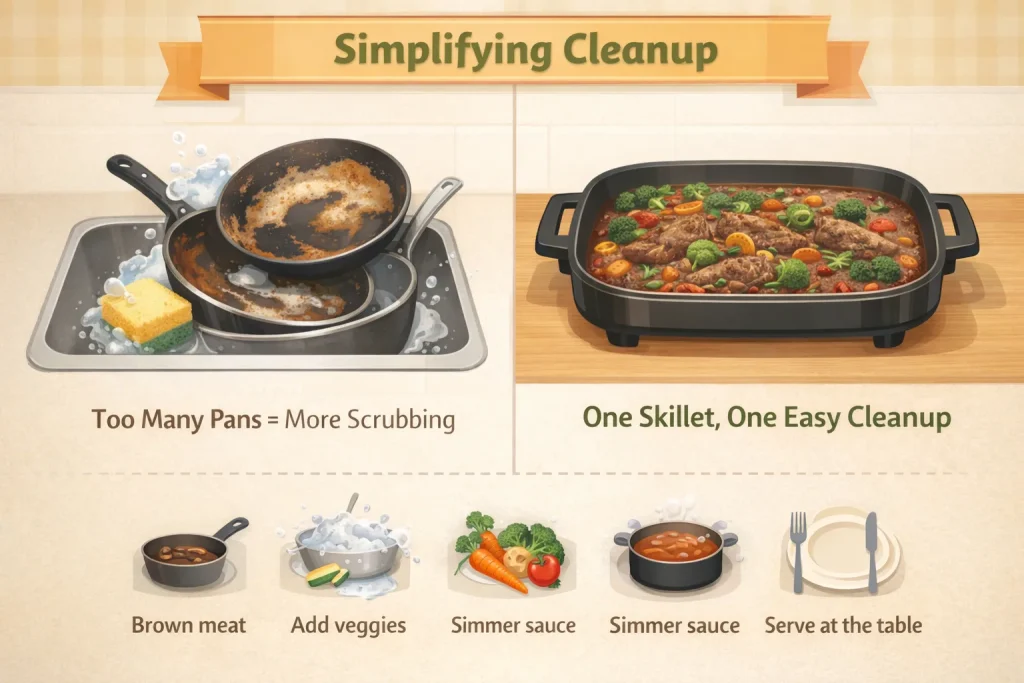
Nobody likes scrubbing three different pans for one meal.
- The Solution: These skillets have high sides and large surface areas (usually 12 to 16 inches). You can brown meat, add veggies, and simmer a sauce all in one go. Plus, many are attractive enough to unplug and place directly on the dinner table.
- Real Life: I make a “skillet lasagna” that goes from raw ingredients to finished dinner in about 30 minutes, and I serve it straight from the pan.
Country-Specific Context
USA
In the US, 120V outlets are standard. Most electric skillets here are rated around 1000-1500 watts. Since American kitchens often feature large islands, the size of the skillet is rarely an issue during use, but cabinet storage can be tight. Energy costs vary, but using a skillet is generally cheaper than heating up a massive electric oven for a small meal.
UK
With 230V power, electric kettles and skillets in the UK often heat up faster than their American counterparts. However, UK kitchens (especially in older flats) tend to be smaller. If you are in London or Edinburgh, look for square models; they utilize corner counter space better than round ones. Energy prices are a significant concern here, so using a smaller appliance rather than the main hob can help keep bills down.
Canada
Similar to the US in voltage, but winter cooking is a big factor. Canadian homes often focus on hearty stews and braises during colder months. An electric skillet is excellent for maintaining a low, slow simmer for hours without using gas, which helps keep indoor air quality better if ventilation is poor during winter.
Australia
The “electric frypan” is a staple in many Aussie homes, often used for family breakfasts or outdoor entertaining where a full BBQ isn’t necessary. In warmer regions like Queensland, using a skillet avoids heating up the whole kitchen, which is a massive benefit during summer.
Experience-Based Benefits
From my time testing various models, the biggest benefit isn’t just the cooking it is the buffet capability.
I found that most modern electric skillets have a “warm” setting. This is incredibly useful. I can cook chili, turn the dial down, and leave it plugged in for guests to serve themselves over two hours. It stays hot but doesn’t burn.
Another specific benefit is depth. Unlike a standard frying pan, electric skillets usually have straight, high walls (2-3 inches). This practically eliminates grease splatter on my counter when I am frying bacon or shallow-frying cutlets. It keeps my kitchen cleaner, which is a win in my book.
Also, if you are looking for specific recommendations, you might want to check out what is the best electric skillet to see which models handle these tasks best.
What Experts & Users Say
“The electric skillet is the unsung hero of the kitchen renovation. It’s the only reason we ate actual vegetables instead of pizza for a month.”
— Sarah Jenkins, Home Renovation Blogger
“For precise temperature cooking, nothing beats a dial you can trust. Stovetops guess; electric skillets measure.”
— Mark D., Professional Line Cook
“We keep one in the caravan. It draws less power than the microwave and is easier to clean than the gas hob.”
— Liam O’Connor, RV & Camping Enthusiast
Practical Tips for Success
- Preheat is Essential: Just like an oven, give your skillet 3-5 minutes to reach the target temp before dropping in food. This prevents sticking.
- The Water Test: To check if it is ready, flick a drop of water on the surface. If it dances and sizzles, you are good to go.
- Protect the Non-Stick: Most of these use Teflon or ceramic coatings. Never use metal tongs or forks. Use silicone or wood tools to avoid scratching the surface.
- Watch the Cord: The probe (the part that plugs into the side) is sensitive. Don’t drop it. If you have issues, sometimes it is just a loose connection, but if you suspect a deeper fault, read up on electric skillet not working troubleshooting steps.
- Don’t Submerge the Probe: While many skillets are dishwasher safe once the probe is removed, the probe itself must never get wet.
FAQs for Are Electric Skillets Worth It?
Can I deep fry in an electric skillet?
Yes, you can. They are actually safer than stovetop pots because you can set a specific temperature (usually up to 400°F/$200^\circ$C), preventing the oil from overheating and smoking. However, always be mindful of electric skillet safety issues regarding hot oil.
Do electric skillets use a lot of electricity?
Generally, no. They are more efficient than an electric oven and comparable to a large stovetop burner. Because the heating element is directly in the pan, there is less heat loss to the surrounding air.
Why does my electric skillet heat unevenly?
This usually happens with cheaper models that have a thin heating element loop. The area directly above the element gets hot, while the rest stays cooler. Heavy-cast aluminum skillets distribute heat better than thin stamped metal ones. This is one of the 15 common electric skillet problems users report.
Is it safe to leave an electric skillet unattended?
No. Like any cooking appliance, you should stay nearby. While they have thermostats, malfunctions can happen, and food can burn or catch fire if left too long.
How do I clean the electrical connection point?
Ensure the unit is unplugged and cool. Use a dry cloth or a cotton swab to wipe away any grease or debris. Do not use water or liquid cleaners near the electrical pins.
Conclusion
So, are electric skillets worth it? If you need extra cooking space, value precise temperature control, or lack a traditional stove, the answer is a solid yes. They offer a versatility that few other appliances can match for the price. While they do take up cupboard space and require careful cleaning, the ability to cook, simmer, and serve from a single unit makes them a valuable tool for busy families and entertainers alike.
If you decide to get one, focus on a model with a heavy base and a high-quality temperature probe. It will make the difference between a frustrating gadget and a daily driver in your kitchen.
For more information on food safety temperatures when using appliances like skillets, check the USDA Safe Minimum Internal Temperature Chart.

“I believe great cooking starts with the right tools, trusted advice, and a little confidence in the kitchen.”
Hi, I’m Emma Carter. My love for cooking began in my grandmother’s kitchen, where I learned that every great meal starts with simple ingredients and the right cookware. Over the years, I’ve spent countless hours researching, testing, and comparing kitchen appliances, cookware, coffee makers, air fryers, and other everyday kitchen essentials.
Here at KiCook, my goal is to make your buying decisions easier with honest product reviews, practical buying guides, and easy-to-follow cooking tips. Whether you’re upgrading your kitchen or searching for the best appliance for your home, I focus on providing clear, reliable, and research-backed information you can trust.
When I’m not testing new kitchen gadgets or writing in-depth guides, you’ll usually find me trying new recipes, visiting local farmers’ markets, or enjoying a quiet cup of coffee while planning my next kitchen project.



1 thought on “Are Electric Skillets Worth It? Real Pros, Cons, and Common Complaints”