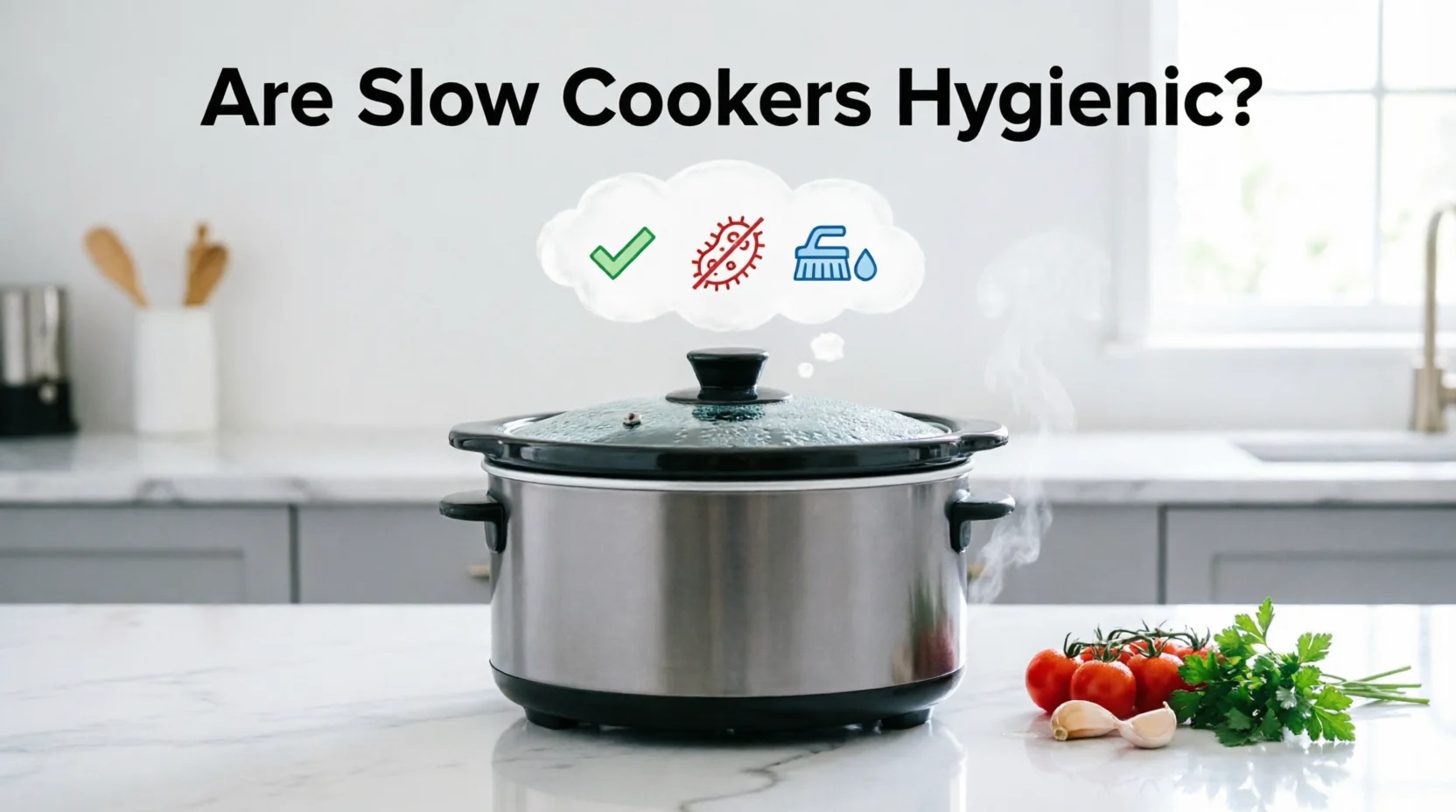
Yes, slow cookers are hygienic when used properly. Research confirms they destroy bacteria through sustained low heat, steam, and proper temperature management.
I’ll never forget the first time I pulled my slow cooker out of the cupboard after it had been sitting there for months. I opened the lid, and a strange smell hit me. Right away, I thought, “Is this thing even safe to cook with?” That one question turned into a full-blown worry: “Are slow cookers hygienic?”
Maybe you’ve had the same thought. You leave food sitting on the counter for six to eight hours. It feels wrong, doesn’t it? We spend our whole lives hearing that leaving food out makes you sick. So how can a slow cooker be any different?
After spending way too many hours researching this topic, talking to food safety experts, and digging through studies from places like the USDA and university extensions, I can tell you this with confidence: Slow cookers are perfectly hygienic, but only if you follow the rules.
Let me share what I found out. I want to put your mind at ease and help you use your slow cooker the right way.
So, Are Slow Cookers Hygienic? Let’s Look at the Science
Here is the short answer again: yes, but you need to use them correctly.
Here is the longer explanation. The USDA says that slow cookers generally cook food at temperatures between 170°F and 280°F. That range is well above the “danger zone.” The danger zone is the temperature range between 40°F and 140°F where bacteria multiply rapidly. Some bacteria can actually double in as little as twenty minutes when food sits in that dangerous zone.
When you put food in a slow cooker, three things team up to destroy harmful bacteria and make the process safe:
- The direct heat coming from the pot
- The lengthy cooking time
- The steam created inside the tightly-covered container
That steam effect is important. It creates a sealed, moist environment that keeps temperatures consistent and helps kill bacteria effectively.
But—and this is a big “but”—the slow cooker may take several hours to reach a safe, bacteria-killing temperature. That waiting period is where most problems happen.
What The Research Actually Says About Slow Cookers and Bacteria
I found some studies that made me feel much better about using my slow cooker. One research study from the late 1970s (yes, they have been studying this for a long time) took foods like green bean casserole, baked navy beans, chicken cacciatore, barbecued ribs, and pork pot roast. They deliberately added large amounts of harmful bacteria like Staphylococcus aureus and Salmonella species before cooking. When they checked the foods after slow cooking, none of the foods contained detectable levels of those bacteria.
Let me repeat that: none.
Another study found that meat loaves and chickens prepared in a slow cooker did not stay in the hazardous temperature zone long enough to allow any meaningful growth of bacteria that could cause food-borne illness.
So the evidence is clear. Slow cookers absolutely can be hygienic and safe. The key words there are “can be.” Let me tell you about the mistakes that turn a safe appliance into a risky one.
The Biggest Mistakes That Make Slow Cookers Unhygienic
I have made almost every mistake on this list myself. Learn from my errors so you do not have to repeat them.
Mistake 1: Putting Frozen Meat Directly Into The Slow Cooker
This one feels so convenient. You forgot to take the chicken out of the freezer. You think, “I will just throw it in frozen and let it cook all day.” Do not do this.
The USDA explicitly warns against this practice. Here is why: when you add frozen meat, it takes much longer for the center of that meat to thaw and heat up. During that extended time, the outer parts of the meat can sit in the danger zone for too long. Bacteria start multiplying before the heat catches up.
Food safety expert Darin Detwiler explains it perfectly: “The concern is not whether the meat eventually gets hot enough. The concern is how long it takes to get there.”
Some bacteria also produce toxins that are not destroyed by cooking, even if the meat eventually reaches a safe final temperature. That leftover toxin can still make you sick.
Always thaw meat or poultry completely in the refrigerator before putting it into your slow cooker.
Mistake 2: Not Preheating The Cooker Or Adding Cold Ingredients
Many people just toss cold ingredients straight from the fridge into a cold slow cooker and turn it on low. That means the food spends a very long time slowly warming up through the danger zone.
The solution is simple. Preheat your cooker. If possible, add hot liquids. Turn the cooker to the highest setting for the first hour of cooking. This rapid heat start quickly pushes the food past the dangerous 40°F to 140°F range.
Mistake 3: Lifting The Lid Over And Over
I know it is tempting to peek. You want to see how your dinner is coming along. But every time you lift that lid, the internal temperature drops by 10 to 15 degrees. Then the cooking process gets slowed down by 20 to 30 minutes.
Keep the lid on. Only remove it when you genuinely need to stir the food or check if it is done.
Mistake 4: Leaving Leftovers In The Slow Cooker To Cool Down
This was my biggest “aha” moment. I used to finish cooking, turn off the slow cooker, and just leave the food sitting there for hours until I felt like putting it away. The USDA says perishable food left in the danger zone for more than two hours should be thrown out.
Do not let cooked food cool down inside the crock. Eat it right away, or move leftovers into shallow containers and get them into the refrigerator promptly.
Mistake 5: Reheating Leftovers In The Slow Cooker
This surprised me. The USDA says reheating leftovers in a slow cooker is not recommended. Cooked food should be reheated on the stove, in a microwave, or in a conventional oven until it reaches 165°F. Slow cookers take too long to bring leftovers up to a safe temperature, which means food sits in the danger zone for an extended period while reheating.
How I Keep My Slow Cooker Clean And Hygienic
A clean slow cooker is a hygienic slow cooker. Bacteria love to hide in leftover food residue. Here is my proven cleaning routine.
After Every Single Use
- Unplug and cool completely. Never put a hot ceramic insert into cold water. Sudden temperature changes can cause cracks.
- Remove the ceramic insert and glass lid. Wash both with warm soapy water and a soft sponge.
- Avoid harsh tools. Stay away from steel wool or abrasive cleaners that can scratch the surface. Scratches create tiny hiding spots for bacteria.
- Dry thoroughly before reassembling. Moisture left behind can encourage mold or bacterial growth.
Dealing With Stubborn Stains
If you have burned or stuck-on food, fill the insert with warm water and a few tablespoons of baking soda. Let it soak for one to two hours, or leave it overnight for really tough spots.
For lingering odors after cleaning, sprinkle baking soda in the insert and leave it overnight before rinsing.
Cleaning The Heating Base
This part contains electrical components, so never submerge it in water. Simply wipe down the exterior with a damp cloth. Avoid getting water near the power cord or control panel.
Are Slow Cooker Liners Hygienic?
Many people ask me about disposable slow cooker liners. These are plastic bags designed to line the ceramic insert so food never touches the pot.
Here is my take: liners are perfectly safe when used according to the manufacturer’s instructions. They make cleanup incredibly easy. However, they are not necessary for hygiene. A properly cleaned ceramic insert is just as safe. Some people worry about cooking in plastic at high temperatures. If that concerns you, stick with the traditional method. Both approaches can be hygienic.
Which Is More Hygienic: Slow Cooker Vs Instant Pot
I get asked this question all the time. People want to know if an Instant Pot is cleaner or safer than a traditional slow cooker.
An Instant Pot reaches higher temperatures and can create pressure, which kills bacteria very effectively. However, many Instant Pot models struggle with true slow cooking because their temperature control is not as precise as a dedicated slow cooker.
From a hygiene standpoint, both appliances can be perfectly safe. The Instant Pot may have a slight edge for certain applications because of its higher heat capabilities. But a slow cooker used correctly is just as hygienic. The main difference is cleaning. Instant Pots have more parts—sealing rings, steam release valves, inner pots, and lids. Those extra parts mean more places for bacteria to hide if you do not clean them properly.
Essential Tips For Hygienic Slow Cooking (A Quick Checklist)
Follow these food safety guidelines every time you use your slow cooker:
- Start clean. Begin with clean hands, clean utensils, a clean work area, and a clean cooker.
- Thaw first. Always thaw meat or poultry before putting it into a slow cooker.
- Keep perishable foods refrigerated until you are ready to prepare them.
- Preheat the cooker or use the highest setting for the first hour if possible.
- Put vegetables at the bottom or sides since they cook the slowest and need more direct heat.
- Fill the cooker properly. The liquid should almost cover the ingredients to ensure effective heat transfer.
- Keep the lid on. Only remove it to stir or check for doneness.
- Use a food thermometer. Check that meat and poultry have reached safe internal temperatures. Roasts should reach 145°F to 160°F. Poultry needs to reach 165°F.
- Cool properly. Do not let cooked food cool down inside the slow cooker. Transfer leftovers to shallow containers and refrigerate.
- Avoid the warm setting for cooking. The warm setting is designed to keep already-cooked food hot, not to cook raw ingredients.
- Soak dried beans first. Kidney beans contain a natural toxin. Soak them for 12 hours, rinse, then boil on the stove for at least 10 minutes before adding them to the slow cooker.
What About The Ceramic Insert Being Porous?
A common concern is whether the ceramic insert is porous and can trap bacteria even after washing. This is a fair worry.
Modern slow cooker ceramic inserts are glazed and fired at extremely high temperatures. This creates a non-porous, glass-like surface that bacteria cannot penetrate. The glaze makes the surface smooth and easy to clean thoroughly. As long as you do not scratch the glaze with abrasive cleaners or metal tools, the surface remains non-porous and hygienic.
If you do notice scratches or chips in the glaze, it is time to replace the insert. Those damaged areas can indeed harbor bacteria.
For complete details directly from the official source, I highly recommend reading the USDA’s full Slow Cookers and Food Safety guide. You can find it here: USDA Food Safety and Inspection Service – Slow Cookers and Food Safety.
Quotes From Trusted Voices
Here are three quotes from experts that reinforce everything I have shared with you:
“The combination of direct heat from the pot, lengthy cooking and steam created within the tightly-covered container combine to destroy bacteria and make the slow cooker a safe process for cooking foods.”
— United States Department of Agriculture (USDA) Food Safety and Inspection Service
“The slow cooker may take several hours to reach a safe, bacteria-killing temperature. Constant refrigeration assures that bacteria, which multiply rapidly at room temperature, won’t get a ‘head start’ during the first few hours of cooking.”
— USDA Food Safety Guidelines
“The concern is not whether the meat eventually gets hot enough. The concern is how long it takes to get there.”
— Darin Detwiler, LP.D., M.A.Ed., Food Safety Expert at Northeastern University
Frequently Asked Questions
Can bacteria survive in a slow cooker?
Properly cooked food in a slow cooker reaches temperatures high enough to kill harmful bacteria. The key is ensuring the food reaches a safe internal temperature. The direct heat, lengthy cooking, and steam work together to destroy bacteria and make the slow cooker a safe process for cooking foods.
Is it safe to leave a slow cooker on while at work?
Yes, that is actually one of the main benefits of a slow cooker. As long as you follow proper food safety guidelines—thawing meat first, preheating if possible, keeping the lid on, and using the correct settings—the food will stay safe while you are away. However, food left in the danger zone for more than two hours should be thrown out if the cooker loses power.
Are slow cooker liners hygienic?
Slow cooker liners are safe when used according to manufacturer instructions. They make cleanup much easier and can help prevent cross-contamination if your insert has scratches. However, they are not strictly necessary for hygiene. A properly cleaned ceramic insert is equally safe.
How long can food stay warm in a slow cooker before it becomes unsafe?
Food should be safe to store in a slow cooker on the “Keep Warm” setting for up to four hours. For the best quality, aim to eat your slow cooker dish within one to two hours of when it finishes cooking.
Is it safe to cook frozen meat in a slow cooker?
The USDA strongly advises against this. Always thaw meat or poultry completely before putting it into a slow cooker. Frozen meat takes too long to reach a safe internal temperature, allowing bacteria to multiply during that extended period.
Do I need to add liquid to my slow cooker?
Yes, water or liquid is necessary to create steam. When cooking meat or poultry, the water or liquid level should cover the ingredients to ensure effective heat transfer throughout the crock.
Can I reheat leftovers in my slow cooker?
The USDA does not recommend reheating leftovers in a slow cooker. Reheat food on the stove, in a microwave, or in a conventional oven until it reaches 165°F. Only then can you transfer it to a slow cooker to keep it warm.
How do I know if my slow cooker is heating properly?
You can test your slow cooker by filling it half to two-thirds full of water. Turn it on low and let it heat for eight hours without lifting the lid. After eight hours, check the water temperature with an accurate food thermometer. The water should be between 185°F and 200°F.
What temperature kills bacteria in a slow cooker?
According to the USDA, bacteria are killed at temperatures above 165°F. Slow cookers generally reach temperatures between 170°F and 280°F, which is well above this threshold.
Can a scratched ceramic slow cooker insert harbor bacteria?
Yes, scratches in the glaze can create places where bacteria can hide and survive even after washing. If your ceramic insert has deep scratches or chips, it is best to replace it to maintain proper hygiene.
Conclusion
So, after all of this research and my own experience, here is my final answer to the question “Are slow cookers hygienic?”
Yes, absolutely. But like any kitchen tool, your slow cooker’s hygiene depends entirely on how you use it and how you care for it.
The science is clear. Slow cookers effectively destroy harmful bacteria through sustained heat, steam, and proper cooking times. Studies have shown that foods cooked in slow cookers do not contain detectable levels of dangerous pathogens like Salmonella or Staphylococcus aureus when prepared correctly.
However, you cannot just toss ingredients in, turn it on, and forget about basic food safety. You need to thaw meat properly. You need to preheat when possible. You need to keep the lid on. You need to clean thoroughly after every use. You need to handle leftovers correctly and never reheat in the slow cooker.
These habits are not difficult. They just require a little awareness and consistency. Once you build them into your routine, your slow cooker becomes one of the safest and most convenient tools in your kitchen.
I love my slow cooker. It has saved me on countless busy weeknights when I had no time or energy to cook. It has produced some of the most delicious, tender, flavorful meals I have ever made. And now, I use it with complete confidence, knowing that I am following the rules that keep my family safe.
If you have been hesitant to use your slow cooker because of hygiene concerns, I hope this article has helped you feel better. Give it another try. Follow the guidelines I shared. And enjoy the convenience of coming home to a hot, safe, home-cooked meal.
Happy slow cooking, everyone

“I believe great cooking starts with the right tools, trusted advice, and a little confidence in the kitchen.”
Hi, I’m Emma Carter. My love for cooking began in my grandmother’s kitchen, where I learned that every great meal starts with simple ingredients and the right cookware. Over the years, I’ve spent countless hours researching, testing, and comparing kitchen appliances, cookware, coffee makers, air fryers, and other everyday kitchen essentials.
Here at KiCook, my goal is to make your buying decisions easier with honest product reviews, practical buying guides, and easy-to-follow cooking tips. Whether you’re upgrading your kitchen or searching for the best appliance for your home, I focus on providing clear, reliable, and research-backed information you can trust.
When I’m not testing new kitchen gadgets or writing in-depth guides, you’ll usually find me trying new recipes, visiting local farmers’ markets, or enjoying a quiet cup of coffee while planning my next kitchen project.