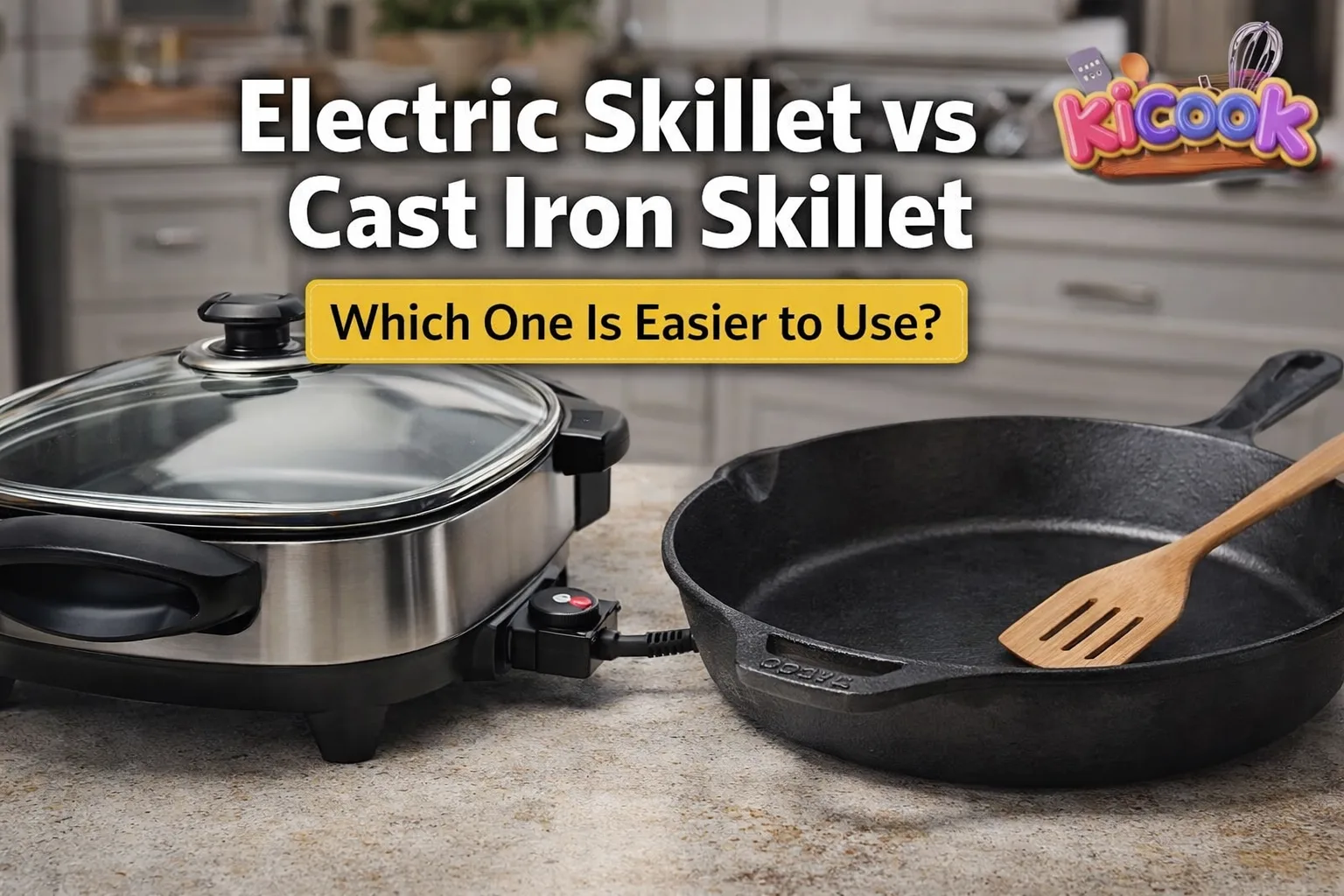
If convenience, temperature control, and easy cleanup matter most, an electric skillet is generally easier to use. A cast iron skillet excels at heat retention and searing but requires more care and experience.
Many home cooks debate between an electric skillet vs cast iron skillet because both can handle a wide range of cooking tasks, from frying to simmering. The confusion usually comes from differences in ease of use, maintenance, and versatility.
From my own kitchen experience, electric skillets offer consistent heat, a nonstick surface, and easy cleanup. Cast iron skillets, while legendary for flavor and searing, are heavy, need seasoning, and require more care. In this article, I’ll explain how each performs in real cooking, highlight key differences, and help you choose the skillet that best fits your lifestyle.
Quick Comparison
| Feature | Electric Skillet | Cast Iron Skillet |
|---|---|---|
| Price Range | Low–Mid | Low–Mid |
| Heat Control | Built-in thermostat | Stove-dependent |
| Cooking Area | Large, even surface | Medium, excellent heat retention |
| Best For | Everyday cooking, one-pan meals | Searing, frying, baking |
| One-Line Takeaway | Easy, convenient, consistent | Heavy, durable, flavors food better |
Product Overview – Presto 16-inch Electric Skillet
Credit: Amazon
Check the latest price on Amazon
Check the latest price on AliExpress
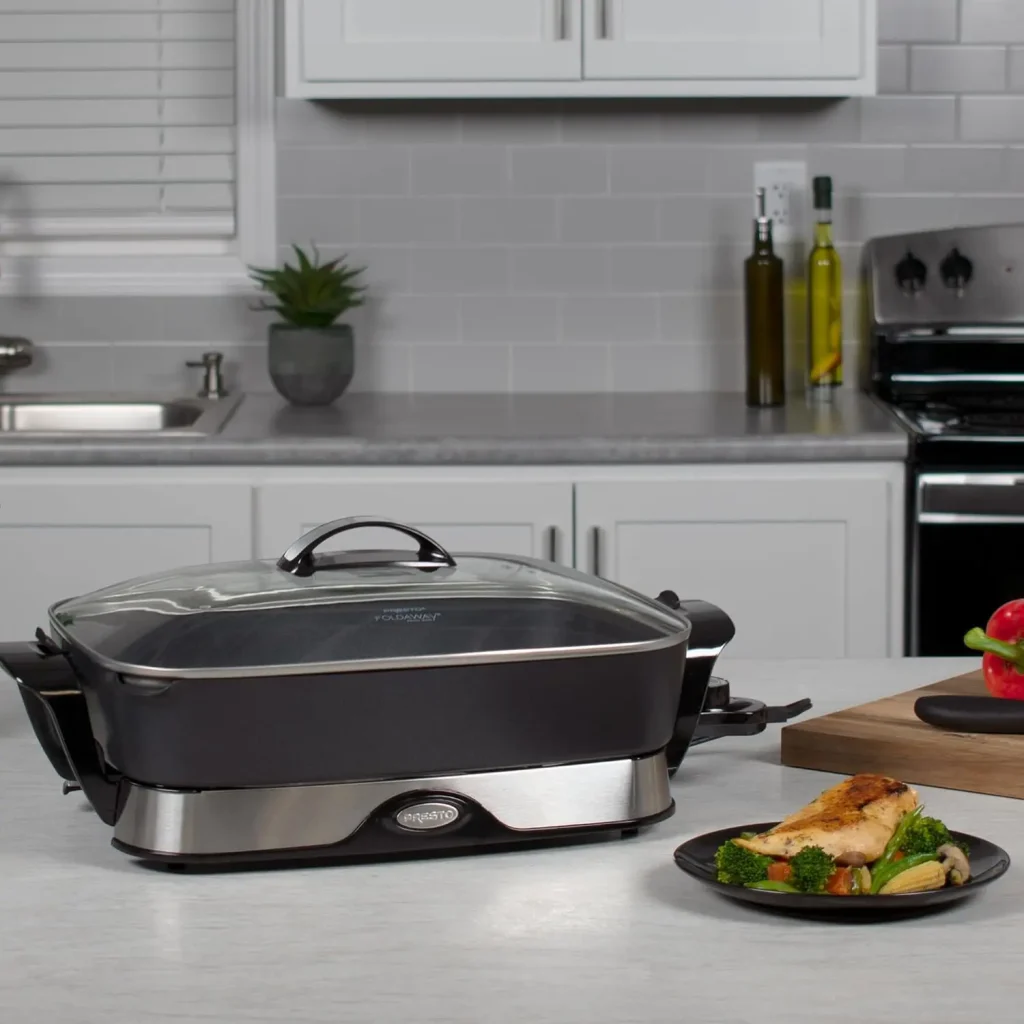
About Presto 16-inch Electric Skillet
Presto is a trusted brand for affordable electric cookware, and this 16-inch electric skillet delivers consistent heat across a large surface. Its temperature dial allows precise control, and the nonstick surface makes cooking and cleaning easier.
This skillet is ideal for families, batch cooking, or anyone who wants stress-free temperature control without worrying about stove hot spots.
Product Overview – AmazonBasics Cast Iron Skillet
Credit: Amazon
Check the latest price on Amazon
Check the latest price on AliExpress
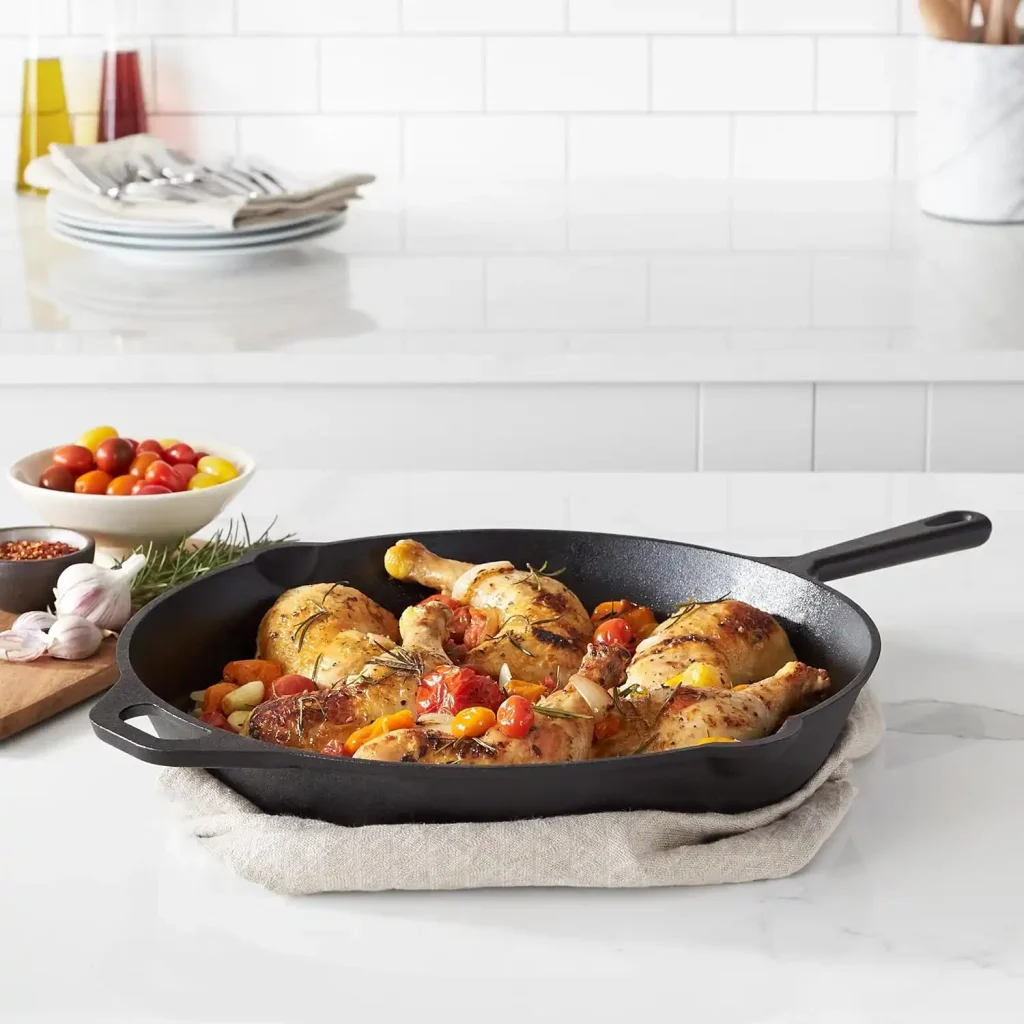
About AmazonBasics Cast Iron Skillet
AmazonBasics offers a pre-seasoned cast iron skillet that’s ready for searing, frying, and baking. Cast iron retains heat incredibly well, giving food a crispy, even finish, and can be used in ovens or on stovetops.
This skillet is perfect for cooks who value flavor development, don’t mind heavier cookware, and are comfortable with cleaning and seasoning cast iron.
Feature-by-Feature Comparison
| Feature | Electric Skillet | Cast Iron Skillet |
|---|---|---|
| Design & Build Quality | Bulkier, with heating base and nonstick coating | Heavy, solid iron, pre-seasoned |
| Size / Capacity | Large, deep cooking surface; good for families | Medium size; good for single or small meals |
| Performance | Even heat, precise temperature control | Retains heat very well; excellent for searing and browning |
| Ease of Use | Simple controls, plug-and-play | Requires experience, preheating, seasoning |
| Cleaning & Maintenance | Dishwasher-safe, easy to clean | Hand wash, dry immediately, oil lightly to maintain seasoning |
| Durability | Dependent on electrical components | Extremely long-lasting; can last decades if cared for |
Real-World Performance Comparison
In my experience, electric skillets shine for quick and consistent cooking: stir-fries, pancakes, or simmered dishes turn out evenly every time. Cleanup is easy due to the nonstick surface.
Cast iron skillets excel for high-heat tasks: searing steaks, frying chicken, or baking cornbread. However, they require careful preheating, handling, and maintenance to prevent rust.
Pros & Cons
Electric Skillet – Pros & Cons
| Pros | Cons |
|---|---|
| Easy temperature control | Larger and takes storage space |
| Nonstick surface, easy cleanup | Needs electricity |
| Great for one-pan meals | Preheating takes a few minutes |
Cast Iron Skillet – Pros & Cons
| Pros | Cons |
|---|---|
| Excellent heat retention | Very heavy |
| Can be used on stove and oven | Requires seasoning and careful cleaning |
| Builds flavor over time | Slower to learn and master |
Price vs Value Analysis
| Factor | Electric Skillet | Cast Iron Skillet |
|---|---|---|
| Upfront Cost | Affordable | Affordable |
| Value Over Time | Great for easy, daily cooking | Extremely durable; improves flavor with use |
| Best ROI For | Busy families, beginners | Cooks who prioritize flavor and longevity |
Who Should Choose Which Product?
Choose an Electric Skillet if you…
- Want convenience and consistent results
- Cook larger portions or multiple dishes at once
- Prefer minimal cleanup
Choose a Cast Iron Skillet if you…
- Want superior searing and heat retention
- Enjoy long-term investment cookware
- Don’t mind extra maintenance
Common Concerns & Deal-Breakers
- Weight: Electric skillets are lighter; cast iron is heavy.
- Maintenance: Electric skillets are easy to clean; cast iron requires seasoning.
- Heat: Electric skillet gives controlled heat; cast iron needs careful preheating.
- Durability: Electric components may fail; cast iron can last decades.
Final Verdict
For ease of use, the electric skillet wins hands down. It’s convenient, forgiving, and perfect for everyday meals. Cast iron is unbeatable for flavor and heat retention but requires more experience and care.
If I wanted hassle-free cooking, I’d go electric. If I wanted the perfect sear and long-term investment, I’d choose cast iron.
FAQs on Electric Skillet vs Cast Iron Skillet
Is a cast iron skillet harder to use than an electric skillet?
Yes, it requires preheating, seasoning, and careful cleaning.
Can an electric skillet replicate cast iron cooking?
It can mimic some functions, but cast iron excels at high-heat searing and flavor development.
Which is better for beginners?
Electric skillets are easier for beginners due to steady heat and nonstick surfaces.
Do cast iron skillets last longer than electric skillets?
Yes, a well-cared-for cast iron skillet can last decades, while electric skillets may wear out over time.
Can I use a cast iron skillet on an electric stove?
Absolutely, but make sure the surface is even and preheat gradually to avoid warping.
Affiliate Disclosure:
This article contains affiliate links. If you buy through these links, I may earn a small commission at no extra cost to you. This helps support my work and allows me to continue providing honest, helpful content.

“I believe great cooking starts with the right tools, trusted advice, and a little confidence in the kitchen.”
Hi, I’m Emma Carter. My love for cooking began in my grandmother’s kitchen, where I learned that every great meal starts with simple ingredients and the right cookware. Over the years, I’ve spent countless hours researching, testing, and comparing kitchen appliances, cookware, coffee makers, air fryers, and other everyday kitchen essentials.
Here at KiCook, my goal is to make your buying decisions easier with honest product reviews, practical buying guides, and easy-to-follow cooking tips. Whether you’re upgrading your kitchen or searching for the best appliance for your home, I focus on providing clear, reliable, and research-backed information you can trust.
When I’m not testing new kitchen gadgets or writing in-depth guides, you’ll usually find me trying new recipes, visiting local farmers’ markets, or enjoying a quiet cup of coffee while planning my next kitchen project.