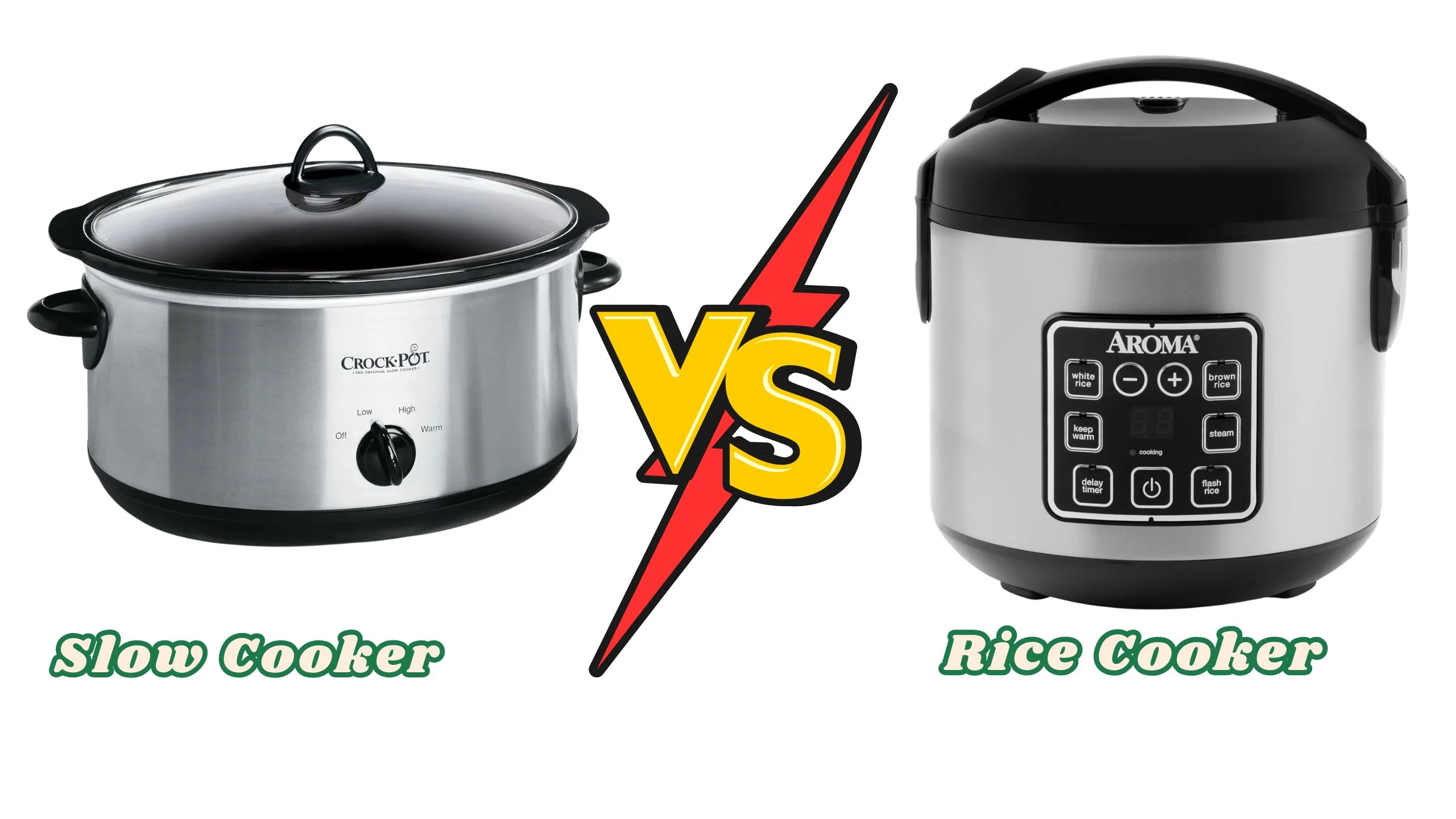
People often compare a slow cooker and a rice cooker because both are countertop appliances designed to make cooking easier. I see this confusion a lot, especially among busy families, students, and small households. The biggest question is simple: Do I need one appliance or both?
From my experience researching and using these appliances, the confusion usually comes from overlapping features. Some rice cookers claim to cook soups and stews, while some slow cookers can make rice. This makes buyers unsure which one fits their daily cooking habits.
In this article, I break down the real differences based on how they work, what they cook best, and how they perform in everyday use. By the end, you’ll know whether a slow cooker or a rice cooker makes more sense for your kitchen and lifestyle.
Quick Comparison
| Feature | Slow Cooker | Rice Cooker |
|---|---|---|
| Price Range | $30–$120 | $25–$150 |
| Core Function | Long, low-heat cooking | Automatic rice cooking |
| Typical Capacity | 3–8 quarts | 3–10 cups (uncooked rice) |
| Best For | Stews, soups, meats | Rice, grains, simple meals |
| One-Line Takeaway | Best for hands-off meals | Best for perfect rice |
Product Overview – Slow Cooker
Credit: Amazon Check the Latest price on Amazon
About Slow Cooker
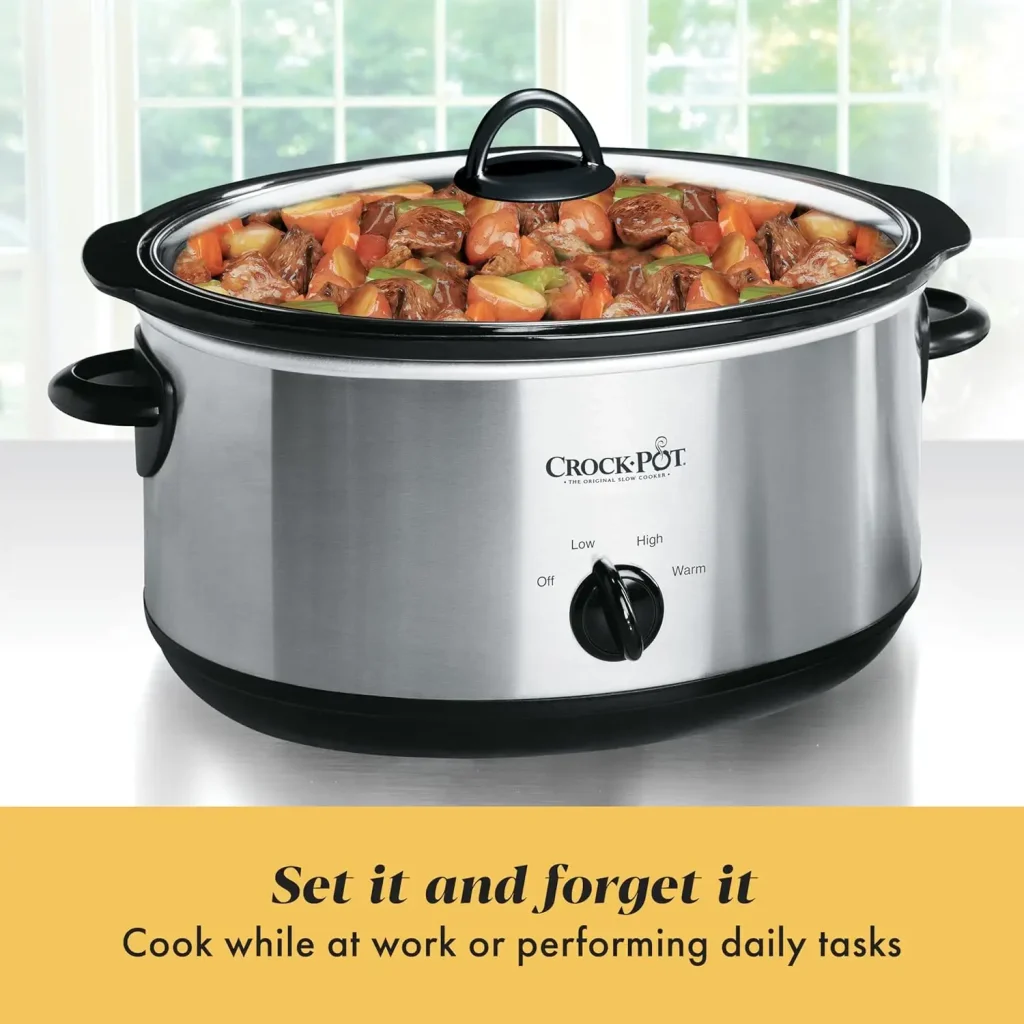
Slow cookers have been around for decades and are designed for low-temperature, long-duration cooking. Most brands focus on simple controls, steady heat, and large capacity.
A slow cooker is built to gently cook food over several hours. This makes it ideal for soups, chili, pulled meat, and one-pot meals. You add ingredients, set the time, and walk away.
From what I’ve seen, slow cookers work best for people who meal prep, cook for families, or want dinner ready after a long day. They are not fast, but they are reliable and forgiving.
Product Overview – Rice Cooker
Credit: Amazon Check the latest price on Amazon
About Rice Cooker
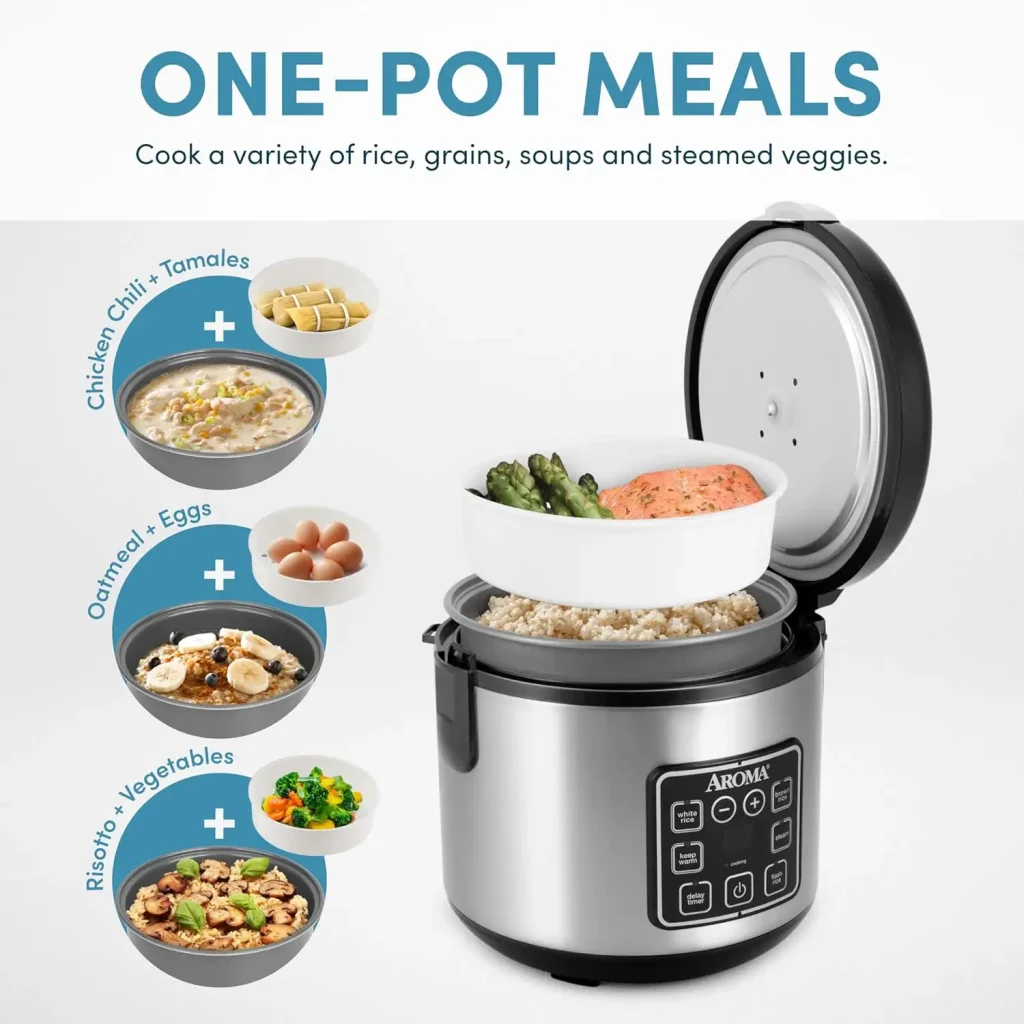
Rice cookers were originally designed for one job: cooking rice perfectly every time. Over time, brands added more features like steaming, porridge, and multi-grain modes.
A rice cooker uses sensors to detect water absorption and automatically stops cooking when the rice is done. This makes it very easy to use, even for beginners.
Rice cookers are best for people who eat rice regularly, live in small spaces, or want quick, consistent results without monitoring the stove.
Feature-by-Feature Comparison
Design & Build Quality
Slow cookers usually have a ceramic inner pot and sturdy outer housing. Rice cookers often feel lighter but include sealed lids and digital panels on higher models.
Size / Capacity
Slow cookers handle large volumes. Rice cookers measure capacity based on cups of dry rice, which can feel limiting for large families.
Performance
Slow cookers excel at tenderizing food slowly. Rice cookers excel at precision and speed.
Ease of Use
Rice cookers win here. One button often does the job. Slow cookers require more planning.
Cleaning & Maintenance
Both are easy to clean, but removable ceramic pots in slow cookers are especially dishwasher-friendly.
Durability
In my experience, slow cookers last longer due to simpler electronics.
Real-World Performance Comparison
In daily use, I find slow cookers shine when I want deep flavor with minimal effort. I can start a meal in the morning and forget about it. The downside is time. You cannot rush it.
Rice cookers feel more practical for daily cooking. Rice is ready fast, and cleanup is easy. However, when I tried cooking thick stews, the results were inconsistent.
For real meals like curries or roasts, the slow cooker performs better. For quick lunches or dinners, the rice cooker is more convenient.
Pros & Cons (Side-by-Side)
Slow Cooker – Pros & Cons
| Pros | Cons |
|---|---|
| Excellent for meal prep | Long cooking time |
| Large capacity | Not ideal for quick meals |
| Simple controls | Limited cooking styles |
Rice Cooker – Pros & Cons
| Pros | Cons |
|---|---|
| Perfect rice every time | Smaller capacity |
| Fast cooking | Less flexible |
| Compact design | Advanced models cost more |
Price vs Value Analysis
| Aspect | Slow Cooker | Rice Cooker |
|---|---|---|
| Entry Price | Lower | Slightly higher |
| Long-Term Value | High for families | High for rice eaters |
| Best ROI For | Batch cooking | Daily simple meals |
A slow cooker gives more value if you cook in bulk. A rice cooker pays off if rice is part of your daily diet.
Who Should Choose Which Product?
Choose a Slow Cooker if you…
- Cook stews, soups, or meats often
- Meal prep for several days
- Prefer set-and-forget cooking
Choose a Rice Cooker if you…
- Eat rice multiple times a week
- Want fast, consistent results
- Have limited kitchen space
Common Concerns & Deal-Breakers
- Noise: Both are very quiet
- Size: Slow cookers take more counter space
- Cleaning: Both are low effort
- Reliability: Fewer electronics means slow cookers fail less often
Final Verdict
After comparing both, I see them as tools for different habits. A slow cooker is better for comfort food and planning ahead. A rice cooker is better for speed and simplicity.
If I had to choose one for everyday home cooking, I’d pick based on diet. Rice-heavy meals point to a rice cooker. Hearty, slow-cooked meals point to a slow cooker. Neither is better overall. The best choice depends on how you cook.
FAQs for Slow Cooker vs Rice Cooker
Can a rice cooker replace a slow cooker?
Not fully. It lacks low-heat, long-time control.
Can a slow cooker cook rice?
Yes, but texture is less consistent.
Which is healthier?
Both are healthy. It depends on ingredients.
Which uses less electricity?
Rice cookers usually consume less power.
Do I need both appliances?
Only if you cook rice and slow meals often.
Discloser: Some links on this page are affiliate links. This means I may earn a small commission if you make a purchase, at no extra cost to you. I only recommend products I have researched or genuinely find useful.

“I believe great cooking starts with the right tools, trusted advice, and a little confidence in the kitchen.”
Hi, I’m Emma Carter. My love for cooking began in my grandmother’s kitchen, where I learned that every great meal starts with simple ingredients and the right cookware. Over the years, I’ve spent countless hours researching, testing, and comparing kitchen appliances, cookware, coffee makers, air fryers, and other everyday kitchen essentials.
Here at KiCook, my goal is to make your buying decisions easier with honest product reviews, practical buying guides, and easy-to-follow cooking tips. Whether you’re upgrading your kitchen or searching for the best appliance for your home, I focus on providing clear, reliable, and research-backed information you can trust.
When I’m not testing new kitchen gadgets or writing in-depth guides, you’ll usually find me trying new recipes, visiting local farmers’ markets, or enjoying a quiet cup of coffee while planning my next kitchen project.