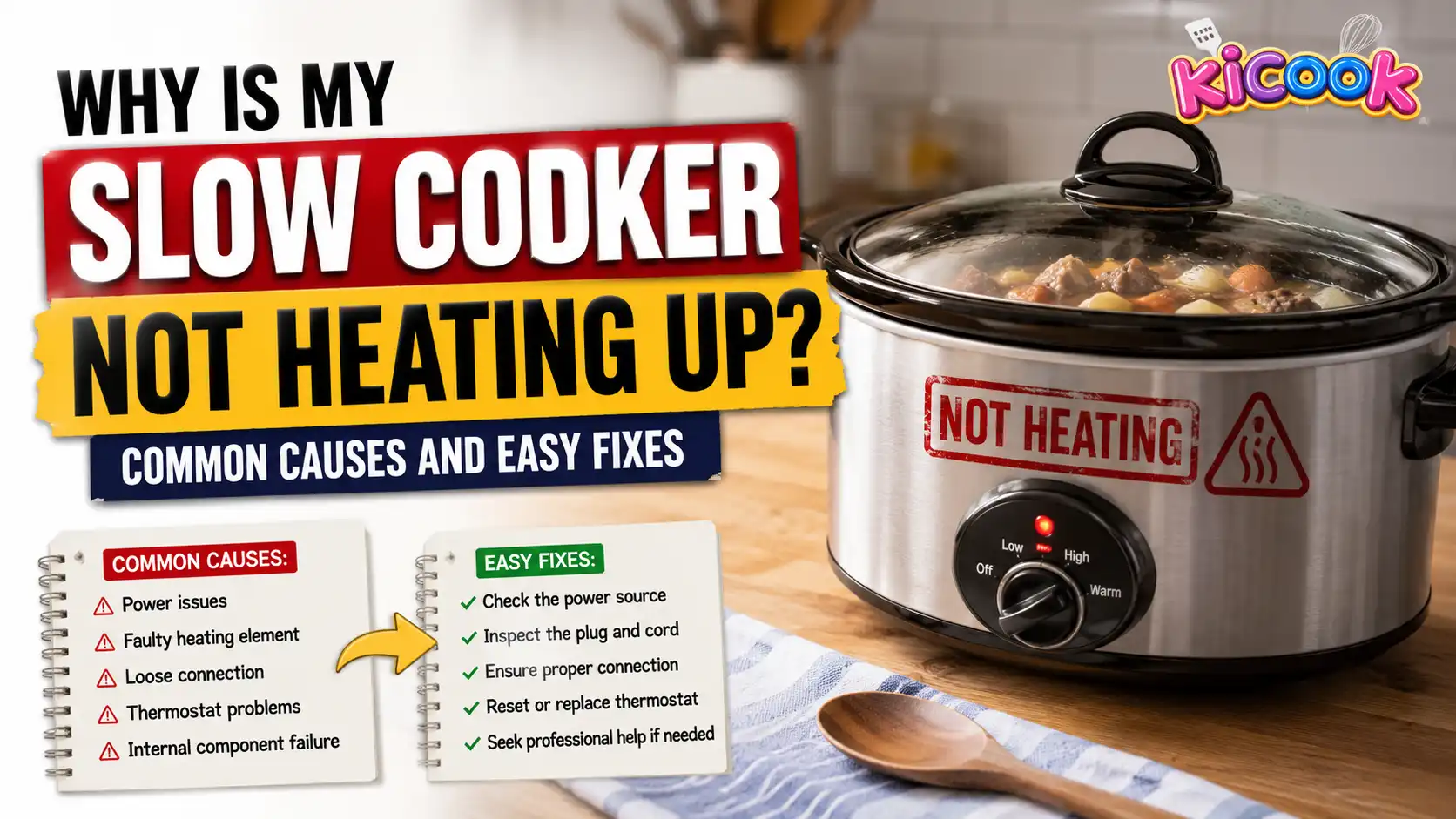
If you are asking, “why is my slow cooker not heating up,” the problem can be as simple as a bad outlet or as serious as a failed heating element. A slow cooker should gradually build steady heat, hold moisture with the lid, and cook food safely over several hours. When it stays cold, feels only slightly warm, or leaves food undercooked, you need to check the appliance before using it again.
This guide will help you troubleshoot the most common reasons a slow cooker is not heating up, including power issues, wrong settings, lid problems, overfilling, frozen food, heating element failure, thermostat issues, and safety concerns. Whether you use a Crock-Pot, Hamilton Beach, Ninja, Morphy Richards, Russell Hobbs, Breville, or another slow cooker brand, the steps below will help you decide whether the issue is easy to fix or whether the appliance should be replaced.
Quick Answer: Why Your Slow Cooker Is Not Heating Up
Your slow cooker may not be heating up because the outlet is not working, the plug or cord is damaged, the cooker is set to Warm instead of Low or High, the lid is not sealing properly, the insert is not seated correctly, the cooker is overfilled, or the internal heating element has failed.
In many cases, the first checks are simple: try another outlet, inspect the power cord, confirm the heat setting, keep the lid on, and make sure the removable crock is sitting properly inside the base. If the slow cooker turns on but still does not get hot enough, it may have a faulty heating element, thermostat, thermal fuse, or control board.
A working slow cooker usually cooks at low temperatures over a long period. The USDA notes that slow cookers generally cook between 170°F and 280°F, using direct heat, time, and steam inside the covered pot to cook food safely.
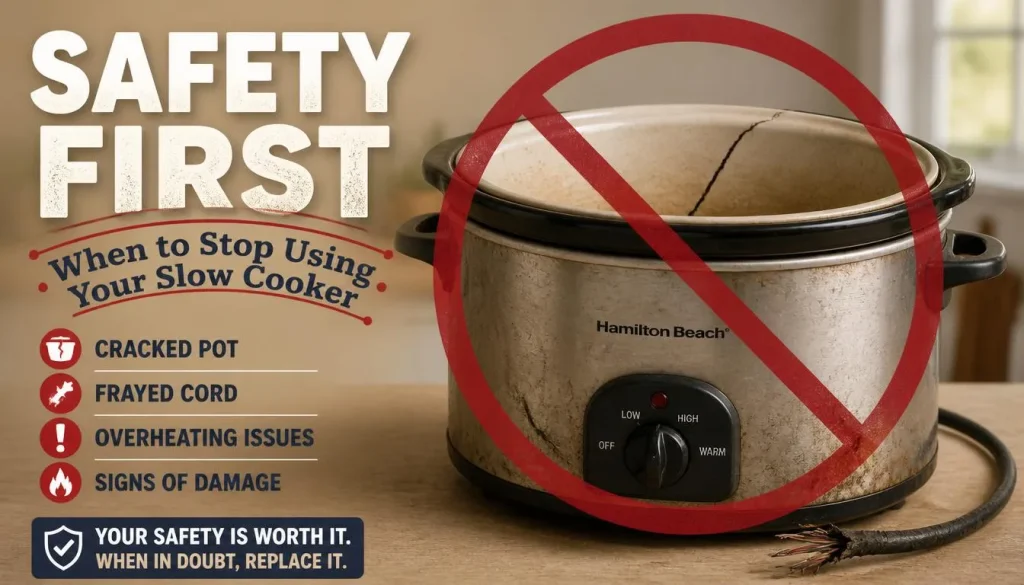
Safety First: When to Stop Using Your Slow Cooker
Before you troubleshoot the appliance, think about safety. Stop using the slow cooker immediately if you notice a burning smell, smoke, sparks, a melted plug, a cracked base, exposed wires, or food that stays lukewarm for hours.
You should also stop using it if the food did not reach a safe internal temperature. FoodSafety.gov says the only way to know cooked food is safe is to use a food thermometer and check the thickest part of the food. It lists 165°F for all poultry, 160°F for ground meats and egg dishes, and 145°F for whole cuts of beef, pork, veal, lamb, and fin fish.
If the slow cooker failed during cooking and the food stayed warm but not hot, do not guess. If you are unsure how long the food was in an unsafe temperature range, it is safer to throw it away.
10 Common Reasons Your Slow Cooker Is Not Heating Up
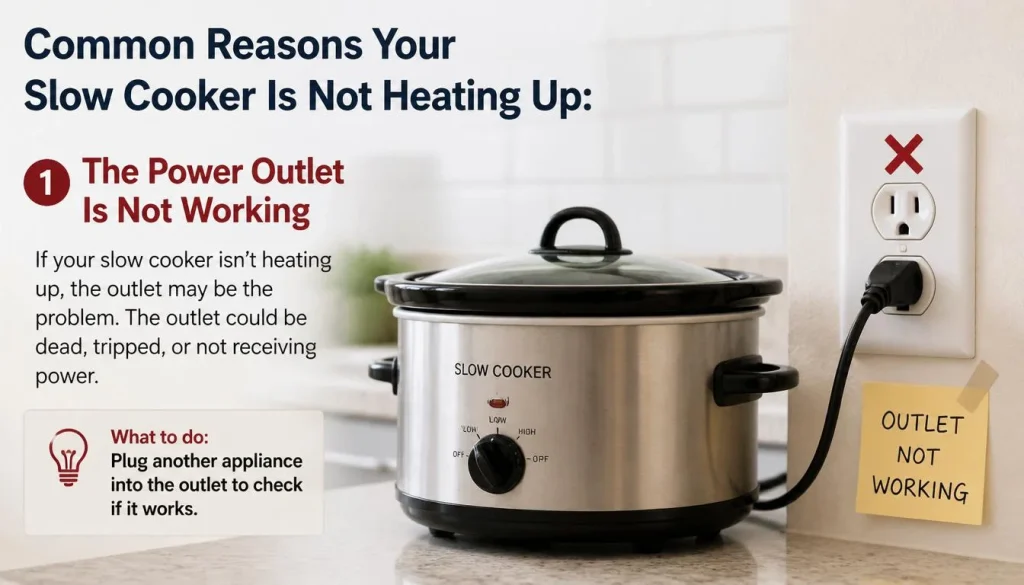
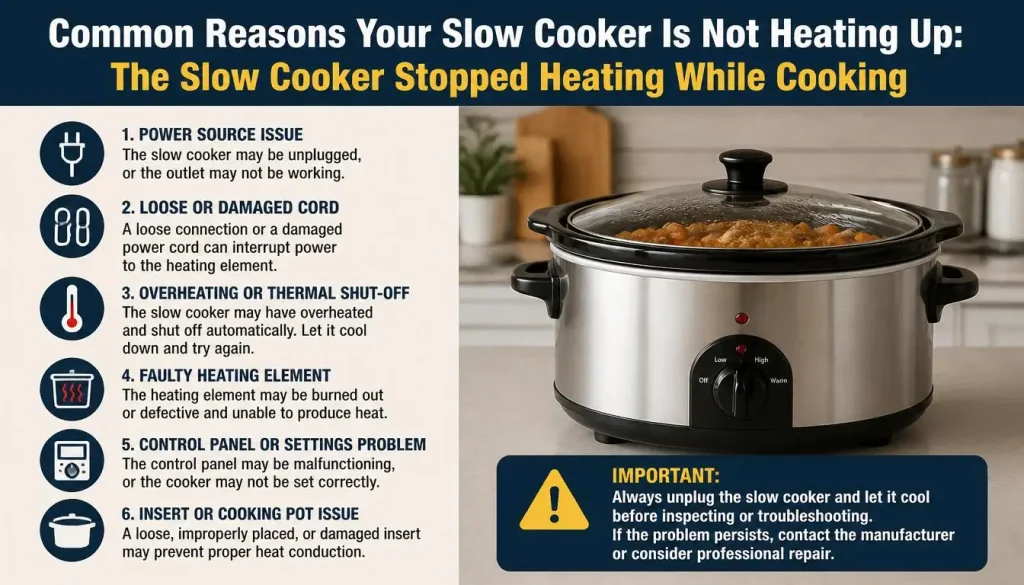
1. The Power Outlet Is Not Working
Start with the easiest problem first. Your slow cooker may be fine, but the outlet may not be providing power. Kitchen outlets can trip, especially GFCI outlets near sinks. A breaker may also have switched off.
Unplug the slow cooker and test the outlet with another appliance, such as a lamp, phone charger, kettle, or toaster. If the second appliance does not work either, the outlet is the problem. Try another wall outlet and reset the breaker or GFCI button if needed.
Avoid using damaged extension cords or overloaded power strips. A slow cooker should be plugged into a stable power source because it runs for several hours.
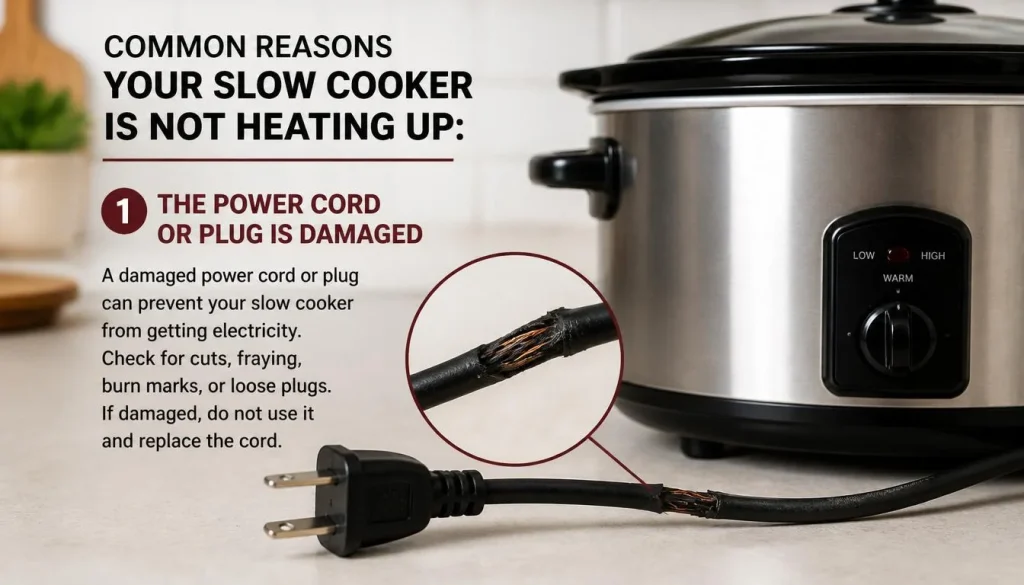
2. The Power Cord or Plug Is Damaged
A damaged cord can stop the slow cooker from heating or create a fire risk. Inspect the cord carefully. Look for fraying, cuts, loose areas, scorch marks, melted plastic, or a plug that feels unusually hot.
If the cord or plug is damaged, do not continue using the appliance. Small kitchen appliances are not always worth repairing, especially when the issue involves internal wiring or heat damage. Replace the unit or contact the manufacturer if it is still under warranty.
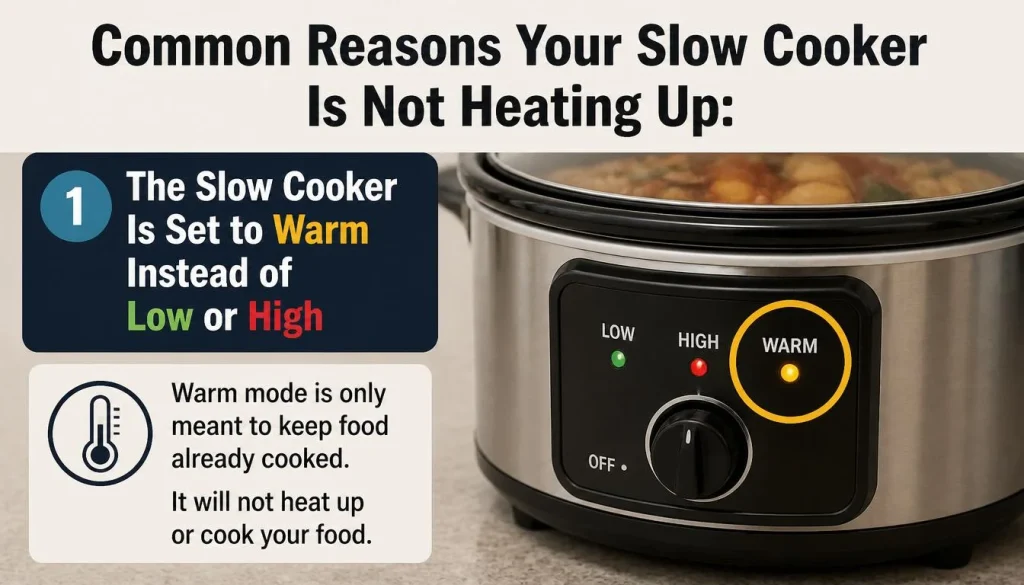
3. The Slow Cooker Is Set to Warm Instead of Low or High
Many people confuse the Warm setting with a cooking setting. Warm is usually designed to hold already-cooked food at serving temperature. It is not meant to cook raw meat, poultry, vegetables, beans, or a full meal from the start.
If your slow cooker is only warm and not cooking food, check the dial or digital control. Make sure it is set to Low or High, not Warm. If you accidentally started on Warm, switch to the correct setting and check whether the cooker begins heating properly.
For raw food, always follow the recipe and manufacturer instructions. Do not rely on Warm to bring food through the cooking process.
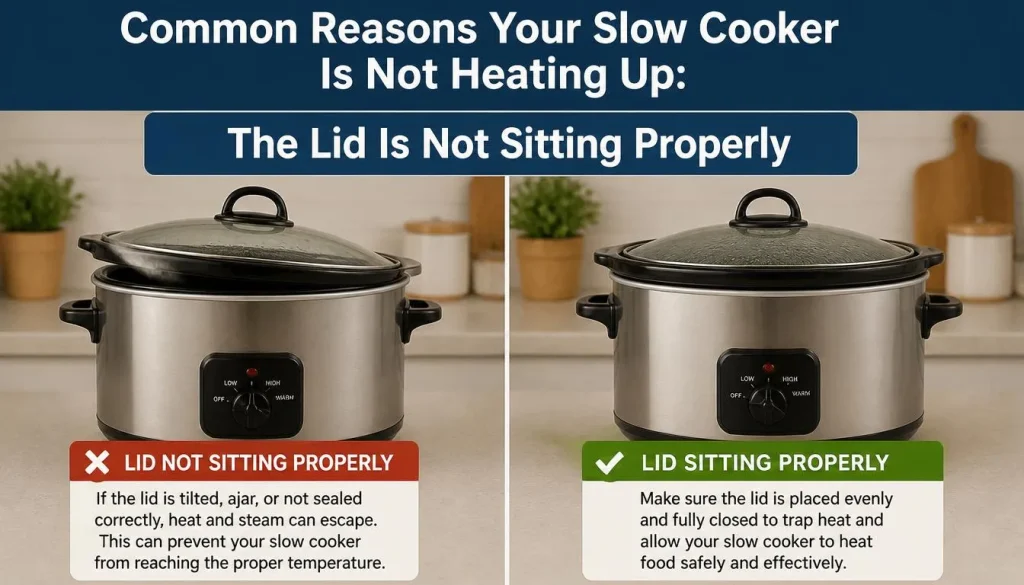
4. The Lid Is Not Sitting Properly
A slow cooker depends on trapped heat and steam. If the lid is cracked, loose, warped, or not sitting flat, heat escapes. This can make the food cook very slowly or stay undercooked.
Check whether the lid fits tightly on the crock. Make sure there are no food pieces, foil, liners, or utensils blocking the lid. Crock-Pot support also recommends making sure the lid is tightly sealed to retain heat and trying another power outlet if there are temperature issues.
Do not open the lid too often. Every time you lift the lid, heat and steam escape. That can add extra cooking time and make it seem like the slow cooker is not heating.
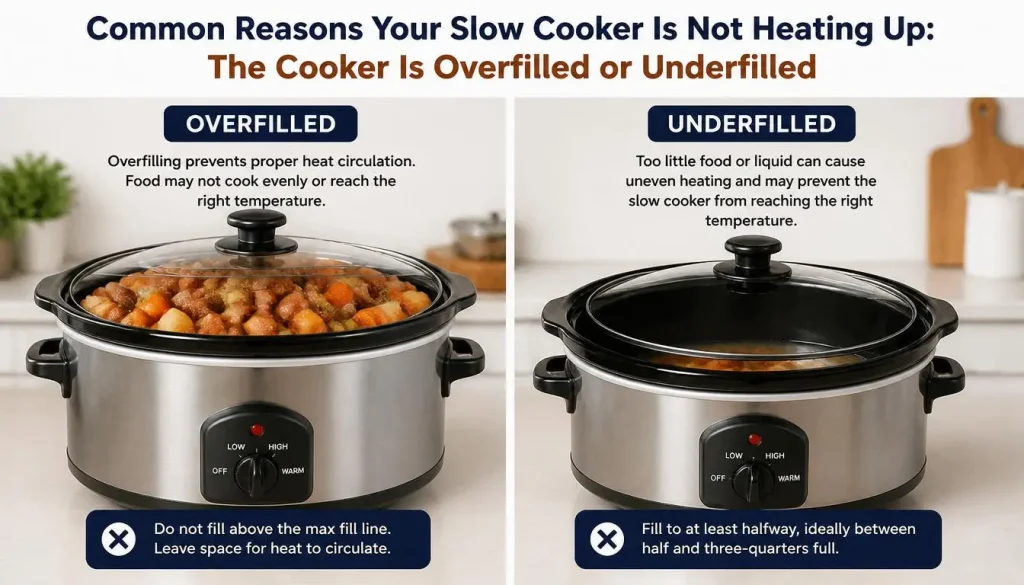
5. The Cooker Is Overfilled or Underfilled
A slow cooker needs the right amount of food and liquid to work well. If it is too full, food may not heat evenly. If it is too empty, food may overcook, dry out, or fail to cook as expected.
FoodSafety.gov recommends keeping a slow cooker between half and two-thirds full. It warns that if the cooker is too full, food may be undercooked and unsafe; if it is not full enough, food may be overcooked.
For best results, do not pack the crock to the top. Leave enough space for heat and steam to circulate. If your recipe is too large for your slow cooker, use a bigger appliance or reduce the recipe.
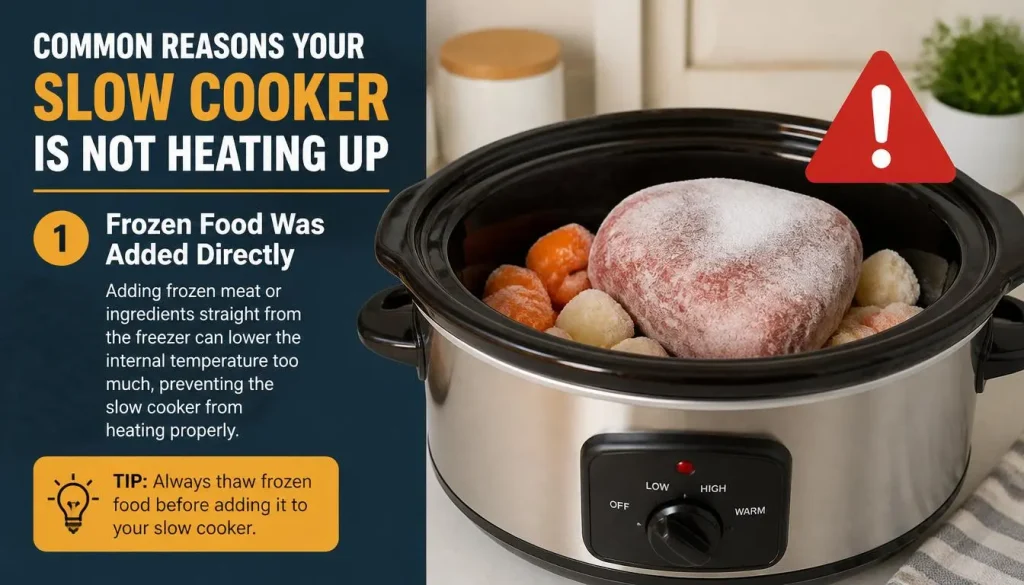
6. Frozen Food Was Added Directly
Frozen meat or poultry can make your slow cooker seem like it is not heating properly because the appliance has to spend a long time thawing the food before it can cook it safely.
The USDA advises defrosting meat or poultry before placing it in a slow cooker. Frozen meat or poultry can spend too much time thawing in the cooker, which can allow bacteria to multiply.
Always thaw meat and poultry in the refrigerator before adding them to the slow cooker. If you forgot to thaw them, use a safer cooking method that heats food faster.
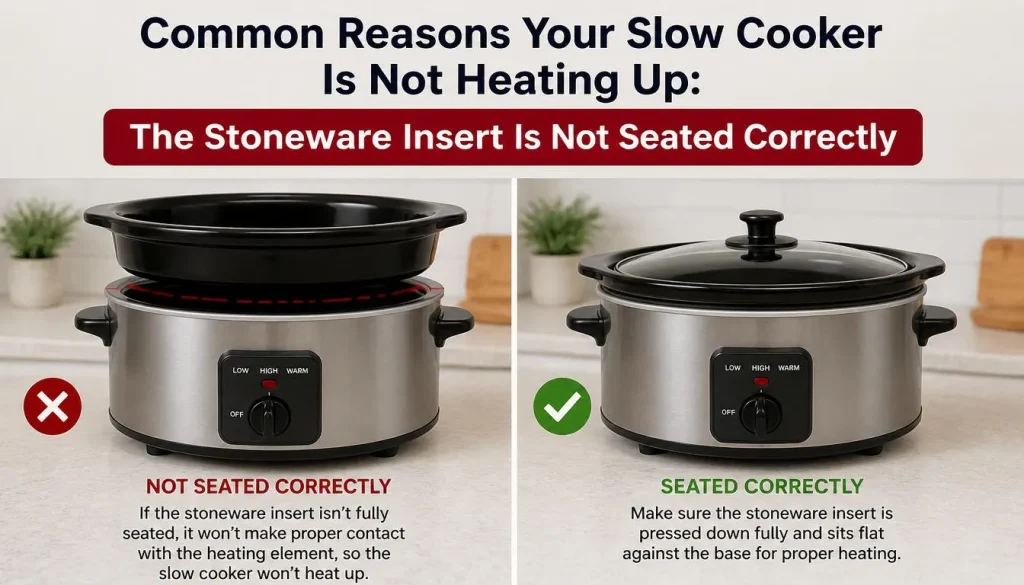
7. The Stoneware Insert Is Not Seated Correctly
Most slow cookers have a removable ceramic or stoneware insert. If the insert is not sitting flat inside the heating base, it may not absorb heat evenly. This can happen if crumbs, food residue, or a slow cooker liner gets trapped underneath the pot.
Remove the insert after the appliance is unplugged and cool. Check the inside of the base for debris. Clean the bottom of the insert and place it back properly. The crock should sit stable without rocking.
Also check for cracks. A cracked insert can affect cooking performance and may become unsafe with heat.
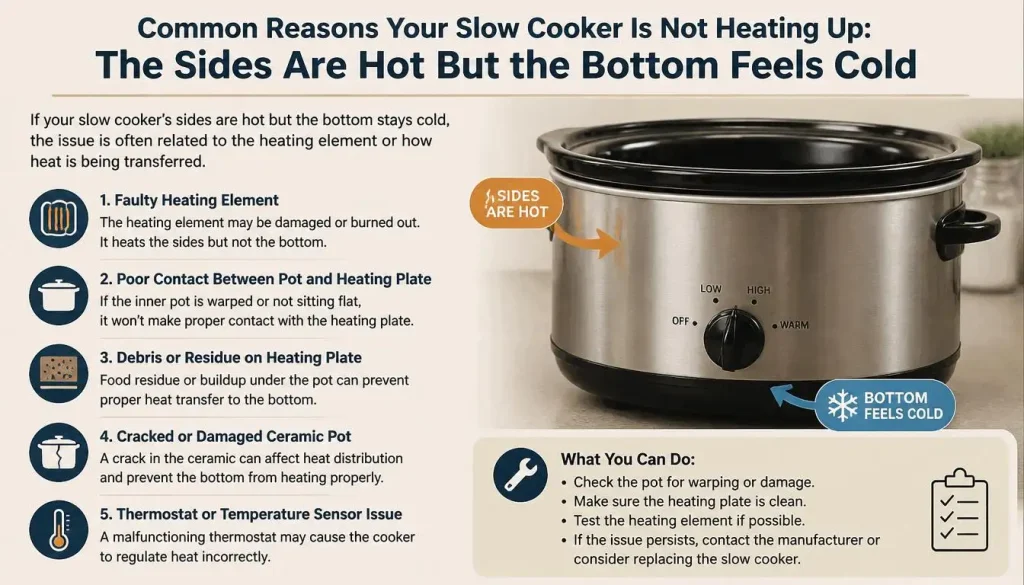
8. The Sides Are Hot But the Bottom Feels Cold
This situation can confuse many users. Some traditional slow cookers heat mainly from the sides rather than from the bottom. So the bottom may not feel as hot as the side walls, especially early in cooking.
However, the food or water inside should still reach safe cooking temperatures over time. If the sides are hot but the food stays lukewarm for hours, the cooker may not be transferring heat properly. In that case, run a water temperature test before using it again for food.
9. The Slow Cooker Stopped Heating While Cooking
If your slow cooker started normally but stopped heating halfway through, check for a power outage, tripped breaker, loose plug, automatic shutoff, or digital control error.
This is a serious food safety issue. If food sat in the cooker without enough heat, bacteria may have multiplied. Michigan State University Extension advises throwing away food if the power goes out during slow cooking, especially when there is doubt about safety.
If the cooker repeatedly stops heating during use, do not trust it for long recipes. Replace it or contact the manufacturer.
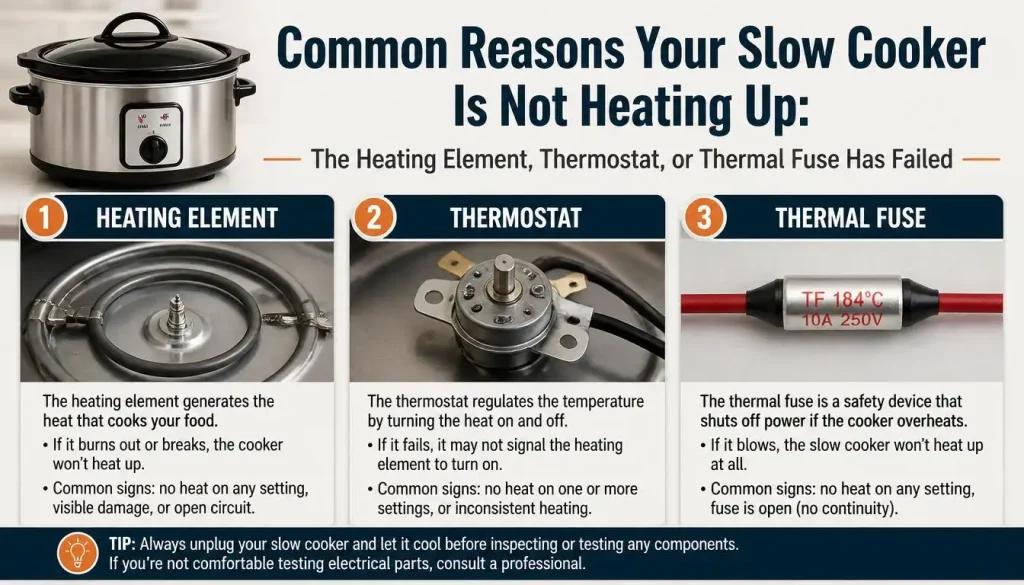
10. The Heating Element, Thermostat, or Thermal Fuse Has Failed
If the light turns on but the slow cooker does not heat, the internal heating element may have failed. Other possible internal problems include a faulty thermostat, failed thermal fuse, loose wiring, or damaged control board.
These issues are more common in older slow cookers or digital models. You may notice symptoms such as:
- The power light is on, but there is no heat.
- The cooker heats sometimes but not always.
- Low works, but High does not.
- High works, but Low does not.
- The cooker shuts off randomly.
- The base gets warm in one area but not around the whole crock.
Because this involves electrical components, do not open the base unless you are qualified to repair small appliances. In most cases, replacing the slow cooker is safer and more cost-effective.
How to Test If Your Slow Cooker Is Heating Properly
If your slow cooker is old, weak, or inconsistent, run a water temperature test. This test helps you know whether the appliance reaches a safe temperature.
Follow these steps:
- Fill the slow cooker one-half to two-thirds full with tap water.
- Place the lid on properly.
- Set the cooker to Low.
- Let it heat for 8 hours.
- Quickly remove the lid.
- Check the water temperature with a reliable food thermometer.
Colorado State University Extension says the water should measure 185°F to 200°F after this test. Temperatures below 185°F indicate that the slow cooker does not heat food adequately and should be replaced.
Michigan State University Extension gives a similar test and says that water below 185°F after 8 hours means the slow cooker is unsafe and should be replaced.
Slow Cooker Light Is On But Not Heating
If the indicator light is on but the cooker is not heating, power is reaching at least part of the unit. That does not mean the heating system is working.
Common causes include:
- Burned-out heating element
- Failed thermal fuse
- Faulty thermostat
- Loose internal wire
- Damaged control board
- Digital panel malfunction
Try switching between Low and High. If neither setting heats, the internal heating system may have failed. If one setting works but the other does not, the control switch or thermostat may be damaged.
For a new slow cooker, contact the seller or manufacturer for warranty support. For an older cooker, replacement is usually the better option.
Slow Cooker Is Warm But Not Cooking Food
A slow cooker that gets warm but does not cook food may have a weak heating element, poor lid seal, incorrect setting, or too much food inside.
First, make sure it is not set to Warm. Then check the lid, fill level, and recipe size. If everything looks correct but the food still does not cook properly, test the appliance with water.
Food should not stay lukewarm for hours. The danger zone for food safety is commonly identified as 40°F to 140°F, where bacteria can grow quickly. Colorado State University Extension explains that slow cookers must heat food slowly but fast enough to keep it out of that danger zone.
Slow Cooker Not Heating on High or Low
If your slow cooker does not heat on High, but Low works, the control switch or thermostat may be faulty. If it does not heat on Low, but High works, the lower heat circuit may have failed.
Try this simple check:
- Add water to the crock.
- Turn the cooker to High for 30 to 60 minutes.
- Check whether the water becomes noticeably hot.
- Repeat later on Low for a longer period.
If one setting works and the other does not, do not rely on the cooker for unattended meals. Slow cooker recipes depend on predictable heat. A broken setting can cause undercooking or overcooking.
Why Is My Crock-Pot Not Heating Up?
If your Crock-Pot is not heating up, check the same basic issues first: power outlet, cord, lid position, heat setting, fill level, and removable stoneware placement.
Crock-Pot’s own troubleshooting guidance for temperature issues recommends checking that the lid is sealed to retain heat and trying a different power outlet. If the issue continues, the brand recommends contacting support.
Also check whether your model has a timer. Some programmable slow cookers shift to Warm after the cooking time ends. If the cooker moved to Warm too early, the food may not continue cooking at the expected rate.
Is It Safe to Eat Food If the Slow Cooker Did Not Heat Up?
It depends on how hot the food became and how long it stayed at an unsafe temperature. If raw meat, poultry, seafood, or dairy-based food sat lukewarm for hours, it may not be safe.
Use a food thermometer. Do not rely only on appearance, smell, or cooking time. FoodSafety.gov says the only way to know for sure that food is safe is to check its internal temperature with a thermometer.
If the slow cooker stopped heating during cooking and you do not know how long the food stayed warm but not hot, discard the food. It is not worth the risk.
Should You Repair or Replace a Slow Cooker That Won’t Heat?
In many cases, replacing a slow cooker is the better choice. Slow cookers are relatively affordable, and electrical repairs can cost more than a new unit. Safety also matters because the appliance uses heat for several hours.
Use this table to decide:
| Problem | Best Action |
|---|---|
| Bad outlet | Use another outlet or fix the electrical outlet |
| Tripped breaker | Reset breaker and monitor the cooker |
| Loose lid | Adjust, clean, or replace the lid |
| Overfilled cooker | Reduce food amount |
| Frozen food added | Thaw food before cooking next time |
| Cord or plug damage | Stop using and replace the unit |
| Light on but no heat | Likely replace the slow cooker |
| Failed water temperature test | Replace the slow cooker |
| Burning smell or melted plug | Stop using immediately |
| Old cooker with weak heat | Replace for safety and reliability |
If the cooker fails the 185°F water test, do not keep using it for meat, poultry, seafood, or other high-risk foods.
How to Prevent Slow Cooker Heating Problems
You can reduce heating problems by using the slow cooker correctly and maintaining it well.
Follow these tips:
- Keep the cooker between half and two-thirds full.
- Thaw meat and poultry before cooking.
- Keep the lid on during cooking.
- Do not use Warm as a cooking setting.
- Cut large pieces of meat into smaller pieces.
- Make sure the insert sits flat in the base.
- Do not use a cracked crock or lid.
- Clean the insert and lid after every use.
- Keep the electrical base dry.
- Do not submerge the heating base in water.
- Store the cord safely.
- Test older slow cookers once a year.
The USDA also recommends cutting large pieces of meat into smaller pieces and keeping the cooker half to two-thirds full so food cooks thoroughly.
Final Verdict
If your slow cooker is not heating up, begin with the simple checks: outlet, plug, cord, setting, lid, fill level, and insert position. Many heating problems come from basic setup mistakes.
If the slow cooker turns on but does not get hot, feels only warm, stops heating during cooking, or fails the water temperature test, the issue may be internal. A broken heating element, thermostat, thermal fuse, or control board is usually not worth the risk.
When food safety is involved, be careful. Test the cooker with water, use a food thermometer, and replace the appliance if it cannot heat properly. A slow cooker should make cooking easier, not leave you guessing whether your meal is safe.
FAQs About Slow Cooker Not Heating Up
Why is my slow cooker on but not heating?
If your slow cooker is on but not heating, the indicator light may still work even though the heating element, thermostat, thermal fuse, or internal wiring has failed. Try another outlet and check the setting. If the light stays on but the cooker remains cold, replacement is usually the safest option.
Why is my slow cooker warm but not cooking food?
Your slow cooker may be set to Warm instead of Low or High. Warm is usually for holding cooked food, not cooking raw food. If it is already on Low or High but food still does not cook, check the lid, fill level, and run a water temperature test.
Why is my Crock-Pot not heating up?
A Crock-Pot may not heat because of a bad outlet, loose lid, wrong setting, damaged cord, poorly seated stoneware insert, or internal heating failure. Crock-Pot support recommends checking the lid seal and trying a different outlet for temperature issues.
Why is my slow cooker not heating on High?
If the slow cooker does not heat on High, the switch, thermostat, control board, or heating circuit may be faulty. Try heating water on High for 30 to 60 minutes. If there is no clear heat increase, stop using the cooker.
Why is my slow cooker not heating on Low?
If Low does not work but High does, the low-heat control may be damaged. Do not rely on the cooker for all-day recipes if one setting is broken. Slow cooking depends on steady, predictable heat.
Why are the sides hot but the bottom cold?
Some slow cookers heat mainly from the sides, so the bottom may feel cooler than the side walls. This can be normal. However, if the food or water inside does not become hot enough after several hours, the appliance may have a heating problem.
How do I know if my slow cooker heating element is broken?
Signs of a broken heating element include no heat, light on but no cooking, uneven heating, food staying lukewarm, or failure during the water temperature test. If the cooker does not reach at least 185°F in the water test after 8 hours on Low, it should be replaced.
Can I repair a slow cooker that does not heat?
Some electrical parts can technically be repaired, but most slow cookers are not worth repairing unless they are expensive models and the repair is done professionally. For damaged cords, melted plugs, failed heating elements, or unsafe temperatures, replacement is usually better.
Is food safe if my slow cooker stopped heating?
Food may not be safe if the slow cooker stopped heating and the food stayed in the danger zone too long. If you do not know how long the food was without proper heat, throw it away. When in doubt, do not take the risk.
How hot should a slow cooker get?
The USDA says slow cookers generally cook between 170°F and 280°F. For checking an older cooker, the water temperature test should reach 185°F to 200°F after 8 hours on Low.
Should I replace my slow cooker if it fails the water test?
Yes. If your slow cooker does not reach 185°F after the water temperature test, it is not heating food adequately and should be replaced. This is especially important if you cook meat, poultry, soups, stews, or family meals regularly.

“I believe great cooking starts with the right tools, trusted advice, and a little confidence in the kitchen.”
Hi, I’m Emma Carter. My love for cooking began in my grandmother’s kitchen, where I learned that every great meal starts with simple ingredients and the right cookware. Over the years, I’ve spent countless hours researching, testing, and comparing kitchen appliances, cookware, coffee makers, air fryers, and other everyday kitchen essentials.
Here at KiCook, my goal is to make your buying decisions easier with honest product reviews, practical buying guides, and easy-to-follow cooking tips. Whether you’re upgrading your kitchen or searching for the best appliance for your home, I focus on providing clear, reliable, and research-backed information you can trust.
When I’m not testing new kitchen gadgets or writing in-depth guides, you’ll usually find me trying new recipes, visiting local farmers’ markets, or enjoying a quiet cup of coffee while planning my next kitchen project.