A crock pot temperature typically ranges from 190°F to 210°F (88°C to 99°C) on the Low setting and 300°F (149°C) or higher on the High setting, depending on the model. Understanding crock pot temperature settings helps you cook food safely, prevent overcooking, and get better results with soups, stews, meats, and casseroles.
Cooking with a crock pot seems simple—add ingredients, turn it on, and walk away. Yet many home cooks wonder whether their slow cooker is getting hot enough, why recipes take different amounts of time, or how the Low and High settings actually work.
If you’ve ever worried about food safety, dry meat, or meals that finish too early or too late, you’re not alone. Knowing the correct crock pot temperature can make a huge difference in your cooking success.
This guide explains crock pot cooking temperature ranges, how heat settings work, food safety recommendations, and practical tips for getting perfect results every time. You’ll also learn common mistakes to avoid and how modern slow cookers in 2026 differ from older models.
Why Crock Pot Temperature Matters for Safe and Delicious Cooking
Many people assume that a crock pot cooks at a single temperature. In reality, different settings produce different heat levels over time.
The biggest challenge with slow cooking is balancing food safety and texture. If the temperature stays too low, harmful bacteria can multiply. If it becomes too hot, meat can dry out and vegetables may become mushy.
A properly functioning slow cooker gradually heats food above the danger zone of 40°F to 140°F. Once the food reaches a safe internal temperature, the crock pot maintains steady heat for hours.
Common problems caused by misunderstanding crock pot heat settings include:
- Tough or dry meat
- Undercooked poultry
- Mushy vegetables
- Burned edges
- Food safety concerns
- Inconsistent recipe results
Today’s smart slow cookers often include programmable timers, temperature sensors, and automatic warming modes. These features help maintain consistent crock pot cooking temperature while reducing the risk of overcooking.
“No one is born a great cook, one learns by doing.”
— Julia Child, Chef and Author
Understanding temperature is one of the most important skills a home cook can learn when using a slow cooker.
Best Crock Pot Temperature Guide and Heat Settings
The exact temperature of crock pot models varies by manufacturer, but most follow similar ranges.
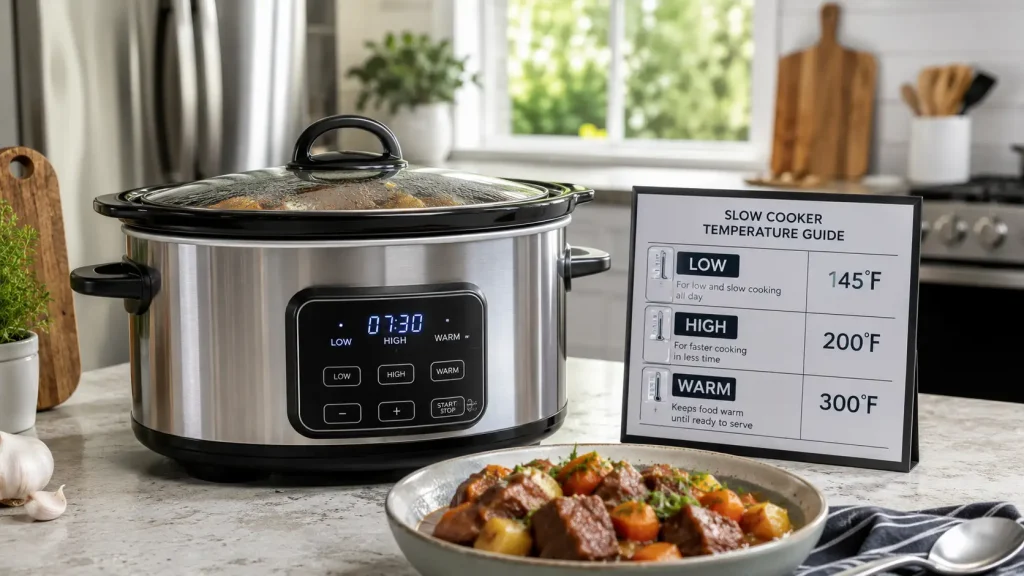
Common Crock Pot Heat Settings
- Warm Setting
- Typically 145°F–165°F
- Keeps food ready to serve
- Not intended for cooking raw ingredients
- Low Setting
- Usually reaches 190°F–210°F
- Ideal for long cooking sessions
- Excellent for tougher meat cuts
- High Setting
- Often reaches 275°F–300°F+
- Faster cooking
- Useful for soups and quick meals
Advantages of Low Temperature Cooking
Pros
- Better moisture retention
- Tender meat texture
- Rich flavor development
- Lower risk of scorching
Cons
- Longer cooking times
- Requires planning ahead
Advantages of High Temperature Cooking
Pros
- Faster meal preparation
- Great for busy schedules
- Useful when time is limited
Cons
- Slightly higher risk of overcooking
- Lean meats may dry out
Kitchen Essentials for Better Temperature Control
- Digital food thermometer
- Programmable slow cooker
- Temperature probe
- Heat-resistant lid
- Quality ceramic insert
- Smart kitchen timer
Modern Cooking Hacks for 2026
- Use smart slow cookers with app monitoring.
- Track internal food temperatures remotely.
- Schedule automatic switch-to-warm functions.
- Combine meal prep apps with cooking timers.
- Use AI-powered recipe planners for cooking adjustments.
Step-by-Step Guide
Follow these steps to achieve the best crock pot cooking temperature results:
- Read your slow cooker manual.
- Preheat the cooker if recommended by the manufacturer.
- Fill the crock pot at least halfway.
- Avoid overfilling beyond two-thirds full.
- Use thawed ingredients whenever possible.
- Keep the lid closed during cooking.
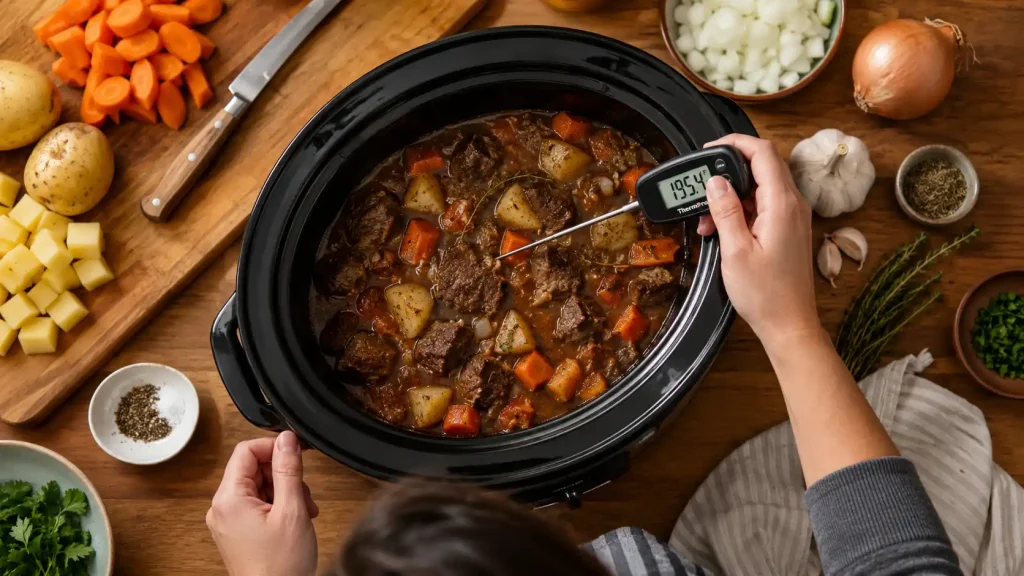
- Check food temperature with a digital thermometer.
- Switch to Warm mode only after food is fully cooked.
These simple steps help maintain stable temperatures and improve meal quality. Consistency is one of the biggest advantages of slow cooking when used correctly.
Expert Tips & Common Mistakes
Mastering crock pot temperature is easier when you learn from experienced cooks.
Pro Tips
- Use a digital thermometer for accuracy.
- Choose Low setting for tougher cuts of meat.
- Allow enough cooking time for connective tissue to break down.
- Keep the lid closed to maintain stable heat.
- Use uniform ingredient sizes for even cooking.
Common Mistakes to Avoid
Opening the lid repeatedly.
- Heat escapes quickly and extends cooking time.
Starting with frozen meat.
- Food may stay too long in unsafe temperature ranges.
Using too little liquid.
- Some recipes require moisture for proper heat distribution.
Overfilling the slow cooker.
- Food may cook unevenly.
For example, a large beef roast benefits from a long Low-temperature cook because collagen slowly breaks down into gelatin. On the other hand, chicken breast may become dry if cooked too long on High.
“Cooking is like love. It should be entered into with abandon or not at all.”
— Harriet Van Horne, Columnist and Author
A thoughtful approach to temperature control can dramatically improve flavor and texture.
FAQs
What is the normal crock pot temperature on Low?
Most slow cookers reach approximately 190°F to 210°F on the Low setting. The exact temperature varies by manufacturer, but this range is generally sufficient for safe slow cooking.
What temperature does a crock pot reach on High?
High settings typically reach between 275°F and 300°F or slightly higher. This allows food to cook faster while still benefiting from moist heat.
Is Low or High better for crock pot cooking?
Low is often preferred for tougher cuts of meat because it develops better texture and flavor. High works well when you need a meal ready more quickly.
Can I leave a crock pot on Warm all day?
Warm settings are designed to hold cooked food at a serving temperature. They are not intended to cook raw ingredients from the beginning.
How can I test my crock pot temperature?
Fill the crock pot with water and measure the temperature after several hours using a digital thermometer. Compare the results with the manufacturer’s specifications.
Why is my slow cooker cooking too fast?
Newer models often operate hotter than older units for food safety reasons. Reducing cooking time may help prevent overcooking.
What is the safest internal temperature for meat cooked in a crock pot?
Follow standard food safety guidelines. Poultry should reach 165°F, while other meats should meet recommended safe internal temperatures before serving.
Conclusion
Understanding crock pot temperature is one of the best ways to improve your slow-cooking results. Most crock pot heat settings operate within specific temperature ranges designed to cook food safely while creating tender, flavorful meals.
Whether you’re preparing soups, stews, pulled pork, pot roast, or casseroles, choosing the correct crock pot cooking temperature helps prevent dry meat, undercooked food, and inconsistent results. Modern slow cookers make temperature management easier than ever through programmable controls, smart sensors, and automatic warming features.
By following the crock pot temperature guide in this article, using a reliable thermometer, and avoiding common mistakes, you can enjoy safer and more delicious meals every time. Try these kitchen tips today and get more confidence from your slow cooker temperature settings.
“People who love to eat are always the best people.”
— Julia Child, My Life in France
For more expert guidance, visit Serious Eats—one of the most trusted resources for kitchen techniques, tested recipes, and food science. Their detailed guide to slow-cooker cooking techniques and food science can help you better understand how temperature affects flavor, texture, and cooking performance in everyday meals.
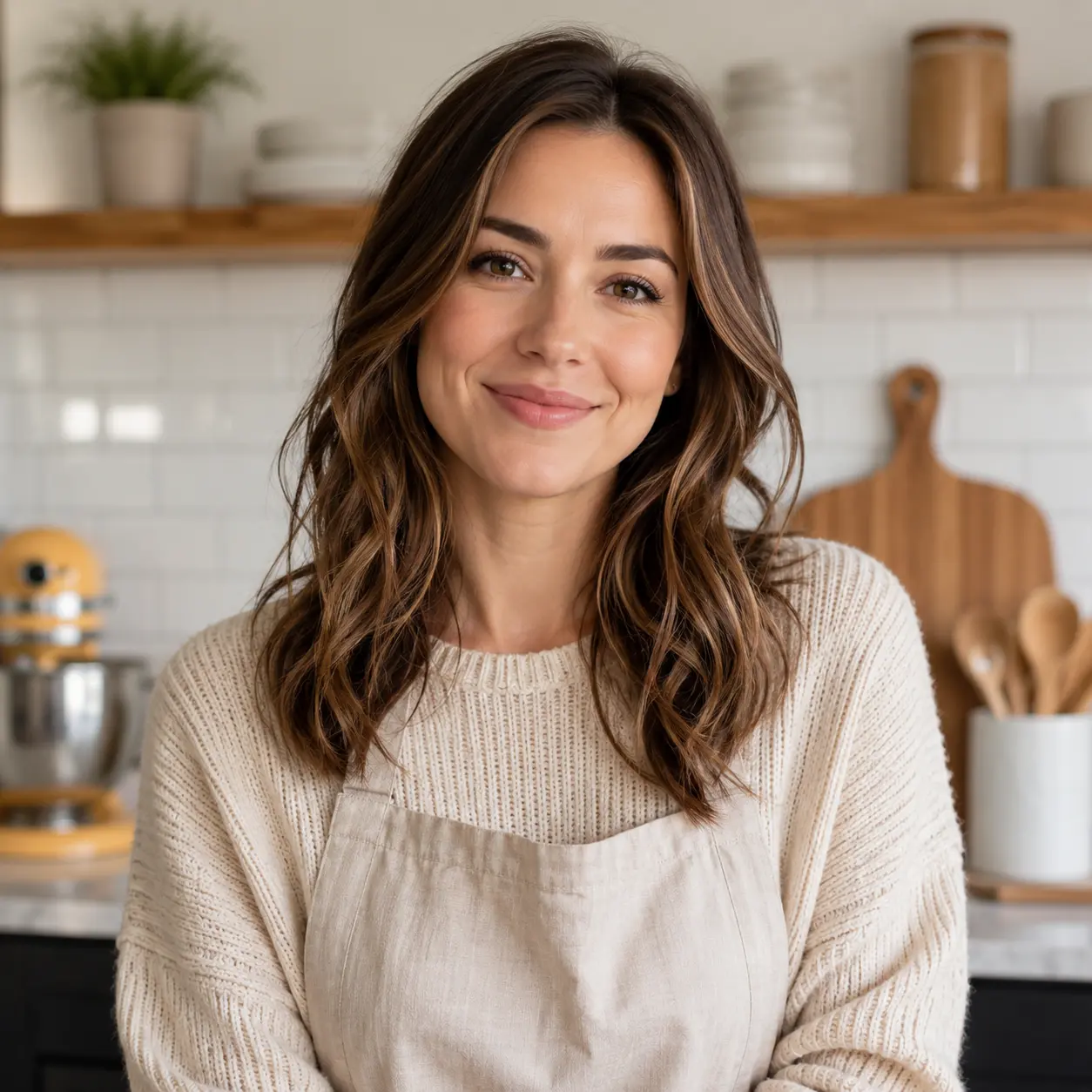
“I believe great cooking starts with the right tools, trusted advice, and a little confidence in the kitchen.”
Hi, I’m Emma Carter. My love for cooking began in my grandmother’s kitchen, where I learned that every great meal starts with simple ingredients and the right cookware. Over the years, I’ve spent countless hours researching, testing, and comparing kitchen appliances, cookware, coffee makers, air fryers, and other everyday kitchen essentials.
Here at KiCook, my goal is to make your buying decisions easier with honest product reviews, practical buying guides, and easy-to-follow cooking tips. Whether you’re upgrading your kitchen or searching for the best appliance for your home, I focus on providing clear, reliable, and research-backed information you can trust.
When I’m not testing new kitchen gadgets or writing in-depth guides, you’ll usually find me trying new recipes, visiting local farmers’ markets, or enjoying a quiet cup of coffee while planning my next kitchen project.