
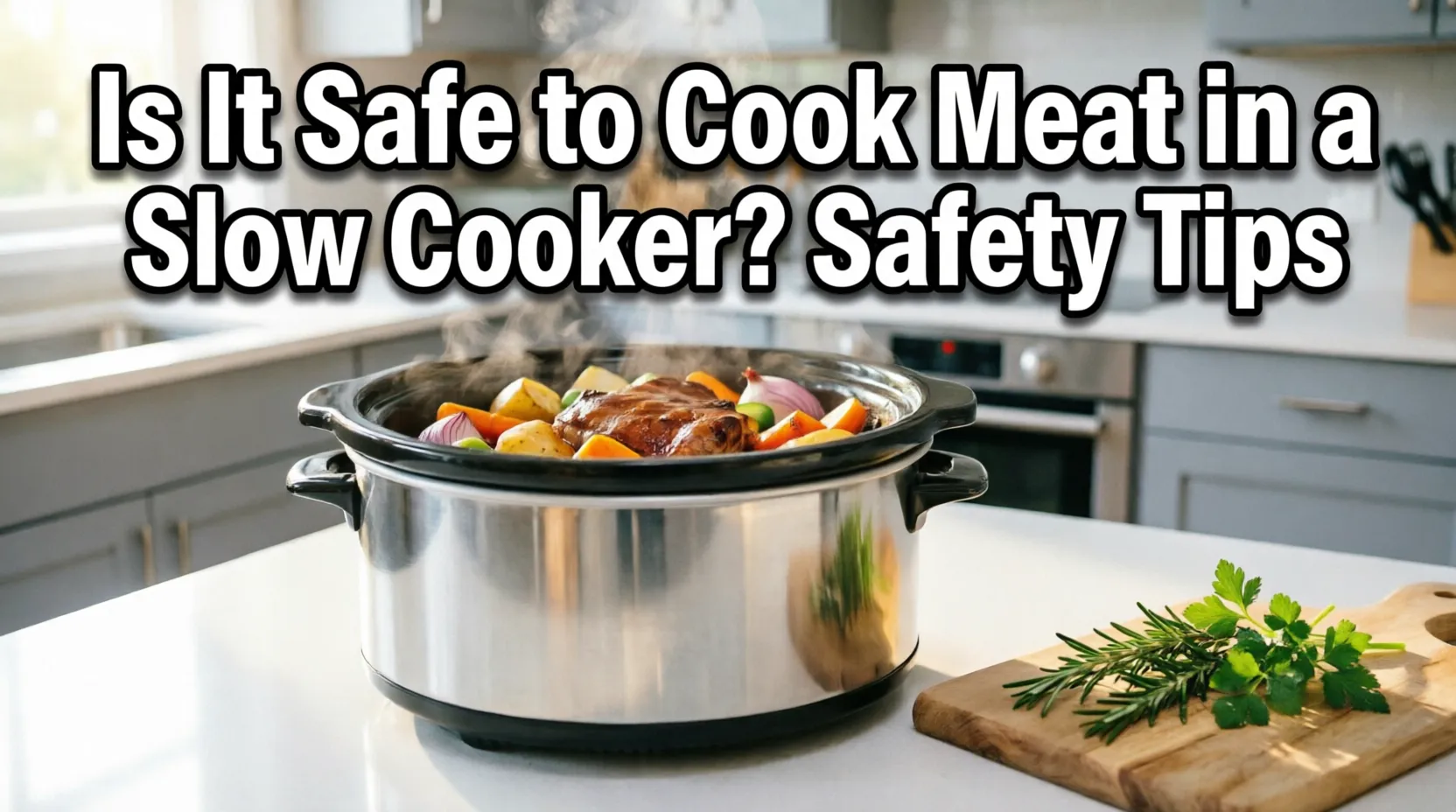
Yes, it is entirely safe to cook meat in a slow cooker if you follow proper preparation and temperature guidelines. The combination of direct heat, trapped steam, and continuous cooking destroys harmful bacteria effectively.
The Slow Cooker Dilemma: Peace of Mind for Your Countertop
We have all stood over a countertop appliance, staring at a raw beef roast or a pile of chicken breasts, wondering if a low-heat machine can truly handle raw meat without causing foodborne illness. You want the convenience of a ready-to-eat dinner after a long day at work, but the fear of serving undercooked food or lingering in the dangerous temperature zone can cause real anxiety.
I have spent over a decade helping home cooks manage their kitchens efficiently and safely. Over the years, I have tested dozens of slow cookers, analyzed food prep workflows, and looked closely at how these appliances handle heat.
You do not need to abandon your favourite comfort food recipes out of fear. When you understand the basic mechanics of how these appliances operate, you can prepare delicious, tender meals with absolute confidence. This guide will walk you through the precise steps to ensure every meal you serve is completely safe for your family.
3 Major Slow Cooker Mistakes (And How to Fix Them)
While these appliances are incredibly reliable, certain common preparation mistakes can inadvertently place your dinner in jeopardy. Here are the three most frequent problems people face when slow-cooking meat, why they happen, and how you can resolve them today.
1. Placing Frozen Meat Directly into the Ceramic Pot
- Why it happens: Life gets busy, and remembering to thaw ingredients the night before is easy to forget. It feels intuitive to throw a frozen pork shoulder or a package of frozen chicken directly into the pot, assuming the long cooking cycle will handle the defrosting process.
- The risk: The appliance heats food slowly. Frozen meat takes far too long to thaw inside the machine, leaving the outer layers sitting in the bacterial danger zone between 40°F and 140°F (4°C to 60°C) for multiple hours. This provides the perfect environment for harmful bacteria to multiply before the heat ever reaches a temperature high enough to destroy them.
- The solution: Always thaw your meat completely in the refrigerator before adding it to the appliance. If you are short on time, you can use the defrost setting on your microwave or submerge the sealed meat in cold water, but it must be completely thawed before the cooking cycle begins.
2. Overfilling or Underfilling the Insert
- Why it happens: When you are hosting a larger gathering or trying to meal prep for the entire week, it is tempting to pile ingredients all the way to the top rim. Conversely, if you are only making a small portion for one person, you might use a large machine with barely enough food to cover the bottom.
- The risk: An overfilled machine will cook unevenly and may never reach a safe internal temperature within the required timeframe. An underfilled machine will dry out the meat quickly, scorching the liquid and ruining the texture of your food.
- The solution: Keep your slow cooker filled between one-half and two-thirds full. This specific volume ensures proper steam distribution and even heat transfer throughout the entire contents. If your household size changes, consider investing in a smaller three-quart model or a larger six-quart model to match your typical batch size.
3. Lifting the Lid Frequently to Check Progress
- Why it happens: The aromas filling your home can make you hungry, leading to the urge to lift the lid, stir the liquid, or peek at the progress of your stew.
- The risk: Every single time you lift the lid, the internal temperature of the container drops by 10 to 15 degrees Fahrenheit. It takes the machine approximately 20 minutes to recover that lost heat. Repeatedly opening the pot extends the required cooking time significantly and can push your meal back down into an unsafe temperature range.
- The solution: Keep the lid securely in place until the minimum cooking time has elapsed. Trust the steam cooker process. Only remove the lid at the very end of the cycle to verify the internal temperature with a digital food thermometer or to add quick-cooking green vegetables.
The Science Behind Slow Cooker Safety
To understand why this method is safe, we need to look at how these appliances actually function. A slow cooker relies on a combination of direct heat from the heavy ceramic pot, a lengthy cooking cycle, and the continuous steam generated inside the tightly covered container. Together, these elements form an environment that effectively destroys foodborne pathogens.
The appliance generally operates at temperatures between 170°F and 280°F (77°C to 137°C). While this is lower than a traditional oven, the sustained heat over several hours ensures that the food eventually surpasses the critical safety threshold.
According to public safety standards across the USA, UK, Canada, and Australia, bacteria cannot survive when exposed to consistent heat above 140°F (60°C) over an extended duration. The steam traps moisture inside, which transfers heat into the center of the meat much more effectively than dry air.
Step-by-Step Guide to Safe Food Prep
Following a clean, orderly process from the moment you take the meat out of the refrigerator until you serve it will eliminate almost all risk of contamination.
1. Prepare a Clean Workspace
Always start with thoroughly washed hands, clean utensils, and a sanitized countertop. If you cut up your meat and vegetables a day in advance, store them in separate containers inside your refrigerator until you are ready to assemble the dish. This prevents any raw meat juices from contaminating ingredients that require less cooking time.
+-------------------------------------------------------------+
|               SAFE SLOW COOKER CAPACITY                     |
+-------------------------------------------------------------+
|                                                             |
|   =======================================  <- MAX (2/3)     |
|   |                                     |                   |
|   |       IDEAL COOKING ZONE            |                   |
|   |                                     |                   |
|   =======================================  <- MIN (1/2)     |
|   |                                     |                   |
|   +-------------------------------------+                   |
+-------------------------------------------------------------+
2. Layer Ingredients for Optimal Heat Transfer
Vegetables cook much slower than meat in a countertop environment. Place root vegetables like carrots, potatoes, and onions at the very bottom of the pot where they have direct contact with the primary heat source. Place your seasoned, thawed meat on top of the vegetables.
3. Add Sufficient Liquid
The presence of moisture is essential for generating the steam required to heat the chamber evenly. Add the amount of broth, water, or sauce specified in your recipe. The liquid level should almost cover the ingredients to ensure effective heat transfer throughout the pot.
4. Select the Right Setting
If you are preparing a meal before heading out for the work day, cooking on the “Low” setting for 8 hours is perfectly safe. However, if your schedule allows, turning the machine to the “High” setting for the first hour of cooking is an excellent practice. This approach rapidly pushes the food through the initial warming stage and shortens the time ingredients spend warming up.
Verifying Safe Internal Temperatures
You cannot determine whether meat is safe to eat simply by looking at its color or checking how easily it falls apart with a fork. The only definitive way to verify food safety is by using a reliable digital food thermometer at the end of the cooking cycle.
Insert the probe into the thickest part of the meat, making sure you avoid touching any bone, fat, or the ceramic wall of the cooker itself.
| Meat Type | Minimum Internal Temperature | Notes |
| Whole Beef, Pork, Lamb, Veal | 145°F (63°C) | Allow a 3-minute rest period after removal |
| Ground Meats (Beef, Pork) | 160°F (71°C) | Ensure no pink remains in the center |
| All Poultry (Chicken, Turkey) | 165°F (74°C) | Test multiple spots on whole birds or large breasts |
| Soups, Stews, and Sauces | 165°F (74°C) | Stir the liquid thoroughly before measuring |
“The direct heat from the pot, lengthy cooking and steam created within the tightly-covered container combine to destroy bacteria and make the slow cooker a safe process for cooking foods.” — [USDA Meat and Poultry Hotline], [Food Safety Education Authority]
Proper Care for Leftovers and Reheating
What you do after the cooking cycle finishes is just as vital as the preparation phase. Many people leave the ceramic pot sitting on the counter all evening, assuming the residual warmth keeps the food safe. This is a dangerous misconception.
The Two-Hour Window
Once the machine is turned off, or if it switches over to a “Keep Warm” setting, the temperature will slowly begin to decline. You must transfer leftovers into shallow, airtight containers and place them in the refrigerator within two hours.
If you leave the food inside the heavy ceramic insert, the dense material will retain heat for hours, keeping the inner contents at a lukewarm temperature that encourages bacterial growth. Splitting the food into small, shallow containers allows it to cool down rapidly to a safe storage temperature below 40°F (4°C).
Reheating Rules
Never use a slow cooker to reheat leftovers. The machine takes far too long to warm up cold food from the refrigerator, allowing bacteria a second opportunity to multiply.
Instead, reheat your food on the stovetop, in a traditional oven, or in the microwave until it reaches a uniform temperature of 165°F (74°C). Once the food is piping hot, you can place it back into a preheated slow cooker to keep it warm for serving during a gathering.
Real-World Scenarios and Country-Specific Guidelines
Food safety principles remain universal, but the specific regulations and environmental factors can vary depending on where you live.
High-Altitude Cooking (USA & Canada)
If you live in mountainous regions like Colorado or Alberta, the lower atmospheric pressure causes water to boil at a lower temperature. This means your appliance will cook food more slowly. For every 4,000 feet of elevation, you should add an extra hour of cooking time to your recipe if you are using the “Low” setting. Utilizing the “High” setting for the first hour is highly recommended in these regions to compensate for the atmospheric drop.
Regional Ingredient Concerns (UK & Australia)
If your recipe includes dried kidney beans, you must exercise extreme caution. Raw kidney beans contain a natural toxin called phytohaemagglutinin, which can cause severe gastrointestinal distress.
The low temperature of a countertop appliance is not hot enough to destroy this toxin. In fact, undercooking the beans can actually increase their toxicity. The [Food Safety Information Council of Australia] recommends soaking dried beans for at least five hours and then boiling them rapidly in fresh water on a traditional stovetop for at least 10 minutes before adding them to your recipe. Alternatively, you can use canned beans, which are already fully cooked and completely safe.
Frequently Asked Questions
Can you put raw meat in a slow cooker?
Yes, you can place raw meat directly into the pot. The appliance is engineered to heat ingredients steadily to a temperature that kills harmful bacteria, provided you include sufficient liquid and keep the lid closed.
Can you overcook meat in a slow cooker?
Yes, meat can become dry, fibrous, or completely mushy if left inside the machine for too long. Lean cuts like chicken breast are especially prone to overcooking, whereas tougher cuts with more connective tissue benefit from longer cycles.
Is it safe to leave a slow cooker on low all day while at work?
Yes, it is perfectly safe as long as the appliance is placed on a flat, heat-resistant surface away from walls and flammable materials. Modern certified appliances are built to regulate low electricity levels securely for hours.
What should I do if the power goes out while I am away?
If the power goes out during the cooking process, the food is no longer safe to eat, even if it looks fully cooked. If you are home and notice the outage immediately, finish cooking the meal using a gas stove or outdoor grill right away.
Can I cook a whole large chicken or beef roast safely?
Yes, but you must ensure the cut fits comfortably within the capacity guidelines of your specific model. The meat should not touch the lid, and there must be enough space around the sides for liquid and steam to circulate evenly.
Your Plan for Stress-Free Cooking
Preparing comforting meals for your household should be an enjoyable experience, not a source of worry. By applying these fundamental preparation and temperature rules, you eliminate the risks entirely.
- Always thaw your meat completely before turning on the machine.
- Keep the pot properly filled between the half and two-thirds thresholds.
- Verify the final temperature using a digital food thermometer before serving.
Investing a tiny amount of attention into your morning preparation will reward you with an effortless, delicious, and perfectly safe dinner waiting for you the moment you walk through the front door.
“I believe great cooking starts with the right tools, trusted advice, and a little confidence in the kitchen.”
Hi, I’m Emma Carter. My love for cooking began in my grandmother’s kitchen, where I learned that every great meal starts with simple ingredients and the right cookware. Over the years, I’ve spent countless hours researching, testing, and comparing kitchen appliances, cookware, coffee makers, air fryers, and other everyday kitchen essentials.
Here at KiCook, my goal is to make your buying decisions easier with honest product reviews, practical buying guides, and easy-to-follow cooking tips. Whether you’re upgrading your kitchen or searching for the best appliance for your home, I focus on providing clear, reliable, and research-backed information you can trust.
When I’m not testing new kitchen gadgets or writing in-depth guides, you’ll usually find me trying new recipes, visiting local farmers’ markets, or enjoying a quiet cup of coffee while planning my next kitchen project.



1 thought on “Is It Safe to Cook Meat in a Slow Cooker? Safety Tips”