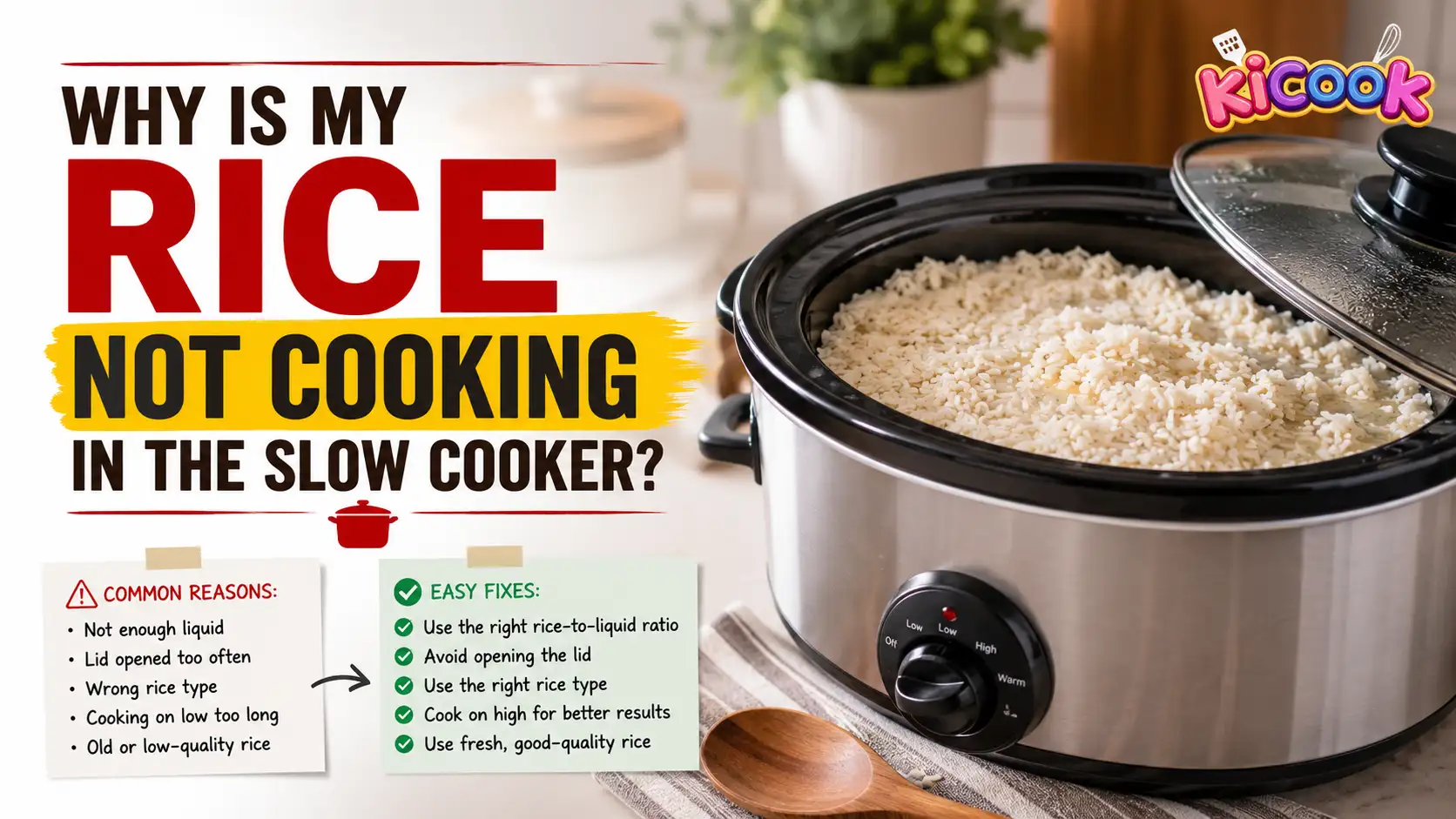
You opened your slow cooker expecting soft, fluffy rice, but the grains are still hard, crunchy, or sitting in liquid without cooking properly. If you are wondering, “Why is my rice not cooking in the slow cooker?”, the most common reasons are low heat, not enough liquid, adding rice too late, opening the lid too often, using the wrong rice type, or cooking in a sauce that is too thick.
The good news is that undercooked slow cooker rice can often be fixed. In most cases, you can add hot liquid, switch the slow cooker to High, keep the lid closed, and give the rice more time to soften.
Quick Answer: Why Rice Stays Hard in a Slow Cooker
Rice usually stays hard in a slow cooker because it does not get enough steady heat or enough liquid. Slow cookers heat gently, so rice needs the right amount of hot liquid, enough cooking time, and a tightly closed lid. If the rice is dry, crunchy, or not soft after hours, the slow cooker may be too full, too cool, or the rice may have been added too late.
Quick Fix Table for Undercooked Slow Cooker Rice
| Problem | Likely Cause | Quick Fix |
|---|---|---|
| Rice is hard | Not enough liquid | Add 1/4 to 1/2 cup hot water or broth |
| Rice is crunchy | Heat is too low | Cook on High for 20 to 40 minutes more |
| Rice is hard but watery | Rice was added too late | Cover and continue cooking |
| Rice is dry on top | Rice is not under liquid | Gently press rice into the liquid |
| Chicken is done but rice is hard | Rice needs more time than the meat | Remove chicken and finish cooking the rice |
| Rice is mushy outside but hard inside | Uneven heat or thick sauce | Add hot liquid and cook covered |
| Rice is still hard after 3 hours | Slow cooker may be too cool | Test cooker temperature or cook rice separately next time |
Can Rice Cook Properly in a Slow Cooker or Crockpot?
Yes, rice can cook in a slow cooker or Crockpot-style cooker, but it does not behave the same way as rice cooked on the stove, in a rice cooker, or in an Instant Pot. A slow cooker uses low, steady heat. That is great for soups, stews, meat, and casseroles, but rice needs enough moisture and heat to fully absorb liquid and soften.
Rice can cook well in a slow cooker when the recipe has enough liquid, the lid stays closed, the cooker is not overfilled, and the rice is added at the correct time. However, slow cooker rice can easily become hard, mushy, sticky, or uneven if the timing or liquid ratio is wrong.
If you need perfect fluffy rice, cooking it separately is often the safest option. If you want rice to absorb flavor from broth, chicken, vegetables, or spices, then cooking it directly in the slow cooker can work well with the right method.
Can You Put Uncooked Rice in a Slow Cooker?
Yes, you can put uncooked rice in a slow cooker, but it depends on the recipe. Uncooked rice works best in dishes with thin liquid, such as broth-based chicken and rice, soup, jambalaya, curry, or stuffed pepper filling.
Uncooked rice does not work as well in very thick, creamy, cheesy, or tomato-heavy recipes because the grains may not absorb moisture evenly. If the sauce is too thick, the outside of the rice may soften while the center stays hard.
For best results, use uncooked rice only when there is enough liquid around the grains. The rice should be fully touching the liquid, not sitting dry on top of meat or vegetables.
12 Reasons Your Rice Is Not Cooking in the Slow Cooker
The Slow Cooker Is Not Hot Enough
One of the biggest reasons rice does not cook in a slow cooker is low heat. Some slow cookers run cooler than others, especially on the Low setting. Rice needs enough heat to absorb liquid and soften. If the temperature rises too slowly, the rice may stay firm even after several hours.
This can happen with older slow cookers, very large slow cookers with small amounts of food, or recipes cooked only on Low. If your rice is still crunchy, switch the slow cooker to High and cook it longer with the lid closed.
You Added the Rice Too Late
Rice needs time to absorb liquid. If you add it near the end of the cooking time, it may not have enough time to soften. This is common in slow cooker chicken and rice, jambalaya, soups, and casseroles.
White rice usually needs about 1.5 to 2.5 hours on High in a slow cooker. Brown rice needs even longer. Instant rice needs less time, but it can turn mushy if added too early.
If the meat or vegetables are already cooked but the rice is hard, remove the cooked ingredients if needed, add hot liquid to the rice, cover the slow cooker, and let the rice finish cooking.
There Is Not Enough Liquid
Rice absorbs a lot of liquid. If there is not enough water, broth, or cooking liquid in the slow cooker, the rice will stay hard or dry. This is especially common when cooking rice with chicken, vegetables, beans, or thick sauces because those ingredients can also absorb moisture.
If your rice is hard and the dish looks dry, add 1/4 to 1/2 cup of hot water or hot broth. Do not add cold liquid if you can avoid it because cold liquid lowers the temperature inside the cooker.
You Opened the Lid Too Often
Every time you open the slow cooker lid, heat and steam escape. Rice depends on steady heat and trapped steam to cook properly. If you keep checking, stirring, or lifting the lid, the slow cooker may lose too much heat.
This can make the rice take much longer to soften. After adding rice, keep the lid closed as much as possible. If you need to check it, do it quickly and close the lid again.
The Slow Cooker Is Too Full
An overfilled slow cooker can cause uneven cooking. Rice may not heat evenly if the cooker is packed with meat, vegetables, sauce, and liquid. FoodSafety.gov recommends using a slow cooker at about half to two-thirds full for safe and even cooking. A slow cooker that is too full may not heat food properly.
If your recipe fills the slow cooker almost to the top, the rice may cook slowly or unevenly. For large batches, use a bigger cooker, split the recipe, or cook the rice separately.
The Rice Is Sitting Above the Liquid
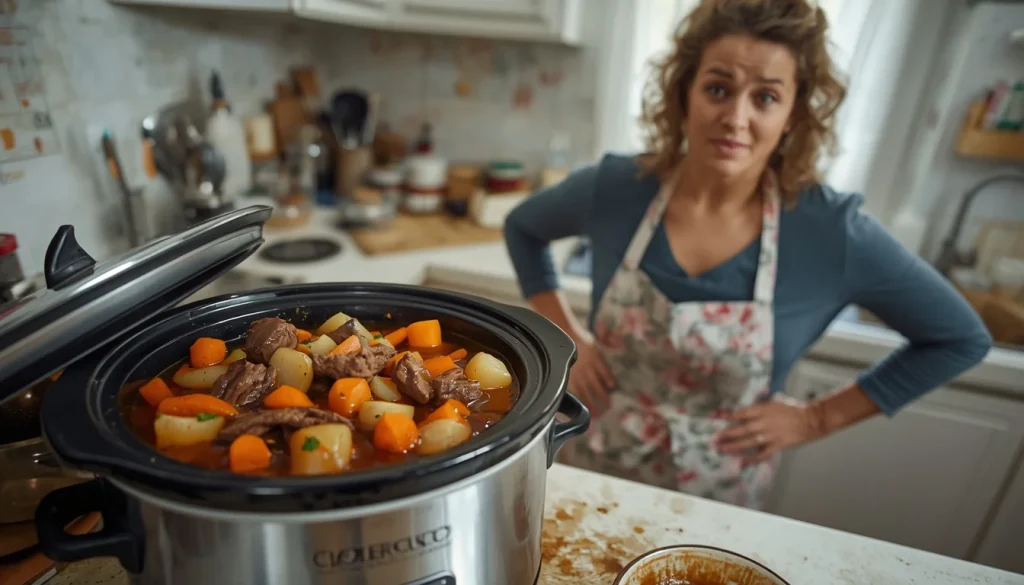
Rice must be in contact with liquid to cook. If the grains are sitting on top of chicken, meat, vegetables, or thick sauce, they may dry out instead of softening.
This is why rice can be crunchy on top but soft at the bottom. To fix it, gently press the rice into the liquid. Avoid aggressive stirring if the rice has already started cooking, because stirring too much can break the grains and make the dish gluey.
You Used Brown Rice or Wild Rice Without Extra Time
Brown rice, wild rice, and some long-grain rice varieties need more time and liquid than white rice. If you use brown rice in a recipe written for white rice, the rice may still be hard when the rest of the food is done.
Brown rice has a tougher outer layer, so it needs longer cooking. Wild rice also takes longer and works best with plenty of broth. If you want to use brown rice in a slow cooker, add more liquid and allow extra time.
You Used Instant Rice Too Early
Instant rice cooks quickly. If you add it at the beginning of a long slow cooker recipe, it may turn mushy or break down. But if you add it too late without enough hot liquid, it may stay firm.
Instant rice is best added near the end of cooking. In many recipes, it only needs 20 to 40 minutes, depending on the heat level and amount of liquid.
The Sauce Is Too Thick or Creamy
Rice cooks best in liquid that can move around the grains. Thick creamy sauce, condensed soup, cheese sauce, or heavy gravy can slow the cooking process. The rice may not absorb moisture evenly.
If your slow cooker rice is not cooking in a creamy casserole, add a little hot broth or water. For future recipes, consider cooking the rice separately and mixing it in near the end.
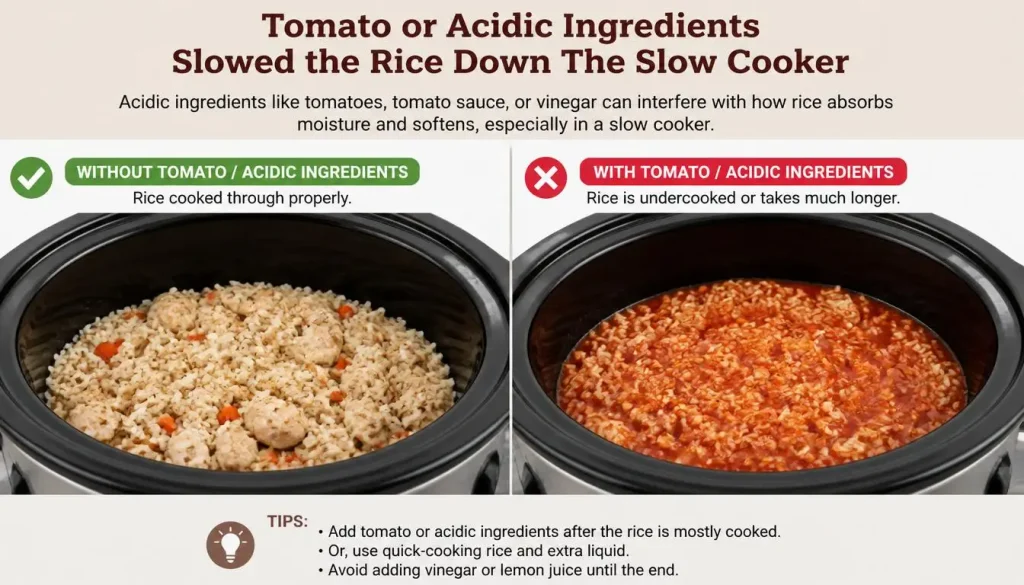
Tomato or Acidic Ingredients Slowed the Rice Down
Tomato sauce, salsa, lemon juice, vinegar, and other acidic ingredients can sometimes affect the texture of rice in slow cooker recipes. The bigger issue is usually that tomato-based sauces are thick and do not hydrate rice as easily as broth or water.
If you are making slow cooker jambalaya, stuffed peppers, curry, or tomato rice, make sure there is enough thin liquid in the cooker. Broth usually works better than thick sauce alone.
Your Slow Cooker Has Hot and Cold Spots
Some slow cookers heat unevenly. One side may get hotter while another side stays cooler. This can cause part of the rice to cook while another part stays crunchy.
If this happens often, your slow cooker may have uneven heat distribution. You can gently rotate the insert if your model allows it, avoid overfilling, and test the cooker with water to see how well it heats.
The Cooker Size Does Not Match the Recipe
Slow cooker size matters. A very large slow cooker with a small amount of rice may dry out the food faster. A small slow cooker that is packed too full may not heat evenly.
For rice dishes, choose a cooker size that matches the recipe. A 6-quart slow cooker is common for family meals, but smaller rice portions may work better in a 3-quart or 4-quart slow cooker.
How to Fix Undercooked Rice in a Slow Cooker Right Now
If your rice is already in the slow cooker and still hard, do not throw the whole meal away yet. Use the condition of the rice to choose the right fix.
If the Rice Is Hard but There Is Still Liquid
If there is still liquid in the slow cooker, the rice may simply need more time. Stir gently only if needed, cover the slow cooker, and cook on High for another 20 to 40 minutes.
Do not keep opening the lid. Let the heat build up again and give the rice time to absorb the liquid.
If the Rice Is Hard and Dry
If the rice is hard and the dish looks dry, add hot liquid. Start with 1/4 cup of hot water or broth. For a larger batch, add up to 1/2 cup.
Cover the slow cooker and cook on High. Check after 20 to 30 minutes. If the rice is still hard and dry, add a small amount more liquid.
If the Rice Is Crunchy on Top
Crunchy rice on top usually means the grains were not under the liquid. Gently press the rice down so it touches the broth or sauce. Do not stir too hard.
Cover the cooker and cook on High until the top layer softens.
If the Chicken Is Done but Rice Is Still Hard
This is a common problem in slow cooker chicken and rice. Chicken may cook faster than rice, especially if the rice was added late or did not have enough liquid.
Remove the cooked chicken and keep it covered. Add hot broth to the rice if needed. Let the rice finish cooking on High, then return the chicken to the slow cooker before serving.
If the Dish Is Overcooked but Rice Is Still Raw
If the meat and vegetables are already overcooked but the rice is still hard, the best solution is to cook rice separately. Make a fresh batch of rice on the stove or in a rice cooker, then mix it into the slow cooker dish.
This saves the flavor of the meal without making the other ingredients worse.
When Should You Add Rice to a Slow Cooker?
The best time to add rice depends on the type of rice and the recipe. White rice cooks faster than brown rice. Instant rice cooks much faster than both.
| Rice Type | Best Time to Add | Best Setting | Notes |
|---|---|---|---|
| White rice | Last 1.5 to 2.5 hours | High | Best for chicken and rice |
| Jasmine rice | Last 1 to 2 hours | High | Can become soft quickly |
| Basmati rice | Last 1.5 to 2 hours | High | Rinse first for better texture |
| Brown rice | Beginning or last 2.5 to 3.5 hours | High | Needs more liquid |
| Wild rice | Beginning or last 3 to 4 hours | High | Best with broth |
| Instant rice | Last 20 to 40 minutes | Low or High | Do not add too early |
| Cooked rice | Last 10 to 20 minutes | Warm or Low | Only needs heating |
For thick casseroles, creamy dishes, or recipes with very little liquid, cook the rice separately and add it near the end.
Slow Cooker Rice Cooking Time Chart
Cooking time can vary based on slow cooker model, amount of food, rice type, and liquid ratio. Use this chart as a starting point.
| Rice Type | Approximate Slow Cooker Time | Liquid Needed | Best Use |
|---|---|---|---|
| White rice | 1.5 to 2.5 hours on High | 1.5 to 2 cups liquid per 1 cup rice | Chicken and rice, soups |
| Jasmine rice | 1.5 to 2 hours on High | 1.5 cups liquid per 1 cup rice | Soft fragrant rice dishes |
| Basmati rice | 1.5 to 2 hours on High | 1.5 to 1.75 cups liquid per 1 cup rice | Curry, pilaf-style meals |
| Brown rice | 2.5 to 3.5 hours on High | 2 to 2.5 cups liquid per 1 cup rice | Healthier rice bowls |
| Wild rice | 3 to 4 hours on High | 2.5 to 3 cups liquid per 1 cup rice | Soups and hearty dishes |
| Instant rice | 20 to 40 minutes | Follow package style ratio | Quick finish recipes |
Best Rice-to-Liquid Ratio for Slow Cooker Rice
The rice-to-liquid ratio matters a lot. Too little liquid leaves rice hard. Too much liquid makes rice mushy or soupy.
A good starting point is:
| Rice Type | Starting Ratio |
|---|---|
| White rice | 1 cup rice to 1.5 to 2 cups liquid |
| Jasmine rice | 1 cup rice to 1.5 cups liquid |
| Basmati rice | 1 cup rice to 1.5 to 1.75 cups liquid |
| Brown rice | 1 cup rice to 2 to 2.5 cups liquid |
| Wild rice | 1 cup rice to 2.5 to 3 cups liquid |
These ratios can change if your recipe includes vegetables, chicken, beans, tomato sauce, cream, or cheese. Thick ingredients do not hydrate rice the same way as water or broth.
Why Rice Does Not Cook in Popular Slow Cooker Recipes
Slow Cooker Chicken and Rice
Slow cooker chicken and rice often fails because the chicken cooks before the rice softens. Chicken releases some liquid, but that does not always mean the rice has enough moisture.
For better results, use enough broth, keep rice under the liquid, and avoid adding the rice too late. If the chicken finishes first, remove it and let the rice continue cooking.
Slow Cooker Jambalaya
Jambalaya often contains tomatoes, sausage, chicken, shrimp, vegetables, and spices. The rice may stay hard if the tomato mixture is too thick or if the rice is added too close to the end.
Use hot broth and make sure the rice is fully mixed into the liquid. If seafood is part of the recipe, add it near the end separately so it does not overcook while waiting for the rice.
Slow Cooker Rice Soup
Rice in soup can be tricky. Sometimes it stays firm because it floats near the top. Other times it becomes mushy because it sits too long after cooking.
If you want firmer rice, cook it separately and add it to each bowl. If you want the rice to thicken the soup, add it during the final part of cooking and keep checking the texture.
Slow Cooker Casserole
Casseroles often use creamy soup, cheese, milk, or thick sauce. These ingredients can stop rice from absorbing liquid evenly.
For creamy casseroles, cooked rice usually gives better results than raw rice. If using uncooked rice, thin the sauce with broth and make sure the rice is covered.
Slow Cooker Stuffed Peppers
Stuffed peppers can have hard rice if raw rice is packed tightly inside the pepper. The rice needs space and moisture to expand.
For best results, use partially cooked rice or add extra sauce around the peppers. Fully cooked rice is the safest choice if you want consistent texture.
Slow Cooker Curry with Rice
Rice may not cook well in thick curry sauce, especially coconut milk-based or tomato-based curry. The sauce can be flavorful but too thick for even rice cooking.
Cook the rice separately if you want fluffy rice. If you want the rice inside the curry, add extra broth and cook until the grains are fully soft.
Should You Cook Rice Separately Before Adding It?
You should cook rice separately when texture matters. If you want fluffy, separate grains, a rice cooker or stovetop pot is better than a slow cooker.
Cook rice separately for:
- Creamy casseroles
- Tomato-heavy recipes
- Thick curries
- Meal prep bowls
- Recipes with seafood
- Large slow cooker batches
- Dishes where rice should stay fluffy
Cook rice directly in the slow cooker when you want the grains to absorb flavor from broth, chicken, spices, or vegetables.
Is Undercooked Rice in a Slow Cooker Safe to Eat?
Undercooked rice is unpleasant and hard to digest, but the bigger safety concern is how rice is handled after cooking. Cooked rice should not sit for a long time at unsafe temperatures. FoodSafety.gov says leftovers should be refrigerated within 2 hours after cooking, or within 1 hour if the food has been exposed to temperatures above 90°F or 32°C.
Rice can also be linked to Bacillus cereus, a bacteria that can grow in cooked rice if it is left in the temperature danger zone. The Singapore Food Agency explains that Bacillus cereus can produce heat-resistant toxins in starchy foods, and those toxins are not easily destroyed by cooking.
For safer rice:
- Do not eat rice that has been sitting out for more than 2 hours.
- Refrigerate leftovers quickly in shallow containers.
- Reheat leftovers until steaming hot.
- Do not use a slow cooker to reheat cold leftovers from the fridge.
- Throw away rice if it smells bad, looks slimy, or has been left out too long.
The USDA also recommends storing slow cooker leftovers in shallow covered containers and refrigerating them within two hours after cooking. It does not recommend reheating leftovers in a slow cooker; instead, reheat food on the stove, in a microwave, or in an oven until it reaches 165°F.
How to Prevent Rice from Staying Hard Next Time
To avoid hard or crunchy slow cooker rice next time, follow these simple rules:
- Use the right rice type for the recipe.
- Rinse rice before cooking to remove extra starch.
- Use hot liquid when adding rice late.
- Keep rice fully under the liquid.
- Use broth instead of thick sauce when possible.
- Cook rice on High for better results.
- Do not open the lid too often.
- Do not overfill the slow cooker.
- Match the slow cooker size to the recipe.
- Cook rice separately for creamy or tomato-heavy dishes.
- Add instant rice near the end, not at the beginning.
- Give brown rice and wild rice extra time.
If your slow cooker often leaves rice hard, test it with water. Fill it about halfway with water, heat it on Low for several hours, and check whether it gets hot enough. If your cooker runs cool, rice may always be difficult to cook properly in that model.
FAQs About Rice Not Cooking in the Slow Cooker
Why is my rice still hard after 3 hours in the slow cooker?
Rice may still be hard after 3 hours if the slow cooker is not hot enough, there is not enough liquid, the lid was opened too often, or the rice is not sitting under the liquid. Add hot broth or water, switch to High, cover the cooker, and cook longer.
Why is my rice crunchy in the Crockpot?
Rice becomes crunchy in a Crockpot when it does not absorb enough moisture. This usually happens when the rice is on top of the food, the sauce is too thick, the cooker is too full, or the lid was opened too often.
Can I fix undercooked rice in a slow cooker?
Yes, you can often fix undercooked slow cooker rice. Add a small amount of hot liquid, cover the slow cooker, and cook on High for 20 to 40 minutes. If the rest of the dish is already overcooked, cook rice separately and mix it in.
Should rice be cooked on Low or High in a slow cooker?
Rice usually cooks better on High in a slow cooker. Low heat may work for some recipes, but it often takes too long and can leave the rice hard. For more consistent results, add rice during the final part of cooking and use High.
Can brown rice cook in a slow cooker?
Yes, brown rice can cook in a slow cooker, but it needs more time and liquid than white rice. Brown rice may take 2.5 to 3.5 hours on High. If you use brown rice in a recipe made for white rice, adjust the liquid and cooking time.
Why is my chicken cooked but rice is still hard?
Chicken cooks faster than rice in many slow cooker recipes. Rice needs enough liquid and steady heat to soften. If the chicken is done but the rice is hard, remove the chicken, add hot broth to the rice, and continue cooking the rice on High.
Can I add instant rice to a slow cooker?
Yes, instant rice can be added to a slow cooker, but it should usually be added near the end. If you add instant rice too early, it can become mushy. If you add it too late without enough hot liquid, it may stay firm.
Should I rinse rice before slow cooking?
Yes, rinsing rice can help remove extra starch and reduce stickiness. This is especially helpful for white rice, jasmine rice, and basmati rice. Rinsing will not fix a bad liquid ratio, but it can improve texture.
How much water do I need for rice in a slow cooker?
For white rice, start with 1 cup of rice and 1.5 to 2 cups of liquid. Brown rice usually needs 2 to 2.5 cups of liquid per cup of rice. Wild rice may need 2.5 to 3 cups. Adjust based on sauce thickness and other ingredients.
Is it safe to leave rice on Warm in a slow cooker?
Rice should not sit for too long after cooking. If the slow cooker keeps food safely hot, it may be okay for a short time, but rice quality will decline and may become dry or mushy. Refrigerate leftovers within 2 hours for safety.
Is Crockpot rice different from slow cooker rice?
No. Crockpot rice and slow cooker rice usually mean the same thing. Crockpot is a popular brand name, while slow cooker is the general appliance name. The cooking method is similar.
Final Verdict: Why Your Rice Did Not Cook
Your rice probably did not cook in the slow cooker because it did not get enough heat, liquid, or time. The most common causes are low temperature, adding rice too late, opening the lid too often, using brown rice without extra time, or cooking the rice in a thick sauce.
To fix hard rice now, add hot liquid, switch the slow cooker to High, keep the lid closed, and cook longer. For future recipes, use the right rice type, keep the rice under the liquid, avoid overfilling the cooker, and cook rice separately when you need a perfect texture.

“I believe great cooking starts with the right tools, trusted advice, and a little confidence in the kitchen.”
Hi, I’m Emma Carter. My love for cooking began in my grandmother’s kitchen, where I learned that every great meal starts with simple ingredients and the right cookware. Over the years, I’ve spent countless hours researching, testing, and comparing kitchen appliances, cookware, coffee makers, air fryers, and other everyday kitchen essentials.
Here at KiCook, my goal is to make your buying decisions easier with honest product reviews, practical buying guides, and easy-to-follow cooking tips. Whether you’re upgrading your kitchen or searching for the best appliance for your home, I focus on providing clear, reliable, and research-backed information you can trust.
When I’m not testing new kitchen gadgets or writing in-depth guides, you’ll usually find me trying new recipes, visiting local farmers’ markets, or enjoying a quiet cup of coffee while planning my next kitchen project.