
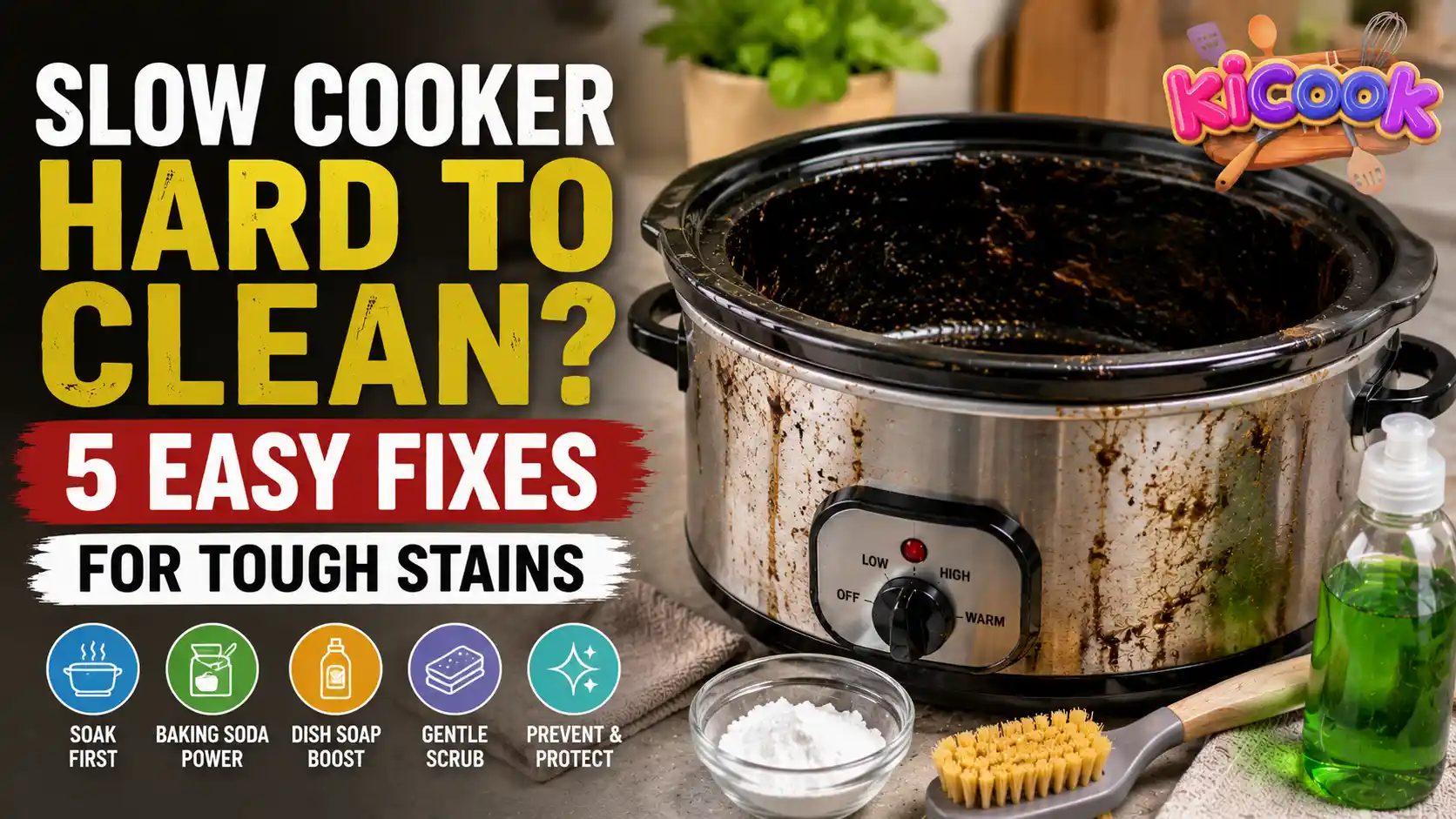
A slow cooker is hard to clean when food bakes onto the ceramic surface, but you can fix this by using a vinegar soak or specialized liners. Proper heat management and early soaking prevent stubborn, crusty residue from forming.
Why Cleaning Your Crock-Pot Feels Like a Workout
I know that feeling of dread when you look at the kitchen counter after a great Sunday roast. You’ve had a lovely meal, but now you’re staring at a ceramic pot with a ring of crusty, burnt-on gravy that looks like it’s been there since the Victorian era. It makes you want to hide the whole thing in the cupboard and forget about it.
I have spent over a decade testing kitchen gear and helping home cooks streamline their chores. My goal today is to make sure you never have to scrub a pot until your arms ache again. By the time you finish reading, you will have a toolkit of simple methods to keep your appliance looking brand new.
The 3 Most Common Reasons Your Slow Cooker Is Hard to Clean
1. High-Sugar Glazes and Sauces
The Problem: Ingredients like honey, BBQ sauce, or maple syrup caramelize quickly. Because the ceramic walls stay hot for hours, these sugars turn into a hard, glass-like coating that sticks to the pot.
The Solution: Add a small amount of liquid (like broth or water) around the edges of the food midway through cooking. If the damage is already done, fill the pot with warm water and two tablespoons of baking soda immediately after serving. This breaks down the sugar bonds before they set like concrete.
2. Cooking for Too Long on High
The Problem: Many people leave their cooker on the “High” setting for 8 hours because they are out at work. This causes the liquid to evaporate, leaving the food at the edges to scorch and bake onto the ceramic.
The Solution: Use a programmable slow cooker that switches to “Warm” automatically. In the UK and Australia, where many older models only have manual dials, I recommend using a simple plug-in timer. Set it to turn off two hours before you get home; the residual heat in the heavy ceramic will keep the food safe and warm without burning the sides.
3. Micro-Scratches in the Glaze
The Problem: If you have used steel wool or harsh scouring pads in the past, you might have created tiny scratches. Food gets trapped in these grooves, making every future meal stick even worse.
The Solution: Stop using abrasives immediately. Instead, use a magic eraser or a soft nylon brush. To “reset” the surface, rub a tiny amount of vegetable oil into the dry ceramic liner once a month to help fill those microscopic gaps and create a temporary non-stick barrier.
Simple Methods to Restore Your Ceramic Pot
The Vinegar and Baking Soda Deep Clean
When your slow cooker is hard to clean, the most effective tool is likely sitting in your pantry. Fill your pot with water until it covers the stuck-on food line. Add about half a cup of white vinegar and half a cup of baking soda.
Be prepared for the fizz—it is a natural chemical reaction that lifts debris. Turn the cooker on “Low” for an hour. Most of the grime will wipe away with a simple sponge.
“The combination of mild acidity and gentle abrasion is often more effective than the most expensive chemical degreasers on the market.” — Sarah Miller, Lead Researcher at The Home Science Institute.
The Overnight Soak Rule
In the UK and Canada, where hard water can make soap less effective, I always suggest an overnight soak with a dash of dish soap and a dryer sheet. The conditioning agents in the dryer sheet help soften the bond between the food and the ceramic. By morning, you can usually just rinse the mess away.
Preventing the Mess Before It Starts
Use High-Quality Liners
If you truly hate cleaning, liners are a lifesaver. These are heat-resistant bags that sit inside the pot. Once you finish cooking, you simply lift the bag out and throw it away. While popular in the USA, ensure you buy BPA-free versions to keep your meals healthy.
The “Grease the Pot” Hack
Before you put a single ingredient inside, take a piece of butter or a teaspoon of oil and rub it all over the interior walls. It works exactly like greasing a cake tin. This is especially helpful for dairy-heavy recipes like macaroni and cheese or potato gratin, which are notoriously difficult to wash off.
Liquid Ratios Matter
One reason food sticks is a lack of moisture. In dry climates like parts of Australia or the Western USA, evaporation happens slightly faster if the lid doesn’t have a perfect seal. Always ensure you have at least half a cup of liquid in any recipe to create a steam barrier between the food and the walls.
Expert Tips for Longevity
Avoid Thermal Shock
Never take a hot ceramic pot and plunge it into cold sink water. The ceramic can crack, making it not just hard to clean, but dangerous to use. Let it cool down to room temperature on a wooden board or a towel before you introduce water.
“Ceramic is a porous material that expands and contracts. Sudden temperature changes lead to hairline fractures that eventually cause the pot to shatter during a cook cycle.” — Dr. Robert Chen, Materials Engineer.
Cleaning the Heating Base
Don’t forget the outer metal housing. Often, drips run down the side and burn onto the heating element. Since you cannot submerge the base in water, use a damp cloth with a bit of lemon juice to wipe away stains. The citric acid cuts through the grease without damaging the electronics.
When to Replace Your Pot
If the ceramic has deep cracks (crazing) or if the lead-free glaze has worn away completely, the pot will always be hard to clean. At this point, it is a safety issue. Food particles and bacteria can hide in those cracks. Most major brands in the US, UK, and Canada sell replacement ceramic crocks separately, so you don’t always have to buy a whole new machine.
“If you can feel a crack with your fingernail, it is time to recycle that liner. Safety in the kitchen should always come before trying to save a few dollars on an old appliance.” — Amanda Hughes, Author of The Modern Kitchen Manual.
For more information on food safety and appliance maintenance, you can check the guidelines provided by the U.S. Department of Agriculture regarding slow cooker use.
Frequently Asked Questions on Slow Cooker Hard to Clean
Can I put my slow cooker pot in the dishwasher?
Most modern ceramic liners are dishwasher safe, but check the bottom of your pot for a “dishwasher safe” symbol. However, the high heat and harsh detergents can eventually dull the glaze, making food stick more often over time. Hand washing is usually better for the long-term life of the pot.
How do I remove white filmy stains from my Crock-Pot?
Those white spots are usually calcium deposits from hard water. To remove them, wipe the pot with a cloth soaked in white vinegar or lemon juice. Let it sit for ten minutes, then rinse with fresh water and dry it immediately.
Is it safe to use baking soda on ceramic?
Yes, baking soda is a very gentle abrasive. It is soft enough that it won’t scratch the glass-like glaze of your slow cooker but tough enough to lift burnt proteins and fats. It is one of the safest cleaning agents you can use.
Why does my slow cooker smell even after washing?
Ceramic can sometimes hold onto odors from strong spices like curry or garlic. To fix this, make a paste of baking soda and water, rub it over the inside, and let it sit for an hour before washing. This neutralizes the trapped organic compounds.
Should I use steel wool on stubborn stains?
No, you should avoid steel wool or metal scouring pads. They create tiny scratches in the glaze that make the pot much harder to clean in the future. Stick to nylon scrubbers, sponges, or specialized ceramic cleaning pastes.
Closing Thoughts
A slow cooker should make your life easier, not add an hour of scrubbing to your evening. Remember these three main points: always soak the pot immediately with warm water, avoid high-sugar sauces without a liquid buffer, and never use metal scrubbers that damage the surface.
When you take care of the ceramic glaze, the pot takes care of you. You deserve to enjoy your slow-cooked meals without the “cleaning tax” afterward. Take action today by greasing your pot before your next meal—you will be amazed at how easily the residue slides right off!

“I believe great cooking starts with the right tools, trusted advice, and a little confidence in the kitchen.”
Hi, I’m Emma Carter. My love for cooking began in my grandmother’s kitchen, where I learned that every great meal starts with simple ingredients and the right cookware. Over the years, I’ve spent countless hours researching, testing, and comparing kitchen appliances, cookware, coffee makers, air fryers, and other everyday kitchen essentials.
Here at KiCook, my goal is to make your buying decisions easier with honest product reviews, practical buying guides, and easy-to-follow cooking tips. Whether you’re upgrading your kitchen or searching for the best appliance for your home, I focus on providing clear, reliable, and research-backed information you can trust.
When I’m not testing new kitchen gadgets or writing in-depth guides, you’ll usually find me trying new recipes, visiting local farmers’ markets, or enjoying a quiet cup of coffee while planning my next kitchen project.