
In short, slow cooker vegetables turn mushy because they cook too long at steady heat and release water slowly. I’ve learned that timing, vegetable choice, and liquid control make all the difference.
I’ve used slow cookers for years in the US and UK kitchens, and I still remember my early frustration. I would open the lid, excited for dinner, only to find carrots collapsing, potatoes breaking apart, and zucchini almost melting into sauce. If you’ve ever asked yourself, “Why are my slow cooker vegetables mushy?”, you are not alone.
This article is written from my real experience, not theory. I want to help you fix the exact problems home cooks in the USA, UK, Canada, and London face every day. Simple words. Real fixes. No fluff.
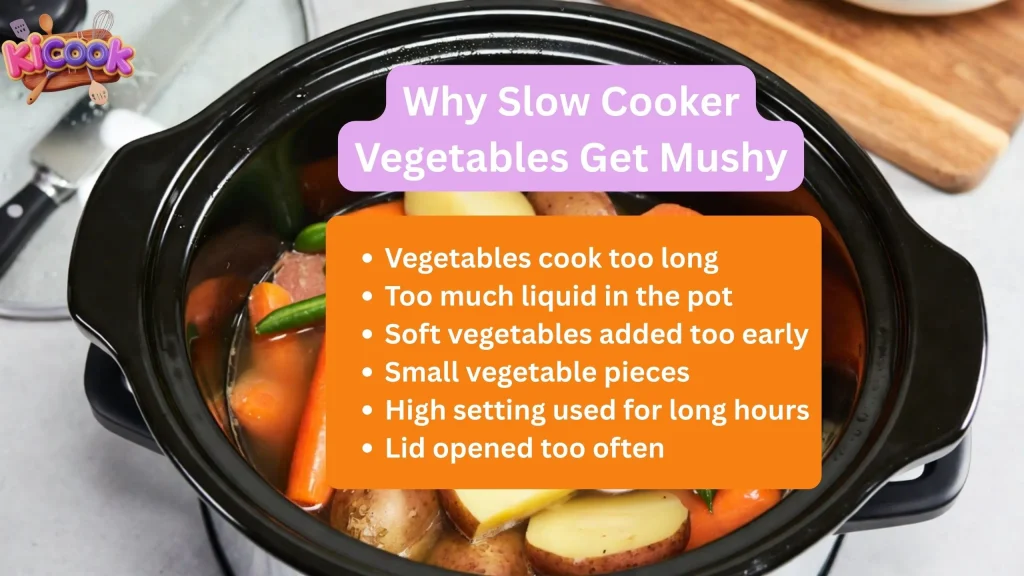
Why Slow Cooker Vegetables Get Mushy
Slow cookers use low, steady heat for many hours. That’s great for meat, but vegetables behave very differently.
Here are the main reasons slow cooker vegetables become soft and watery:
- Vegetables cook too long
- Too much liquid in the pot
- Soft vegetables added too early
- Small vegetable pieces
- High setting used for long hours
- Lid opened too often
Vegetables contain water. Over time, heat breaks down their structure. Without careful timing, they lose shape and texture.
“Texture matters just as much as flavor in home cooking.” — Nigella Lawson
My Early Mistake With Slow Cooker Vegetables
When I first started slow cooking, I treated all vegetables the same. I put onions, carrots, potatoes, and zucchini into the pot at the same time. I cooked them on LOW for 8 hours.
The result?
- Potatoes split
- Carrots tasted sweet but mushy
- Zucchini disappeared
That’s when I realized slow cooker vegetable texture needs planning.
Customer Pain Points (You Might Relate)
Many readers from the US, UK, and Canada tell me the same things:
- “My vegetables turn to baby food.”
- “My stew tastes good but looks awful.”
- “Potatoes fall apart every time.”
- “My kids won’t eat mushy vegetables.”
- “I waste food because texture is bad.”
I felt all of this too. The good news? Every one of these problems has a fix.
“Vegetables need respect, even in a slow cooker.” — Jamie Oliver
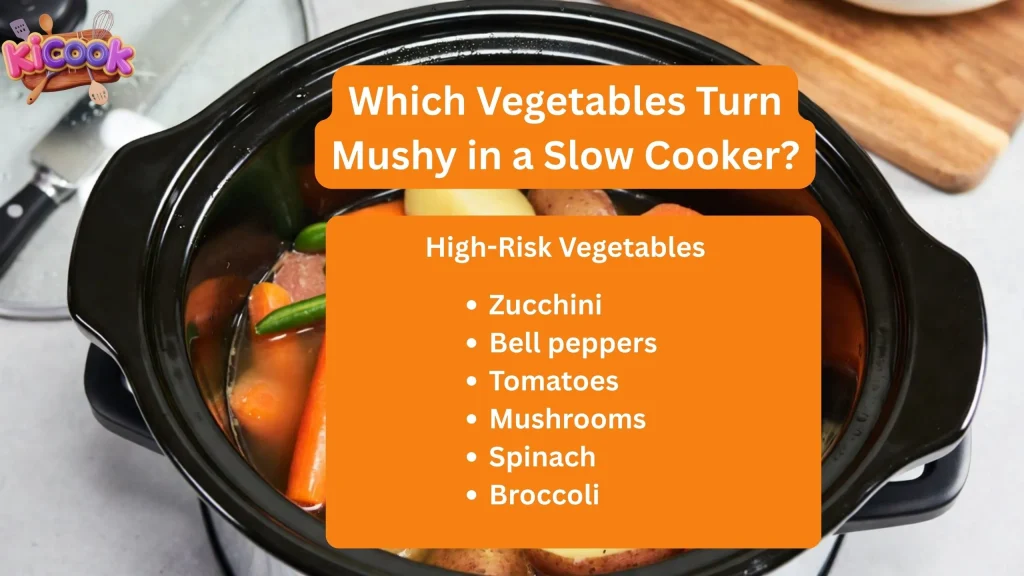
Which Vegetables Turn Mushy in a Slow Cooker?
Some vegetables soften faster than others.
High-Risk Vegetables
These become mushy very fast:
- Zucchini
- Bell peppers
- Tomatoes
- Mushrooms
- Spinach
- Broccoli
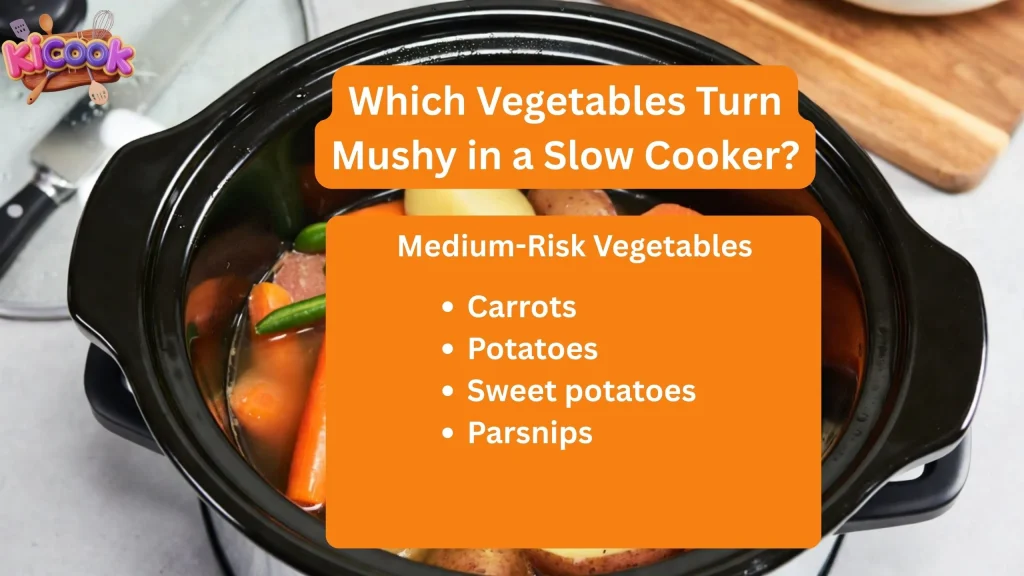
Medium-Risk Vegetables
These need timing control:
- Carrots
- Potatoes
- Sweet potatoes
- Parsnips
Best Vegetables for Slow Cooking
These hold shape better:
- Onions
- Turnips
- Rutabaga
- Butternut squash
- Celery
Cooking Time Is Too Long
Slow cookers don’t stop cooking. Even on LOW, vegetables keep breaking down.
In US and Canadian homes, many people leave the cooker on while at work for 8–10 hours. That’s too long for most vegetables.
What I do now:
- Hard vegetables: add at start
- Soft vegetables: add in last 30–60 minutes
This one change saved my meals.
Too Much Liquid Makes Vegetables Soft
Slow cookers trap steam. Liquid does not escape.
Common mistakes:
- Adding water like stovetop cooking
- Using canned vegetables with liquid
- Adding frozen vegetables without draining
Fix:
Use less liquid than you think. Vegetables release their own moisture.
For UK and London-style stews, I reduce broth by at least 30%.
Vegetable Size Matters More Than You Think
Small pieces cook faster.
If carrots are cut thin, they turn soft early.
If potatoes are diced small, they fall apart.
My rule:
- Large chunks = better texture
- Uniform size = even cooking
LOW vs HIGH Setting: What Actually Works
Many think LOW is always safer. That’s not always true.
- LOW for 8 hours = mushy vegetables
- HIGH for 4 hours = better shape
In many US kitchens, I recommend HIGH for shorter time when vegetables are the focus.
When to Add Vegetables (This Changed Everything)
Here’s my real-world timing guide:
| Vegetable | When I Add It |
|---|---|
| Potatoes | Start |
| Carrots | Start or mid |
| Onions | Start |
| Bell peppers | Last 1 hour |
| Zucchini | Last 30 minutes |
| Spinach | Last 10 minutes |
This works across US, UK, and Canadian recipes.
Raw vs Frozen Vegetables
Frozen vegetables cook faster. Ice crystals damage structure.
If you add frozen vegetables early, mush is almost guaranteed.
Fix:
- Thaw first
- Drain well
- Add near the end
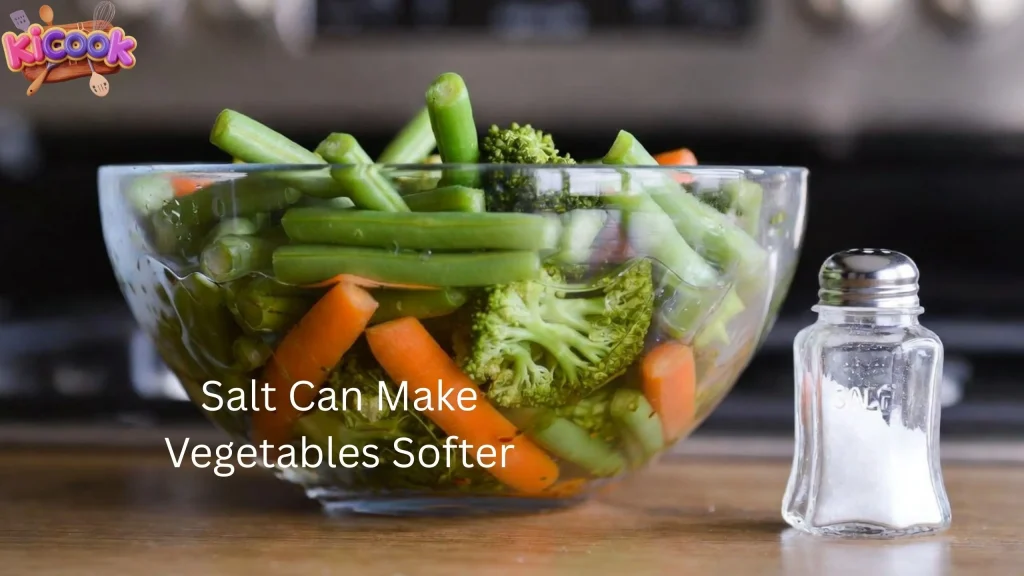
Salt Can Make Vegetables Softer
Salt pulls water out.
If you salt early, vegetables soften faster.
What I do:
- Light salt at start
- Final seasoning at the end
Using Acid Too Early
Tomatoes, vinegar, and lemon juice break down vegetables.
In many London-style slow cooker recipes, tomatoes go in at the start. That speeds softening.
Better approach:
Add acidic ingredients in the last hour.
“Cooking time is the secret most people ignore.” — America’s Test Kitchen
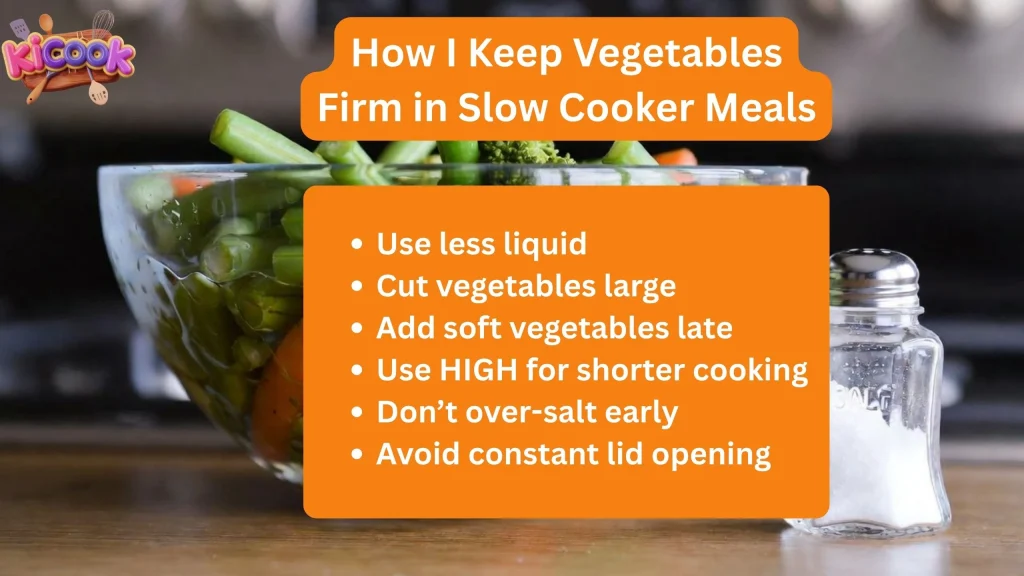
How I Keep Vegetables Firm in Slow Cooker Meals
This is my personal checklist:
- Use less liquid
- Cut vegetables large
- Add soft vegetables late
- Use HIGH for shorter cooking
- Don’t over-salt early
- Avoid constant lid opening
These steps stopped my mushy vegetable problem completely.
Best Slow Cooker Meals Without Mushy Vegetables
Some dishes naturally work better:
- Beef stew with chunky root vegetables
- Chicken thighs with carrots and onions
- Lentil stew with late-added vegetables
- Pulled pork with vegetables cooked separately
Should You Cook Vegetables Separately?
Sometimes, yes.
For picky eaters in US and Canadian homes, I often:
- Slow cook meat alone
- Add vegetables near serving
- Or cook vegetables separately
This keeps texture perfect.
For food safety and cooking temperature guidance, I trust the USDA slow cooker safety guide
Frequently Asked Questions for Why Slow Cooker Vegetables Turn Mushy
Why are my potatoes mushy in a slow cooker?
Potatoes cook too long or are cut too small. Large chunks and shorter time help.
Can I fix mushy vegetables?
You can blend them into soup or sauce, but texture cannot be fully restored.
Is LOW setting bad for vegetables?
LOW is fine, but only for the right time and vegetables.
Should I stir vegetables while cooking?
No. Stirring breaks them down faster.
Why are my vegetables watery?
Too much liquid and trapped steam cause this problem.
Final Thoughts
I’ve been where you are. Mushy slow cooker vegetables can ruin a meal, waste food, and disappoint your family. Once I learned how vegetables behave under long heat, everything changed.
With better timing, less liquid, and smarter choices, slow cooker vegetables can stay tender, flavorful, and enjoyable. If I can fix this in my own kitchen, so can you.
If you’d like, I can also help you with slow cooker vegetable charts, recipe fixes, or meal plans for your kitchen.

“I believe great cooking starts with the right tools, trusted advice, and a little confidence in the kitchen.”
Hi, I’m Emma Carter. My love for cooking began in my grandmother’s kitchen, where I learned that every great meal starts with simple ingredients and the right cookware. Over the years, I’ve spent countless hours researching, testing, and comparing kitchen appliances, cookware, coffee makers, air fryers, and other everyday kitchen essentials.
Here at KiCook, my goal is to make your buying decisions easier with honest product reviews, practical buying guides, and easy-to-follow cooking tips. Whether you’re upgrading your kitchen or searching for the best appliance for your home, I focus on providing clear, reliable, and research-backed information you can trust.
When I’m not testing new kitchen gadgets or writing in-depth guides, you’ll usually find me trying new recipes, visiting local farmers’ markets, or enjoying a quiet cup of coffee while planning my next kitchen project.