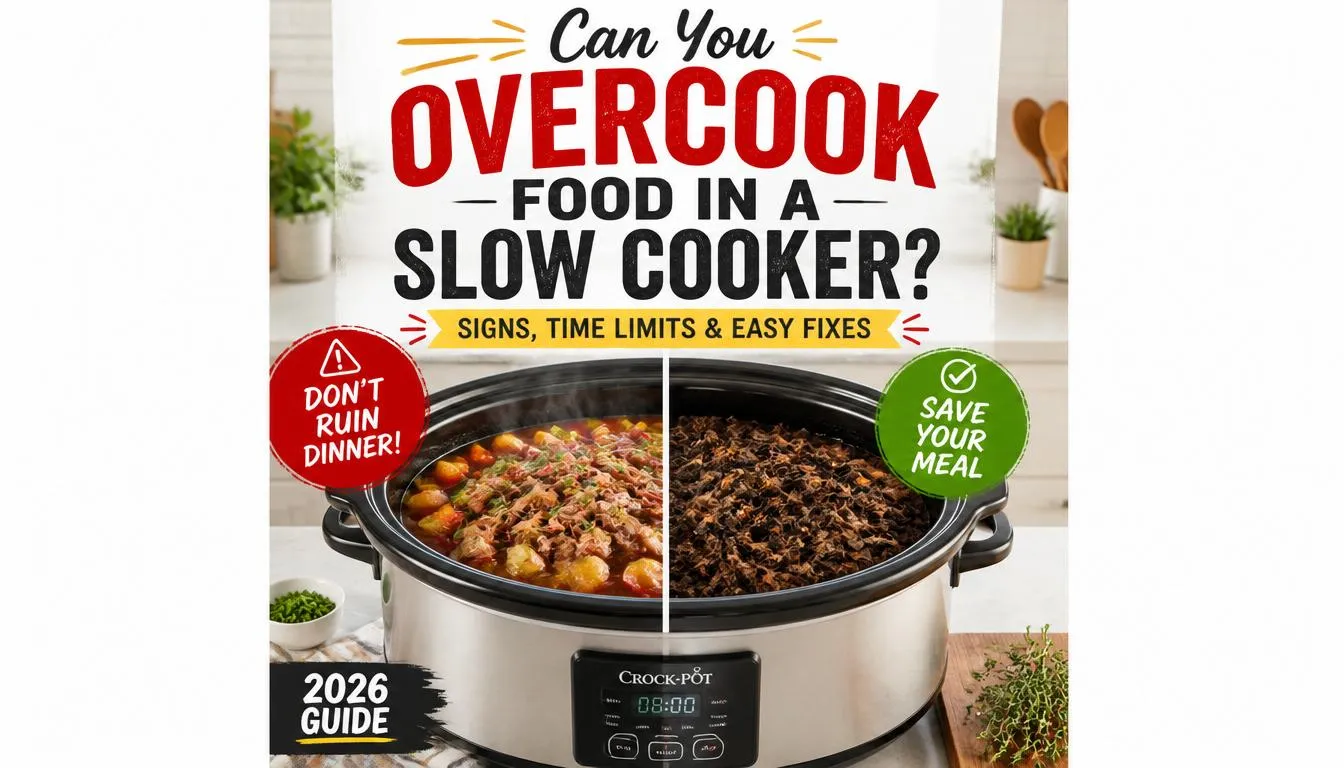
Yes, you can overcook food in a slow cooker. Although slow cookers use gentle heat, leaving a meal beyond its ideal cooking time can make meat dry or stringy, vegetables mushy, and sauces overly thick. Even food left on the Warm setting may continue to lose moisture and texture.
However, overcooked food is not automatically unsafe. Overcooking is usually a quality problem, while food safety depends on whether the meal reached a safe internal temperature and was held, cooled, and stored correctly.
Understanding the difference can help you prepare tender slow-cooked meals without drying them out or putting food safety at risk.
Can You Actually Overcook Food in a Slow Cooker?
A slow cooker is more forgiving than an oven, frying pan, or grill, but it is not impossible to overcook food in one.
Slow cookers trap steam under a tightly fitted lid and cook food gradually. This moist environment reduces surface burning and allows tough cuts of meat to become tender. However, food continues to change as long as it remains exposed to heat.
After meat reaches its ideal tenderness, additional cooking can cause its muscle fibres to separate too much and lose moisture. Vegetables can lose their structure, while pasta, rice, dairy products, and delicate herbs may break down.
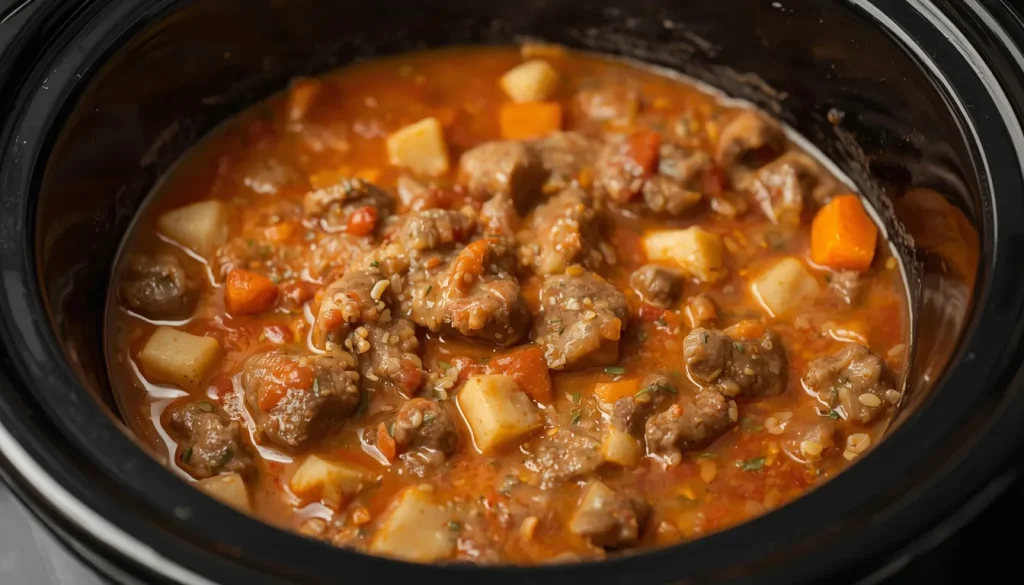
Beef stew is a good example. Longer cooking initially helps break down connective tissue, but excessive cooking can eventually turn the meat into a dry, pulpy mass rather than making it more tender.
Therefore, the answer is simple: low heat slows down overcooking, but it does not prevent it completely.
What Happens When Food Cooks Too Long in a Slow Cooker?
Different ingredients react differently to extended cooking. A beef shoulder may tolerate several extra minutes better than a chicken breast, while delicate vegetables may lose their texture long before the meat is ready.
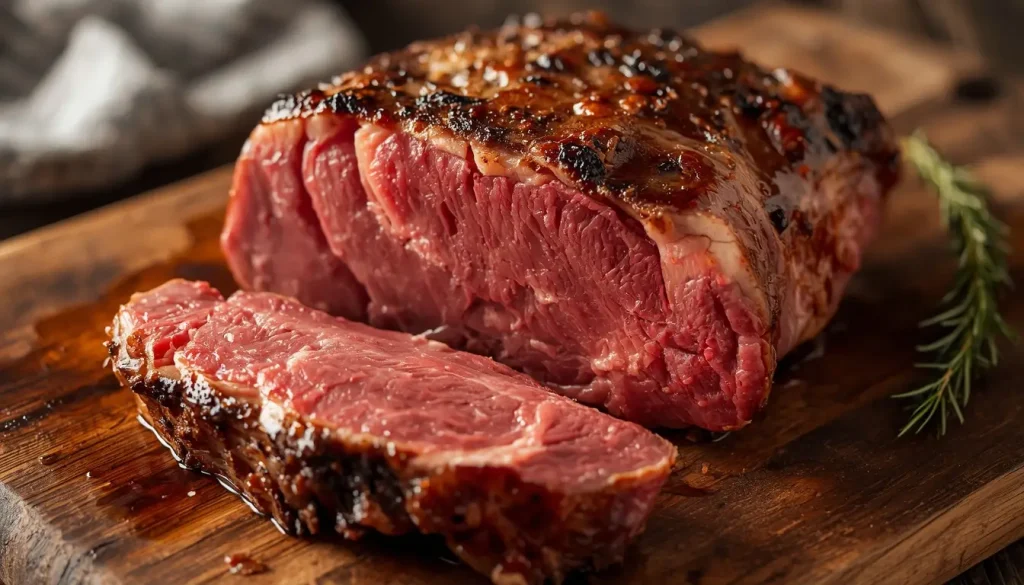
Meat Can Become Dry, Stringy, or Pulpy
Tough cuts such as beef chuck and pork shoulder contain connective tissue that needs time to soften. During the ideal cooking window, these cuts become tender and juicy.
If they cook for too long, however, the meat fibres can continue breaking down until the meat becomes:
- Dry despite sitting in liquid
- Stringy rather than tender
- Grainy or pulpy in the mouth
- Difficult to slice cleanly
- Completely disintegrated
Lean cuts are usually less forgiving because they contain less fat and connective tissue. Chicken breast, pork loin, and lean beef may dry out considerably faster than chicken thighs, pork shoulder, or beef chuck.
Vegetables Can Turn Mushy
Dense root vegetables such as carrots, potatoes, parsnips, and swede can withstand several hours of slow cooking. Softer vegetables are much more delicate.
Broccoli, courgette or zucchini, spinach, peas, green beans, mushrooms, and bell peppers may become soft, dull, or watery when added too early.
To preserve their colour and texture, add delicate vegetables during the final part of the cooking time.
Sauces Can Become Too Thick
Slow cookers lose less moisture than open pots, but sauces can still thicken during a long cooking cycle. This is especially likely when:
- The recipe contains little liquid
- The slow cooker is underfilled
- Starchy ingredients are included
- The meal stays on Warm for several hours
- The lid does not fit correctly
Sauces containing milk, cream, yoghurt, or cheese may also separate or develop a grainy texture when exposed to heat for too long.
Pasta and Rice Can Lose Their Structure
Pasta and rice absorb liquid as they cook. If they remain in the slow cooker for several hours, they may become swollen, sticky, or mushy.
Unless a recipe has been specifically developed for slow-cooked pasta or rice, it is usually better to:
- Add them near the end
- Cook them separately
- Stir them into the finished dish before serving
Cooked rice and pasta are also considered temperature-sensitive foods and should be cooled and stored correctly after cooking.
Herbs and Seasonings Can Lose Freshness
Long cooking can soften strong flavours. Fresh herbs may become dull, while some spices can lose their brightness.
For a fresher-tasting finished dish, consider adding the following near the end:
- Fresh parsley
- Coriander or cilantro
- Basil
- Lemon or lime juice
- Vinegar
- Freshly ground pepper
- A final pinch of salt
A small amount of acid can help brighten a slow-cooked meal that tastes flat, although it cannot restore the texture of severely overcooked meat.
How Long Is Too Long in a Slow Cooker?
There is no universal maximum slow-cooker time.
The point at which food becomes overcooked depends on:
- The type and cut of meat
- Fat and connective-tissue content
- The size of the ingredients
- The amount of cooking liquid
- Whether the cooker is on Low or High
- The size and shape of the slow cooker
- How full the cooking pot is
- The appliance’s heating pattern
- Whether the food is later held on Warm
Manufacturer cooking times should therefore be treated as starting points rather than guarantees.
For example, Crock-Pot lists approximately six hours on Low for stew meat and eight hours on Low for a three-to-four-pound beef roast. However, it also states that these times are approximate and can change according to the meat, vegetables, liquid, ingredient size, and fill level.
The best approach is to begin checking the food at the earliest time given in the recipe.
Foods That Usually Need Earlier Checking
The following ingredients are relatively easy to overcook:
- Boneless, skinless chicken breast
- Pork loin
- Lean beef
- Fish
- Seafood
- Pasta
- Rice
- Dairy products
- Delicate vegetables
- Fresh herbs
Foods That Are Usually More Forgiving
These ingredients generally tolerate longer slow cooking:
- Beef chuck
- Brisket
- Pork shoulder
- Chicken thighs
- Dried beans
- Chilli
- Hearty soups
- Root vegetables
“More forgiving” does not mean impossible to overcook. Even beef chuck or pork shoulder can become dry and pulpy after remaining at cooking temperature for too long.
What Are the Signs of Overcooked Slow Cooker Food?
You may have overcooked your slow-cooker meal if you notice one or more of the following signs:
- Meat is dry even though it is surrounded by liquid
- Meat breaks into thin, stringy fibres
- Beef or pork has a grainy, pulpy texture
- Chicken breast tastes chalky
- Vegetables collapse when touched
- Pasta or rice has lost its shape
- The sauce is excessively thick
- Dairy-based sauce has separated
- Food has dried around the edges
- The flavour tastes dull or unbalanced
Do not use appearance, smell, or taste alone to decide whether food is safe. Health Canada notes that contaminated food cannot always be identified by its smell, appearance, or flavour.
Is Tough Slow Cooker Meat Overcooked or Undercooked?
Tough slow-cooker meat can be either undercooked or overcooked. The correct answer depends mainly on the cut and texture.
Signs Tough Meat May Need More Time
A connective-tissue-rich cut such as beef chuck may be undercooked when it:
- Feels firm or rubbery
- Resists a fork
- Does not pull apart
- Is difficult to chew
- Still holds together in dense cubes
In this situation, the connective tissue may not have softened enough. Provided the food has been handled safely and remains at cooking temperature, it may need additional time.
Signs Meat Has Cooked Too Long
Meat is more likely to be overcooked when it:
- Separates into dry strands
- Falls apart without remaining juicy
- Has a cottony or chalky texture
- Feels grainy or pulpy
- Has lost its natural structure
Lean meat that is dry and tough should not automatically be cooked longer. Chicken breast and pork loin may become even drier if additional cooking is added.
Use Temperature for Safety and Texture for Doneness
Texture helps determine whether a meal has reached the result you want, but a food thermometer should be used to confirm safety.
For example, official guidance in the United States and Canada recommends cooking poultry to 165°F or 74°C. Health Canada lists 160°F or 71°C for whole cuts of beef, veal, lamb, and pork, while US recommendations for whole cuts may differ depending on the meat and required resting time.
Always follow the official guidance for your country and the specific food you are cooking.
Does Food Continue to Cook on the Warm Setting?
The Warm setting is intended to hold already-cooked food at serving temperature. It is not designed to cook raw ingredients.
Food may not cook at the same rate as it does on Low, but its texture can continue to change. Meat can lose moisture, vegetables can soften, and sauce can thicken while the meal remains warm.
Crock-Pot advises reducing the original cooking time when food will remain on Warm for an extended period. The company also advises against using its Warm setting for more than four hours, although instructions can vary between brands and models.
Check your slow cooker’s manual rather than assuming that every Warm setting operates in the same way.
Warm Is Not the Same as Low
Low is a cooking setting. Warm is a holding setting.
On many traditional slow cookers, Low and High eventually approach a simmer, but High reaches it faster. One Crock-Pot guide estimates approximately seven to eight hours to reach the simmer point on Low and three to four hours on High. These figures apply to that manufacturer’s appliances and should not be treated as universal for every slow cooker.
Do not place raw meat in a cold slow cooker and attempt to cook it using only the Warm setting.
Can You Leave a Slow Cooker on All Day?
You can leave many slow cookers operating during the day when the appliance is designed for unattended countertop cooking and you follow its instructions.
Crock-Pot states that its slow cookers can be used unattended for extended countertop cooking. However, that statement applies to its own products. Always check the manual for your specific appliance.
Before leaving a slow cooker operating:
- Inspect the cord and plug for damage
- Place the cooker on a stable, heat-resistant surface
- Keep it away from the edge of the counter
- Provide the clearance required by the manufacturer
- Make sure the lid fits correctly
- Use the correct quantity of ingredients
- Select a recipe suitable for the planned cooking time
- Avoid using an appliance with cracked stoneware
- Follow the manufacturer’s electrical-safety instructions
The biggest culinary risk is choosing a recipe that finishes several hours before you return. A programmable slow cooker that automatically switches to Warm can reduce this risk, although food may still lose quality while being held.
Can You Leave a Slow Cooker on Overnight?
Slow cooking overnight can be appropriate when:
- The appliance is designed for extended unattended use
- The recipe requires a long cooking period
- The slow cooker is in good working condition
- The ingredients are properly prepared
- The cooker is filled correctly
- The food will be checked when the cooking cycle ends
However, cooking overnight is different from leaving a finished meal on Warm overnight.
A roast that needs eight hours on Low may fit an overnight schedule. Chicken breast that only needs a shorter cooking period is more likely to be dry by morning.
Leaving cooked food on Warm for the entire night may also exceed the holding time recommended by the appliance manufacturer.
How Full Should a Slow Cooker Be?
Fill level affects cooking performance.
An underfilled slow cooker may cook a small quantity faster than expected. An overfilled cooker may heat unevenly or take longer to bring the ingredients to the required temperature.
Crock-Pot generally recommends filling its slow cookers between one-half and two-thirds full, while another company guide refers to a range of one-half to three-quarters full. The correct range may vary by model, recipe, and manufacturer.
For the best results:
- Match the recipe quantity to the cooker size
- Do not force the lid over an overfilled pot
- Avoid using a very large cooker for a tiny portion
- Leave enough space for heat and steam to circulate
- Follow your appliance’s minimum and maximum fill instructions
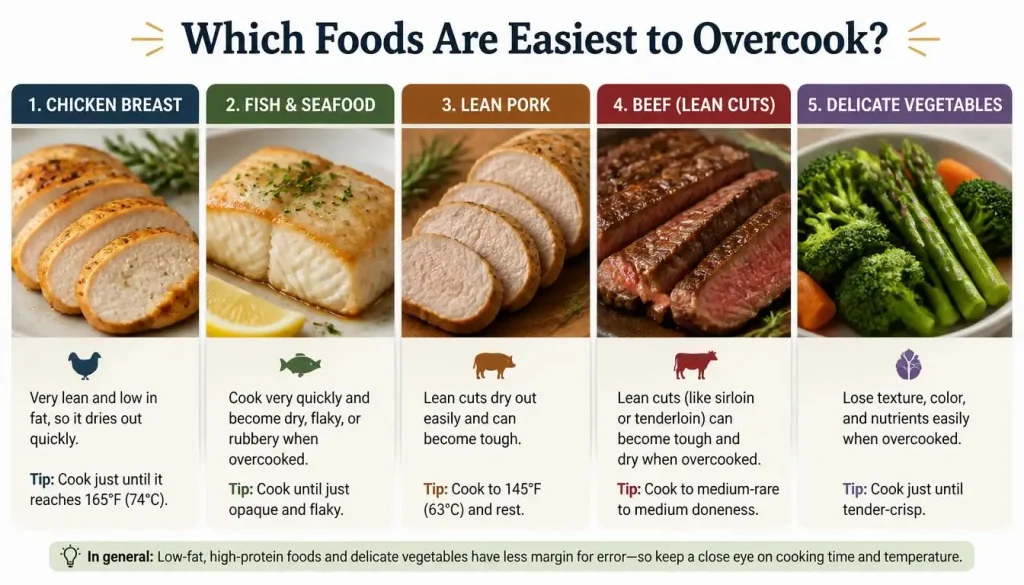
Which Foods Are Easiest to Overcook?
Chicken Breast
Boneless, skinless chicken breast is one of the easiest slow-cooker meats to overcook. It is lean and may become dry, chalky, or stringy.
Chicken thighs are generally more forgiving because they contain more fat and connective tissue.
Fish and Seafood
Fish and seafood usually need much less cooking time than beef or pork. They may become dry, rubbery, or mushy if added at the beginning of a long recipe.
When possible, add fish or seafood during the final part of cooking and follow a recipe developed specifically for the ingredient.
Lean Pork and Beef
Pork loin and lean beef cuts may dry out before tougher cuts become tender. Choose cuts appropriate for slow cooking rather than assuming every roast will improve with an eight-hour cooking cycle.
Delicate Vegetables
Spinach, peas, broccoli, courgette, zucchini, and green beans should normally be added later than potatoes, carrots, and other firm root vegetables.
Pasta and Rice
Pasta and rice can absorb too much cooking liquid and become sticky or mushy. Cook them separately or add them near the end unless the recipe specifically instructs otherwise.
Milk, Cream, and Cheese
Dairy products can curdle, separate, or become grainy during long cooking. Many recipes produce better results when cream, milk, yoghurt, or cheese is stirred in near the end.
How to Prevent Overcooking Food in a Slow Cooker
Follow the Earliest Recommended Time
When a recipe gives a range such as six to eight hours, begin checking at six hours rather than automatically waiting until eight.
Appliance power, ingredient size, food quantity, and slow-cooker shape can all affect the result.
Use a Programmable Slow Cooker
A programmable model can switch from Low or High to Warm after the selected cooking period.
This is useful when you cannot turn the appliance off immediately, but it does not mean the meal can remain on Warm indefinitely.
Choose the Right Cut of Meat
Use connective-tissue-rich cuts for long recipes.
Good choices include:
- Beef chuck
- Brisket
- Pork shoulder
- Lamb shoulder
- Chicken thighs
Save lean cuts for shorter recipes or methods that provide better control over their final temperature.
Add Delicate Ingredients Later
Add ingredients according to how quickly they cook.
Root vegetables may go in at the beginning. Green vegetables, pasta, rice, dairy, seafood, and fresh herbs often perform better when added later.
Keep the Lid Closed
Opening the lid releases heat and steam, which can extend the cooking time. Crock-Pot recommends keeping the lid on unless the recipe specifically calls for it to be removed.
Check the meal near the end of the expected cooking window rather than repeatedly lifting the lid throughout the day.
Use the Correct Amount of Liquid
Slow cookers retain more moisture than uncovered stovetop pans. A recipe converted from the stovetop may therefore need less liquid.
Too little liquid can contribute to dried edges or an overly thick sauce. Too much can produce a watery meal because very little steam escapes.
Check Meat With a Thermometer
A thermometer helps you separate two questions:
- Is the meat safe?
- Has it reached the texture you prefer?
Remove lean meat soon after it reaches a safe temperature and desired tenderness. Tough cuts may need more time after reaching a safe temperature for their connective tissue to soften.
How to Fix Overcooked Slow Cooker Food
Severely overcooked food cannot always be returned to its original texture, but it can often be made more enjoyable or repurposed.
How to Rescue Dry Meat
Try the following:
- Shred the meat into smaller pieces
- Add warm stock, gravy, or cooking liquid
- Mix it with barbecue sauce
- Use it in tacos, sandwiches, pies, or pasta sauce
- Combine it with a moist filling
- Serve it with mashed potatoes, rice, or polenta
Let the shredded meat sit briefly in the added sauce. Avoid continuing to cook it for a long period.
How to Fix Mushy Vegetables
Mushy vegetables cannot be made firm again, but they can be repurposed.
You can:
- Blend them into the sauce
- Turn the dish into a soup
- Mash root vegetables
- Add fresh vegetables cooked separately
- Use fresh herbs or crunchy toppings for contrast
How to Thin an Overly Thick Sauce
Add small amounts of hot liquid until the sauce reaches the desired consistency.
Suitable options include:
- Stock
- Water
- Tomato juice
- Coconut milk
- Cream, when appropriate for the recipe
Add the liquid gradually so the sauce does not become watery.
How to Improve Flat Flavour
A slow-cooked dish that tastes dull may benefit from:
- Lemon juice
- Lime juice
- Vinegar
- Fresh herbs
- Black pepper
- Mustard
- Worcestershire sauce
- A carefully measured pinch of salt
Make one adjustment at a time and taste before adding more.
Is Overcooked Slow Cooker Food Safe to Eat?
Overcooked food may be safe to eat if it was cooked, held, cooled, and stored correctly.
Dry chicken, stringy beef, or mushy vegetables are normally quality problems. Food becomes a safety concern when it:
- Never reaches a safe internal temperature
- Remains in an unsafe temperature range
- Is left at room temperature too long
- Cools too slowly
- Is reheated inadequately
- Is affected by an unknown power interruption
- Is contaminated by raw ingredients or utensils
Safe Hot-Holding Temperatures
Official thresholds vary slightly between countries.
US and Canadian guidance commonly identifies 40°F to 140°F, or approximately 4°C to 60°C, as the temperature danger zone. Australia generally requires potentially hazardous food to be kept at 5°C or colder or 60°C or hotter. UK food-business guidance commonly uses 63°C as the minimum hot-holding temperature.
For international readers, the safest approach is to follow the official guidance that applies where you live and verify the food’s temperature with a clean thermometer.
Cooling and Storing Leftovers
Do not leave a finished slow-cooker meal sitting at room temperature for several hours.
US and Canadian authorities recommend refrigerating perishable leftovers within two hours. Use shallow containers to help large portions cool more quickly.
UK Food Standards Agency guidance also advises cooling and refrigerating leftovers within two hours.
Can You Reheat Leftovers in a Slow Cooker?
A slow cooker is not the best appliance for reheating cold leftovers because the food may warm too gradually.
The USDA recommends reheating cooked food on the stove, in a microwave, or in a conventional oven until it reaches 165°F or 74°C. It can then be transferred to a preheated slow cooker for hot holding.
Health Canada also recommends reheating leftovers to 74°C or 165°F and checking the centre with a digital thermometer.
Can You Put Frozen Meat in a Slow Cooker?
It is best to thaw meat and poultry before placing them in a slow cooker.
A slow cooker heats gradually, so a large frozen piece may remain at a temperature that supports bacterial growth for too long. USDA guidance recommends thawing meat or poultry before slow cooking, and it specifically advises against cooking frozen chicken in a slow cooker.
Follow the recipe, food packaging, appliance manual, and local food-safety guidance.
What If the Power Goes Out?
A power interruption can create a safety problem even when the food looks normal.
According to USDA guidance, food that was completely cooked before the power failed may remain safe for up to two hours in the cooker with the power off. If you do not know how long the appliance was without power, the safest decision is to discard the food.
Do not taste food to test whether it is safe.
Frequently Asked Questions About Can You Overcook Food in a Slow Cooker
Can You Overcook Food on Low in a Slow Cooker?
Yes. Low reduces the cooking speed, but food can still become overcooked when it remains at cooking temperature beyond its ideal time. Lean meat, dairy, pasta, rice, and delicate vegetables are particularly vulnerable.
Can You Overcook Food on the Warm Setting?
Yes. Warm is designed for holding cooked food, but the meal can continue losing moisture and texture. Follow your appliance manual’s maximum recommended holding time.
Can You Leave a Slow Cooker on for 12 Hours?
Some recipes containing tough cuts may be designed for very long cooking times, but many meals will be overcooked after 12 hours. Use a recipe intended for that duration and a slow cooker approved for extended operation.
Does Meat Become More Tender the Longer It Slow Cooks?
Only up to a point. Tough meat initially becomes more tender as connective tissue softens. Once it passes its ideal stage, the fibres may break down too much and become dry, stringy, or pulpy.
Can You Overcook Chicken in a Slow Cooker?
Yes. Chicken breast is especially easy to overcook because it is lean. Chicken thighs are generally more forgiving, but they can also lose quality when cooked excessively.
Can You Overcook Beef Stew in a Slow Cooker?
Yes. Beef stew can become overcooked when the meat loses its juicy structure and turns dry or pulpy. Begin checking the meat near the earliest recommended cooking time.
Can Slow-Cooker Food Burn?
It can. Burning is less common because the cooker traps moisture, but food may stick or dry around the edges when there is too little liquid, the cooker is underfilled, the recipe runs too long, or the appliance heats unevenly.
Why Is My Slow-Cooker Meat Tough?
Tough meat may need more time if it is a connective-tissue-rich cut that still feels firm and resistant. It may be overcooked if it is dry, stringy, or grainy. Lean meat that is already dry should not automatically be cooked longer.
How Long Can Food Stay on Warm?
The answer depends on the appliance and whether it maintains a safe holding temperature. Crock-Pot advises no more than four hours on Warm for its slow cookers, but other brands may provide different instructions. Check the food with a thermometer and follow your model’s manual.
Is Overcooked Slow-Cooker Food Safe?
It may be safe if it reached the required internal temperature and was held, cooled, and stored correctly. Texture alone cannot confirm safety.
Final Thoughts
You can overcook food in a slow cooker, even when using Low or Warm. Slow heat provides a larger margin for error, but every ingredient still has an ideal cooking window.
For consistently better results, choose cuts suited to slow cooking, begin checking at the earliest recommended time, add delicate ingredients later, use the correct cooker size, and rely on a food thermometer for safety.
Most importantly, remember that tenderness and safety are separate issues. Use texture to decide when the meal tastes best, and use temperature to confirm that it is safe to serve.

“I believe great cooking starts with the right tools, trusted advice, and a little confidence in the kitchen.”
Hi, I’m Emma Carter. My love for cooking began in my grandmother’s kitchen, where I learned that every great meal starts with simple ingredients and the right cookware. Over the years, I’ve spent countless hours researching, testing, and comparing kitchen appliances, cookware, coffee makers, air fryers, and other everyday kitchen essentials.
Here at KiCook, my goal is to make your buying decisions easier with honest product reviews, practical buying guides, and easy-to-follow cooking tips. Whether you’re upgrading your kitchen or searching for the best appliance for your home, I focus on providing clear, reliable, and research-backed information you can trust.
When I’m not testing new kitchen gadgets or writing in-depth guides, you’ll usually find me trying new recipes, visiting local farmers’ markets, or enjoying a quiet cup of coffee while planning my next kitchen project.