
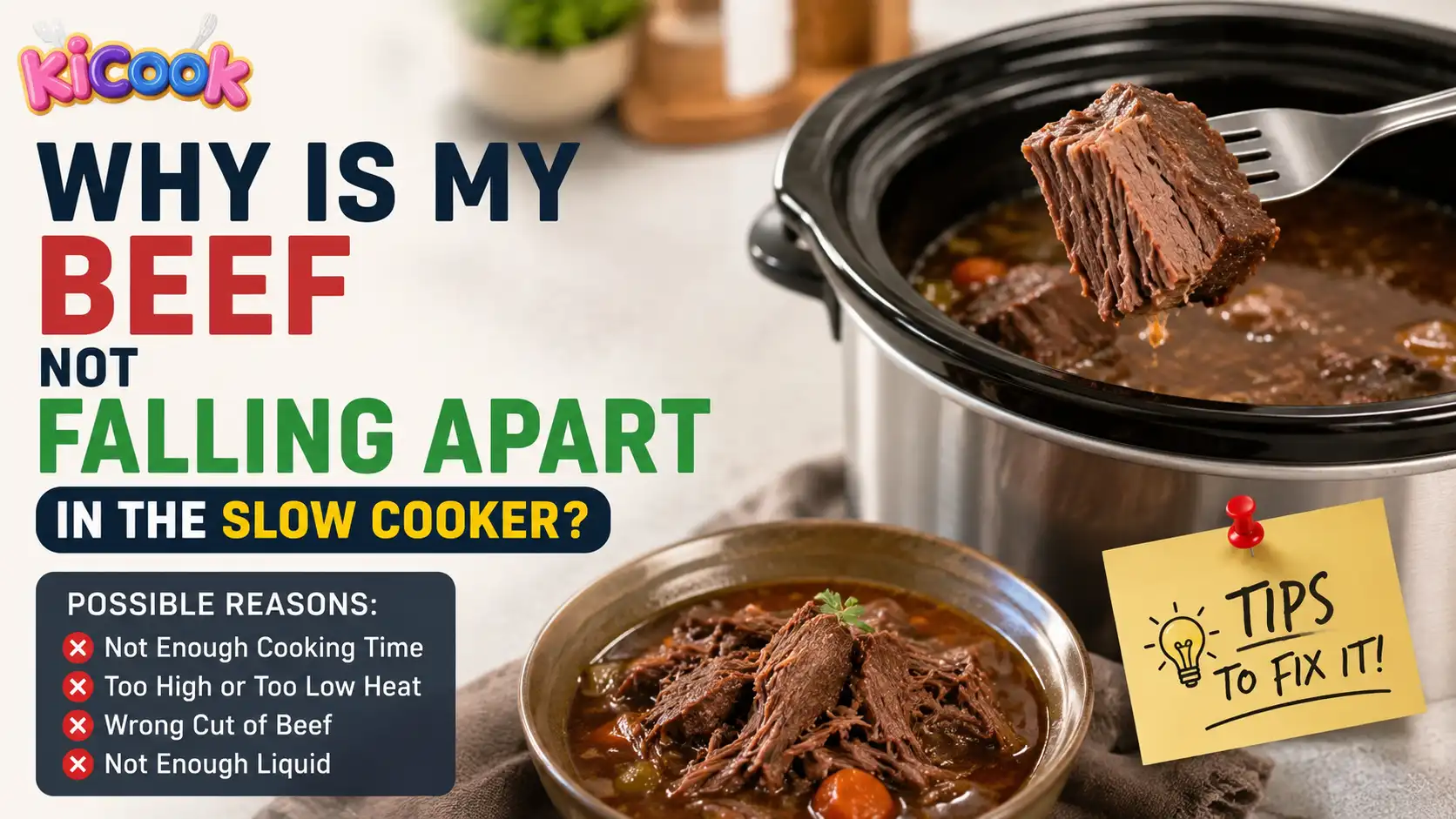
You cooked your beef for hours, opened the lid, grabbed two forks, and expected it to fall apart easily. But instead, the beef is tough, chewy, dry, or still holding together. This is one of the most common slow cooker problems, especially with pot roast, chuck roast, brisket, stew meat, or crockpot beef recipes.
The good news is simple: most slow cooker beef that is not falling apart can still be fixed. In many cases, the beef needs more time, more moisture, a better cut, or lower heat. Fall-apart beef is not just about being “cooked.” It becomes tender when the connective tissue has enough time to break down into soft gelatin through slow, moist cooking.
Quick Answer: Why Is My Beef Not Falling Apart in the Slow Cooker?
Beef usually does not fall apart in a slow cooker because it has not cooked long enough, the cut is too lean, the cooker is too full, there is not enough moisture, or the heat setting is too high. Fall-apart beef needs low, slow, moist cooking so the collagen and connective tissue can break down properly.
Can You Fix Tough Beef in the Slow Cooker Right Now?
Yes, you can often fix tough slow cooker beef. Before throwing it away, check whether the beef is tough but moist, tough and dry, or cooked but not shredding. Each problem needs a slightly different fix.
If the Beef Is Tough but Still Moist
If the beef is still juicy but hard to pull apart, it probably needs more time. Put the lid back on and continue cooking on low for another 1 to 2 hours. Do not keep opening the lid to check every few minutes because that releases heat and slows the cooking process.
This is very common with chuck roast, brisket, blade roast, beef shin, and pot roast. These cuts often need longer cooking before they become fork-tender.
If the Beef Is Tough and Dry
If the beef is tough and dry, add moisture. Pour in a small amount of beef broth, stock, gravy, sauce, or cooking juices. Then cover the slow cooker and cook on low for another 30 to 60 minutes.
You can also slice or shred the beef into smaller pieces and mix it with the sauce. This helps dry beef absorb some moisture and makes it easier to serve.
If the Roast Is Cooked but Not Shredding
If the beef is cooked through but still will not shred, the connective tissue has probably not broken down enough. Safe internal temperature and fall-apart tenderness are not the same thing. Beef can be safe to eat before it is tender enough to pull apart.
The USDA lists beef roasts as safe at 145°F / 63°C with a 3-minute rest, but slow cooker beef often needs more time to become soft and shreddable.
Why Slow Cooker Beef Becomes Fall-Apart Tender
Beef becomes fall-apart tender when tough connective tissue slowly breaks down. Cuts like chuck roast, brisket, beef shin, short ribs, blade roast, and stewing beef contain collagen. When cooked slowly with moisture, collagen softens and turns into gelatin. That is what gives slow cooker beef its rich, juicy, fork-tender texture.
This is why lean cuts do not always work well in a slow cooker. A lean cut may cook through, but it can become dry instead of tender. A tougher, collagen-rich cut usually gives better results because it has the structure needed to become soft over time.
In simple terms: fall-apart beef needs the right cut, enough moisture, low heat, and enough time.
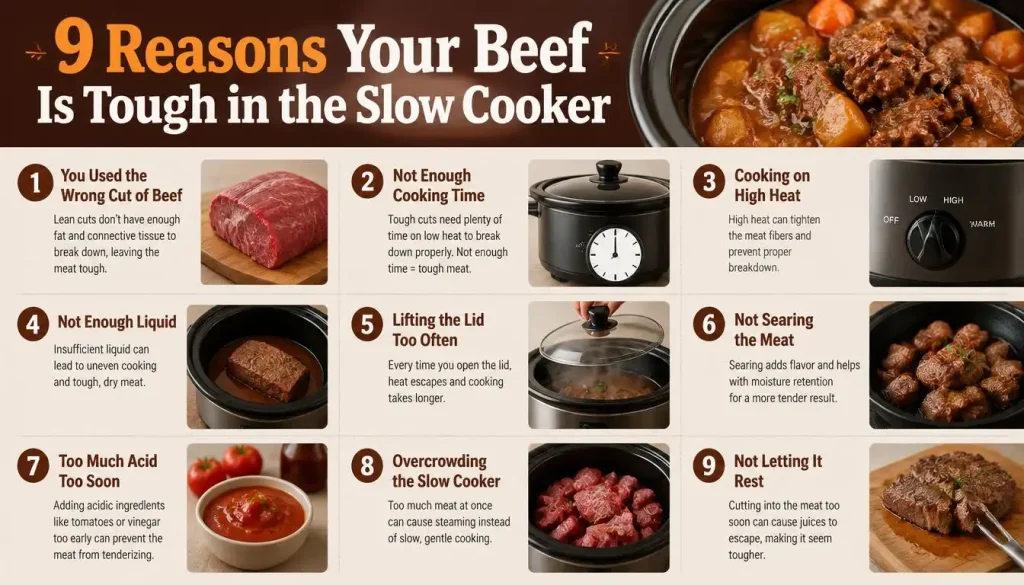
9 Reasons Your Beef Is Tough in the Slow Cooker
1. You Did Not Cook It Long Enough
The most common reason beef is not falling apart in the slow cooker is that it needs more time. Many people stop cooking once the beef looks done, but fall-apart beef takes longer than basic doneness.
A chuck roast may need 8 to 10 hours on low. Brisket, beef shin, blade roast, and stewing beef may also need long cooking. If your beef is tough but still moist, keep cooking it on low.
2. You Used the Wrong Cut of Beef
Not every beef cut is ideal for slow cooking. Lean cuts such as sirloin, eye of round, top round, or tenderloin can become dry because they do not have enough fat and connective tissue.
For fall-apart slow cooker beef, choose cuts such as:
- Chuck roast
- Pot roast
- Brisket
- Blade roast
- Beef shin or shank
- Short ribs
- Stewing beef
- Braising steak
- Gravy beef
These cuts are naturally tougher at first, but they become tender when cooked slowly with moisture.
3. You Cooked It on High Instead of Low
The high setting can work for some recipes, but low is usually better for fall-apart beef. Cooking on high may make the outside firm or dry before the inside becomes fully tender.
For the best texture, use the low setting whenever possible. A longer cook on low gives collagen more time to soften and gives the beef a better chance of becoming fork-tender.
4. There Was Not Enough Moisture
Slow cooker beef needs moisture. This does not always mean the beef must be fully covered with liquid, but the cooker should have enough broth, stock, sauce, gravy, wine, tomato sauce, or natural juices to create a moist cooking environment.
Without enough moisture, beef may become tough, dry, or stringy. This is especially true for lean cuts or smaller pieces of meat.
5. The Slow Cooker Was Overfilled
If your slow cooker is packed too full, the beef may cook unevenly. Some parts may cook faster, while thicker sections stay firm. Overfilling can also reduce proper heat circulation.
For best results, avoid filling the slow cooker all the way to the top. Leave enough space for heat and steam to move around the food.
6. You Opened the Lid Too Often
Every time you open the slow cooker lid, heat escapes. This can extend the cooking time and delay tenderness. The USDA’s slow cooker guidance also recommends keeping the lid in place during cooking.
If your beef is not tender yet, resist the urge to keep checking it. Put the lid back on and give it more time.
7. The Beef Cut Was Too Lean
Lean beef can become tough in a slow cooker because it lacks the fat and connective tissue that help create a juicy texture. This is why a chuck roast often becomes more tender than a lean roast.
If you already used a lean cut, add extra liquid and cook gently. You may not get the same pulled-beef texture, but you can still improve the result by slicing the beef thinly and serving it with sauce.
8. The Pieces Were Too Small
Small pieces of beef can dry out faster, especially if they are lean. Stew meat can also stay chewy if the pieces come from mixed cuts with different levels of toughness.
For shredded beef or pot roast, a larger roast often works better than very small cubes. For beef stew, cook the meat until it is tender enough to press apart with a fork.
9. You Started With Frozen Beef
Frozen beef should not go straight into a slow cooker. The USDA recommends thawing meat or poultry before adding it to a slow cooker.
A slow cooker heats gradually, so frozen beef may spend too long in an unsafe temperature range before fully cooking. For better safety and more even texture, thaw beef in the refrigerator before slow cooking.
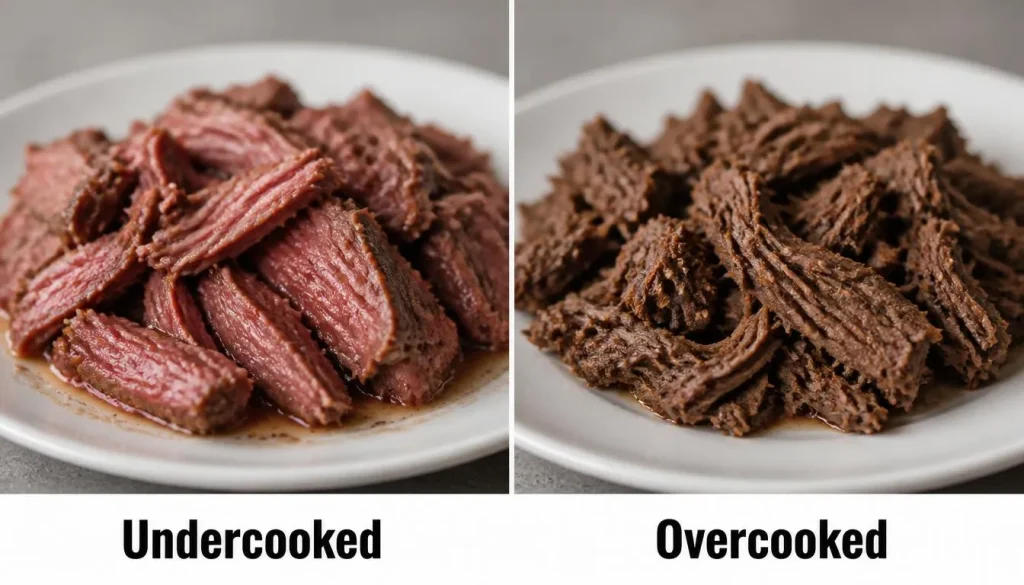
Undercooked vs Overcooked Slow Cooker Beef: How to Tell
Sometimes tough beef is undercooked. Other times, it is overcooked and dry. Here is how to tell the difference.
| Beef Problem | Most Likely Cause | What To Do |
|---|---|---|
| Tough but juicy | Needs more time | Cook longer on low |
| Tough and dry | Too lean, too hot, or overcooked | Add sauce or broth and shred |
| Cooked but not shredding | Collagen has not broken down | Keep cooking until fork-tender |
| Dry outside but firm inside | Heat too high or pieces too small | Use low heat next time |
| Chewy stew meat | Needs longer moist cooking | Simmer longer in sauce or broth |
| Roast slices but will not pull apart | Not enough time for connective tissue | Cook 1–2 more hours on low |
If the beef is moist but tough, it usually needs more time. If the beef is dry and crumbly, it may be overcooked or too lean.
How Long Does Beef Take to Fall Apart in a Slow Cooker?
Cooking time depends on the size of the beef, the cut, the recipe, the amount of liquid, and the slow cooker model. Still, these general ranges can help.
| Beef Cut | Low Setting | High Setting | Best Use |
|---|---|---|---|
| Chuck roast | 8–10 hours | 5–6 hours | Pulled beef, pot roast |
| Brisket | 8–10 hours | 5–6 hours | Sliced or shredded beef |
| Beef shin / shank | 8–10 hours | 5–6 hours | Rich stew, gravy beef |
| Blade roast | 8–9 hours | 5–6 hours | Pot roast, shredded beef |
| Short ribs | 7–9 hours | 4–6 hours | Tender braised beef |
| Stewing beef cubes | 6–8 hours | 4–5 hours | Beef stew |
If your beef is still tough after 8 hours, check the moisture level, the size of the meat, and the cut. A large roast may simply need more time.
Best Beef Cuts for Fall-Apart Slow Cooker Beef
The best slow cooker beef cuts are usually tougher cuts with fat, marbling, and connective tissue. These cuts become tender when cooked slowly.
| Region | Best Terms to Look For |
|---|---|
| USA | Chuck roast, pot roast, brisket, short ribs |
| Canada | Chuck roast, blade roast, stewing beef, brisket |
| UK | Braising steak, shin of beef, brisket, stewing steak |
| Australia | Chuck steak, blade roast, gravy beef, brisket |
| General | Collagen-rich, well-marbled, not too lean |
If you want beef that shreds easily, chuck roast is one of the safest choices. Brisket can also become tender, but it may slice better than it shreds depending on how it is cooked. Beef shin and gravy beef are excellent for rich stews and sauces.
Should Beef Be Covered With Liquid in a Slow Cooker?
Beef does not always need to be fully submerged in liquid, but it does need enough moisture to cook gently. A slow cooker traps steam, so you usually need less liquid than you would use in a pot on the stove.
For a pot roast, the liquid may come halfway up the beef. For stew, the beef is usually more covered. For shredded beef, enough broth, sauce, or cooking juices should be present to keep the meat moist.
Too little liquid can make beef dry and tough. Too much liquid can make the final dish watery and bland. The goal is moisture, not soup, unless you are making stew.
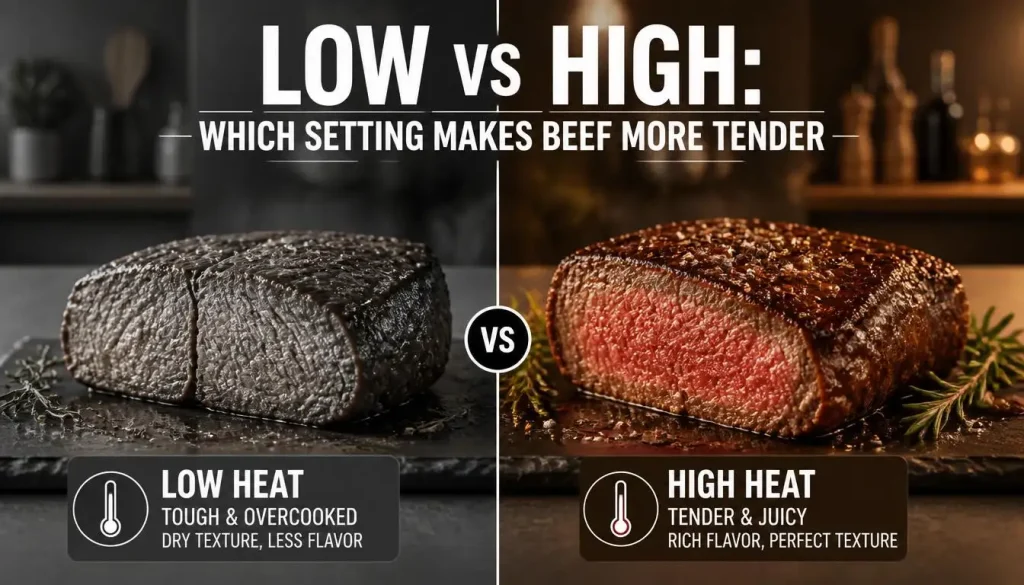
Low vs High: Which Setting Makes Beef More Tender?
For fall-apart beef, low is usually better than high. The low setting gives tough cuts more time to soften without drying out too quickly.
The high setting can be useful when you are short on time, but it may not produce the same tender texture. A roast cooked for 4 hours on high may be safe and cooked, but it may not shred like a roast cooked for 8 to 10 hours on low.
Use high for faster cooking when needed. Use low when tenderness matters most.
Why Your Chuck Roast, Pot Roast, or Stew Meat Is Not Shredding
Different beef cuts fail for different reasons. Here is how to understand the most common problems.
Chuck Roast Not Falling Apart
Chuck roast is one of the best cuts for slow cooker beef, but it still needs enough time. If your chuck roast is tough, it is usually not finished yet. Add a little broth if needed and keep cooking on low until it pulls apart with two forks.
Pot Roast Not Shredding
Pot roast may not shred if the cut is too lean or the cooking time is too short. A pot roast can be sliceable before it becomes shreddable. If you want pulled beef, keep cooking until the meat separates easily.
Stew Meat Still Chewy
Stew meat can be tricky because it may include pieces from different cuts. Some pieces become tender quickly, while others stay chewy. Cook stew meat until the toughest pieces are tender, not just until the first pieces seem done.
Brisket Not Tender
Brisket needs patience. It has a lot of connective tissue and can stay firm for hours before it softens. Cook it low and slow with enough moisture. If it is still tough, it probably needs more time.
Slow Cooker Beef Troubleshooting Chart
Use this chart to quickly identify the problem and fix it.
| Searcher Problem | Likely Cause | Quick Fix |
|---|---|---|
| Beef is tough after 8 hours | Large roast or tough cut needs more time | Cook 1–2 more hours on low |
| Roast is cooked but not shredding | Connective tissue has not broken down | Keep cooking until fork-tender |
| Beef is dry and chewy | Too lean, too little liquid, or too much high heat | Add broth or sauce and cover |
| Chuck roast is hard | Not cooked long enough | Continue cooking on low |
| Stew meat is chewy | Mixed cuts or not enough time | Simmer longer in liquid |
| Beef tastes watery | Too much liquid | Remove lid near the end or reduce sauce separately |
| Beef is bland | Not enough seasoning or no browning | Add salt, herbs, sauce, or gravy |
| Beef is firm outside and tough inside | Heat too high or piece too large | Cook longer on low next time |
| Beef cooked unevenly | Slow cooker overfilled | Use less food or a larger cooker |
How to Make Beef Fall Apart in the Slow Cooker Every Time
To make slow cooker beef tender, follow a simple method.
Choose the right cut first. Chuck roast, blade roast, brisket, beef shin, short ribs, and gravy beef are better than lean roasts.
Season the beef well. Salt, pepper, garlic, onion, herbs, Worcestershire sauce, tomato paste, stock, or gravy can all add flavor.
Sear the beef before slow cooking if you have time. Searing is not required, but it adds deeper flavor and color.
Add enough moisture. Use broth, stock, sauce, gravy, wine, tomato sauce, or a mix of these.
Cook on low. For fall-apart beef, low and slow is usually better than fast and hot.
Keep the lid closed. Opening the lid too often slows the cooking process.
Test with two forks. If the beef resists, it needs more time. If it pulls apart easily, it is ready.
Rest before shredding. Let the beef sit for a few minutes before pulling it apart so the juices settle.
Common Slow Cooker Beef Mistakes to Avoid
Avoid these mistakes if you want tender beef:
- Using a very lean cut
- Cooking on high when low would work better
- Not adding enough moisture
- Adding too much water and diluting the flavor
- Opening the lid too often
- Overfilling the slow cooker
- Starting with frozen beef
- Cutting the beef too small
- Trying to shred the beef before it is ready
- Assuming safe temperature means fall-apart texture
The biggest mistake is stopping too early. If the beef is tough but still moist, keep cooking.
Can You Overcook Beef in a Slow Cooker?
Yes, beef can be overcooked in a slow cooker, especially lean cuts or small pieces. Overcooked beef often becomes dry, stringy, or crumbly.
However, tough collagen-rich cuts like chuck roast or brisket are often undercooked when they are still firm and chewy. The key is to check the texture. If the beef is moist but tough, it likely needs more time. If it is dry and falling apart in a crumbly way, it may be overcooked.
To avoid overcooking, use the right cut, cook on low, keep enough moisture in the cooker, and check the beef near the end of the suggested cooking time.
Food Safety Notes for Slow Cooker Beef
Slow cooker beef should be cooked safely, not just tenderly. Use thawed beef, keep the lid in place, and make sure the slow cooker is turned on and heating properly. USDA slow cooker guidance recommends thawing meat or poultry before putting it into a slow cooker and keeping the lid in place during cooking.
For food safety, use a food thermometer when needed. Beef steaks, chops, and roasts should reach at least 145°F / 63°C with a 3-minute rest, while ground meats require a higher minimum temperature of 160°F / 71°C.
Remember, safe temperature tells you the beef is safe to eat. It does not always mean the beef is tender enough to shred.
FAQs About Beef Not Falling Apart in the Slow Cooker
Why is my beef still tough after 8 hours in the slow cooker?
Your beef may still be tough after 8 hours if the cut is very large, the slow cooker is overfilled, the lid was opened often, or the cut has a lot of connective tissue. If the beef is still moist, cook it longer on low.
Does beef get softer the longer you slow cook it?
Yes, collagen-rich beef usually gets softer with longer slow cooking. However, lean cuts can become dry if cooked too long. Tough cuts like chuck roast, brisket, blade roast, and beef shin are better for long cooking.
Can you overcook beef in a slow cooker?
Yes, you can overcook beef in a slow cooker. Lean beef and small pieces are more likely to become dry. Tough cuts usually need more time, but they still need moisture to stay tender.
Why is my chuck roast not falling apart?
Your chuck roast probably needs more time. Chuck roast is a good slow cooker cut, but it may need 8 to 10 hours on low before it becomes fork-tender. Add a little broth if it looks dry and continue cooking.
Why is my pot roast cooked but not shredding?
Pot roast can be fully cooked before it is tender enough to shred. Shredding requires the connective tissue to break down. Keep cooking on low until the meat pulls apart easily with two forks.
Is it better to cook beef on low or high in a slow cooker?
Low is usually better for tender, fall-apart beef. High can cook the beef faster, but low gives tough cuts more time to soften and become juicy.
Should beef be covered with liquid in a slow cooker?
Beef does not always need to be fully covered, but it should have enough liquid to create moisture. Broth, stock, gravy, sauce, wine, tomatoes, or cooking juices can help prevent dryness.
Can I put frozen beef in the slow cooker?
It is better not to put frozen beef directly in the slow cooker. Thaw the beef first for safer and more even cooking. The USDA recommends thawing meat or poultry before slow cooking.
How do I fix dry beef from the slow cooker?
Add broth, gravy, sauce, or cooking juices. Slice or shred the beef, mix it with the liquid, and warm it gently. Dry beef may not become perfect, but sauce can make it much better.
What is the best beef cut for shredding in a slow cooker?
Chuck roast is one of the best cuts for shredded slow cooker beef. Brisket, blade roast, short ribs, beef shin, and gravy beef can also become tender when cooked low and slow.
Final Answer: What To Do Right Now
If your beef is not falling apart in the slow cooker, do not panic. If it is still moist, it probably needs more time. Put the lid back on, keep the slow cooker on low, and cook it for another 1 to 2 hours.
If the beef is dry, add broth, gravy, sauce, or cooking juices. Then cover it and cook gently until it softens. For next time, choose a collagen-rich cut like chuck roast, brisket, blade roast, beef shin, short ribs, or gravy beef. Cook it low and slow with enough moisture, and do not open the lid too often.
Fall-apart beef is not about rushing. It is about the right cut, the right moisture, and enough time.

“I believe great cooking starts with the right tools, trusted advice, and a little confidence in the kitchen.”
Hi, I’m Emma Carter. My love for cooking began in my grandmother’s kitchen, where I learned that every great meal starts with simple ingredients and the right cookware. Over the years, I’ve spent countless hours researching, testing, and comparing kitchen appliances, cookware, coffee makers, air fryers, and other everyday kitchen essentials.
Here at KiCook, my goal is to make your buying decisions easier with honest product reviews, practical buying guides, and easy-to-follow cooking tips. Whether you’re upgrading your kitchen or searching for the best appliance for your home, I focus on providing clear, reliable, and research-backed information you can trust.
When I’m not testing new kitchen gadgets or writing in-depth guides, you’ll usually find me trying new recipes, visiting local farmers’ markets, or enjoying a quiet cup of coffee while planning my next kitchen project.