YES, crock pot overheating can happen when the thermostat, heating element, control switch, or temperature sensor stops regulating heat correctly. A healthy slow cooker usually holds food near 190–205°F (88–96°C) after warming up; constant rolling boils, scorched edges, and unusually fast cooking suggest a problem.
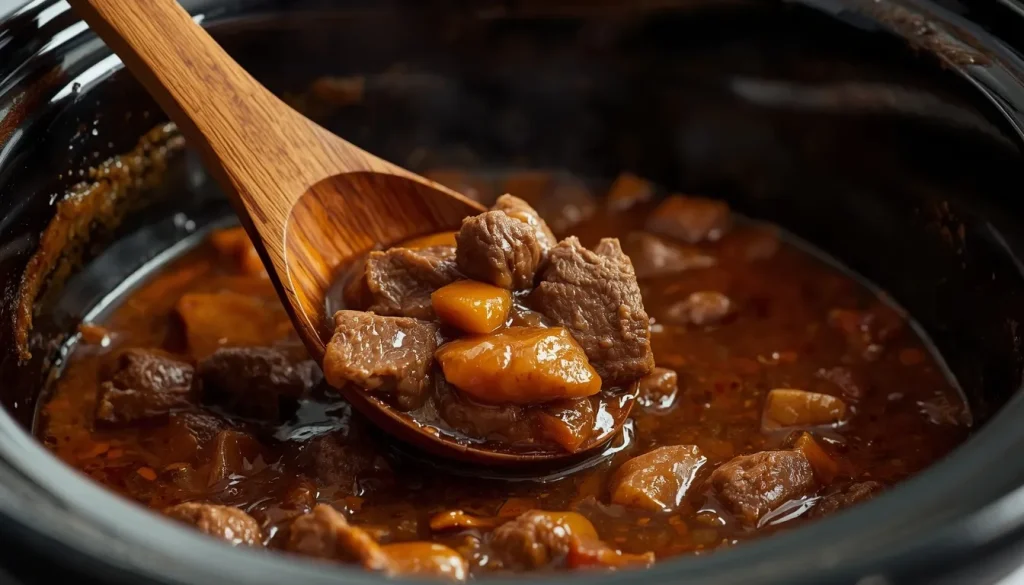
A crock pot overheating can turn an eight-hour beef stew into dry meat and burnt sauce in four hours. Although the outside casing may feel very hot during normal use, the food inside should usually settle into a gentle simmer rather than boil aggressively for hours.
The biggest catch is that “Low” and “High” do not always represent different final temperatures. On many models, both settings eventually approach about 205°F (96°C), but High gets there faster. You must check the actual cooking pattern before assuming the appliance has failed.
This guide explains how to test a slow cooker overheating problem, compare normal and excessive temperatures, protect your food, and decide when replacement is safer than continued use. Start with the warning signs below.
Why a Crock Pot Too Hot Matters
A crock pot too hot does more than shorten dinner time. Excess heat changes texture, reduces liquid too quickly, burns sauces around the ceramic insert, and can make lean meats dry or stringy.
Imagine putting chicken breasts on Low before work. The recipe calls for six hours, but the sauce bubbles hard after two hours. By dinner, the chicken may be well above its safe minimum temperature of 165°F (74°C), yet it can still be dry and unpleasant. Food safety and food quality are separate issues.
The USDA identifies 40–140°F (4–60°C) as the temperature danger zone where bacteria can multiply quickly. A working slow cooker should move food through this range and then maintain safe heat. However, overheating does not make unsafe preparation methods acceptable. Always thaw meat before slow cooking, and never use the Warm setting to cook raw food.
Excessive exterior heat also creates practical risks. A hot housing can damage a heat-sensitive countertop, melt nearby plastic, burn fingers, or affect electrical components. Stop using the cooker immediately if you notice smoke, sparks, a melted plug, a burning electrical smell, a cracked cord, or controls that no longer respond.
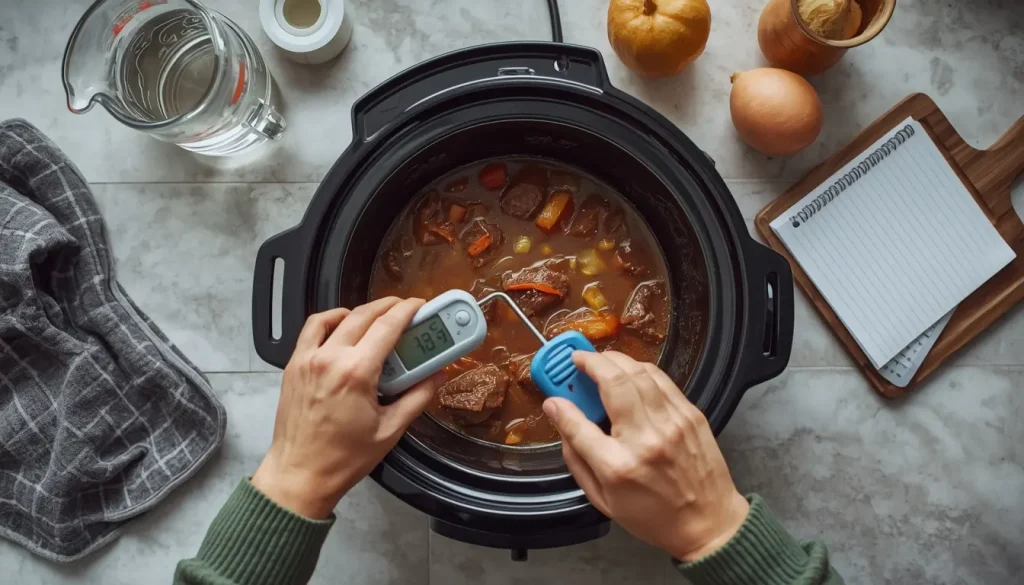
No matter which slow cooker brand you own, a calibrated thermometer remains the most reliable diagnostic tool. A temperature probe remains the most reliable way to confirm what is happening inside the pot.
How to Stop Crock Pot Overheating
Before changing recipes, compare the appliance’s behaviour with normal slow-cooker temperatures. Different brands, sizes, insert materials, room temperatures, and food volumes can change how quickly the cooker heats.
| Setting or Condition | Expected Behaviour | Warning Sign | Recommended Action |
|---|---|---|---|
| Low | Gradual rise toward roughly 190–205°F | Rolling boil within 1–2 hours | Test with water and a thermometer |
| High | Reaches simmering temperature faster | Scorching before the recipe midpoint | Shorten time or stop using the unit |
| Warm | Holds fully cooked food above 140°F | Boils, burns, or cooks raw food rapidly | Discontinue Warm mode |
| Half-full pot | Even, controlled heating | Dry edges and rapid evaporation | Check cooker size and temperature |
| Less than one-third full | Food may heat too quickly | Burning around the sides | Use a smaller cooker |
| Smoke or electrical smell | Never normal | Melted plastic, sparks, hot plug | Unplug and replace the appliance |
Note: Manufacturer specifications vary. Check your manual before judging the cooker by one universal number. Crock-Pot states that Low may begin around 164–182°F and peak near 205°F after several hours. Independent slow-cooker temperature testing from Serious Eats found that strong performers maintained roughly 195–205°F without continually boiling their contents.
A few bubbles near the edges do not always mean slow cooker overheating. Thick chilli, sugary barbecue sauce, tomato paste, dairy, and small portions scorch more easily than water-based soups. Look for a pattern across several recipes or complete the controlled water test below.
Step-by-Step Guide
- Inspect the power components. Unplug the cooker and examine the cord, plug, switch, and housing. Do not continue if you see cracks, dark marks, exposed wiring, or melted plastic.
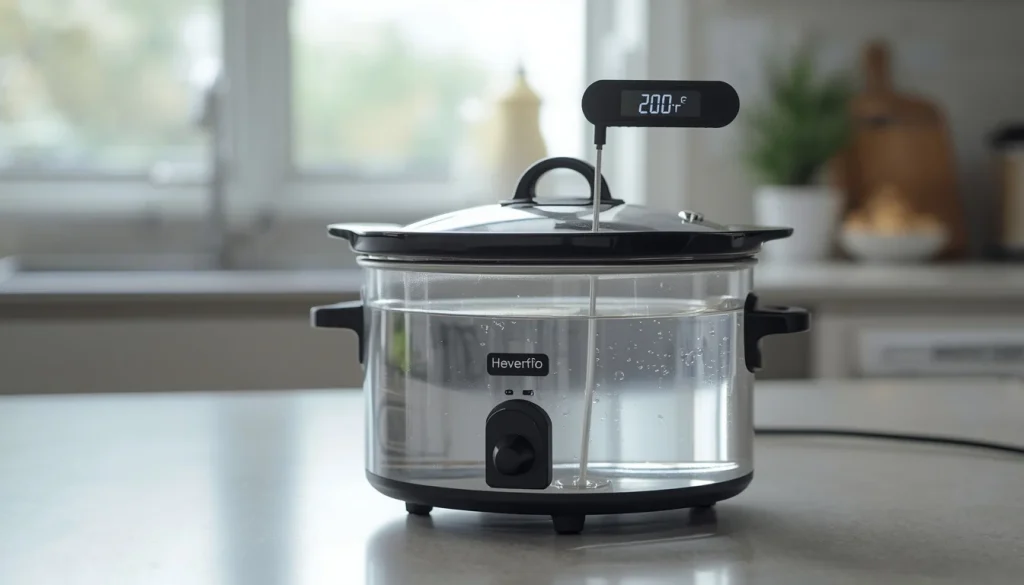
- Fill the insert halfway. Add room-temperature water until the ceramic pot is 50% full. This creates a consistent test without wasting food.
- Cover and select Low. Leave the lid closed for four hours. Do not add cold water or lift the lid repeatedly.
- Measure the centre temperature. Insert an instant-read probe into the water without touching the insert.
Pro tip: Check again after six hours to see whether the temperature stabilises. - Watch the surface. Gentle edge bubbles can be normal. A continuous rolling boil well before four hours suggests the crock pot is overheating or running unusually hot.
- Repeat on High. Let the unit cool completely, refill it, and test High for two to four hours. Record the time and temperature.
- Test Warm only with hot water. Warm should hold already-heated contents above 140°F (60°C), not bring cold water rapidly to a boil.
Pro tip: Measure every 30 minutes for two hours. - Compare the results with the manual. Contact the manufacturer when results fall far outside its specifications. Replace the cooker rather than opening or rewiring its base yourself.
Expert Tips & Common Mistakes
Pro Tips
- Keep the cooker one-half to two-thirds full. A shallow meal spreads across more heated surface and can finish much faster than the recipe predicts.
- Check food 60–90 minutes early. Do this when using an unfamiliar cooker, especially with chicken breast, fish, dairy sauces, or recipes containing less than 2 cups of liquid.
- Use a probe alarm for meat. Modern connected thermometers can alert you when chicken reaches 165°F or a roast reaches the recipe’s target. The alert prevents unnecessary extra hours of cooking.
- Add dairy and delicate vegetables late. Stir in cream, milk, peas, spinach, seafood, or fresh herbs during the final 15–30 minutes so excess heat does not split or destroy them.
- Reduce cook time before adding extra liquid. Water may delay scorching, but it can also dilute flavour. First cut the cooking time by 20–25% and monitor the result.
Common Mistakes
- Assuming a hot exterior proves a defect: Many traditional slow cookers transfer heat through the sides. Judge performance by food temperature, boiling pattern, smell, and manufacturer guidance.
- Using a wall timer or smart plug to cycle the power: Repeatedly switching a heating appliance on and off can create unsafe food temperatures and may conflict with the manufacturer’s instructions.
- Opening the lid every few minutes: Each opening releases heat and steam. The cooker then reheats aggressively, extends cooking time, and may dry the edges.
- Continuing after electrical warning signs: A scorched smell from food differs from a sharp electrical or melting-plastic smell. Continued operation may damage the outlet, plug, or appliance.
According to the USDA Food Safety and Inspection Service, slow cookers must reach a minimum internal food temperature of 165°F (74°C) to be considered safe for poultry —and overheating does not exempt the cook from verifying this with a thermometer.
FAQs About Crock Pot Overheating
Why is my crock pot boiling on Low?
Your crock pot may boil on Low because many slow cookers eventually reach a similar peak temperature on both Low and High. Low simply takes longer to reach it. Occasional edge bubbling can be normal, but a strong rolling boil early in the cooking cycle, rapid liquid loss, or repeated scorching may indicate that the thermostat or control system runs too hot.
Why does my crock pot burn food around the edges?
The heating element usually surrounds the lower sides of the cooker, so the edges receive heat first. Thick sauces, cheese dips, oatmeal, sugary barbecue sauce, and small batches can stick and burn there. Fill the cooker at least halfway, shorten the cooking time, use enough recipe-approved liquid, and avoid leaving finished food on Warm for several hours.
Can a slow cooker overheating make chicken unsafe?
Overheating usually overcooks chicken rather than leaving it undercooked, but safe preparation still matters. Start with thawed chicken and confirm that the thickest part reaches at least 165°F (74°C). Do not assume bubbling sauce proves the centre of a large chicken piece is safe. Use a clean instant-read thermometer rather than judging doneness by colour alone.
Why is my crock pot too hot even on Warm?
Warm should hold fully cooked food at a serving-safe temperature, generally above 140°F (60°C). It should not produce a hard boil or rapidly burn food. If Warm behaves like High, test it with already-hot water and a thermometer. Stop using that mode when it cannot regulate heat, especially for cheese dips, gravy, or overnight holding.
Can I leave an overheating crock pot on overnight?
No. Do not leave a suspected faulty appliance operating while you sleep or leave the house. Unplug it and complete a supervised water test during the day. If it produces smoke, sparks, a burning electrical smell, a melted plug, or uncontrollable boiling, replace it. Recipe changes cannot correct a damaged thermostat, sensor, switch, or heating element.
Why is my slow cooker overheating after I replaced the insert?
A replacement insert may have a different thickness, shape, base contact, or thermal response, even when it appears to fit. An incorrect insert can create uneven heating or leave gaps that affect temperature control. Use only the insert approved for the exact model number. Stop using the appliance if the replacement rocks, sits too high, or prevents the lid from closing properly.
How do I stop chilli from burning in a crock pot that runs hot?
Use a batch large enough to fill the pot at least halfway, add the tomato paste after combining it with liquid, and cook on Low for less time. Stir once near the final hour if the recipe allows. Avoid placing sugar, thick tomato concentrate, or cooked beans directly against a dry insert because these ingredients can catch around the hottest edges.
Conclusion
Crock pot overheating becomes easier to manage once you separate normal slow-cooker heat from genuine warning signs. A warm exterior, light edge bubbling, or a final temperature near 190–205°F may be normal. Constant rolling boils, early scorching, electrical smells, melted parts, and controls that ignore the selected setting are not.
Test the cooker with water, a lid, and a reliable thermometer before risking another meal. Keep recipes between one-half and two-thirds full, check delicate foods early, and use a probe thermometer for meat. Never attempt to repair sealed electrical components unless the manufacturer provides an approved service route.
A slow cooker overheating repeatedly is not worth working around with outlet timers, improvised liners, or unattended cooking.
A dependable slow cooker should save your dinner time—not make you watch the pot.
Unplug the cooker now and run a supervised temperature test before your next recipe. If your slow cooker fails the water test, our guide to the [best slow cookers under $50 / best-rated Crock-Pot models] can help you find a reliable replacement that holds true temperatures across all settings.

“I believe great cooking starts with the right tools, trusted advice, and a little confidence in the kitchen.”
Hi, I’m Emma Carter. My love for cooking began in my grandmother’s kitchen, where I learned that every great meal starts with simple ingredients and the right cookware. Over the years, I’ve spent countless hours researching, testing, and comparing kitchen appliances, cookware, coffee makers, air fryers, and other everyday kitchen essentials.
Here at KiCook, my goal is to make your buying decisions easier with honest product reviews, practical buying guides, and easy-to-follow cooking tips. Whether you’re upgrading your kitchen or searching for the best appliance for your home, I focus on providing clear, reliable, and research-backed information you can trust.
When I’m not testing new kitchen gadgets or writing in-depth guides, you’ll usually find me trying new recipes, visiting local farmers’ markets, or enjoying a quiet cup of coffee while planning my next kitchen project.