
I’ve been there, you clean your electric skillet thinking you’re done, and the next time you plug it in you notice a weird smell or even smoke. It’s unsettling, especially when you’ve taken good care of it. In this article, I’ll walk you through exactly why this happens and how to fix or prevent it.
An electric skillet can smell or smoke after cleaning because of leftover moisture, residue from oils or food particles, detergent residue, or cleaning cloth fibers burning off when reheated. Most of these issues are harmless but should be addressed promptly for safety and performance.
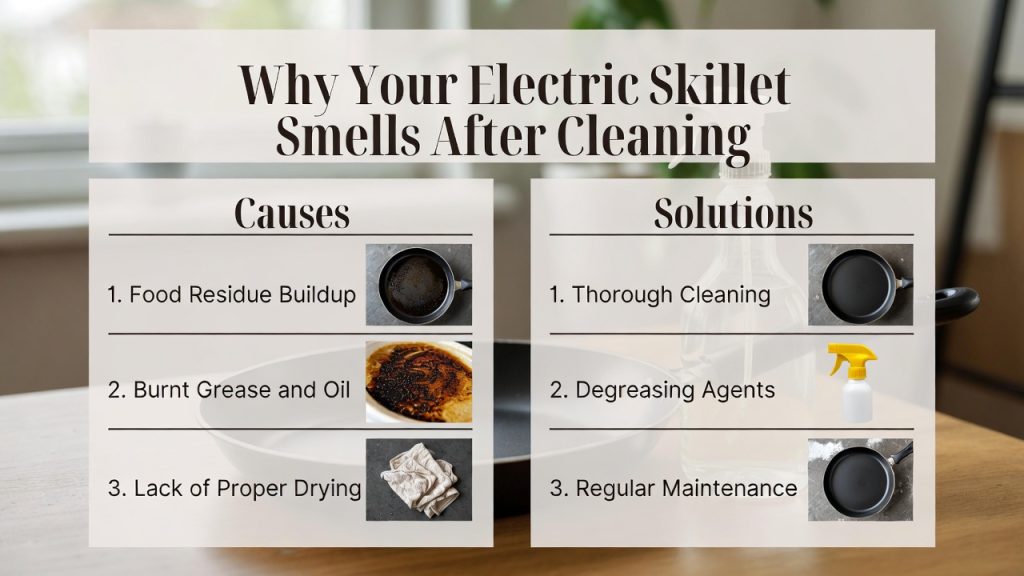
Why Your Electric Skillet Smells After Cleaning
Electric skillets are kitchen workhorses. But when a burning smell pops up after cleaning, it can mean something as simple as leftover soap or water or something slightly more concerning.
1. Moisture Left in Heating Elements
Even a small amount of water trapped under the skillet’s base or around the heating coil can create a burning smell once you turn it on. This happens because electricity meets water.
- Water droplets on heating elements vaporize and produce a “steam-burn” smell.
- Condensation under metal parts can linger if not dried completely.
Tip: Always dry the skillet thoroughly, including crevices and around the temperature control joint.
2. Detergent or Soap Residue
If you scrub with dish soap and don’t rinse well, the next heat cycle can burn off the soap film — and that smells.
- Strong-smelling detergents can leave a lingering odor.
- Soap trapped in grooves may heat and smoke slightly.
Solution: Rinse carefully with clean water, then wipe dry with a soft towel.
3. Leftover Food or Grease
Even tiny particles of leftover food or hardened grease can burn when the skillet heats up again.
- Grease on metal surfaces heats and smokes at moderate temperatures.
- Food particles under the skillet gasket or around the rim can be hidden trouble.
Best Practice: Inspect all edges and wipe with a damp cloth before dry heating.
4. Cloth Fibers or Cleaning Tool Debris
Sometimes what causes smoke isn’t the skillet it’s your cleaning tool.
- Tiny fibers from abrasive sponges or towels can embed in crevices.
- These fibers burn off when heated.
Pro Tip: Use lint-free towels for drying and non-abrasive scrubbers for cleaning.
Why It Might Smoke After Cleaning
A smell is usually just an odor but smoke means something is physically burning off. Common sources after cleaning include:
- Water turning into steam quickly
- Soap film or detergent burning off
- Grease or oil heating beyond smoke point
- Plastic bits from cleaners melting
Smoke often clears quickly once the skillet warms up, but if it persists, turn it off and let it cool.
Safety First: When to Be Concerned
Most smells or slight smoke after cleaning are harmless and temporary, but you should be cautious.
- If smoke is dense or accompanied by sparks, unplug immediately.
- If your skillet continues to smell strongly after repeated heating cycles, it may need professional inspection or replacement.
- Never immerse the heating control unit in water.
For general safety tips on using electric cooktops and appliances, check out this guide from the U.S. Consumer Product Safety Commission: the basics on appliance safety.
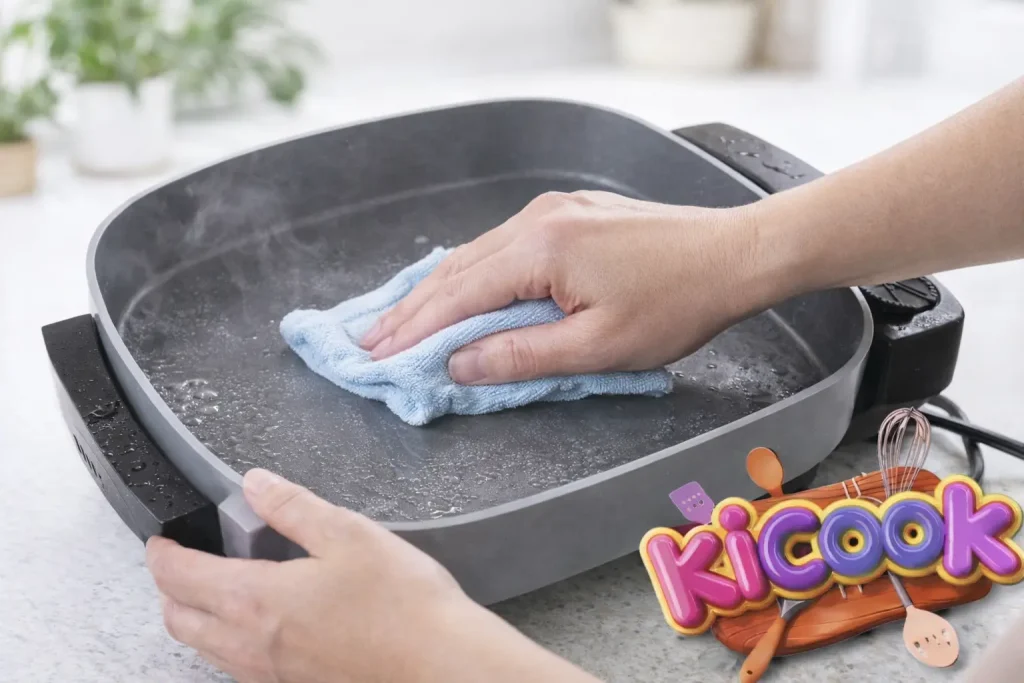
How to Clean Your Electric Skillet Without Problems
Here’s a step-by-step that prevents smells and smoke later:
- Unplug and let cool completely
- Remove cooking surface/insert (if detachable)
- Wipe loose debris with a soft cloth
- Use warm, soapy water on removable parts
- Rinse thoroughly
- Dry every part completely
- Reassemble and perform a test heat cycle with no food
Common Myths About Electric Skillet Smell & Smoke
| Myth | Reality |
|---|---|
| “All smoke means it’s broken.” | Light smoke after cleaning is usually just water or residue burning off. |
| “Electric skillets can be washed like pots.” | Not the temperature control unit — only removable surfaces. |
| “If it smells once, it’s unsafe.” | A one-time smell often goes away after proper drying and heating. |
Expert Opinion
By Dila Lick, Kitchen Appliance Specialist
Electric skillets are durable and versatile when maintained correctly. Most smell or smoke incidents after cleaning are simply due to moisture or residue. Take your time with cleaning and drying, and always monitor the first heat cycle after maintenance.
Pros & Cons of Electric Skillet Use
Pros
- Even heating and temperature control
- Easy to clean removable inserts
- Versatile for many cooking styles
Cons
- Requires complete drying after cleaning
- Sensitive to soap and detergent residue
- Electrical parts must stay dry
FAQs on Electric Skillet Smell or Smoke After Cleaning
Is it normal for my electric skillet to smell the first time I use it?
Yes — new electric skillets often have protective coatings that burn off and can smell on first use.
Should I be worried if my electric skillet smokes every time after cleaning?
If smoke persists beyond the first few heat-ups, inspect for residue or water buildup. If issues continue, stop use and check the unit.
Can soap residue affect the heating element?
It won’t permanently damage it, but it can smoke or smell as it burns off. Always rinse well.

Conclusion
A smell or light smoke from your electric skillet after cleaning is usually nothing to panic about. In most cases, it’s just leftover water, soap, or food particles burning off.
With careful cleaning, thorough drying, and attention to detail, you can keep your skillet performing safely and smell-free. Always prioritize safety and consult professional help if you notice persistent issues.
Related Articles You May Find Helpful
- Learn how to solve other kitchen appliance problems with this Electric Skillet Troubleshooting Guide, covering common faults and fixes.
- For more reasons why your skillet might act up, check out these 15 Common Electric Skillet Problems.
- Understand broader maintenance and safety insights in this article on Electric Skillet Safety Issues.

“I believe great cooking starts with the right tools, trusted advice, and a little confidence in the kitchen.”
Hi, I’m Emma Carter. My love for cooking began in my grandmother’s kitchen, where I learned that every great meal starts with simple ingredients and the right cookware. Over the years, I’ve spent countless hours researching, testing, and comparing kitchen appliances, cookware, coffee makers, air fryers, and other everyday kitchen essentials.
Here at KiCook, my goal is to make your buying decisions easier with honest product reviews, practical buying guides, and easy-to-follow cooking tips. Whether you’re upgrading your kitchen or searching for the best appliance for your home, I focus on providing clear, reliable, and research-backed information you can trust.
When I’m not testing new kitchen gadgets or writing in-depth guides, you’ll usually find me trying new recipes, visiting local farmers’ markets, or enjoying a quiet cup of coffee while planning my next kitchen project.