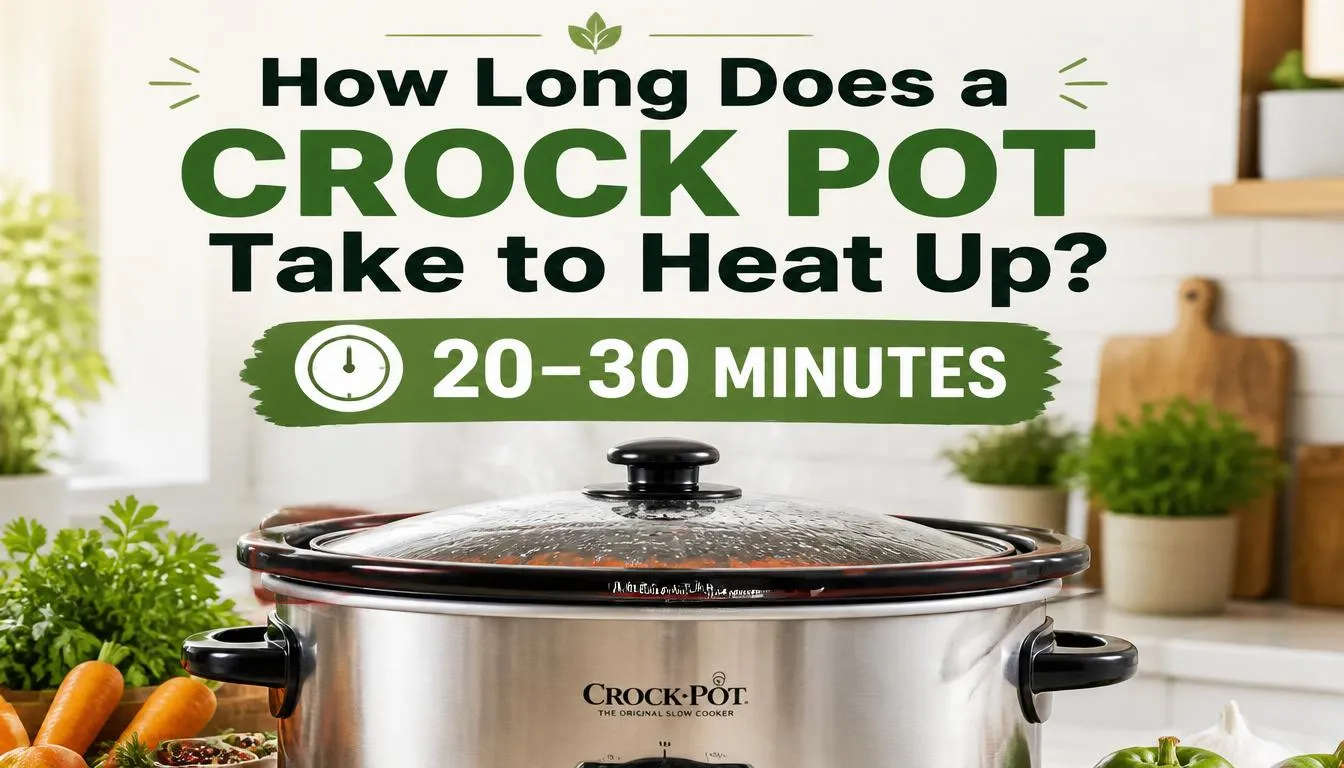
YES, a crock pot needs time to warm before it cooks efficiently. Most models begin feeling hot within 20–30 minutes, but a filled crock pot may need 1–2 hours to reach a food-safe cooking temperature and several hours to develop a steady simmer.
A crock pot usually takes 20–30 minutes to start heating noticeably after you switch it on. However, the answer to how long does a crock pot take to heat up depends on the setting, food quantity, starting temperature, crock size, and appliance wattage. A full six-quart cooker containing refrigerated ingredients will warm more slowly than a half-full cooker filled with warm stock.
The biggest limitation is that slow cookers are designed to build heat gradually. They do not preheat like ovens, pressure cookers, or air fryers. Many models need approximately 3–4 hours on HIGH or 7–8 hours on LOW to reach a gentle simmer throughout a full meal.
This guide explains crock pot preheating, realistic heating times, safe food temperatures, faster preparation methods, and common reasons a slow cooker heats too slowly. You will also learn how to test your appliance and plan meals without leaving food at unsafe temperatures.
Why Crock Pot Heating Time Matters
Knowing how long for crock pot to heat up helps you plan dinner accurately and avoid unsafe cooking habits. A slow cooker can feel hot around the outside while the food in the centre remains cool. This is especially common with thick stews, large meat portions, frozen ingredients, or an overfilled crock.
Bacteria grow most rapidly between 40°F and 140°F, or approximately 4°C and 60°C. Perishable food should not remain in this temperature range for more than two hours. Starting with thawed meat, refrigerated vegetables, and enough hot or room-temperature liquid helps the cooker move through this range more efficiently.
Heating time also affects texture. Root vegetables may remain firm if they sit above the liquid, while chicken can become dry when cooked too long after reaching 165°F or 74°C. Beans, dairy products, pasta, and delicate vegetables need different timing because they react differently to prolonged heat.
Modern 2026 slow cookers may include programmable probes, Wi-Fi monitoring, app notifications, and automatic temperature adjustments. These features improve control, but they cannot replace safe preparation. Even an AI-connected appliance needs properly thawed food and a correctly filled crock.
The heating element also matters. Most traditional slow cookers heat from the sides and bottom rather than directly beneath the food. Heat must pass through the ceramic insert before warming the ingredients. This gradual transfer creates tender results, but it explains why crock pot preheating takes longer than heating a saucepan on the stove.
For more detail about how heat changes food texture and moisture, the tested cooking science guides from Serious Eats provide useful explanations for home cooks.
How to Make Crock Pot Preheating More Efficient
Crock pot preheating is usually optional. Most recipes expect you to place the ingredients inside, cover the cooker, select a setting, and allow everything to heat together. Preheating can still help when you want to shorten the early warming stage, but you should follow your model’s manual before heating an empty stoneware insert.
| Setting or Method | Noticeable Warmth | Typical Time to Steady Simmer | Recommended Use |
|---|---|---|---|
| HIGH setting | 15–30 minutes | About 3–4 hours | Faster meals, soups, sauces and thawed meat |
| LOW setting | 20–40 minutes | About 7–8 hours | All-day cooking and tenderising tougher cuts |
| WARM setting | 20–45 minutes | Not designed to reach a cooking simmer | Holding fully cooked food only |
| Hot liquid added | Almost immediate | May shorten early heating by 20–40 minutes | Soups, stews and braised dishes |
| Cold liquid added | 20–40 minutes | Standard recipe time | Normal slow-cooker recipes |
| Frozen ingredients | Highly variable | Can delay safe heating significantly | Not recommended for large meat portions |
Note: Heating times vary by brand, wattage, crock material, room temperature, ingredient temperature, and how often the lid is opened. Check your manual because some programmable models manage heat differently.
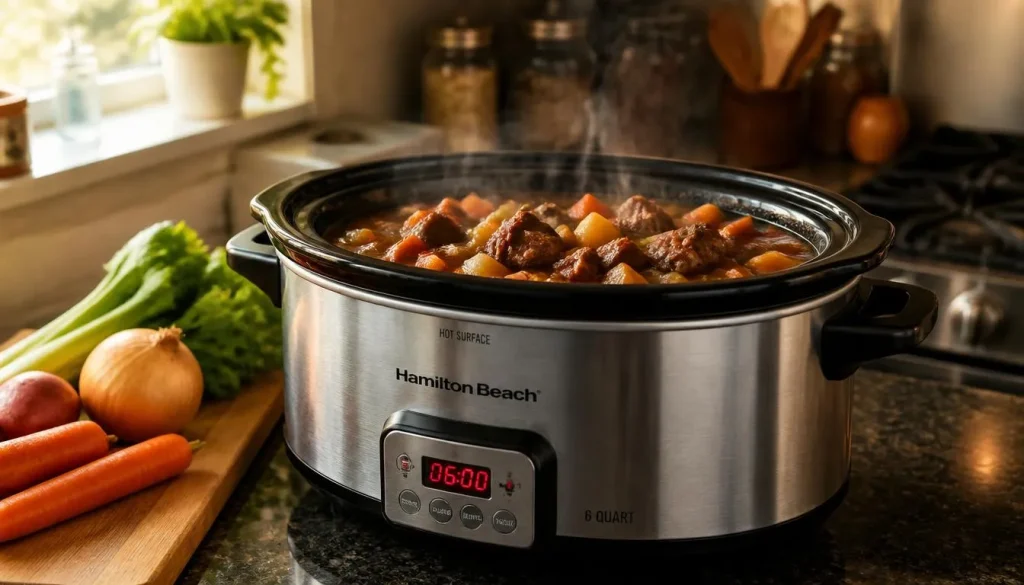
A crock pot should generally be filled between one-half and three-quarters full. A nearly empty cooker may heat unevenly or evaporate liquid too quickly. An overfilled cooker takes longer to heat and may fail to cook dense ingredients evenly.
Use thawed meat rather than frozen roasts or frozen chicken breasts. Frozen vegetables are usually less problematic because they are smaller, but adding several cups at once can still reduce the temperature.
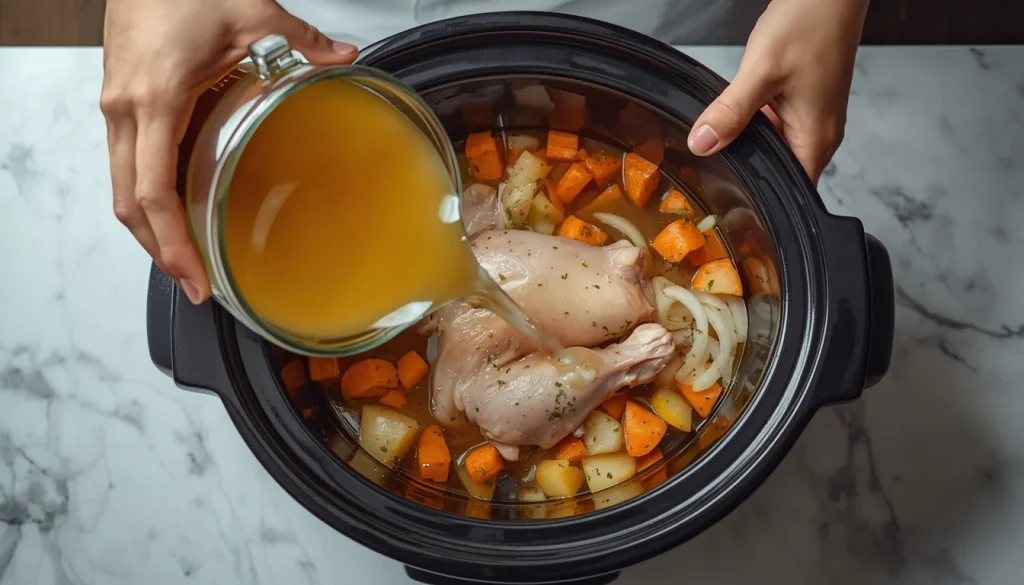
Warm stock can help a soup or stew begin cooking sooner. Heat it to steaming rather than a full boil, then pour it carefully over the ingredients. Do not place a refrigerator-cold ceramic insert onto a hot base, because a sudden temperature change may damage the stoneware.
Step-by-Step Guide
- Check the recipe volume. Keep the crock between one-half and three-quarters full so heat can circulate without excessive empty space or overcrowding.
- Thaw large proteins completely. Defrost chicken, beef, or pork in the refrigerator before cooking. A four-pound frozen roast can remain cool in the centre long after the sauce becomes hot.
- Cut food into even pieces. Slice meat into two-inch portions and root vegetables into one-inch chunks when possible. Smaller, consistent pieces heat more predictably.
- Warm the cooking liquid. Heat stock or sauce until steaming, around 160–180°F or 71–82°C. Pro tip: Use hot liquid for thick soups that would otherwise take longer to warm.
- Place dense vegetables near the bottom. Potatoes, carrots, and swede need stronger contact with the heated crock than softer ingredients.
- Choose HIGH for the first hour when appropriate. Some recipes can begin on HIGH for 45–60 minutes before switching to LOW. Follow the recipe and appliance instructions.
- Keep the lid closed. Each lid opening releases heat and may add 15–20 minutes to the cooking process. Pro tip: Use the glass lid to check bubbling without lifting it.
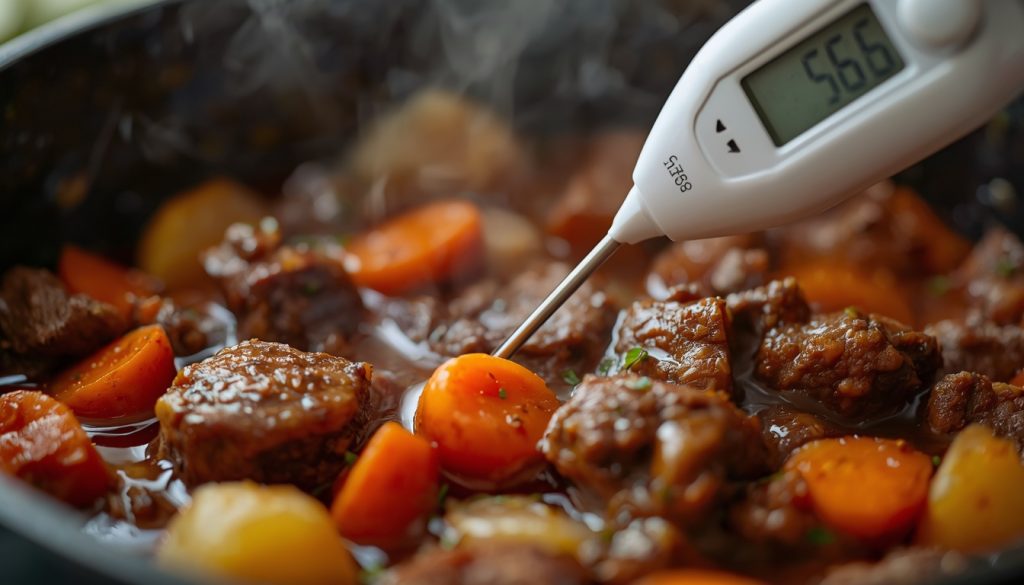
- Verify the internal temperature. Test poultry at 165°F or 74°C and ground meat at 160°F or 71°C before serving.
Expert Tips and Common Mistakes
Pro Tips
- Start with the correct crock size. A three-quart recipe in an eight-quart cooker may heat and evaporate differently. Use a cooker that allows the food to fill at least half the insert.
- Brown meat before slow cooking. Searing does not seal in moisture, but it creates deeper flavour and warms the exterior before the meat enters the crock.
- Use an instant-read thermometer after two hours. Check thick foods in the centre rather than only measuring the hot liquid around the edges.
- Limit lid opening to once or twice. Every unnecessary check may release enough heat to extend the cooking time by 15–20 minutes.
- Add dairy and pasta near the end. Stir in milk, cream, cooked pasta, or tender greens during the final 15–30 minutes to prevent curdling or overcooking.
Common Mistakes
- Using the WARM setting to cook raw food: WARM is designed to hold cooked food, not bring raw meat safely through the bacterial danger zone.
- Adding a large frozen roast: The outside may warm while the centre stays frozen or cool for too long, increasing food-safety risk and causing uneven texture.
- Filling the crock to the rim: An overloaded cooker takes longer to heat, circulates heat poorly, and may spill when bubbling begins.
- Preheating cold stoneware suddenly: Moving a refrigerated ceramic insert directly onto a hot base can expose it to thermal shock and may cause cracking.
“You don’t have to cook fancy or complicated masterpieces—just good food from fresh ingredients.” — Julia Child, chef and culinary author
FAQs About How Long a Crock Pot Takes to Heat Up
How long does a crock pot take to heat up on HIGH?
A crock pot normally begins feeling warm within 15–30 minutes on HIGH. A filled cooker may need about one hour to become thoroughly hot and approximately 3–4 hours to develop a steady simmer. Thick recipes, cold ingredients, large meat portions, and frequent lid opening can extend the heating time. Always verify meat temperature rather than relying only on visible bubbling.
How long does a crock pot take to heat up on LOW?
On LOW, noticeable warmth may develop within 20–40 minutes, but the entire meal heats gradually. Many traditional models need around 7–8 hours to reach and maintain a gentle simmer during a full cooking cycle. LOW does not necessarily operate at a dramatically lower final temperature than HIGH. It simply takes longer to reach the cooking temperature.
Should I preheat my crock pot before adding chicken?
Crock pot preheating is usually unnecessary for thawed chicken. Place the chicken, seasonings, and recipe liquid into the cooker before switching it on. Preheating may shorten the initial warming period, but never place cold stoneware onto a preheated base unless the manufacturer permits it. Cook chicken until the thickest section reaches at least 165°F or 74°C.
Can I leave a crock pot cooking overnight?
Yes, a functioning slow cooker can cook suitable recipes overnight when used according to its manual. Choose a recipe with enough liquid and an eight-hour LOW cooking time. Keep the cooker away from towels, paper, and crowded electrical outlets. Use a programmable model that switches to WARM after cooking, but refrigerate leftovers within two hours after serving.
Why is my crock pot not boiling water?
Slow cookers are designed for gentle simmering rather than rapid boiling. The lid, ceramic insert, heating cycle, and low wattage control heat differently from a stovetop pan. Water may show small bubbles around the edges without reaching a rolling boil. If the water remains lukewarm after two hours on HIGH, test another outlet and inspect the cooker for damage.
Can I put frozen chicken directly into a crock pot?
Large frozen chicken pieces should not go directly into a slow cooker. The centre may stay below a safe temperature while the outer surface warms slowly through the bacterial danger zone. Thaw chicken in the refrigerator first, then cook it until it reaches 165°F or 74°C. Small frozen vegetables can usually be added, but they may extend the heating time.
Does opening the lid make a crock pot take longer to heat?
Yes. Opening the lid releases trapped steam and lowers the temperature inside the crock. One quick opening may add approximately 15–20 minutes to the total cooking time, depending on the model and recipe. Check food through the glass whenever possible. Open the lid only when stirring, adding late ingredients, or checking the final internal temperature.
How long should soup take to heat in a crock pot?
A refrigerated soup may take 1–2 hours on HIGH to become hot throughout, depending on the volume and thickness. A full pot of creamy or dense soup heats more slowly than clear broth. Stir after the first hour if the recipe allows, then confirm that the centre reaches at least 165°F or 74°C before serving or switching to WARM.
Conclusion
The most useful answer to how long does a crock pot take to heat up is that initial warmth and full cooking heat are not the same. Most crock pots feel hot within 20–30 minutes, but a full meal may need 1–2 hours to enter the safe cooking range. A steady simmer can take approximately 3–4 hours on HIGH or 7–8 hours on LOW.
Crock pot preheating is optional for most recipes. You will get safer and more consistent results by using thawed meat, evenly cut ingredients, the correct crock size, and enough liquid. Keep the lid closed and use a thermometer to confirm doneness instead of judging food by steam or bubbles.
Smart timers and app-connected cookers can improve convenience, but careful preparation still controls the final result.
Slow cooking rewards patience, but safe slow cooking starts with smart heat management.
Check your crock pot’s manual and test its HIGH setting with a thermometer before preparing your next meal.
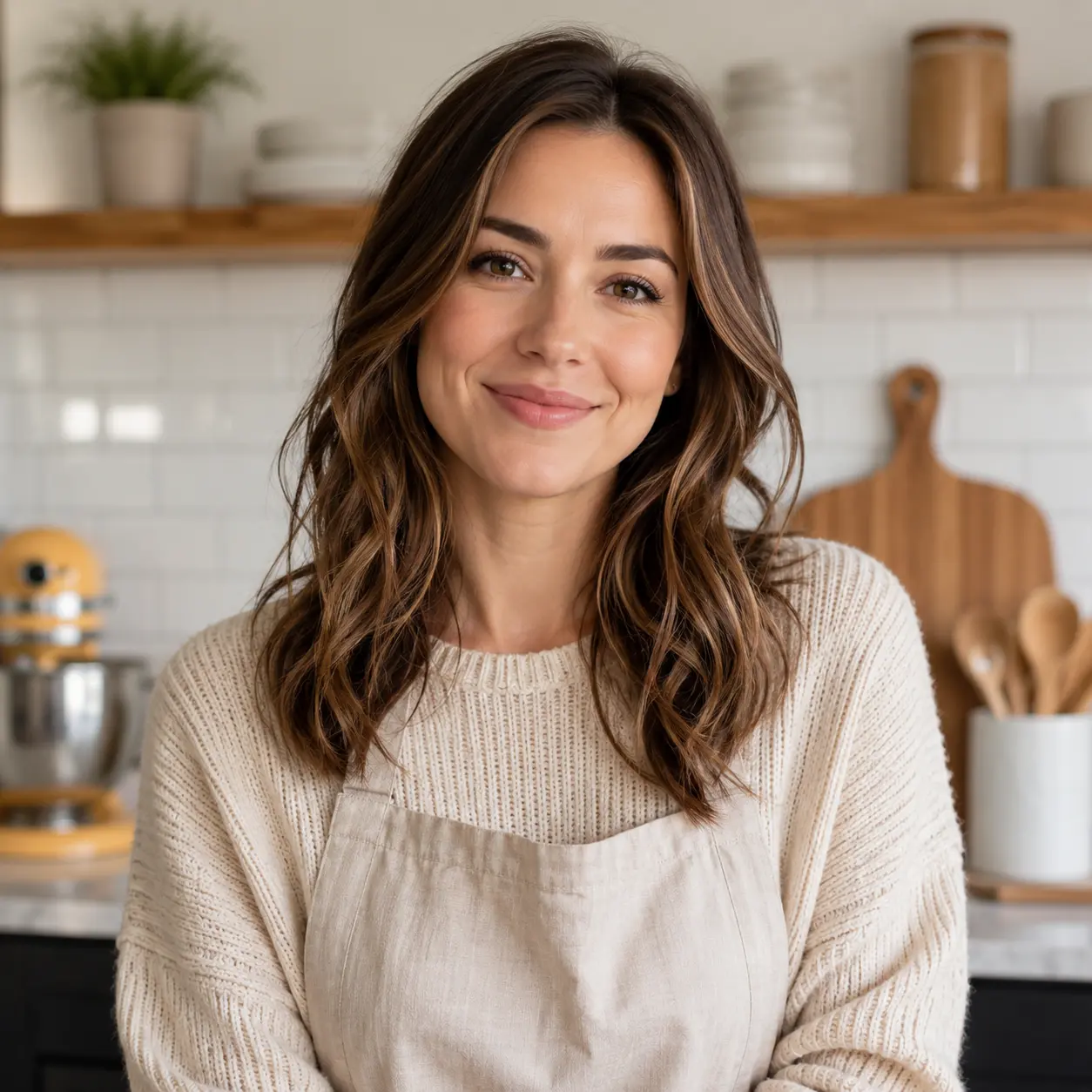
“I believe great cooking starts with the right tools, trusted advice, and a little confidence in the kitchen.”
Hi, I’m Emma Carter. My love for cooking began in my grandmother’s kitchen, where I learned that every great meal starts with simple ingredients and the right cookware. Over the years, I’ve spent countless hours researching, testing, and comparing kitchen appliances, cookware, coffee makers, air fryers, and other everyday kitchen essentials.
Here at KiCook, my goal is to make your buying decisions easier with honest product reviews, practical buying guides, and easy-to-follow cooking tips. Whether you’re upgrading your kitchen or searching for the best appliance for your home, I focus on providing clear, reliable, and research-backed information you can trust.
When I’m not testing new kitchen gadgets or writing in-depth guides, you’ll usually find me trying new recipes, visiting local farmers’ markets, or enjoying a quiet cup of coffee while planning my next kitchen project.