
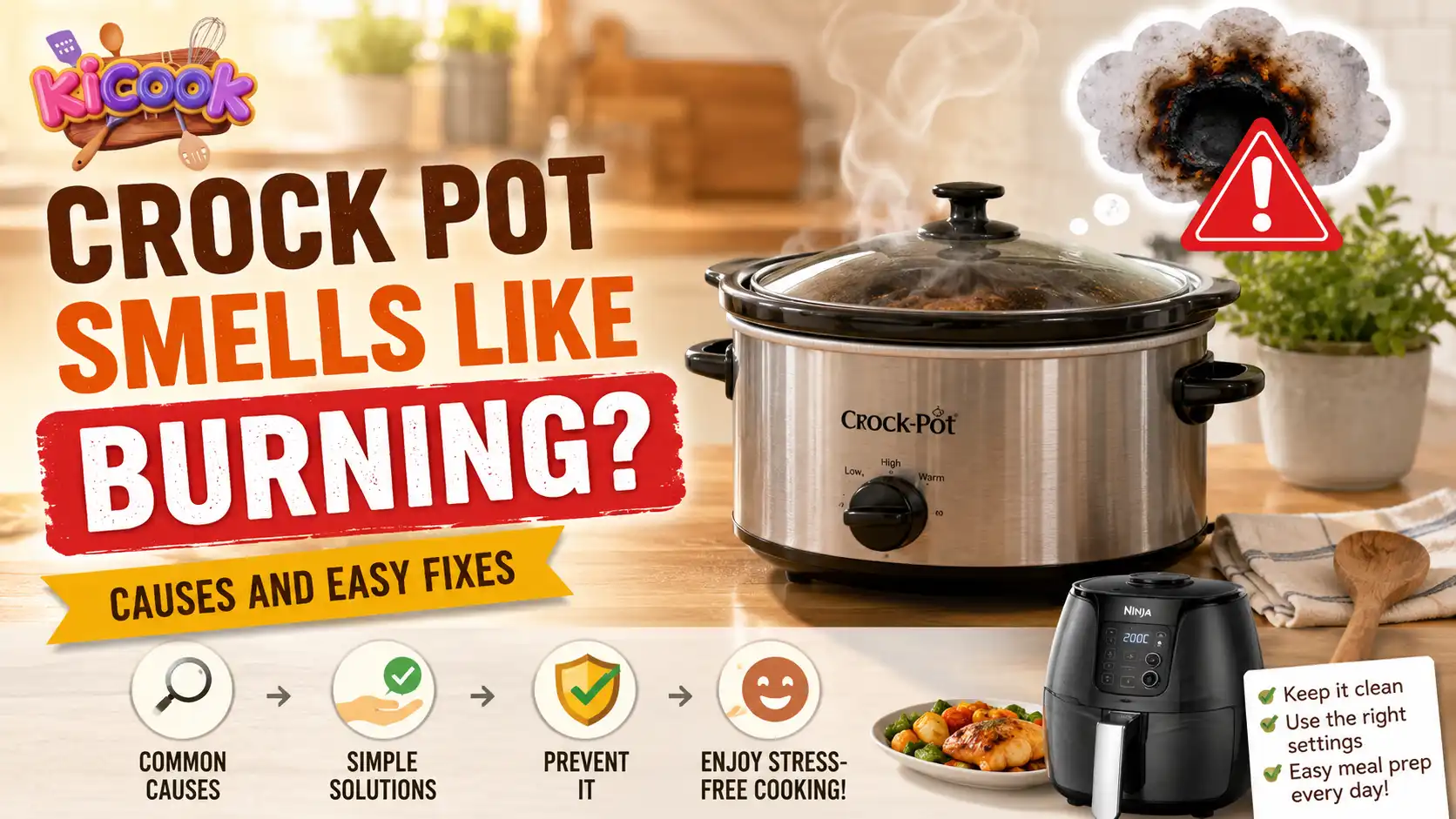
YES, a crock pot can smell like burning without actually being dangerous, especially during the first few uses. Common causes include manufacturing residue, food spills on the heating base, overheating ingredients, or damaged electrical components. If the smell persists after cleaning or is accompanied by smoke, stop using the appliance immediately.
Cooking with a slow cooker should fill your kitchen with the aroma of a delicious meal, not a worrying burning odor. If your crock pot smells like burning, the cause is often something simple, such as residue on the heating element or food splatter trapped between the stoneware and the base.
The biggest catch is that not every burning smell is harmless. New appliances often release odors during the first few cooking sessions, but an electrical burning smell can signal a safety issue that requires immediate attention.
In this guide, you’ll learn why a crock pot smells hot, how to identify safe versus unsafe odors, how to fix the problem, and what steps to take to prevent it from happening again.
Why a Crock Pot Smells Like Burning Matters
A burning smell coming from your slow cooker can be unsettling. Most home cooks expect a crock pot to run quietly for hours while preparing soups, stews, pulled pork, or chili. When an unexpected odor appears, it’s natural to wonder whether the appliance is overheating.
The good news is that slow cookers are designed to operate at relatively low temperatures. Most models maintain food temperatures between 170°F and 280°F depending on the setting. Food safety guidelines recommend keeping cooked foods above 140°F to prevent bacterial growth.
If your slow cooker smells hot, it may simply be working as intended. The outer housing can become warm during long cooking cycles, and some heat-related odors are normal when components expand and contract.
However, ignoring persistent burning smells can lead to bigger problems:
- Food scorching is the most common cause. Even a thin layer of dried sauce on the heating base can create a persistent burning smell every time you cook.
- The more serious concern is electrical odor. If the smell resembles burning plastic or hot wiring rather than food, unplug the appliance immediately. Continued use with damaged electrical components increases the risk of overheating.
- The good news is that most burning smells from slow cookers have a simple fix — usually a thorough cleaning or a test cycle with plain water.
According to food safety guidance and cooking science discussions from trusted resources like Serious Eats, maintaining proper cooking temperatures is essential for both safety and flavor development.
One simple way to test whether the smell is coming from food residue or the appliance itself is to run the crock pot with only water and a sliced lemon for two hours on HIGH. If the burning smell disappears, the issue was food-related. If it persists, the heating element or electrical components may need professional inspection.
Understanding the source of the smell helps you decide whether a quick cleaning is enough or whether the appliance should be replaced.
How To Fix a Crock Pot Smells Like Burning Problem
| Possible Cause | What Happens | Fix | Recommended? |
|---|---|---|---|
| New appliance residue | Chemical-like burning smell | Run water inside for 2 hours on HIGH | Yes |
| Food spills on base | Burnt food odor during cooking | Clean heating base thoroughly | Yes |
| Overfilled ingredients | Food drips into heating area | Fill only 1/2 to 2/3 full | Yes |
| Dry cooking | Food scorches at bottom | Add sufficient liquid | Yes |
| Damaged wiring | Electrical burning smell | Stop use immediately | Yes |
| Cracked stoneware | Uneven heating | Replace insert | Yes |
Note: Different brands and models may produce a mild odor during their first few uses. If the smell disappears after several cooking cycles and no smoke is present, it is usually normal.
Tip 1: Check for Food Spills
Even a small amount of sauce or grease can bake onto the heating base and create a burning smell during future cooking sessions.
Tip 2: Clean Under the Stoneware
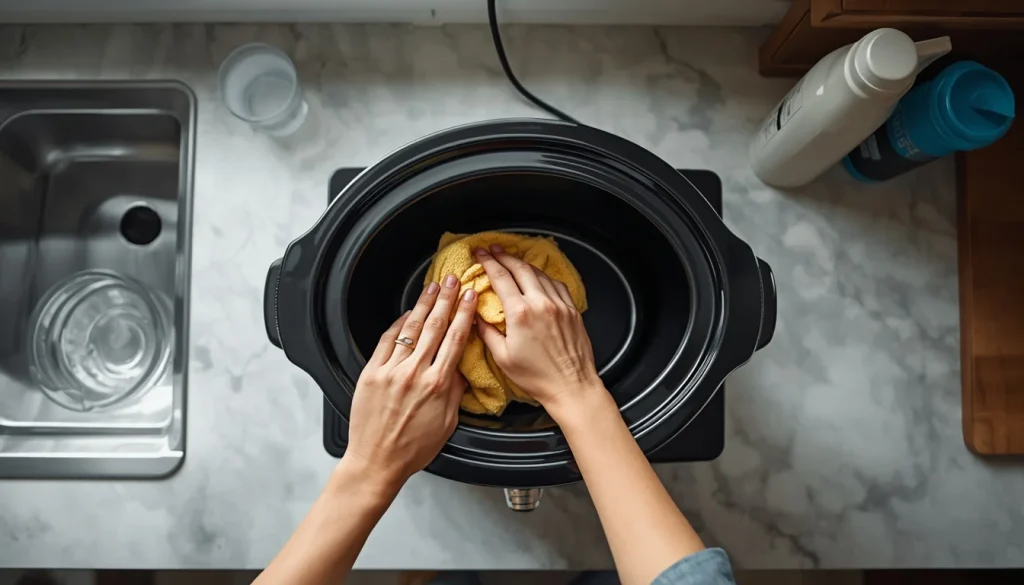
Remove the insert and inspect the metal heating chamber. Wipe away any dried food particles using a damp cloth.
Tip 3: Avoid Overfilling
Keeping the crock pot between half and two-thirds full promotes even cooking and reduces overflow.
Tip 4: Use Enough Liquid
Recipes with insufficient liquid can cause ingredients to scorch, especially during long cooking times.
Tip 5: Inspect the Power Cord
Look for discoloration, cracks, or melted areas. Electrical odors require immediate attention.
Tip 6: Run a Test Cycle
Fill the crock with water and heat it on HIGH for 2 hours. If the burning smell remains without food present, the issue may be mechanical.
Step-by-Step Guide
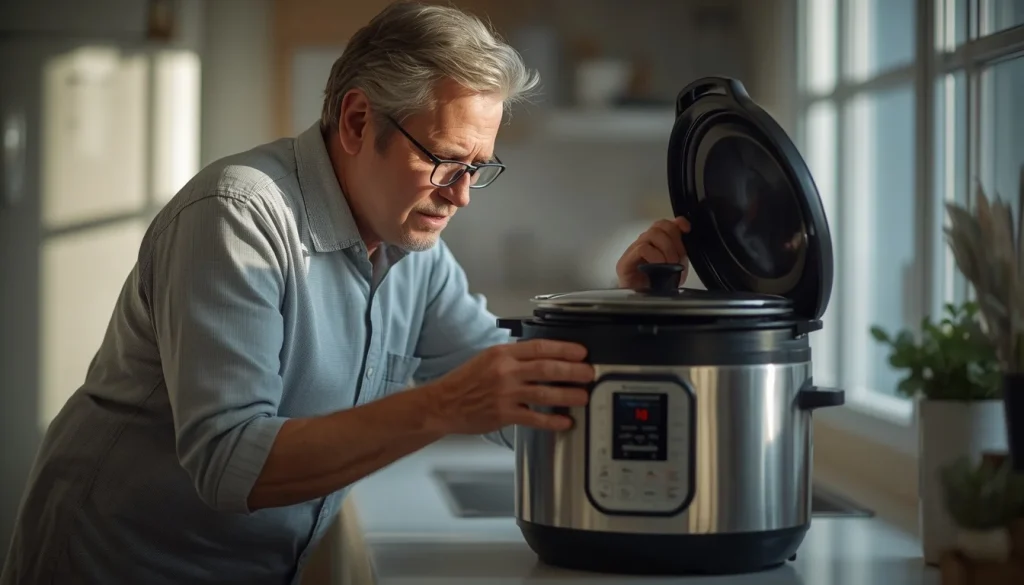
- Unplug the crock pot and allow it to cool completely before inspection.
- Remove the stoneware insert and examine the heating chamber for dried food residue or grease buildup.
- Wipe the interior heating base with a damp microfiber cloth. Avoid excessive water around electrical components.
- Fill the stoneware with 4 cups of water and run the unit on HIGH for 2 hours. Pro tip: Add a sliced lemon to help identify whether the odor is coming from food residue or the appliance itself.
- Check the power cord carefully for frayed sections, melted plastic, or unusual discoloration.
- During the test cycle, monitor for smoke, sparking, or strong electrical odors. Pro tip: A mild warm-plastic smell during the first few uses often disappears after several cooking sessions.
- If cooking food, ensure at least 1 cup of liquid is present unless the recipe specifically states otherwise.
- If the burning smell continues after cleaning and testing, discontinue use and replace the appliance.
Expert Tips & Common Mistakes
Pro Tips
- Leave at least 1 inch of space below the rim to reduce overflow.
- Use 1–2 cups of liquid for most long-cooking recipes unless otherwise directed.
- Clean the heating chamber after every spill, even minor ones. Sauce residue thinner than 1mm can still produce a noticeable burning smell after just one cooking cycle.
- Test new slow cookers with water for 1–2 hours before cooking meals.
- Replace the appliance — not just the cord — if you notice heat damage, discoloration around the plug, or melted plastic anywhere on the housing. Replacement cords are rarely available for slow cookers and an overheating unit is not worth repairing.
Common Mistakes
- Ignoring food drips beneath the insert, which repeatedly burn during cooking cycles.
- Assuming all burning smells are normal, potentially overlooking electrical issues.
- Cooking thick sauces without enough liquid, causing scorching at the bottom.
- Continuing to use a crock pot that produces smoke, which can indicate component failure and increase fire risk.
“Temperature control is one of the most important factors in successful cooking.”
— Harold McGee, Food Scientist and Author of On Food and Cooking

FAQs
Can a crock pot catch fire if it smells like burning?
A burning smell alone does not mean fire is imminent, but it should never be ignored. Food residue and manufacturing odors are rarely dangerous. However, an electrical burning smell, visible smoke, or sparking requires you to unplug the appliance immediately and stop using it until inspected by a professional.
Is it normal for a new crock pot to smell hot?
Yes. A new crock pot smells hot because manufacturing oils and protective coatings can burn off during the first few uses. This odor usually disappears after one to three cooking cycles.
Why does my slow cooker smell hot when cooking chicken?
Chicken releases fat and juices during cooking. If these liquids overflow or drip into the heating base, they can create a burnt smell. Keeping the cooker no more than two-thirds full helps prevent this issue.
Why does my crock pot smell like burning plastic?
A burning plastic smell may indicate manufacturing residue in a new appliance. However, if the cooker is older, inspect the cord, plug, and housing immediately. Persistent plastic odors can signal overheating electrical components.
Can leaving a slow cooker on overnight cause a burning smell?
Not usually. Slow cookers are designed for extended cooking periods. However, recipes lacking sufficient liquid can dry out overnight, causing ingredients to scorch and create a burning odor by morning.
Why does my slow cooker smell hot but there is no smoke?
The exterior housing naturally becomes warm during operation. A mild warm smell without smoke is often normal. If the odor becomes stronger over time or develops an electrical smell, further inspection is recommended.
Can a dirty heating base cause a burning smell from crock pot?
Yes. Dried food, grease, and spilled sauces trapped beneath the insert commonly cause a burning smell from crock pot units. Thorough cleaning often resolves the issue completely.
Conclusion
If your crock pot smells like burning, start with the simplest fix first — clean the heating base, check for food spills, and run a water test on HIGH for two hours.
Most burning odors have an easy solution. The ones that don’t electrical smells, visible smoke, or sparking require you to stop using the appliance immediately.
A well-maintained slow cooker should smell like dinner, not a warning sign. Clean it today and it will reward you with years of reliable cooking.
For more expert guidance, visit Serious Eats — one of the most trusted resources for kitchen techniques, tested recipes, and food science.

“I believe great cooking starts with the right tools, trusted advice, and a little confidence in the kitchen.”
Hi, I’m Emma Carter. My love for cooking began in my grandmother’s kitchen, where I learned that every great meal starts with simple ingredients and the right cookware. Over the years, I’ve spent countless hours researching, testing, and comparing kitchen appliances, cookware, coffee makers, air fryers, and other everyday kitchen essentials.
Here at KiCook, my goal is to make your buying decisions easier with honest product reviews, practical buying guides, and easy-to-follow cooking tips. Whether you’re upgrading your kitchen or searching for the best appliance for your home, I focus on providing clear, reliable, and research-backed information you can trust.
When I’m not testing new kitchen gadgets or writing in-depth guides, you’ll usually find me trying new recipes, visiting local farmers’ markets, or enjoying a quiet cup of coffee while planning my next kitchen project.