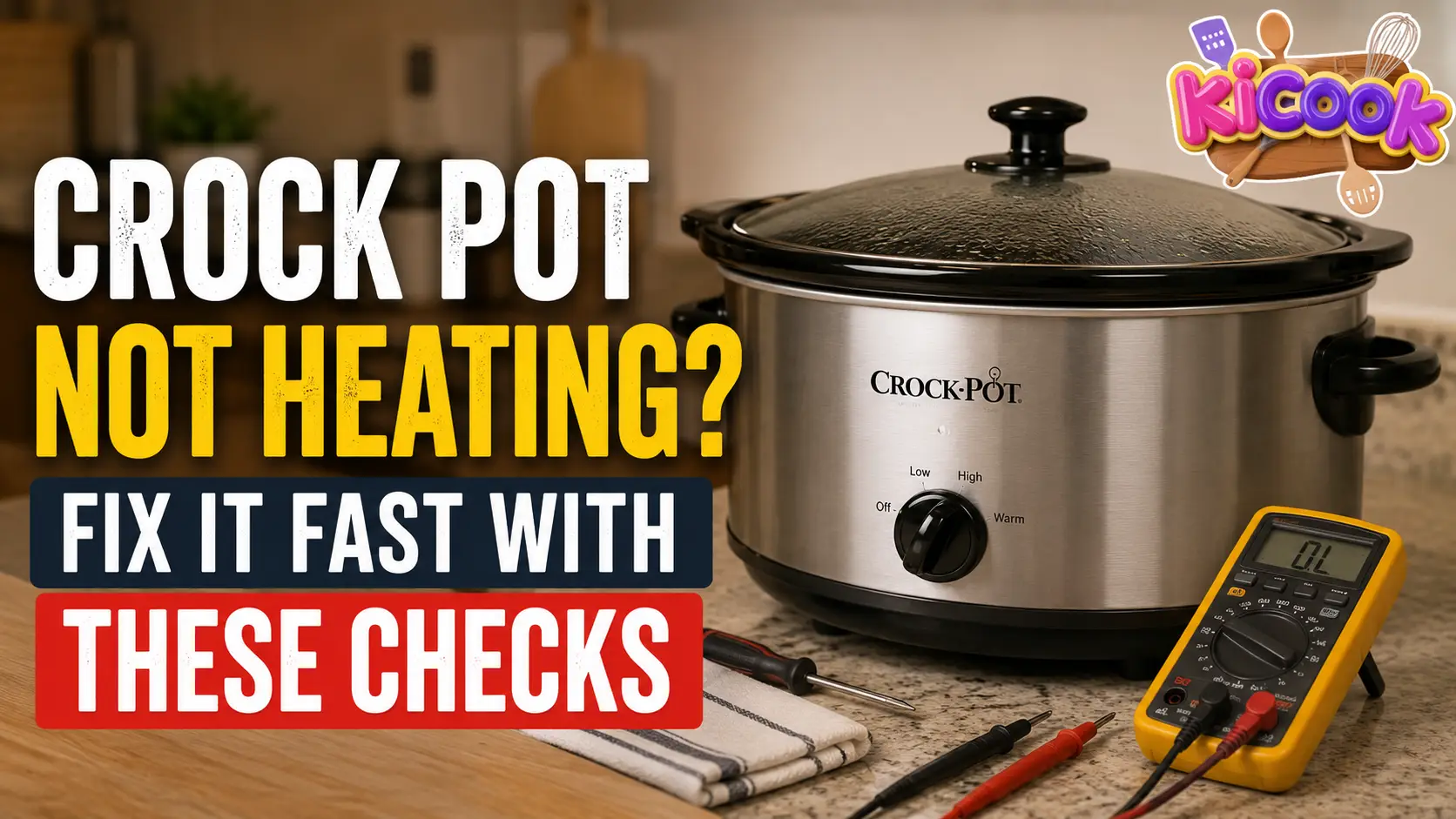
YES, a crock pot not heating can often be fixed without replacing the appliance. In many cases, the issue comes from a loose power connection, faulty heating element, or damaged temperature control. A properly working crock pot should reach food-safe temperatures of at least 165°F (74°C) within a few hours of cooking.
A crock pot not heating is one of the most frustrating kitchen problems. You add your ingredients, set the timer, and come back hours later only to find the food still cold or barely warm. Since slow cookers rely on steady low heat over long periods, even a small heating problem can ruin an entire meal.
The biggest challenge is that many people mistake normal slow cooker operation for a malfunction. Unlike ovens, crock pots heat gradually. The exterior may feel warm while the food takes several hours to reach a safe cooking temperature.
This guide explains why your crock pot is not heating, how to diagnose the problem, what repairs may be possible, and when it’s time to replace the appliance. You’ll also learn practical troubleshooting steps that work for most major brands.
Why Crock Pot Heating Issues Matter
When a crock pot not heating problem occurs, food safety becomes the biggest concern. Slow cookers are designed to gradually bring ingredients to safe cooking temperatures while maintaining moisture and flavor. If the appliance fails to heat properly, food can remain in the danger zone between 40°F and 140°F for too long.
Bacteria grow rapidly within this temperature range. According to food safety guidelines, perishable foods should not remain in this zone for more than two hours. That means a slow cooker not heating properly isn’t just inconvenient, it can create food safety risks.
Imagine preparing a large batch of chili before work. Eight hours later, you expect a hot meal. Instead, the contents are lukewarm. Not only is dinner ruined, but the food may no longer be safe to eat.
The financial cost is also worth considering. A replacement slow cooker costs between $30 and $150 depending on the brand and size. Before spending that money, most heating problems can be diagnosed in under 10 minutes using only a digital thermometer and a cup of water.
Understanding how a slow cooker should operate helps prevent unnecessary replacements. Many owners assume their appliance is broken when it is simply heating at its normal pace. Others ignore genuine warning signs until the unit stops working completely.
Knowing the difference can save money, improve kitchen efficiency, and help keep your meals safe.
How To Fix a Crock Pot Not Heating
| Possible Cause | Symptoms | Solution | Recommended? |
|---|---|---|---|
| Loose Power Connection | No heat at all | Check outlet and cord | Yes |
| Faulty Heating Element | Pot stays cold | Replace appliance or repair | Yes |
| Damaged Thermostat | Inconsistent temperatures | Professional repair | Yes |
| Cracked Stoneware Insert | Uneven heating | Replace insert | Yes |
| Overfilled Cooker | Slow cooking performance | Reduce food quantity | Yes |
| Defective Control Switch | Settings do not respond | Repair or replace unit | Yes |
Note: Performance varies by brand and model. Some newer slow cookers cycle heat on and off automatically to maintain target temperatures, which may appear like a heating problem even when functioning normally.
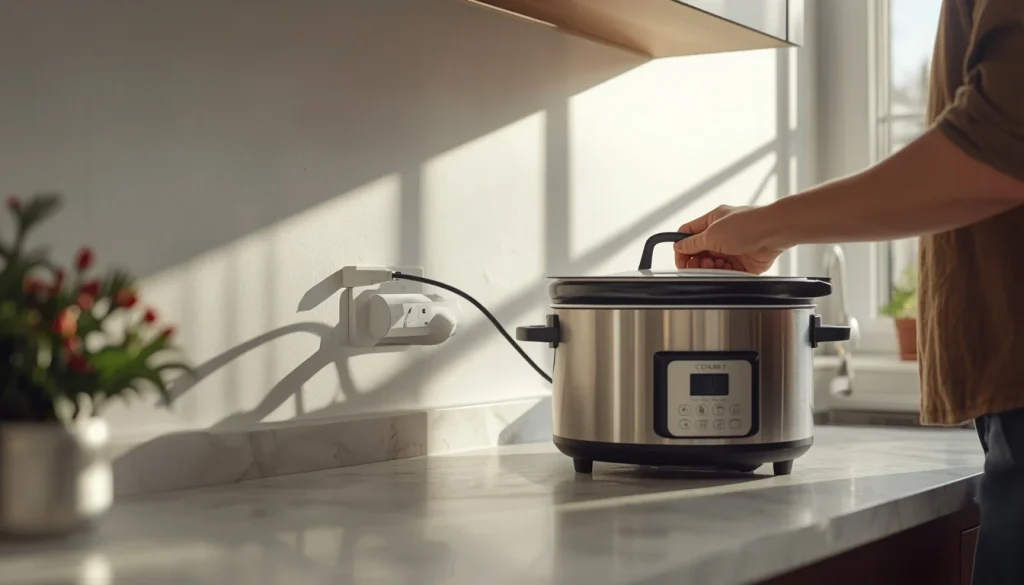
Check the Power Source
Plug another appliance, a phone charger or lamp into the same outlet. If that device also fails to work, the problem is the outlet or breaker, not the crock pot. Reset the breaker and test again before assuming the slow cooker is faulty.
Inspect the Power Cord
Run your fingers along the full length of the cord feeling for hard lumps, soft melted sections, or exposed wire. Pay extra attention to the point where the cord meets the appliance base, this junction fails most often due to repeated bending and heat exposure.
Test Multiple Heat Settings
Switch between LOW and HIGH settings. If neither produces noticeable warmth after 30–60 minutes, the internal heating system may be failing.
Examine the Stoneware Insert
Cracks or improper placement can affect heat transfer. Make sure the insert sits correctly inside the heating base.
Avoid Overfilling
Most crock pots work best when filled between half and three-quarters full. Overfilling can make the appliance seem slower than normal.
Monitor Internal Temperature
Use a food thermometer. Properly functioning slow cookers should eventually bring liquid-based foods above 165°F (74°C).
Step-by-Step Guide
- Unplug the crock pot and allow it to cool completely before inspection.
- Plug another appliance into the same outlet to verify power delivery.
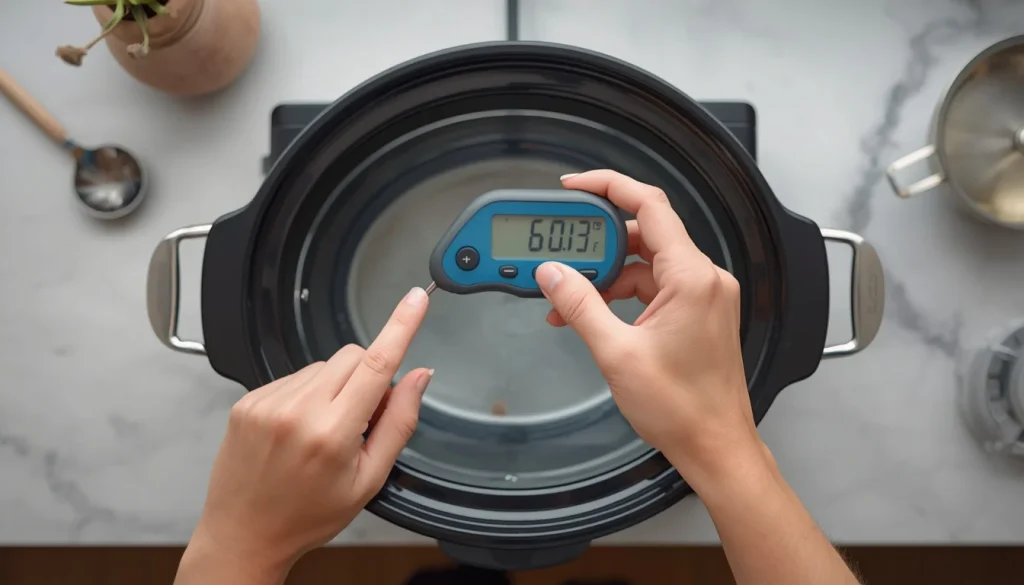
- Fill the crock pot halfway with water and place the lid on securely.
- Set the cooker to HIGH and let it run for 60 minutes. Pro tip: Record the starting water temperature using a digital thermometer. This gives you a clear before-and-after comparison after one hour.
- Check the water temperature after one hour. A noticeable increase indicates the heating element is functioning.
- Inspect the heating base for unusual smells, scorch marks, or discoloration. Pro tip: A burning smell often suggests electrical component failure rather than food residue.
- Test the LOW setting for an additional hour and compare temperature changes.
- If temperatures remain near room temperature after two hours, the heating element or thermostat likely needs repair or replacement.
Expert Tips & Common Mistakes
Pro Tips
- Fill your slow cooker between 50% and 75% full for optimal heat circulation.
- Use a digital thermometer to confirm temperatures reach at least 165°F (74°C).
- Keep the lid closed during cooking to avoid losing accumulated heat.
- Replace cracked stoneware inserts immediately, even if the crack appears minor.
- Clean heating surfaces regularly to prevent residue buildup that can affect performance.
Common Mistakes
- Assuming the crock pot is broken after only 30 minutes of heating. Slow cookers naturally warm gradually.
- Opening the lid repeatedly, which releases heat and extends cooking time.
- Overfilling the pot, causing uneven temperatures and slower cooking.
- Continuing to use a unit that never reaches safe cooking temperatures, which can lead to unsafe food and spoiled meals.
“Temperature is one of the most important ingredients in cooking.” — Harold McGee, Food Science Author and Culinary Researcher
Understanding heat transfer is critical when diagnosing appliance problems. Resources such as the food science guides available from Serious Eats explain how temperature affects cooking performance and food safety.
FAQs
Why is my crock pot not heating but the light is on?
The indicator light only confirms power is reaching part of the appliance. A failed heating element, thermostat, or internal wiring issue can prevent actual heat production even when the light operates normally.
How do I know if my slow cooker heating element is bad?
Fill the cooker with water and run it on HIGH for one hour. If the temperature barely changes, the heating element may be defective. Most heating elements require professional testing for confirmation.
Why is my slow cooker not heating chicken properly?
Overcrowding, excessive frozen ingredients, or a malfunctioning thermostat can prevent chicken from reaching safe temperatures. Chicken should eventually reach an internal temperature of 165°F (74°C).
Can a crock pot stop working suddenly?
Yes. Electrical components such as switches, thermostats, and heating elements can fail unexpectedly. Damage from power surges may also cause sudden failure.
How long should it take a crock pot to heat up?
On HIGH, most slow cookers should show a noticeable temperature increase within 30–60 minutes. Full cooking temperature is typically reached within 2–3 hours. On LOW, expect 3–4 hours to reach optimal cooking temperature. If your unit shows no heat after 60 minutes on HIGH, a heating problem likely exists.
Is it safe to leave food overnight in a slow cooker that isn’t heating?
No. Food left in a slow cooker that fails to maintain safe temperatures may remain in the bacterial danger zone for extended periods. Discard perishable food if proper heating is uncertain.
Can a cracked crock pot insert cause heating issues?
Yes. Cracks can interfere with heat transfer and may worsen over time. Replacing a damaged insert is usually safer than continuing to use it.
Conclusion
A crock pot not heating does not always mean the appliance is beyond repair. Many heating issues result from simple causes, a loose connection, damaged cord, or incorrect loading that take under 10 minutes to check.
Test with water first. If your unit cannot raise water temperature by at least 20°F after one hour on HIGH, the heating element or thermostat likely needs attention.
A reliable slow cooker should make cooking easier, not leave you guessing whether dinner is safe. Run the
water test today and know exactly where you stand.
For more expert guidance, visit Serious Eats, one of the most trusted resources for kitchen techniques, tested recipes, and food science.

“I believe great cooking starts with the right tools, trusted advice, and a little confidence in the kitchen.”
Hi, I’m Emma Carter. My love for cooking began in my grandmother’s kitchen, where I learned that every great meal starts with simple ingredients and the right cookware. Over the years, I’ve spent countless hours researching, testing, and comparing kitchen appliances, cookware, coffee makers, air fryers, and other everyday kitchen essentials.
Here at KiCook, my goal is to make your buying decisions easier with honest product reviews, practical buying guides, and easy-to-follow cooking tips. Whether you’re upgrading your kitchen or searching for the best appliance for your home, I focus on providing clear, reliable, and research-backed information you can trust.
When I’m not testing new kitchen gadgets or writing in-depth guides, you’ll usually find me trying new recipes, visiting local farmers’ markets, or enjoying a quiet cup of coffee while planning my next kitchen project.