
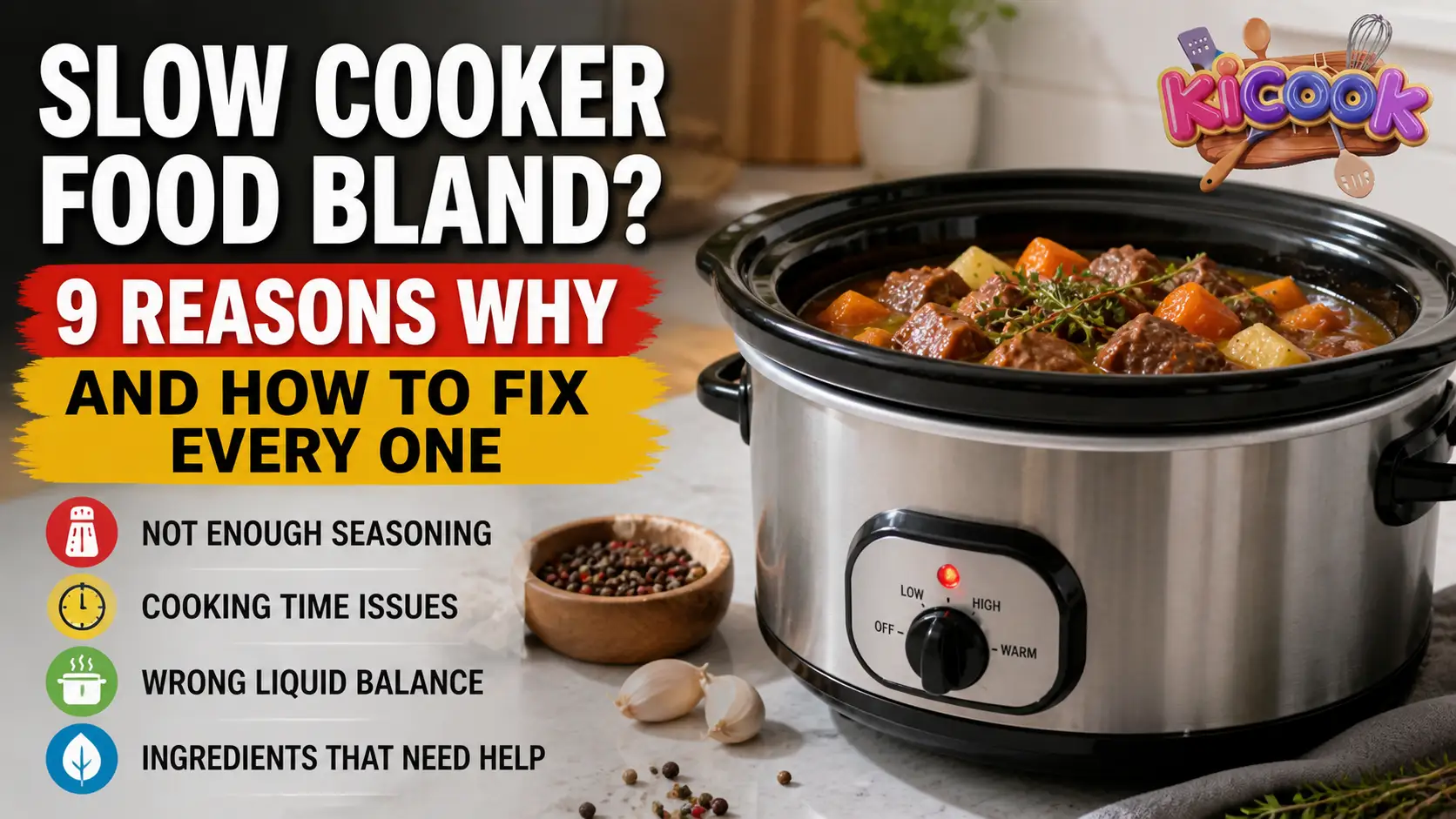
Slow cooker food comes out bland for one core reason: low, moist heat dissolves flavors instead of concentrating them. Unlike roasting or searing where high heat caramelizes sugars and browns proteins to create deep flavor a slow cooker traps steam and dilutes seasoning over hours of cooking. The fix isn’t adding more salt at the end. It’s building flavor correctly before and during the cook.
This guide covers every reason your crock pot meals taste flat and gives you practical, tested fixes for each one.
Why Slow Cooker Food Loses Flavor
The slow cooker environment works against flavor development in three specific ways. First, it never gets hot enough to trigger the Maillard reaction — the browning process responsible for the deep, savory crust on seared meat. Second, the sealed, steam-filled environment dilutes aromatic compounds that would otherwise concentrate and intensify. Third, delicate flavor molecules in herbs and spices break down completely over a 6–8 hour cook.
Understanding these three mechanisms tells you exactly where to intervene — and the fixes below address each one directly.
Fix 1: Brown Your Meat and Aromatics First
This single change has the biggest impact on flavor of anything on this list.
Searing meat before it goes into the slow cooker triggers the Maillard reaction — a chemical process that creates hundreds of new flavor compounds impossible to achieve at slow cooker temperatures (which max out at around 200°F / 93°C). That brown crust isn’t just texture. It’s concentrated flavor that infuses the entire dish during the long cook.
The same applies to aromatics. Cooking onions, garlic, and celery in a hot skillet with butter or oil for 3–4 minutes before adding them to the crock pot transforms them from raw and sharp to sweet, complex, and deeply savory.
How to do it:
- Pat meat dry with paper towels (moisture prevents browning)
- Heat a cast iron or stainless skillet over high heat with 1 tbsp of neutral oil
- Sear in batches — don’t crowd the pan
- Deglaze the pan with a splash of broth or wine and pour those browned bits directly into the slow cooker
Professional chef or culinary instructor — recommended topic: why the Maillard reaction is non-negotiable for flavor in low-and-slow cooking, and the fastest way to sear aromatics before a slow cooker meal
Fix 2: You’re Adding Herbs Too Early
Delicate dried and fresh herbs parsley, basil, dill, tarragon, thyme leaves lose virtually all their flavor over a 6–8 hour cook. The volatile aromatic oils that give these herbs their character simply evaporate in a hot, steam-filled environment.
The rule: Robust herbs go in early. Delicate herbs go in at the end.
| Add at the START | Add in the LAST 30 minutes |
|---|---|
| Rosemary (whole sprigs) | Fresh parsley |
| Bay leaves | Fresh basil |
| Dried thyme (whole) | Fresh dill |
| Dried oregano | Chives |
| Smoked paprika | Fresh cilantro |
| Cumin | Dried parsley |
A generous handful of fresh parsley stirred in right before serving costs almost nothing and completely transforms a flat, muddy-tasting braise into something bright and aromatic.
Fix 3: There’s Too Much Liquid
Most slow cooker beginners add far too much liquid following stovetop instincts where liquid evaporates freely. In a slow cooker, the lid traps everything. A dish that starts with 3 cups of broth finishes with nearly 3 cups of broth, now diluted with juices from the meat and vegetables. The result is a watery, washed-out flavor.
The fix:
- Use 25–50% less liquid than a stovetop recipe would call for
- For a 6-quart slow cooker, most braises need no more than 1–1.5 cups of liquid
- If your dish finishes too watery, remove the lid for the final 30–45 minutes on High to let some liquid evaporate
- Alternatively, transfer the liquid to a saucepan, reduce it by half on the stovetop, then pour it back over the dish
Reducing the cooking liquid concentrates flavors dramatically. This step alone can rescue an otherwise bland slow cooker meal.
Fix 4: You’re Not Using Umami Ingredients
Umami — the savory fifth taste — is what gives dishes a sense of depth and richness that makes you want another bite. Slow cooker meals are especially prone to lacking umami because the long, low cooking process doesn’t generate the same savory compounds that develop during high-heat cooking.
High-impact umami boosters for slow cooker meals (all under $10 USD):
- Tomato paste — 1–2 tablespoons adds concentrated savory depth without a tomato flavor. Brown it in the skillet before adding liquid.
- Soy sauce or tamari — 1–2 tablespoons adds salt and glutamates that deepen meatiness. Works in beef, pork, and chicken dishes.
- Worcestershire sauce — 1 tablespoon is enough. Fermented, complex, and powerful.
- Fish sauce — ½ teaspoon disappears into the dish but dramatically amplifies savoriness. Virtually undetectable as “fishy” when cooked.
- Parmesan rind — Drop one in at the start of a soup or stew. Remove before serving. Adds a nutty, salty, deeply savory backbone.
- Miso paste — 1 tablespoon stirred in during the last 30 minutes. Don’t cook it long — heat destroys the complexity.
- Dried mushrooms — Rehydrate and add the soaking liquid to the slow cooker. Intensely savory.
Start with one or two of these per recipe. You’ll notice the difference immediately.
Fix 5: Your Spices Are Old or Underpowered
Spices lose potency fast — most ground spices are effectively flavorless after 12–18 months. In a slow cooker, where spice flavor already diminishes over long cook times, using stale spices produces meals that taste like nothing at all.
Quick freshness test: Open the jar and smell it close. If the aroma isn’t strong and immediate, the spice is too old.
The fix:
- Replace ground spices every 12 months (most spice jars cost $2–$5 USD at any grocery store)
- Use 50% more spice than a standard stovetop recipe calls for — slow cooking mutes intensity
- Toast whole spices (cumin seeds, coriander, cardamom) in a dry skillet for 60 seconds before grinding — this dramatically amplifies flavor
- Bloom ground spices in hot oil or butter for 30–60 seconds before adding them to the slow cooker
Buying whole spices and grinding them fresh is the single highest-impact upgrade for slow cooker flavor — a $15–$25 USD hand grinder or electric spice grinder pays for itself quickly.
Fix 6: You’re Missing Acid
Acid is the most underused flavor tool in slow cooking. A small amount of acid — vinegar, citrus juice, or wine — doesn’t make food taste sour. It brightens every other flavor in the dish, cuts through richness, and makes the entire meal taste more alive and less flat.
Easy acid additions:
- 1 tablespoon of apple cider vinegar stirred in at the end of a pork or chicken dish
- A squeeze of fresh lemon or lime juice over finished soups and stews
- ½ cup of dry red or white wine added at the start (the alcohol cooks off; the acid and flavor remain)
- A splash of balsamic vinegar in beef dishes during the last 30 minutes
Think of acid as the “volume knob” for every other flavor in the pot. Even ½ teaspoon of apple cider vinegar at the end of a 8-hour braise can make a profound difference.
Fix 7: Seasoning at the Wrong Time
Salt added at the beginning of a long slow cook distributes well — but a significant portion is absorbed into vegetables and meat, leaving the sauce or broth underseasoned. Many cooks don’t realize the dish needs more seasoning at the end because they fear over-salting.
The right approach:
- Season lightly at the start to penetrate the ingredients
- Taste and re-season aggressively in the final 15–20 minutes
- Season in layers — salt, then acid, then fresh herbs, then a small knob of butter stirred in at the end for richness
A final seasoning pass is not optional in slow cooking — it’s essential.
Fix 8: Wrong Cut of Meat
Lean cuts — chicken breast, pork loin, lean ground beef — go dry and flavorless in a slow cooker. They have no fat or collagen to break down over hours of cooking, so they simply lose moisture and flavor as they cook.
Use these cuts for maximum slow cooker flavor:
| Instead of… | Use… |
|---|---|
| Chicken breast | Bone-in chicken thighs |
| Pork loin | Pork shoulder (butt) |
| Lean ground beef | 80/20 ground beef or short ribs |
| Sirloin steak | Chuck roast |
| Turkey breast | Turkey thighs or drumsticks |
Collagen in tougher cuts converts to gelatin over long, slow cooking — creating the silky, rich mouthfeel and deep flavor that makes a great braise. This is exactly what slow cookers do best.
Fix 9: Lid Is Lifting Too Often
Every time you lift the slow cooker lid, the internal temperature drops by approximately 10–15°F and takes 20–30 minutes to recover. More importantly, lifting the lid releases aromatic steam — the very flavor compounds that should be staying in the pot and concentrating in the cooking liquid.
The rule: Don’t lift the lid unless the recipe explicitly requires it. Resist the urge to stir or check. A slow cooker works precisely because it’s sealed.
If you need to add ingredients partway through, do it quickly and replace the lid immediately.
Slow Cooker vs. Stovetop for Flavor Development
| Slow Cooker | Stovetop Braise | |
|---|---|---|
| Flavor depth | Good with prep; limited without | Excellent — Maillard reaction active |
| Convenience | High — set and forget | Requires monitoring |
| Texture (tough cuts) | Excellent — collagen breaks down perfectly | Excellent |
| Herb/spice retention | Poor for delicate herbs | Better — can add at any point |
| Liquid control | Poor — no evaporation | Excellent — reduces freely |
| Energy cost | Low (~0.7–1.5 kWh per cook) | Moderate |
| Best for | Busy households, meal prep | When maximum flavor is the priority |
Frequently Asked Questions on Slow Cooker Food Bland
Why does slow cooker food taste bland?
Slow cooker food tastes bland because the low, moist cooking environment dilutes aromatics, prevents browning reactions that create flavor, and breaks down delicate herb compounds over long cook times. The fix is building flavor before the cook through searing, using umami-rich ingredients, and seasoning strategically at the end.
How do I add more flavor to slow cooker meals?
The most effective steps are: sear meat and aromatics before adding them, reduce your liquid quantity by 25–50%, add umami boosters like soy sauce or Worcestershire, use fresh herbs only in the final 30 minutes, and finish with a splash of acid like lemon juice or vinegar.
Why does my crock pot food taste watery?
Watery slow cooker food is almost always caused by too much liquid. Unlike stovetop cooking, slow cookers don’t allow evaporation. Use significantly less liquid than a standard recipe calls for, and remove the lid for the final 30–45 minutes on High to reduce excess liquid if needed.
Do spices lose their flavor in a slow cooker?
Yes. Volatile aromatic compounds in spices evaporate over long cook times, especially delicate ground spices. Use 50% more spice than a standard recipe calls for, add robust spices at the start, and reserve fresh or delicate herbs for the final 30 minutes.
What is the best meat for a slow cooker?
Tough, collagen-rich cuts perform best chuck roast, pork shoulder, bone-in chicken thighs, lamb shanks, and beef short ribs. The long, slow heat converts collagen to gelatin, creating rich, deeply flavored results. Lean cuts like chicken breast or pork loin dry out and lose flavor.
How do I fix bland slow cooker soup?
Taste the soup and add in this order: salt (if needed), a splash of acid (lemon juice or apple cider vinegar), a teaspoon of soy sauce or Worcestershire for umami depth, and fresh herbs. If the broth is too thin and watery, ladle some out and reduce it in a saucepan before adding it back.

“I believe great cooking starts with the right tools, trusted advice, and a little confidence in the kitchen.”
Hi, I’m Emma Carter. My love for cooking began in my grandmother’s kitchen, where I learned that every great meal starts with simple ingredients and the right cookware. Over the years, I’ve spent countless hours researching, testing, and comparing kitchen appliances, cookware, coffee makers, air fryers, and other everyday kitchen essentials.
Here at KiCook, my goal is to make your buying decisions easier with honest product reviews, practical buying guides, and easy-to-follow cooking tips. Whether you’re upgrading your kitchen or searching for the best appliance for your home, I focus on providing clear, reliable, and research-backed information you can trust.
When I’m not testing new kitchen gadgets or writing in-depth guides, you’ll usually find me trying new recipes, visiting local farmers’ markets, or enjoying a quiet cup of coffee while planning my next kitchen project.