
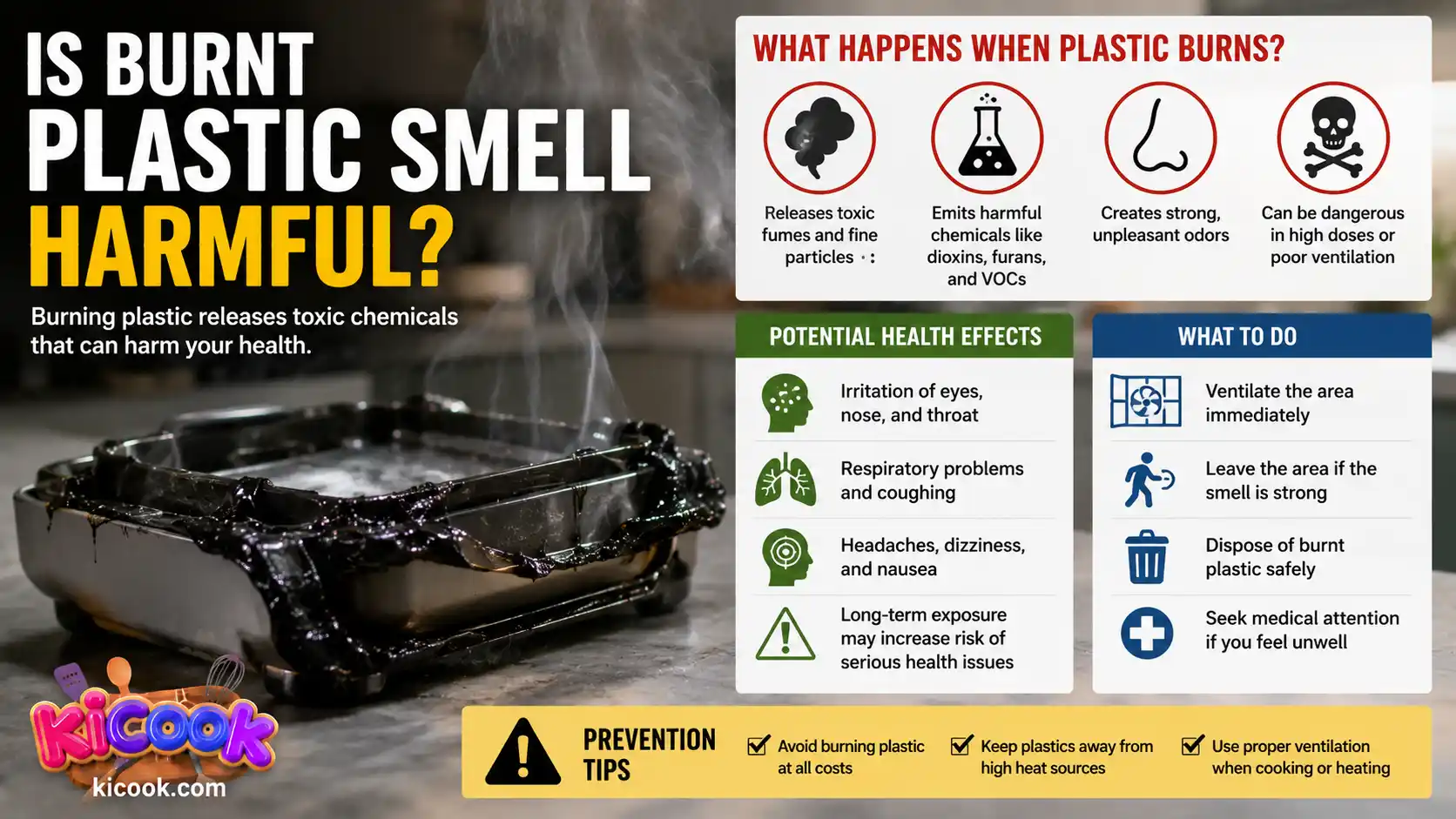
Yes, burnt plastic smell can be harmful, especially if the odor comes from melting plastic, electrical wiring, or smoke. I always treat it seriously because heated plastic fumes may irritate the eyes, throat, lungs, and can be risky for children, pets, older adults, and people with asthma.
Is Burnt Plastic Smell Harmful?
A burnt plastic smell is one of those odors that instantly makes me stop and check my home. It feels sharp, chemical, and worrying. Many people notice it from a slow cooker, air fryer, oven, toaster, heater, refrigerator part, extension cord, or even a plastic container placed too close to heat.
The smell may be mild and temporary, or it may point to a real safety problem. The key is to find the source fast, remove the heat, and improve airflow.
This guide explains what the smell means, possible health effects, what to do right away, and how to prevent it in homes across the USA, UK, London, Canada, and Australia.
Quick Safety Answer
If you smell burnt plastic, I suggest doing three things first:
Unplug or turn off the suspected appliance
Open windows and doors
Move people and pets away from the smell
If you see smoke, sparks, flames, melted wires, or feel dizzy, leave the area and call emergency services.
Why Burnt Plastic Smell Can Be Harmful
Plastic is made from different chemical compounds. When plastic gets too hot, melts, or burns, it can release irritating fumes and particles into the air.
These fumes may affect:
- Eyes
- Nose
- Throat
- Lungs
- Skin
- Breathing comfort
The risk depends on the type of plastic, the amount burned, room size, ventilation, and how long someone breathes it in.
A small plastic film left on a new appliance may create a short bad smell. But burning electrical insulation, melted plastic near a heating element, or smoke from a plastic fire is much more serious.
Common Symptoms After Breathing Burnt Plastic Smell
Some people feel fine after brief exposure. Others may notice symptoms quickly.
Common symptoms include:
- Headache
- Coughing
- Throat irritation
- Watery eyes
- Runny nose
- Chest tightness
- Nausea
- Dizziness
- Burning feeling in the nose
- Wheezing
People with asthma, COPD, allergies, heart issues, or chemical sensitivity may react faster.
Children, babies, pregnant people, older adults, and pets may also be more sensitive.
When Burnt Plastic Smell Is an Emergency
I treat the situation as urgent if I notice:
- Smoke in the room
- Sparks from an outlet
- A melted power cord
- Burning wire smell
- Flames
- Black soot
- Strong chemical odor
- Breathing trouble
- Chest pain
- Confusion
- Dizziness that does not pass
In the USA and Canada, call 911 if there is fire, smoke, or a medical emergency.
In the UK and London, call 999 for fire or urgent medical help.
In Australia, call 000 for fire or urgent medical help.
For poison-related concerns in the USA, Poison Control gives guidance by phone and online. You can visit poison.org for help.
What I Do Immediately After Smelling Burnt Plastic
1. I Turn Off the Heat Source
First, I turn off the appliance, stove, heater, or circuit if safe.
If the smell comes from an electrical outlet or cord, I avoid touching damaged parts. I switch off the power from the breaker if possible.
2. I Unplug the Appliance
If the plug and cord look normal, I unplug the item.
If the cord looks melted, hot, or damaged, I do not pull it with bare hands.
3. I Open Windows
Fresh air matters. I open windows and doors to clear fumes.
If I have an exhaust fan, I turn it on.
4. I Move People and Pets Away
I move children, pets, and sensitive people to another room or outside.
Pets can be affected by fumes faster than adults, especially birds.
5. I Look for the Source
I check appliances, outlets, cords, plastic containers, pans, packaging, and hidden areas near heat.
I do this only after the area is safe.
Common Causes of Burnt Plastic Smell at Home
New Appliance Burn-Off
New slow cookers, air fryers, ovens, heaters, and toasters may release a plastic-like smell during early use.
This can happen because of:
Factory coatings
Protective oils
Dust
Labels
Packaging residue
This smell usually fades after one to three uses. Still, I always read the manual and run the appliance in a ventilated space.
Plastic Left on an Appliance
Sometimes plastic film or packaging stays on the appliance by mistake.
Check:
Under the appliance
Around handles
Near vents
Near the heating plate
Around the lid
Near the power cord
Even a tiny piece of plastic can smell very strong when heated.
Food Packaging Near Heat
Plastic wrap, bread bags, food containers, and zip bags can melt if placed near:
Stovetops
Hot pans
Slow cooker bases
Microwaves
This can create fumes and leave melted residue.
Electrical Wiring Problems
A burnt plastic smell can come from overheated wire insulation.
This is more serious.
Warning signs include:
Flickering lights
Hot outlet
Buzzing sound
Brown marks near socket
Melted plug
Burning smell from wall
If I notice these signs, I stop using that outlet and call an electrician.
Overheated Appliance Motor
Some appliances have motors or fans that can overheat.
Examples include:
Refrigerators
Microwaves
Dishwashers
Washing machines
Dryers
Vacuum cleaners
Blenders
Plastic Touching a Hot Bulb
Lamps, oven lights, and small appliance bulbs can get hot.
If plastic touches the bulb, it may melt and smell harsh.
Dust Burning on Heating Parts
Dust on a heater, oven, toaster, or slow cooker base can burn and smell like plastic.
This is common after storage.
A light smell may fade. A strong smell should be checked.
Is Burnt Plastic Smell Toxic?
It can be.
The word “toxic” depends on exposure level and material type. A brief smell from a small melted wrapper is different from smoke from a plastic fire.
Still, I never ignore it because burning plastic may release irritating gases and tiny particles. These can bother the lungs and may worsen asthma or breathing problems.
If symptoms appear after exposure, fresh air is the first step. Medical advice is smart if symptoms are strong, unusual, or lasting.
Can Burnt Plastic Smell Make Food Unsafe?
Yes, sometimes.
If plastic melted inside or near food, I throw the food away.
I do not try to scrape off melted plastic and eat the rest. Plastic fumes and residue can spread.
Food may be unsafe if:
Plastic touched it
Smoke reached it heavily
Food tastes chemical
Food smells like plastic
The container melted
The appliance interior has residue
I know wasting food is frustrating, but health and safety matter more.
Is It Safe to Stay in a Room That Smells Like Burnt Plastic?
I would not stay in that room until the smell is gone and the source is fixed.
A faint odor from a new appliance may clear with ventilation.
A strong smell from melted plastic, wiring, or smoke should be treated as unsafe until checked.
Open windows, leave the room, and return only when air quality feels normal.
Customer Pain Points and Practical Solutions
Pain Point 1: “I Smell Burnt Plastic but Cannot Find the Source”
This is stressful because the odor spreads fast.
What I do:
- Check outlets
- Check appliances
- Check cords
- Check under counters
- Check trash bins
- Check around stove
- Check inside oven
- Check behind refrigerator
If the smell keeps getting stronger, I leave the home and call help.
Pain Point 2: “My Slow Cooker Smells Like Plastic”
This is common with new slow cookers.
Solution:
- Wash the insert and lid
- Check for plastic film
- Run water only for 1–2 hours
- Use it near ventilation
- Stop using it if the smell grows stronger
A new slow cooker smell should fade. If it does not, contact the seller or brand.
Pain Point 3: “The Smell Is Making Me Feel Sick”
Do not push through it.
Solution:
- Move to fresh air
- Drink water
- Avoid more exposure
- Call poison help or medical support if symptoms continue
Get urgent help for breathing trouble, chest pain, fainting, or confusion
Pain Point 4: “My Child or Pet Was Near the Smell”
Children and pets can be more sensitive.
Solution:
- Move them to fresh air
- Watch for coughing, tiredness, wheezing, vomiting, or unusual behavior
- Call a doctor, vet, poison center, or emergency service if symptoms appear
For birds, smoke and fumes can be very dangerous. I would move birds away immediately and call a vet if there is any concern.
Pain Point 5: “I Am Afraid My House Has an Electrical Problem”
That fear is valid.
Solution:
- Do not use the outlet
- Do not plug the appliance back in
- Check for heat, marks, or melting
- Call a licensed electrician
Electrical burning smells should never be ignored.
How Long Does Burnt Plastic Smell Last?
A small odor may clear in 30 minutes to a few hours with good airflow.
A strong smell may last longer if smoke or melted residue remains.
The odor can stay in:
- Curtains
- Carpet
- Sofas
- Clothing
- Kitchen cabinets
- Appliance vents
If the smell lingers, clean hard surfaces, wash fabrics, and remove any melted plastic residue safely.
How to Remove Burnt Plastic Smell From the House
Ventilate the Area
Open windows and doors.
Use fans to move air outside.
Do not blow the smell deeper into the home.
Remove the Source
Once safe, remove melted plastic or the damaged item.
Let hot surfaces cool first.
Clean Hard Surfaces
Use warm water and mild dish soap.
Wipe counters, appliance exteriors, floors, and nearby walls.
Wash Fabrics
Wash curtains, towels, clothing, and cushion covers if they absorbed the smell.
Use Baking Soda
Place bowls of baking soda around the area.
It may help absorb odors.
Use White Vinegar
A bowl of white vinegar can help reduce lingering smell.
Do not mix vinegar with bleach.
Replace Filters
If your HVAC, air purifier, range hood, or appliance filter absorbed smoke, replace or clean it.
What Not to Do
Do not ignore a strong smell
Do not keep cooking near melted plastic
Do not eat food touched by plastic smoke or residue
Do not spray perfume to hide the smell
Do not use a damaged cord
Do not touch melted plastic while hot
Do not pour water on electrical parts
Do not use bleach mixed with other cleaners
Masking the odor does not fix the problem.
Burnt Plastic Smell From Kitchen Appliances
Slow Cooker
Check for factory residue, packaging, spills, or damaged cord.
Air Fryer
Check basket coating, heating element, plastic film, and vents.
Oven
Check forgotten plastic trays, food packaging, or liners.
Microwave
Check containers, lids, and splatter covers.
Refrigerator
Check compressor area, fan motor, wiring, or overheated parts.
Dishwasher
Check plastic items fallen onto the heating element.
Dryer
Check lint buildup, wiring, belt, or plastic items in pockets.
Is Burnt Plastic Smell Worse for Asthma?
Yes, it can be.
Fumes and smoke may trigger:
Coughing
Wheezing
Chest tightness
Shortness of breath
If someone has asthma, I move them away from the smell fast and help them follow their asthma action plan.
Seek medical help if breathing does not improve.
Is Burnt Plastic Smell Harmful During Pregnancy?
Pregnant people should avoid breathing fumes from burning plastic.
A brief exposure may not cause harm, but it is still best to get fresh air and reduce contact quickly.
If symptoms occur, calling a healthcare provider is a safe step.
Is Burnt Plastic Smell Harmful to Pets?
Yes, it can be.
Pets have smaller bodies and may react faster.
Watch for:
Coughing
Drooling
Weakness
Vomiting
Fast breathing
Hiding
Birds are especially sensitive to fumes.
If a pet shows symptoms, contact a veterinarian.
How to Prevent Burnt Plastic Smells
Inspect New Appliances
Remove all labels, films, foam, and plastic ties.
Read the Manual
Follow first-use instructions.
Some appliances suggest running empty or with water before cooking.
Keep Plastic Away From Heat
Store plastic wrap, bags, and containers away from stoves and hot appliances.
Use Proper Cookware
Use heat-safe containers only.
Avoid random plastic bowls near ovens, air fryers, or stovetops.
Check Cords Often
Look for cracks, heat marks, and loose plugs.
Avoid Overloaded Outlets
Plug high-heat appliances directly into a safe wall outlet when the manual allows.
Clean Regularly
Food spills and dust can burn and smell bad.
3 Helpful Expert Quotes
“A burnt plastic smell should be treated as a warning sign until the source is found.”
— Laura Bennett, Home Safety Educator
“If the odor comes with smoke, sparks, or a hot outlet, stop using the appliance and get professional help.”
— Mark Reynolds, Licensed Electrical Technician
“Fresh air is the first step after fume exposure, but ongoing symptoms should be checked by a medical professional.”
— Dr. Hannah Cole, Family Health Advisor
Frequently Asked Questions
Is burnt plastic smell harmful?
Yes, it can be harmful. Brief mild exposure may only cause irritation, but strong fumes or smoke can affect breathing and should be taken seriously.
What should I do first if I smell burnt plastic?
Turn off the source, unplug the appliance if safe, open windows, and move people and pets away.
Can burnt plastic fumes make me sick?
Yes. They may cause headache, coughing, sore throat, nausea, dizziness, or eye irritation.
Should I call emergency services?
Call emergency services if there is smoke, fire, sparks, chest pain, breathing trouble, or severe dizziness.
Can I eat food exposed to burnt plastic smell?
If plastic melted near or into the food, throw the food away.
Why does my new appliance smell like burning plastic?
New appliances may have factory coatings, oils, dust, or leftover packaging that heat up during first use.
Is the smell from a melted cord dangerous?
Yes. A melted cord can mean overheating or electrical failure. Stop using it.
Can burnt plastic smell harm pets?
Yes. Pets, especially birds, can be sensitive to fumes. Move them away fast.
How do I remove the smell from my home?
Ventilate, remove the source, clean surfaces, wash fabrics, and replace affected filters.
How long does the smell last?
A mild smell may fade within hours. A strong smoke smell may last longer and may require cleaning.
Conclusion
Burnt plastic smell can be harmful, so I never treat it like a normal household odor. It may come from a harmless new appliance burn-off, but it can also point to melted plastic, overheated wiring, smoke, or an unsafe appliance.
The best response is simple: turn off the source, ventilate the area, move people and pets away, and inspect the cause only when it is safe. If the smell is strong, persistent, or linked to smoke or electrical damage, get professional help before using the appliance again.

“I believe great cooking starts with the right tools, trusted advice, and a little confidence in the kitchen.”
Hi, I’m Emma Carter. My love for cooking began in my grandmother’s kitchen, where I learned that every great meal starts with simple ingredients and the right cookware. Over the years, I’ve spent countless hours researching, testing, and comparing kitchen appliances, cookware, coffee makers, air fryers, and other everyday kitchen essentials.
Here at KiCook, my goal is to make your buying decisions easier with honest product reviews, practical buying guides, and easy-to-follow cooking tips. Whether you’re upgrading your kitchen or searching for the best appliance for your home, I focus on providing clear, reliable, and research-backed information you can trust.
When I’m not testing new kitchen gadgets or writing in-depth guides, you’ll usually find me trying new recipes, visiting local farmers’ markets, or enjoying a quiet cup of coffee while planning my next kitchen project.