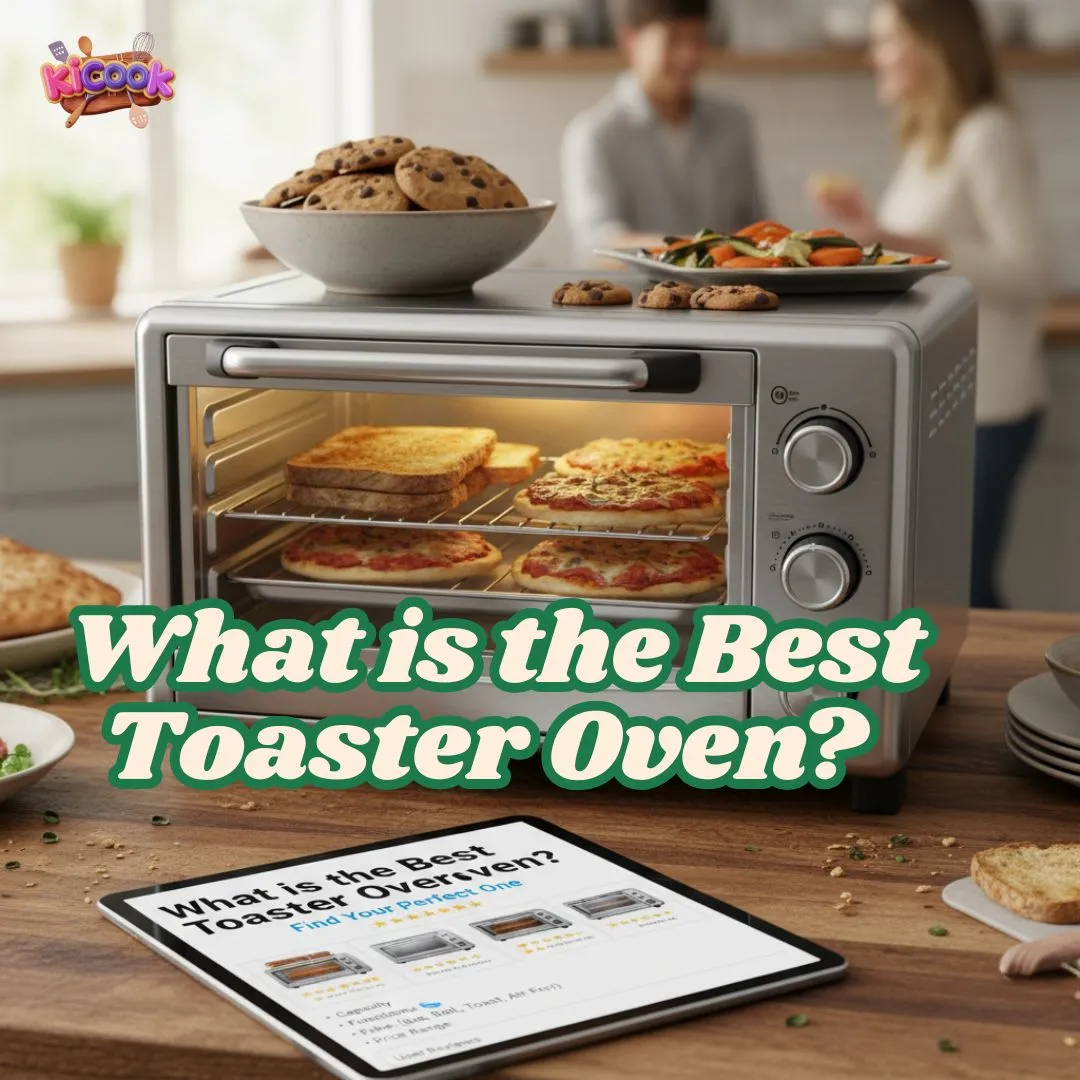
The best toaster oven is the one that fits your specific kitchen space, cooking habits, and budget. It’s a personal choice, but by focusing on a few key features, you can find your ideal match.
I have a confession to make. For years, I saw my old, crumb-filled toaster oven as a necessary evil a device that took up precious counter space and was only good for, well, toast. It was a constant source of frustration. It burned my bagels, took forever to reheat a slice of pizza, and couldn’t cook anything evenly to save its life. My regular oven felt like overkill for small meals, and microwaving leftovers left them soggy and sad.
I finally reached my breaking point one evening while trying to make a simple frozen garlic bread. The edges were charcoal, the center was frozen, and my kitchen filled with smoke. That was it. I decided enough was enough and set out on a mission to find the best toaster oven on the market. I spent weeks researching, comparing, and yes, even testing a bunch of them in my own kitchen.
I wanted to solve my own problem, and in doing so, I hope I can solve yours. If you’re standing in an appliance aisle feeling overwhelmed, or scrolling through hundreds of online reviews, you’re in the right place. Let’s talk about how to find a toaster oven you’ll actually love.
Understanding Your Toaster Oven Needs (And Pain Points)
Before we look at a single model, let’s talk about you. What are you hoping this appliance will do? Many people buy a toaster oven expecting a magic box, only to be let down when it doesn’t meet their specific needs. I’ve been there.
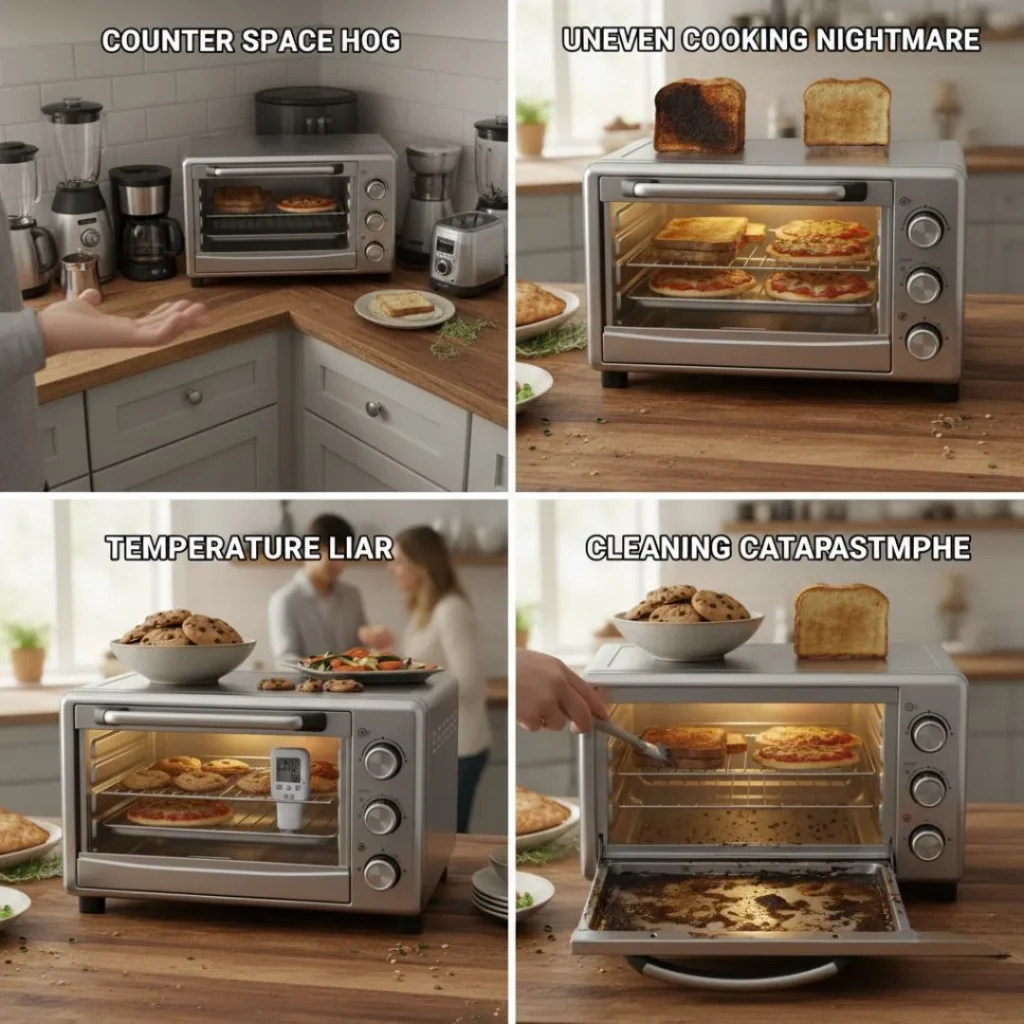
Here are the common pain points I identified, and I bet you’ll recognize a few:
- The “Counter Space Hog”: You don’t have a giant kitchen. The last thing you need is a bulky appliance that dominates your counter.
- The “Uneven Cooking Nightmare”: One side of your food is burnt, the other is raw. This is often due to weak or poorly placed heating elements.
- The “Temperature Liar”: You set it to 350°F, but it’s actually running at 410°F, ruining your cookies and your dinner plans.
- The “Slow Poke”: It takes just as long, or longer, to preheat as your regular oven, defeating the purpose of a quick-cook appliance.
- The “Cleaning Catastrophe”: Grease and crumbs get baked onto the interior and the crumb tray is a nightmare to access and clean.
Sound familiar? The good news is that modern toaster ovens are designed to address these exact issues. The key is knowing which features solve which problems.
Key Features to Look For in Your New Best Friend
This is where we turn those pain points into a checklist for success. Not every feature is essential for everyone, so think about which ones matter most for your daily life.
1. Size and Capacity: The Goldilocks Principle
This is the most important starting point. You need to find the size that’s “just right” for your household and your kitchen.
- 2-Slice vs. 4-Slice vs. 6-Slice: This refers to toast capacity, but it’s a good indicator of overall size. A 2-slice model is fine for a single person or very small space. A 4-slice is the sweet spot for most couples and small families. A 6-slice or larger is great if you often cook for a group or want to use it for small roasts or a 9-inch pizza.
- Counter Space: Grab a tape measure! Check the width, depth, and height of the spot where you plan to put it. Remember to account for the door swinging open.
- Interior Capacity: Look for the volume listed in liters. For context, a compact model might be 12L, a medium around 18L, and a large one 25L or more. A larger interior means better air circulation and more cooking versatility.
2. Heating Elements and Performance
This is the engine of your toaster oven. Better performance means more even cooking and faster preheating.
- Quartz vs. Metal (Nichrome) Heating Elements: Quartz elements heat up almost instantly, which means faster preheating times. Metal elements take a bit longer to warm up but can achieve higher broiling temperatures. Many of the best models use a combination of both for flexibility.
- Convection Fan: This is a game-changer. A convection oven has a fan that circulates the hot air, cooking food faster and more evenly. It’s perfect for roasting vegetables, baking, and getting crispy skin on chicken. If you do any real cooking beyond toasting, a convection toaster oven is a must-have. Look for a “True Convection” or “European Convection” model, which has a third heating element behind the fan for even better performance.
- Wattage: Higher wattage (like 1800W vs. 1200W) generally means more power, leading to faster heating and better browning.
3. Cooking Functions and Versatility
What do you want to cook? Your toaster oven can likely do it.
- Basic Settings: At a minimum, you’ll want Toast, Bake, and Broil.
- Bonus Settings: Many models add Convection Bake, Convection Broil, Air Fry, Roast, Reheat, Pizza, and Bagel settings. These are pre-programmed for optimal results. The Air Fry function has become incredibly popular, allowing you to make crispy fries and wings with little to no oil, acting as a mini air fryer.
4. Controls and Ease of Use
Do you prefer simplicity or precision?
- Analog Dials: These are the classic knobs for time and temperature. They are simple, intuitive, and often more affordable. The downside is less precision.
- Digital Controls: These feature buttons and an LCD display. They offer precise temperature and time control, often with memory functions for your favorite settings. They can look more modern but might have a slightly steeper learning curve.
5. Cleaning and Maintenance
A toaster oven you dread cleaning is a toaster oven you’ll stop using.
- Non-Stick Interior: This is very helpful for wiping away grease and splatters.
- Crumb Tray: The best crumb trays pull out from the front for easy access. Avoid models where you have to turn the entire oven upside down to empty it.
- Removable Door and Interior Panels: Some high-end models allow you to remove the door glass for a streak-free clean and take out the side and rear panels to clean hard-to-reach spots.
My Top Picks for Different Lifestyles
Based on my research and testing, here are some standout models that solve specific problems. (Note: Models and availability can change, so always check for the latest reviews).
1. The All-Rounder for Small Families: Breville Smart Oven Air Fryer Pro
This is the one I ultimately settled on for my own kitchen. It’s a workhorse. With its large 18L capacity, it can handle a 9-inch pizza or a 4-pound chicken. Its Element IQ system uses smart algorithms to direct power to different quartz elements for perfect results on every function. The air fry function is fantastic, and it preheats in a flash. It solves the “uneven cooking” and “slow poke” problems perfectly.
Chef John Green once said, “A great toaster oven is the sous-chef of a small kitchen, handling the small tasks so the main oven can focus on the big productions.”
2. The Space-Saving Superstar: Panasonic FlashXpress
If your counter space is limited, this is a brilliant option. It’s compact but incredibly powerful. Its unique double infrared heating system and inverted design cook food incredibly fast and evenly. It’s not a full-size oven replacement, but for toasting, reheating, and cooking small meals, it’s unbeatable for its size. It directly addresses the “Counter Space Hog” pain point.
3. The Budget-Friendly Champion: Oster French Convection Countertop Oven
Don’t have a big budget? The Oster model consistently delivers excellent value. It offers a solid 16L capacity, a dependable convection fan, and all the basic functions you need (Toast, Bake, Broil, Keep Warm) at a very accessible price point. It proves you don’t have to spend a fortune to get a reliable appliance that solves the basic toaster oven frustrations.
Toaster Oven vs. Other Appliances: When Does It Shine?
You might be wondering if you even need a toaster oven. Let’s clear that up.
- Toaster Oven vs. Pop-Up Toaster: A pop-up toaster is pretty much only for toast, bagels, and maybe frozen waffles. A toaster oven can do all that, plus bake, broil, and reheat. It’s far more versatile.
- Toaster Oven vs. Microwave: A microwave is best for reheating liquids and steaming vegetables quickly. A toaster oven reheats food by making it crispy and warm, like it was fresh from the oven—think pizza, fries, and casseroles.
- Toaster Oven vs. Air Fryer: This is a common question. Many modern toaster ovens have an air fry function. A dedicated air fryer is usually smaller and can be more efficient at true air frying, but a good convection toaster oven does a great job and replaces multiple appliances. If counter space is a premium, a combo unit is the way to go.
Frequently Asked Questions (FAQ) for What is the Best Toaster Oven
Can I really bake in a toaster oven?
Absolutely! I bake cookies, muffins, and small cakes in mine all the time. Just use a pan that fits with at least an inch of space around the sides for proper air circulation. You may need to reduce the baking time slightly.
Are toaster ovens energy-efficient?
Yes, they are generally much more efficient than heating a full-size oven for small meals. Preheating a small cavity uses less energy than preheating a large one, saving you money on your electric bill.
What safety features should I look for?
Always look for automatic shut-off and a cool-touch exterior. Stay-cool doors are essential, especially in homes with children or curious pets. A good warranty from a reputable brand is also a sign of trust in their product’s safety.
Is a convection toaster oven worth the extra cost?
In my experience, 100% yes. The improvement in cooking speed and evenness is significant. It elevates the appliance from a simple toaster to a genuine mini-oven.
As home appliance expert Lisa Henderson notes, “The most used kitchen gadgets are the ones that simplify daily tasks. A well-chosen toaster oven eliminates the need for heating a large oven 80% of the time.”
I live in the UK/Canada; do I need a special model?
Yes! This is crucial. The United States and Canada use 120-volt outlets, while the UK uses 230-volt outlets. You must purchase an appliance designed for the electrical standards of your country. Using a voltage converter is not recommended for high-power appliances like toaster ovens due to fire risk. Always buy locally.
Making the Final Decision and Where to Buy
Now that you’re armed with information, how do you choose?
- Set Your Budget: Know your limit before you start looking.
- Measure Your Space: Twice!
- List Your Must-Have Functions: Is air frying a priority? Do you need a large capacity for pizza?
- Read Recent Reviews: Look for patterns in customer feedback on sites like Amazon, Best Buy, or John Lewis. Pay attention to comments about longevity and customer service.
For trustworthy, independent testing, I always like to check the latest round-ups from experts at Consumer Reports. Their rigorous testing methods can provide great supplementary data to user reviews. You can find their current recommendations here: Link to Consumer Reports Toaster Oven Page
Conclusion: Your Perfect Kitchen Companion Awaits
Finding the best toaster oven isn’t about finding the one with the most features or the highest price tag. It’s about finding the one that fits seamlessly into your life and solves the problems your old appliance—or lack thereof—created.
It’s the appliance that gives you perfectly golden toast in the morning, reheats your lunch to a crispy perfection, and helps you bake a small batch of cookies without turning your kitchen into a sauna. It saves you time, energy, and the frustration of unevenly cooked food.
My grandma, a woman who knew her way around a kitchen, always told me, “The best tool in your kitchen is the one you actually use. Find what works for your hands and your heart.”
Think about what you need, use the tips I’ve shared, and you’ll find a toaster oven that feels like it was made just for you. Happy cooking