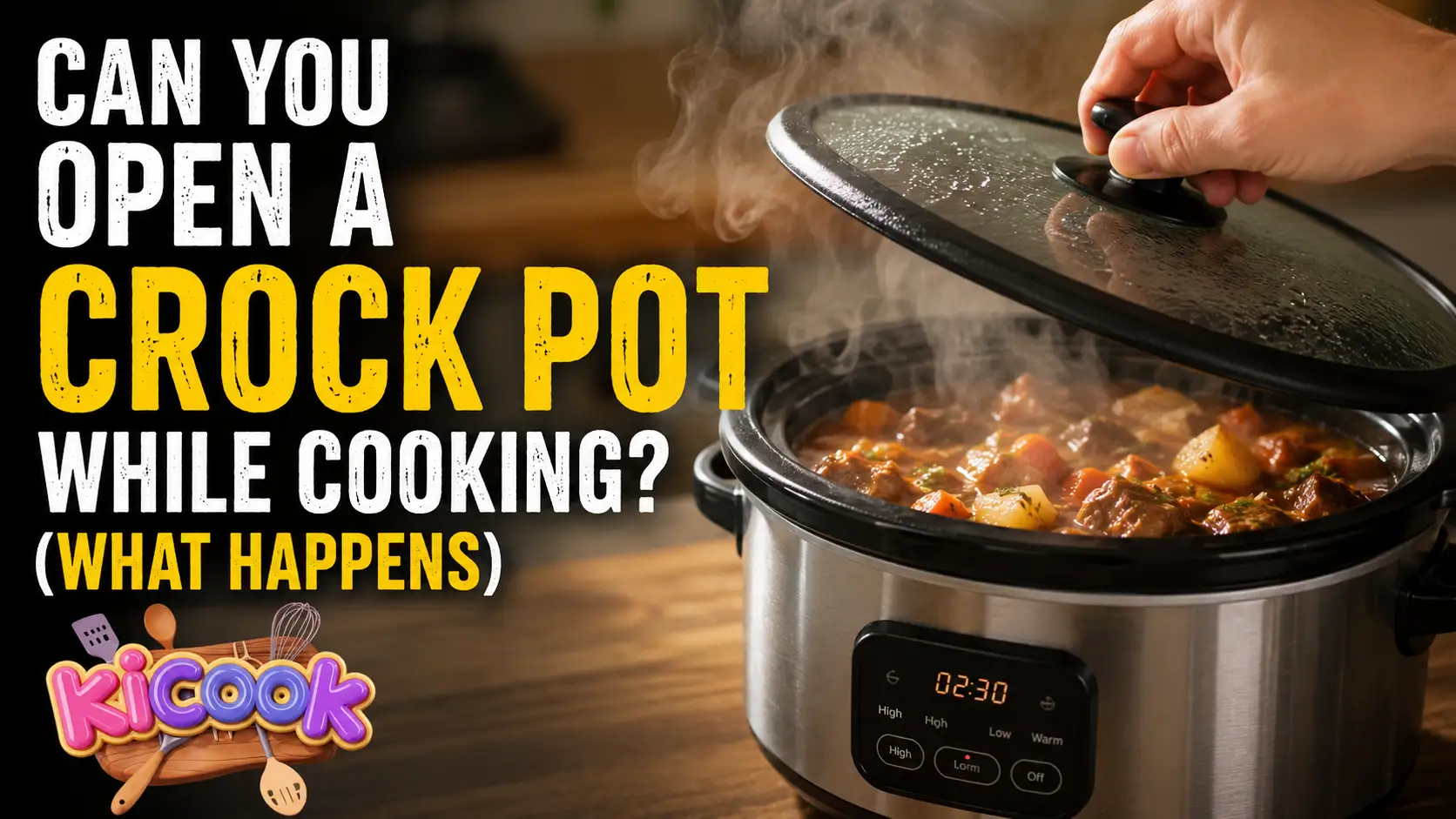
YES, you can open a crock pot while cooking, but you should do it as little as possible. Every time you lift the crock pot lid, the slow cooker loses heat, which can add about 15–30 minutes to the cooking time. For the best results, only open the lid when necessary.
Cooking with a slow cooker is designed to be simple and hands-off. If you’re wondering, can you open a crock pot while cooking, the short answer is yes. However, every time you remove the lid, valuable heat escapes from the cooking chamber.
The biggest catch is that slow cookers work by maintaining a steady temperature over many hours. Even a quick peek can reduce internal heat and slow down the cooking process. This is especially important when cooking large cuts of meat, soups, stews, and beans.
In this guide, you’ll learn exactly what happens when you lift a crock pot lid, how much cooking time you may lose, when opening a slow cooker is necessary, and how to avoid common mistakes that affect meal quality.
Why Opening a Slow Cooker While Cooking Matters
Many home cooks assume a quick glance won’t make much difference. In reality, slow cookers rely on trapped heat and steam to maintain consistent cooking temperatures.
Most slow cookers operate between approximately 170°F and 280°F (77°C to 138°C), depending on the setting. The sealed environment helps food cook evenly while retaining moisture.
When you start opening slow cooker while cooking, several things happen:
- Heat escapes immediately.
- Steam leaves the cooking chamber.
- Internal temperature drops.
- Food takes longer to reach safe serving temperatures.
- Meat may cook less evenly.
Food safety also matters. The safe internal temperature for poultry is 165°F (74°C). If frequent lid lifting slows cooking too much, food may spend more time in lower temperature zones than intended.
According to food science principles discussed by experts at Serious Eats, stable cooking temperatures play a major role in achieving predictable results and proper texture during long cooking methods.
Imagine cooking a beef roast for eight hours. If the lid is lifted repeatedly throughout the day, the roast may require additional cooking time to become tender. The same applies to chili, soups, pulled pork, and other slow-cooked meals.
This is especially important as more households adopt smart kitchen appliances in 2026. While some modern slow cookers offer temperature monitoring through apps, frequent manual lid lifting can still interfere with cooking performance.
When It’s Okay to Open a Crock Pot While Cooking
| Situation | Heat Loss | Impact on Cooking Time | Recommended? |
|---|---|---|---|
| Quick 5-second peek | Low | Minimal | Sometimes |
| Stirring once midway | Moderate | 15-20 minutes | Usually acceptable |
| Opening every 30 minutes | High | Significant delay | No |
| Adding ingredients late | Moderate | Necessary for some recipes | Yes |
| Checking meat temperature near end | Low | Minimal | Yes |
| Frequent lid lifting for curiosity | High | 20-30+ minutes each time | Not recommended |
Note: Different brands and models recover heat at different rates. Larger slow cookers generally take longer to regain lost temperature after opening.
Limit Lid Checks
Aim for no more than 2 lid openings during the entire cooking cycle. Any more than that and you risk adding 30–60 minutes to your total cook time.
Add Ingredients Strategically
Have late-addition ingredients (dairy, soft vegetables, fresh herbs) pre-measured and ready beside the slow cooker. Your goal is to keep the lid off for under 15 seconds each time.
Check Near the End
The ideal window to check food is during the last 30–60 minutes. At this point, the food is nearly done and a brief temperature check causes minimal disruption.
Use a Food Thermometer
Instead of repeatedly checking food visually, use a thermometer near the end of cooking to verify doneness.
Plan Before You Start
Measure ingredients and seasonings beforehand so you won’t need to interrupt cooking later.
Step-by-Step Guide
- Place all primary ingredients into the crock pot before starting the cooking cycle.
- Set the slow cooker to the recommended temperature setting according to your recipe. Most meals cook on LOW for 6–8 hours or HIGH for 3–4 hours.
- Allow the crock pot to build heat during the first hour without interruption.
- Avoid checking the food during the early cooking phase when temperature stabilization is most important.
- If ingredients need to be added later, prepare them in advance so the lid remains open for less than 30 seconds. Pro tip: Keep additions beside the slow cooker before opening the lid.
- Stir only when the recipe specifically recommends it. Pro tip: Most meat-based slow cooker recipes perform better without frequent stirring.
- During the final 30–60 minutes, check doneness using a food thermometer if needed. Chicken should reach 165°F internally.
- Once cooking is complete, serve immediately or switch to the WARM setting to maintain temperature safely.

Expert Tips & Common Mistakes
Pro Tips
- Keep lid openings under 30 seconds whenever possible.
- Cook large roasts on LOW for 8–10 hours for better tenderness.
- Use at least 1 cup of liquid in recipes that require moisture retention.
- Check meat temperature only during the final hour of cooking.
- Use smart slow cookers with temperature monitoring features if you frequently cook large meals.
Common Mistakes
- Opening the lid every hour slows cooking and releases valuable steam.
- Stirring too often can break apart delicate vegetables and meats.
- Removing the lid for long periods causes temperature drops that extend cooking time.
- Adding cold ingredients late in cooking may lower the food temperature and delay completion.
“Temperature control is one of the most important variables in successful cooking.”
— J. Kenji López-Alt, Chef, Food Writer, and Culinary Science Expert
FAQs
Can you open a crock pot while cooking chicken?
Yes. However, avoid frequent lid lifting. Chicken needs to reach an internal temperature of 165°F. Repeatedly opening the lid can extend cooking time and delay safe doneness.
Why is my crock pot not cooking fast enough after opening the lid?
When you open the lid, heat and steam escape. The slow cooker must rebuild that heat before cooking continues efficiently. Multiple lid openings can significantly increase total cooking time.
Can I stir food every hour in a slow cooker?
Most slow cooker recipes do not require hourly stirring. Frequent stirring often releases heat and moisture, reducing cooking efficiency and affecting food texture.
Does lifting crock pot lid add cooking time?
Yes. Each time you lift the crock pot lid, cooking time may increase by approximately 15–30 minutes depending on how long the lid remains off and the size of the slow cooker.
Can I open a slow cooker to add vegetables later?
Absolutely. Many recipes call for adding delicate vegetables during the last 1–2 hours of cooking. Just work quickly and replace the lid immediately afterward.
Can I open a crock pot overnight?
It’s best to avoid it entirely. When cooking overnight, your slow cooker needs uninterrupted heat to safely bring food through the temperature danger zone (40°F–140°F) and hold it at a safe cooking temperature. Opening the lid overnight especially in the first few hours, can slow this process and raise food safety concerns.
Can I check a roast during slow cooking?
Yes. The best time to check a roast is during the final hour. Using a thermometer is more effective than repeatedly lifting the lid throughout cooking.
Why does my recipe say not to open the slow cooker?
Recipe developers know that opening a slow cooker interrupts the cooking environment. Keeping the lid closed helps maintain temperature, moisture, and predictable cooking times.
Conclusion
So, can you open a crock pot while cooking? Yes, but make it count. Every lid lift costs you 15–30 minutes of cooking time.
The rule is simple: open only when necessary, work quickly, and replace the lid immediately. Do that, and your slow cooker will deliver tender, flavorful results every single time.
A great slow-cooked meal rewards patience, the less you peek, the better your food will be.
For more expert guidance, visit Serious Eats — one of the most trusted resources for kitchen techniques, tested recipes, and food science.

“I believe great cooking starts with the right tools, trusted advice, and a little confidence in the kitchen.”
Hi, I’m Emma Carter. My love for cooking began in my grandmother’s kitchen, where I learned that every great meal starts with simple ingredients and the right cookware. Over the years, I’ve spent countless hours researching, testing, and comparing kitchen appliances, cookware, coffee makers, air fryers, and other everyday kitchen essentials.
Here at KiCook, my goal is to make your buying decisions easier with honest product reviews, practical buying guides, and easy-to-follow cooking tips. Whether you’re upgrading your kitchen or searching for the best appliance for your home, I focus on providing clear, reliable, and research-backed information you can trust.
When I’m not testing new kitchen gadgets or writing in-depth guides, you’ll usually find me trying new recipes, visiting local farmers’ markets, or enjoying a quiet cup of coffee while planning my next kitchen project.