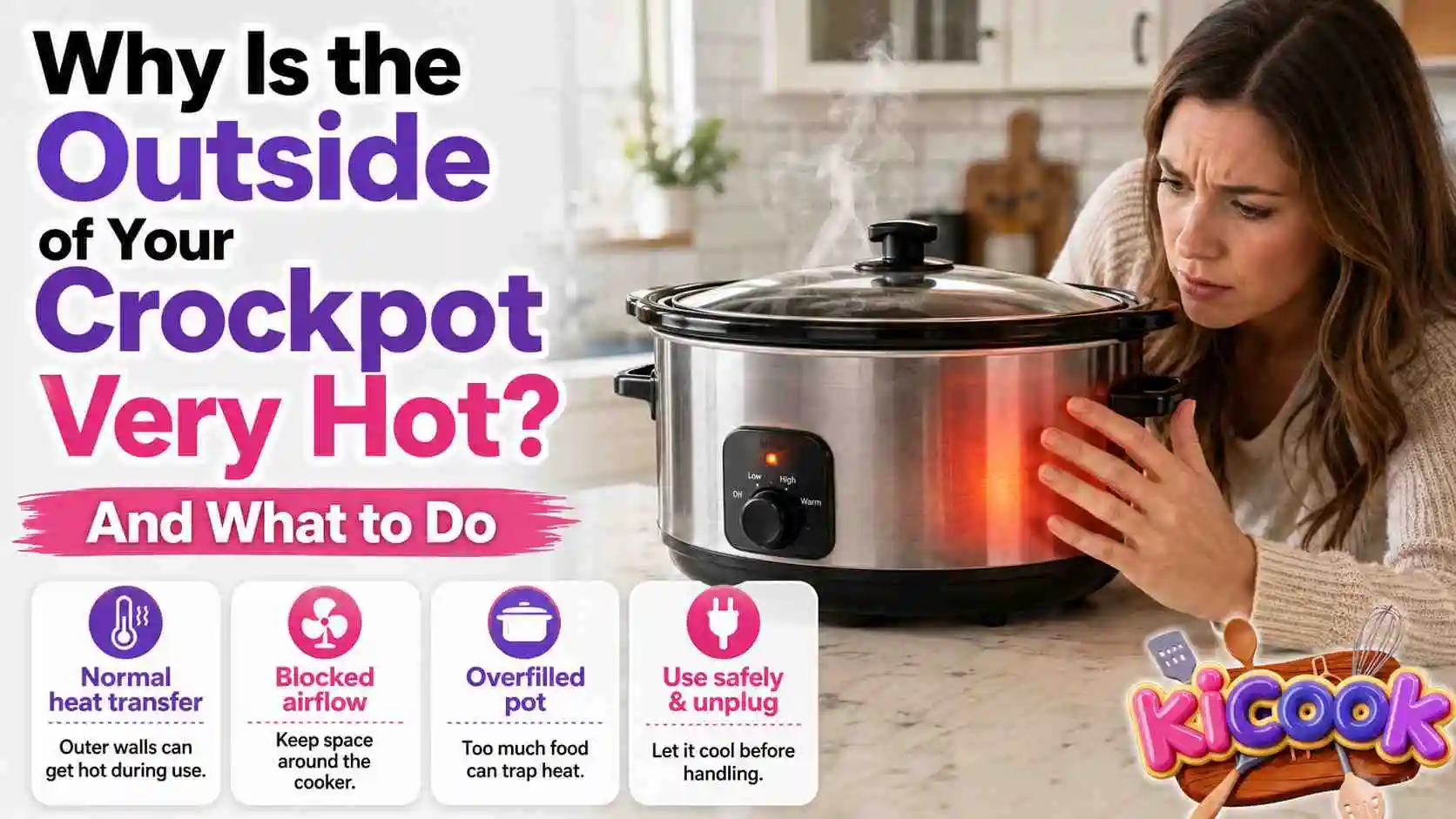
It’s normal for the outside of a crockpot to feel warm or even hot during cooking — but extremely hot exteriors can signal a placement issue, a faulty unit, or improper use. Understanding the difference keeps your kitchen safe and your meals perfectly cooked.
Picture this: you’ve loaded your slow cooker with a hearty beef stew, set it on LOW, and walked away only to return and find the outside of your crockpot very hot to the touch. Panic sets in. Is it broken? Is it a fire hazard? Should you unplug it immediately?
You’re not alone. This is one of the most searched slow cooker concerns among home cooks, and for good reason. Crockpots sit on countertops for 6–10 hours at a time, often unattended. Knowing whether that heat is normal or a warning sign matters enormously for both safety and cooking results.
Slow cookers are designed to radiate some heat outward. That’s simply thermodynamics at work. However, there’s a meaningful difference between warm and dangerously hot. Surfaces that blister your fingertip on contact, scorch your countertop, or smell like burning plastic are telling you something important.
In this guide, you’ll learn exactly why the outside of your crockpot gets hot, what temperatures are considered safe, when to be genuinely concerned, and how to protect your counters, your family, and your appliance. Whether you’re a slow cooker newbie or a seasoned meal-prepper, these insights will give you total confidence every time you plug in.
Why the Outside of Your Crockpot Gets Very Hot — And Why It Matters
Slow cookers work by surrounding a ceramic or stoneware insert with a heating element embedded in the base and sides of the housing unit. That element runs continuously for hours, which means heat naturally transfers through the metal or plastic outer shell.
On the LOW setting, crockpots typically reach internal temperatures between 170°F and 200°F. On HIGH, that climbs to 280°F–300°F. Even with insulation between the element and the outer casing, some of that heat bleeds outward, which is why the outside of your crockpot feels very hot after a few hours of operation.
According to product safety studies, the exterior base of most slow cookers can reach surface temperatures between 120°F and 160°F during normal use. That’s hot enough to cause discomfort on skin contact and, in some cases, to warp certain countertop materials like laminate or vinyl.
Here’s where home cooks run into real trouble:
- Placing the crockpot on heat-sensitive surfaces like plastic placemats, wooden cutting boards, or directly on laminate countertops
- Using an older or damaged unit where insulation has degraded over years of use
- Running the crockpot on HIGH for extended periods beyond recipe recommendations
- Blocking ventilation by placing it in a cabinet nook or too close to a wall
- Overfilling the pot, which forces the heating element to work harder and longer
A 2023 U.S. Consumer Product Safety Commission report noted that slow cookers are involved in approximately 150 house fires annually in the United States most linked to older, degraded units or improper placement rather than inherent design flaws.
Understanding why your crockpot runs hot puts you in control.
“The slow cooker is one of the safest kitchen appliances when used correctly — but like any heat-generating device, placement and maintenance are everything.” — Alton Brown, Food Scientist & Host, Good Eats
Best Solutions When the Outside of Your Crockpot Is Very Hot
If you’ve noticed excessive exterior heat, here are the most effective solutions — from quick fixes to smart upgrades:
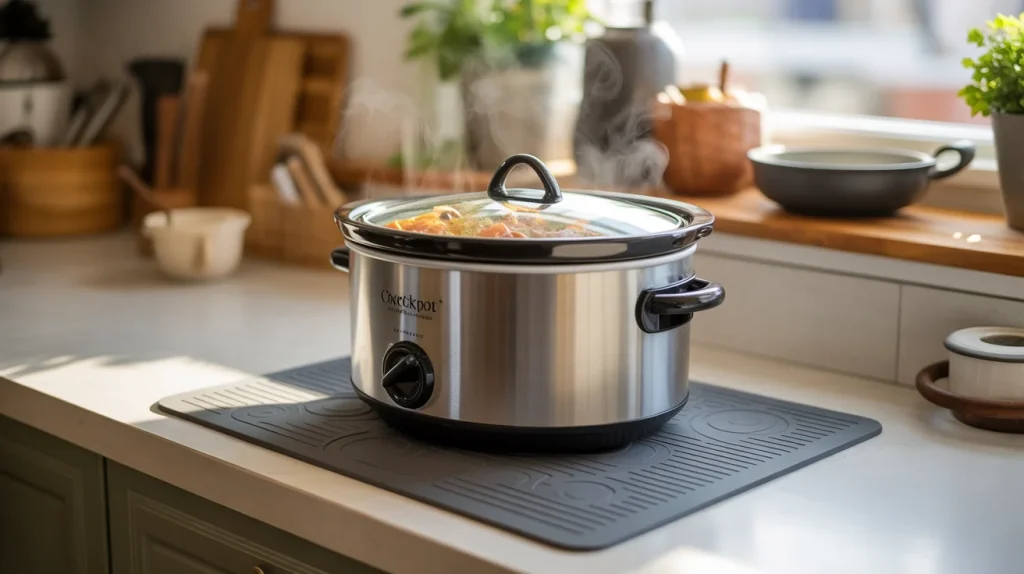
Use a silicone trivet or heat-resistant mat
- Pros: Cheap, widely available, protects countertops instantly
- Cons: Doesn’t fix the root cause, just protects surfaces
- Look for mats rated to at least 400°F for true protection
Switch from HIGH to LOW setting
- Pros: Reduces heat output significantly, improves food texture
- Cons: Adds 2–4 hours to cook time
- Most recipes actually prefer LOW for better flavor development
Ensure 4–6 inches of clearance on all sides
- Pros: Allows proper heat dissipation, prevents heat buildup
- Cons: Requires counter space planning
- Never place your crockpot under cabinets with less than 12 inches overhead clearance
Inspect the power cord and base regularly
- Pros: Catches early signs of wear before they become dangerous
- Cons: Requires occasional attention
- Frayed cords or scorch marks on the base = replace immediately
Upgrade to a modern smart slow cooker
- Brands like Instant Pot, Crock-Pot 7-Quart, and Hamilton Beach Set & Forget feature improved insulation, auto-shutoff, and better temperature regulation
- 2026 models increasingly feature app-controlled temperature monitoring — a genuine game-changer for kitchen safety
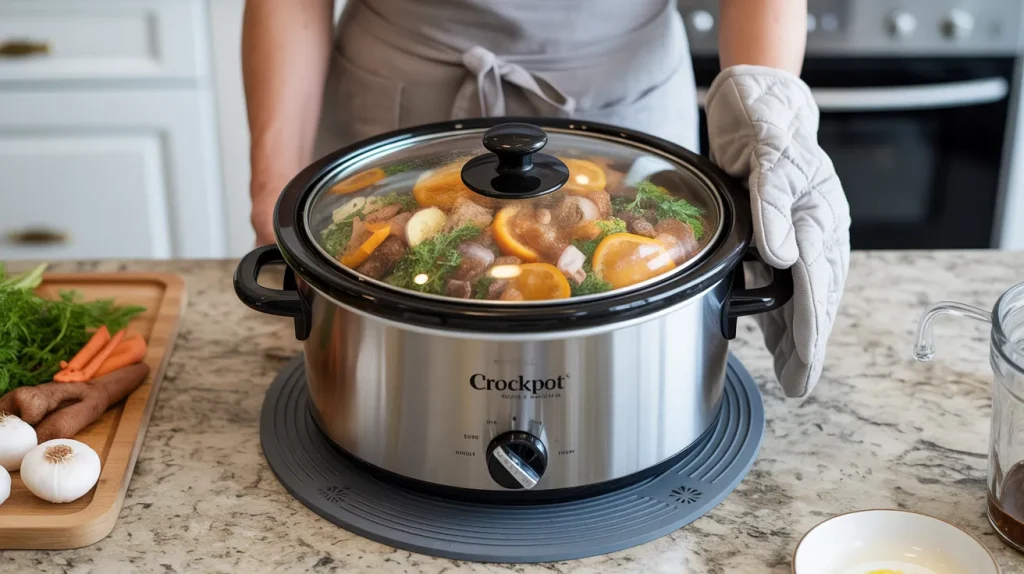
Never place on wood, plastic, or laminate directly
Always use a ceramic tile, granite offcut, or purpose-built appliance mat underneath
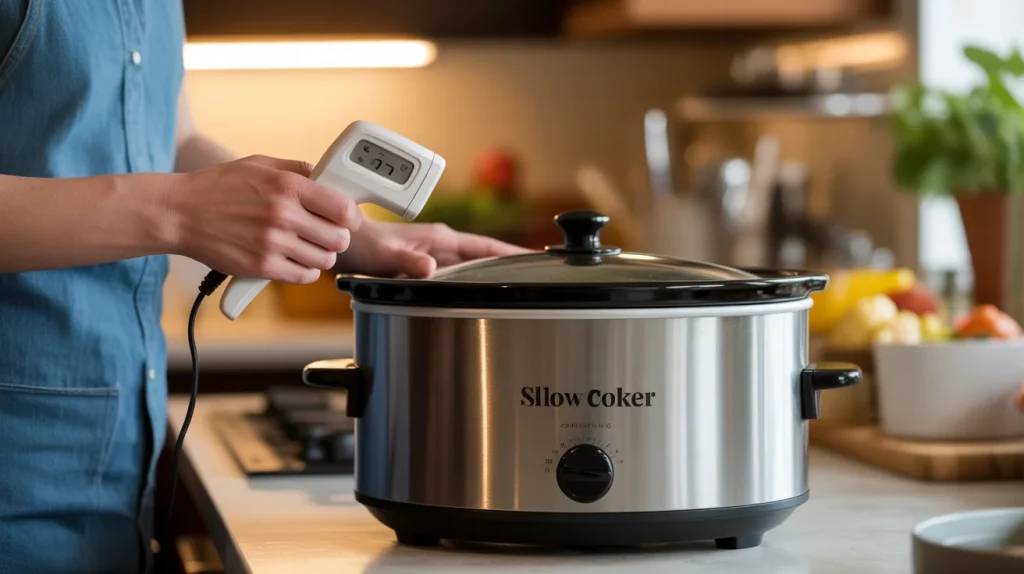
Test with an infrared thermometer
Affordable kitchen thermometers (under $20) let you measure exterior surface temp precisely — above 150°F on the outer casing warrants investigation
Step-by-Step Guide: How to Safely Manage a Very Hot Crockpot Exterior
- Don’t panic or unplug immediately — touch the lid handle (not the base) to assess if food is cooking normally first.
- Slide a silicone mat or folded kitchen towel under the unit without moving it dramatically while hot.
- Check clearance on all sides — pull it away from walls and ensure no items are crowding it.
- Verify your setting — if it’s been on HIGH for over 4 hours, switch to WARM or LOW.
- Inspect the power cord at the wall socket and at the unit — look for discoloration, fraying, or burning smell.
- Run an exterior temperature check with an infrared thermometer on the base and sides.
- If temperature exceeds 160°F on the outer shell, unplug, let cool, and contact the manufacturer before using again.
- After the cook cycle, always unplug — never leave a crockpot plugged in when not in active use.
Expert Tips & Common Mistakes When Your Crockpot Outside Is Very Hot
5 Pro Tips:
- Always preheat on LOW, not HIGH, to distribute heat gradually and reduce exterior stress on the casing
- Use the WARM setting for holding after cooking — it dramatically reduces exterior heat output
- Place a ceramic tile permanently on your designated slow cooker spot — zero maintenance, excellent protection
- Check your crockpot’s age — units over 7 years old may have degraded internal insulation worth replacing
- Modern crockpots with locking lids redistribute seal pressure and tend to run cooler on the outside
4 Mistakes to Avoid:
- Never leave it on a stovetop — residual burner heat plus crockpot heat can create dangerously high combined temperatures
- Don’t wrap it in towels “for insulation” — this blocks ventilation and traps heat dangerously
- Avoid using extension cords unless they’re rated for high-wattage appliances (most crockpots draw 200–300W)
- Don’t ignore scorch marks on the base or discoloration on the power cord — these are immediate red flags, not cosmetic issues
“Heat management in the kitchen isn’t just about the food — it’s about understanding every appliance as a tool with limits, and respecting those limits every single time.” — J. Kenji López-Alt, Culinary Director, Serious Eats
FAQs About Why is the outside of your crockpot very hot?
Is it normal for the outside of a crockpot to be very hot?
Yes, some exterior heat is completely normal. The heating element radiates warmth through the casing during operation. However, the outside should never be so hot that it’s painful to touch for more than a second, scorches surfaces, or emits a burning smell. Warm to moderately hot is expected; blistering hot is a warning sign.
Can a hot crockpot exterior damage my countertop?
Absolutely. Laminate and vinyl countertops are especially vulnerable to sustained heat above 120°F. Always use a heat-resistant trivet or silicone mat rated for 400°F or higher. Granite and stone countertops are generally safe but can still experience thermal shock from prolonged direct contact.
Why does my crockpot get hotter on one side than the other?
This usually indicates uneven heating element placement or a developing fault in the element itself. If one side is noticeably hotter than the other and food cooks unevenly, it’s worth contacting the manufacturer or replacing the unit.
Should I be worried about fire if the crockpot outside is very hot?
Fire risk is low with modern, properly functioning crockpots. Risk increases with older units, damaged cords, placement near flammable materials (curtains, paper towels), or using the appliance on combustible surfaces. Follow placement guidelines and inspect your unit regularly.
How hot should the outside of a crockpot get?
Safe exterior surface temperatures typically range from 100°F–150°F during normal operation. Above 160°F on the outer shell — especially near the base or cord — warrants stopping use and inspecting the appliance.
Can I put my crockpot on a wooden table?
Not directly. Wood can warp, discolor, or scorch from sustained crockpot heat. Always use a protective mat or trivet. For long cooks of 6+ hours, even a thick silicone mat on wood carries some risk — a ceramic tile is the more reliable option.
Does a newer crockpot run cooler on the outside?
Generally, yes. Appliance insulation technology has improved significantly, and 2025–2026 models from major brands run measurably cooler on exterior surfaces while maintaining better internal temperature control. If your unit is older than 5–7 years, an upgrade may be both safer and more energy-efficient.
Conclusion
A crockpot exterior that’s very hot is often nothing more than normal heat dissipation from a well-working appliance — but it’s a signal worth paying attention to. By using the right protective mat, ensuring proper clearance, choosing the LOW setting for long cooks, and periodically inspecting your unit for wear, you can slow cook with complete confidence and zero worry.
Don’t let a warm outer casing stop you from enjoying the incredible convenience of slow cooking. Try these safety tips today and transform your crockpot routine into something both delicious and stress-free. Whether you’re simmering a pot roast or batch-cooking soups for the week, the outside of your crockpot running hot doesn’t have to be a problem — just a cue to cook smarter.
“Cooking is one of the strongest ceremonies for life. We should approach it with intention, safety, and joy.” — Laura Esquivel, Author, Like Water for Chocolate
For deeper dives into slow cooker techniques, food safety, and tested recipes, visit Serious Eats’ Complete Guide to Slow Cooking — an authoritative resource trusted by millions of home cooks worldwide for science-backed kitchen guidance.

“I believe great cooking starts with the right tools, trusted advice, and a little confidence in the kitchen.”
Hi, I’m Emma Carter. My love for cooking began in my grandmother’s kitchen, where I learned that every great meal starts with simple ingredients and the right cookware. Over the years, I’ve spent countless hours researching, testing, and comparing kitchen appliances, cookware, coffee makers, air fryers, and other everyday kitchen essentials.
Here at KiCook, my goal is to make your buying decisions easier with honest product reviews, practical buying guides, and easy-to-follow cooking tips. Whether you’re upgrading your kitchen or searching for the best appliance for your home, I focus on providing clear, reliable, and research-backed information you can trust.
When I’m not testing new kitchen gadgets or writing in-depth guides, you’ll usually find me trying new recipes, visiting local farmers’ markets, or enjoying a quiet cup of coffee while planning my next kitchen project.