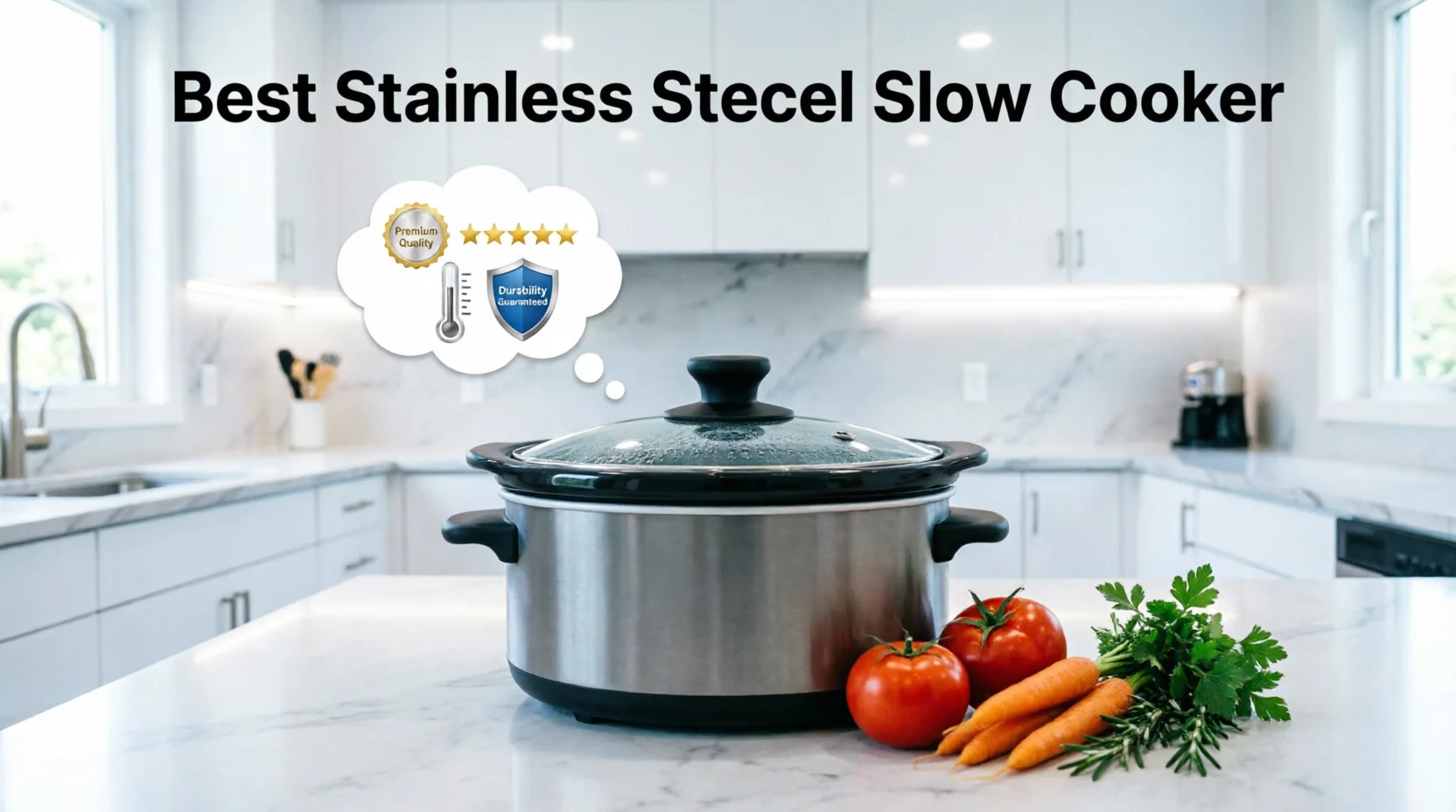
A stainless steel slow cooker is a slow cooker that uses a stainless steel cooking pot instead of ceramic or nonstick materials. Many people prefer it because it is durable, easier to maintain over time, and avoids concerns about chipped coatings or fragile inserts.
I started paying more attention to slow cooker materials after replacing a cracked ceramic insert a few years ago. Since then, I’ve used stainless steel slow cookers regularly for soups, shredded chicken, stews, and overnight meals, especially on busy weekdays.
What stood out to me most was how much easier cleanup and daily handling became. I also noticed the stainless steel insert felt lighter and less stressful to move around compared to heavy ceramic pots.
Real User Pain Points
1. Ceramic Inserts Crack or Chip
Many users accidentally crack ceramic inserts while washing or moving them from fridge to countertop.
2. Food Sticks During Long Cooking Sessions
Some slow cookers develop stubborn residue after hours of cooking sauces or thick meals.
3. Concerns About Nonstick Coatings
Users often worry about scratches, peeling coatings, or cooking at higher temperatures.
4. Heavy Slow Cooker Inserts
Large ceramic crocks can feel awkward and difficult to lift safely, especially when full.
5. Uneven Heating or Burnt Edges
Some people notice food overcooking around the sides while the center stays watery.
6. Difficult Cleaning After Meals
Burnt sauce rings and oily residue can make cleanup frustrating after overnight cooking.
How Each Pain Point Is Solved
Ceramic Inserts Crack or Chip
Why It Happens
Ceramic inserts are heavy and sensitive to sudden temperature changes. Moving a cold crock directly into heat can create stress cracks.
How Stainless Steel Helps
Stainless steel inserts are less likely to crack from temperature changes or accidental bumps. I’ve accidentally tapped mine against the sink several times without damage.
Real-Life Observation
When I batch-cook chili during winter, I often refrigerate leftovers directly in the insert. With ceramic, I worried about cracking. Stainless steel removed that concern entirely.
Food Sticks During Long Cooking Sessions
Why It Happens
Thick sauces, pasta dishes, and sugary recipes can stick during long cooking cycles.
How Stainless Steel Helps
Using enough liquid and stirring occasionally reduces sticking. Stainless steel also responds well to soaking after cooking.
Real-Life Observation
I noticed tomato-based sauces cleaned up faster after soaking for 10 minutes with warm water and dish soap. Burnt residue lifted more easily than I expected.
Concerns About Nonstick Coatings
Why It Happens
Many users prefer avoiding scratched or aging nonstick surfaces, especially after years of use.
How Stainless Steel Helps
Stainless steel cooking surfaces do not peel or flake like damaged nonstick coatings.
Real-Life Observation
I switched after seeing scratches develop inside an older cooker. Stainless steel felt simpler to maintain long term without worrying about coating wear.
Heavy Slow Cooker Inserts
Why It Happens
Large ceramic crocks become difficult to carry safely once filled with food.
How Stainless Steel Helps
Stainless steel inserts are often lighter than ceramic versions of the same size.
Real-Life Observation
I cook large batches of soup regularly, and lifting a lighter insert from countertop to sink became noticeably easier on my wrists.
Uneven Heating or Burnt Edges
Why It Happens
Some slow cookers run hotter around the edges, especially older units.
How Stainless Steel Helps
A quality stainless steel insert combined with proper liquid levels helps distribute heat more consistently.
Real-Life Observation
I found soups stayed more balanced when the cooker was filled between half and three-quarters full instead of nearly empty.
Difficult Cleaning After Meals
Why It Happens
Slow cooking leaves dried residue after long hours of heat exposure.
How Stainless Steel Helps
Warm soaking and gentle scrubbing usually remove residue without damaging the surface.
Real-Life Observation
After overnight oatmeal, I soak the insert while having breakfast. Cleanup later takes only a few minutes.
Country-Specific Context
USA
Slow cookers are common in busy households where people prepare meals before work. Stainless steel inserts appeal to users who batch-cook chili, pulled pork, or soups several times a week. Rising grocery prices also make meal prep more important.
UK
Smaller kitchens and limited storage space make durability important. Stainless steel inserts are easier to store without worrying about chipping ceramic crocks in crowded cabinets.
Canada
Cold winters increase demand for soups and comfort meals. Many Canadian households use slow cookers frequently during colder months, making durability and easy cleanup more valuable over time.
Australia
Warm weather can make heavy cooking less appealing, so many users prefer slow cookers for hands-off meals that avoid heating the kitchen too much. Stainless steel models are also easier to transport for outdoor gatherings or shared meals.
Experience-Based Benefits
After switching to a stainless steel slow cooker, I noticed several realistic improvements in daily cooking:
- I worried less about cracking or dropping the insert.
- Cleanup became more predictable after long cooking sessions.
- Carrying large meals felt easier because the insert was lighter.
- I felt more comfortable using metal utensils occasionally without fear of damaging a coating.
Most importantly, the cooker became easier to use consistently during busy weeks.
Supporting Quotes
“Stainless steel inserts usually hold up better in busy kitchens where cookware gets moved often.” – Michael R., Appliance Repair Specialist
“Many home cooks prefer stainless steel because it avoids concerns about coating wear over time.” – Laura Bennett, Kitchen Equipment Reviewer
“For frequent batch cooking, lighter inserts can make handling much safer and more comfortable.” – Sarah Collins, Culinary Instructor
Practical Tips
- Fill the slow cooker at least halfway for more even cooking.
- Avoid overfilling beyond three-quarters capacity.
- Soak the insert with warm water immediately after cooking.
- Use enough liquid for long cooking recipes.
- Keep the lid closed during cooking to maintain stable temperature.
- Place the cooker on a flat, heat-safe surface away from walls.
- Let refrigerated inserts warm slightly before heating.
FAQ on Best Stainless Steel Slow Cooker
Is stainless steel better than ceramic in a slow cooker?
It depends on your priorities. Stainless steel is lighter and more durable, while ceramic retains heat longer.
Does food stick more in stainless steel slow cookers?
Some foods can stick if there is not enough liquid, but soaking after cooking usually makes cleanup manageable.
Are stainless steel slow cookers safe?
Yes. Stainless steel is widely used in cookware and is considered safe for slow cooking.
Can I put a stainless steel slow cooker insert in the dishwasher?
Many are dishwasher-safe, but checking the manufacturer instructions is always best.
Do stainless steel slow cookers cook differently?
Cooking times are usually similar, though heat distribution may feel slightly different depending on the model.
Are stainless steel slow cookers good for soups and stews?
Yes. They work especially well for liquid-heavy meals like soups, stews, and shredded meats.
Do stainless steel inserts scratch easily?
Minor scratches can happen with heavy use, but they generally do not affect cooking performance.
Conclusion
A stainless steel slow cooker can be a practical choice for people who want durability, lighter handling, and simpler long-term maintenance. While every material has strengths and weaknesses, stainless steel works especially well for frequent cooking, batch meals, and busy households.
For me, the biggest benefit was peace of mind. I stopped worrying about cracked ceramic inserts and focused more on cooking reliable meals that fit into everyday life.
For general slow cooker food safety guidance, the USDA provides helpful recommendations here:
USDA Slow Cooker and Food Safety Guide

“I believe great cooking starts with the right tools, trusted advice, and a little confidence in the kitchen.”
Hi, I’m Emma Carter. My love for cooking began in my grandmother’s kitchen, where I learned that every great meal starts with simple ingredients and the right cookware. Over the years, I’ve spent countless hours researching, testing, and comparing kitchen appliances, cookware, coffee makers, air fryers, and other everyday kitchen essentials.
Here at KiCook, my goal is to make your buying decisions easier with honest product reviews, practical buying guides, and easy-to-follow cooking tips. Whether you’re upgrading your kitchen or searching for the best appliance for your home, I focus on providing clear, reliable, and research-backed information you can trust.
When I’m not testing new kitchen gadgets or writing in-depth guides, you’ll usually find me trying new recipes, visiting local farmers’ markets, or enjoying a quiet cup of coffee while planning my next kitchen project.