
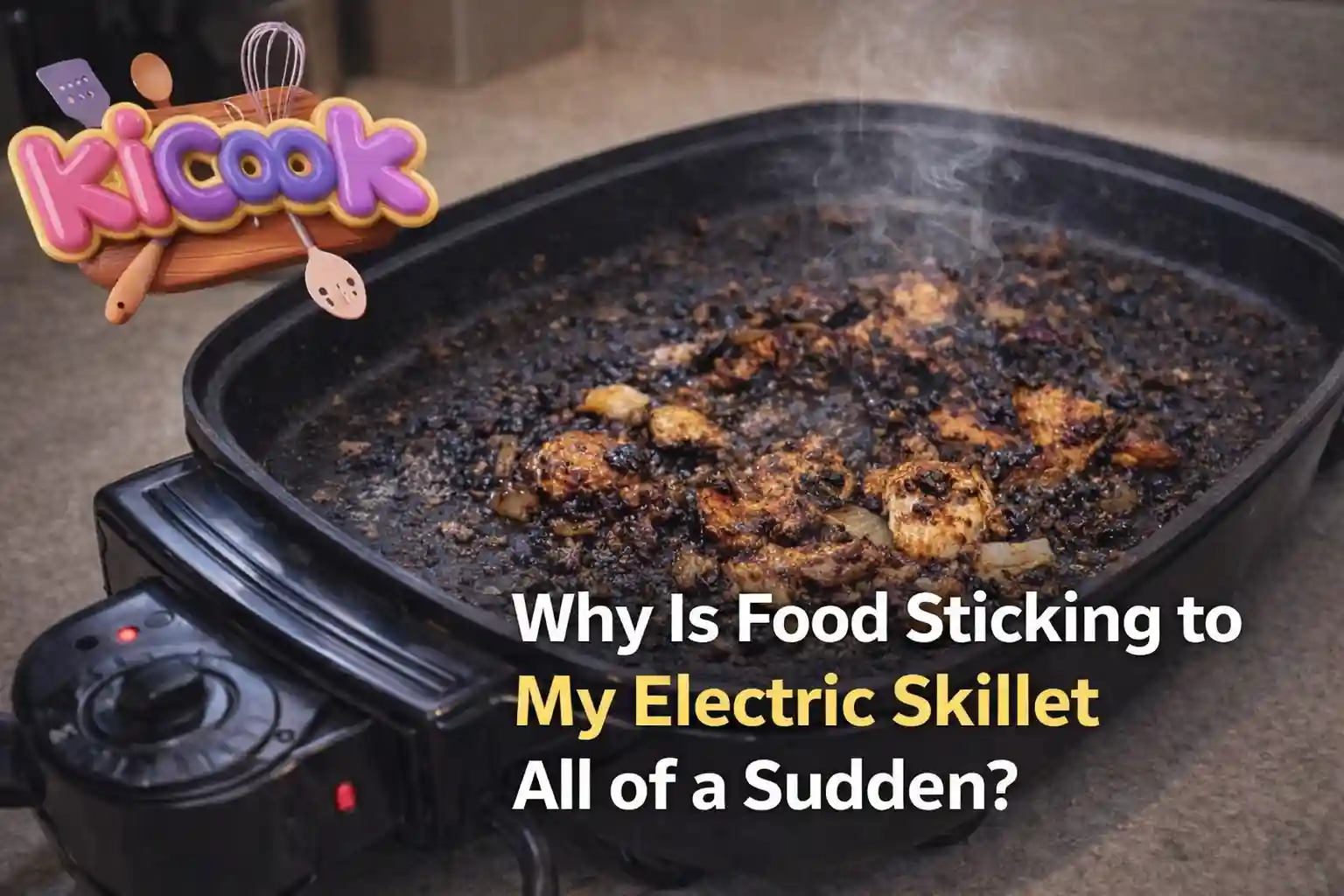
Food usually starts sticking to an electric skillet because the nonstick coating is wearing out, the pan is overheating, or it’s not being cleaned or preheated correctly. Small changes in temperature control, oil use, or surface damage can suddenly turn a once-smooth skillet into a sticky mess.
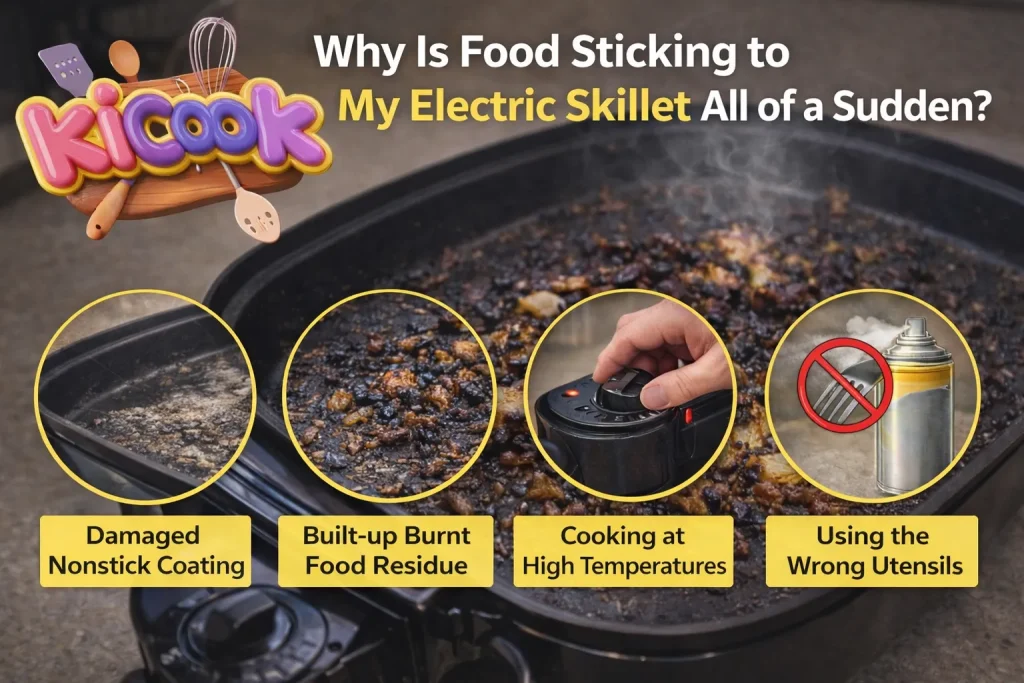
I’ve Used My Electric Skillet for Years—Why Is This Happening Now?
I hear this complaint a lot. One day your electric skillet works perfectly. The next day, eggs stick, chicken tears apart, and cleanup becomes painful.
This usually isn’t random. In most cases, something has changed even if you didn’t notice it right away.
Let’s break it down clearly.
1. The Nonstick Coating Is Worn or Damaged
This is the most common reason food suddenly sticks.
Even high-quality nonstick coatings don’t last forever.
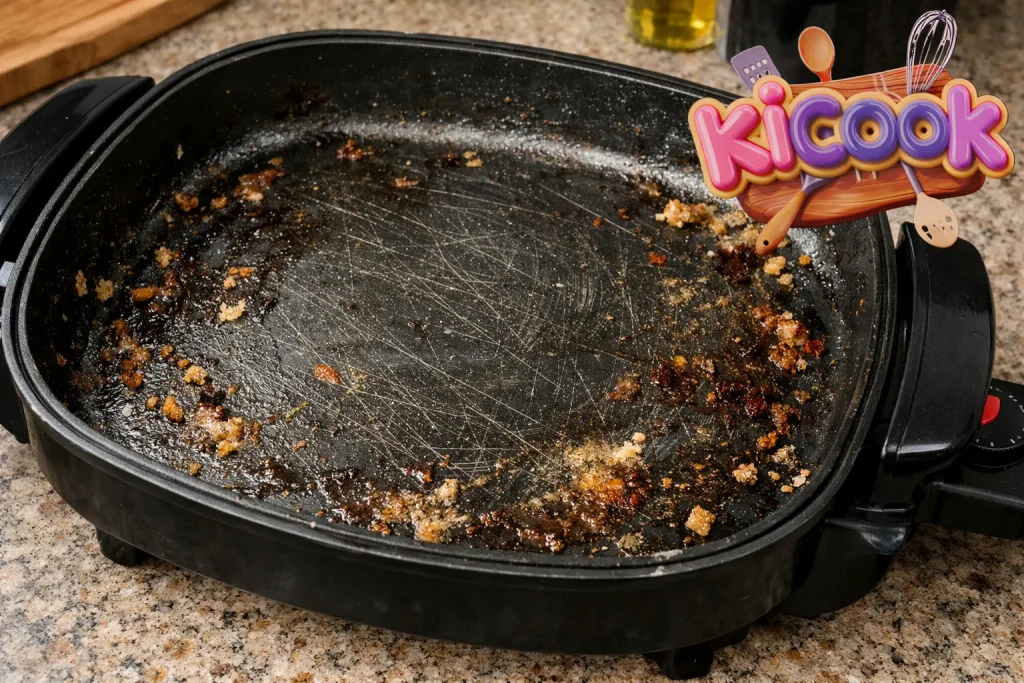
Signs the coating is failing:
- Food sticks even with oil
- Surface looks dull or patchy
- You see scratches or peeling
- Cleanup takes longer than usual
Once the coating is damaged, no amount of oil will fully fix it.
2. You’re Cooking at a Higher Temperature Than Before
Electric skillets heat faster over time if the thermostat becomes inaccurate.
When the pan is too hot:
- Oil burns off quickly
- Food bonds to the surface
- Sugars and proteins stick instantly
This often happens when the temperature control starts failing, even if the dial looks normal.
3. The Skillet Is Not Preheated Properly
Preheating matters more than people think.
If you add food to a cold or unevenly heated skillet, it will stick especially proteins like eggs, fish, and chicken.
What works better:
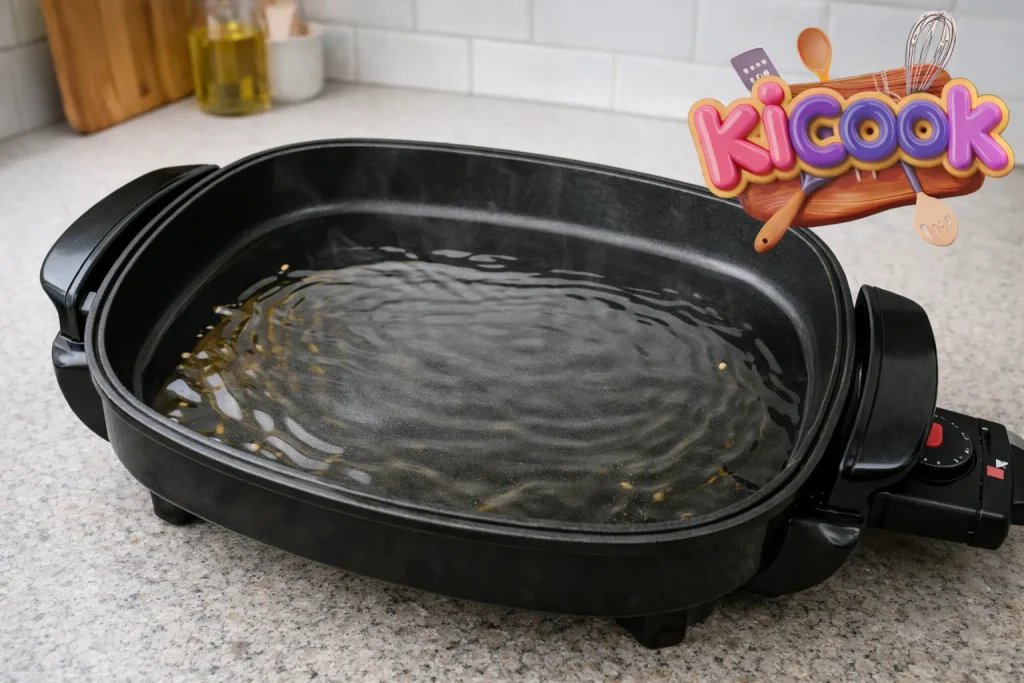
- Preheat the skillet for 3–5 minutes
- Add oil after preheating
- Let oil shimmer slightly before adding food
4. Using the Wrong Oil (or Not Enough)
Low-smoke-point oils burn fast and leave sticky residue.
Common mistakes:
- Cooking with spray oils (they damage nonstick)
- Using butter alone at high heat
- Not using enough fat on older pans
Better options:
- Avocado oil
- Canola oil
- Light olive oil (not extra virgin)
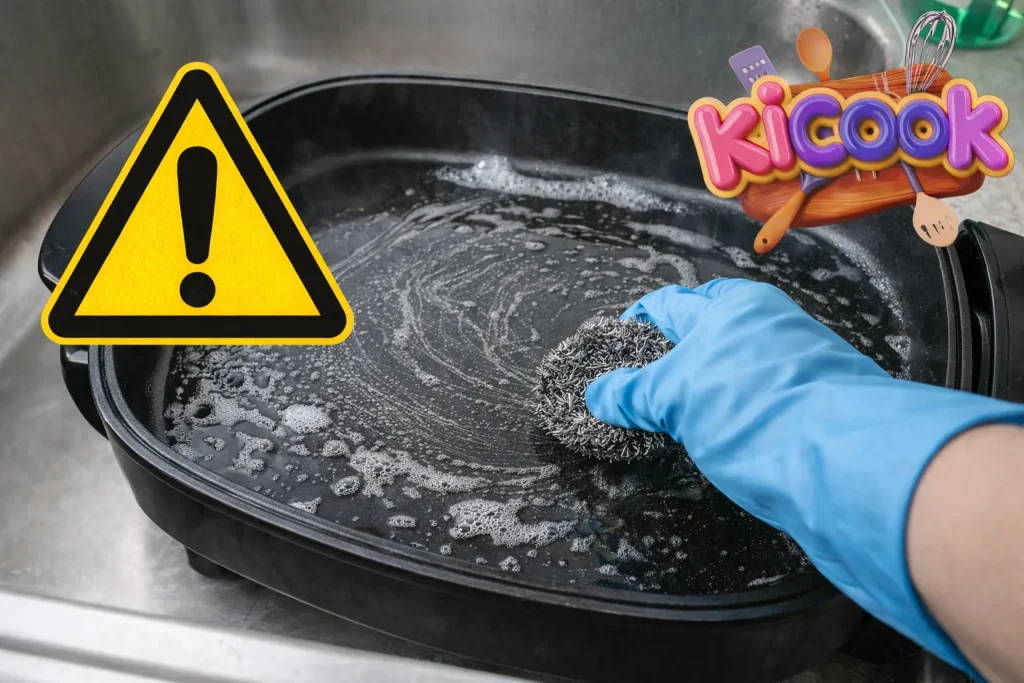
5. Cleaning Methods Are Quietly Ruining the Surface
Many people damage their skillet during cleaning, not cooking.
Avoid:
- Steel wool
- Abrasive scrubbers
- Dishwasher cleaning (unless manufacturer allows it)
Even gentle-looking scrubbers can wear down the coating over time.
6. Uneven Heating Creates Hot Spots
If your skillet heats unevenly, food sticks in hot zones first.
This is often caused by:
- Aging heating elements
- Warped cooking surface
- Internal thermostat problems
Uneven heat = uneven cooking = sticking problems.
Can I Fix a Skillet That Suddenly Started Sticking?
Sometimes—yes. Sometimes—no.
Try this first:
- Lower cooking temperature
- Preheat properly
- Switch to better oil
- Clean gently and dry fully
- Lightly season the surface (if manufacturer allows)
If food still sticks every time, the coating is likely past its lifespan.
When Is It Time to Replace the Electric Skillet?
Replace it if:
- Coating is peeling or flaking
- Food sticks no matter what you do
- Temperature control is unreliable
- Safety issues appear
According to general cookware safety guidance from Wikipedia’s nonstick cookware overview, damaged coatings are not meant to be restored and should be replaced for both performance and safety.
Pros and Cons of Nonstick Electric Skillets
Pros
- Easy cooking and cleanup
- Less oil needed
- Great for eggs, pancakes, and fish
Cons
- Coating wears out over time
- Sensitive to heat and cleaning methods
- Not repairable once damaged
Expert Opinion
By Alex Turner, Small Appliance Specialist
“In my experience, sudden sticking almost always points to coating degradation or thermostat drift. People think the skillet failed overnight, but the damage usually builds slowly. Once sticking starts happening regularly, replacement is often the safest and least frustrating option.”
Frequently Asked Questions on Why Is Food Sticking to My Electric Skillet
Why did my electric skillet suddenly stop being nonstick?
Because the coating has worn down, overheated, or been damaged by cleaning or cooking sprays.
Can I re-season a nonstick electric skillet?
Only if the manufacturer allows it. Many modern coatings are not designed to be re-seasoned.
Does overheating ruin nonstick coating?
Yes. High heat is one of the fastest ways to destroy nonstick surfaces.
Is sticking food a safety issue?
It can be. Sticking often comes with overheating, peeling coating, or electrical issues.
How long should an electric skillet last?
On average, 3–5 years with regular use and proper care.
Final Thoughts
When food starts sticking all of a sudden, your electric skillet is trying to tell you something.
It’s usually heat, coating wear, or control issues—not bad luck.
If simple fixes don’t help, replacing the skillet will save time, food, and frustration.
A smooth pan should stay smooth. When it doesn’t, it’s okay to move on.
Related Articles You May Find Helpful
- If you’re wondering whether it’s time for an upgrade, this guide on choosing the best electric skillet for everyday cooking breaks down what really matters
- For a full breakdown of issues users face, this detailed list of common electric skillet problems and fixes can help you troubleshoot faster
- If your skillet behaves unpredictably, this electric skillet troubleshooting guide explains what’s happening and what to do next
- Temperature problems often lead to sticking—this article on electric skillet heating unevenly explains why hot spots matter
- If food burns even on low heat, this guide on why electric skillets burn food at low settings is worth reading
- For safety concerns linked to coating damage and overheating, read this deep dive on electric skillet safety issues
- And if you’re questioning the value of replacement, this honest take on whether electric skillets are worth it may help you decide

“I believe great cooking starts with the right tools, trusted advice, and a little confidence in the kitchen.”
Hi, I’m Emma Carter. My love for cooking began in my grandmother’s kitchen, where I learned that every great meal starts with simple ingredients and the right cookware. Over the years, I’ve spent countless hours researching, testing, and comparing kitchen appliances, cookware, coffee makers, air fryers, and other everyday kitchen essentials.
Here at KiCook, my goal is to make your buying decisions easier with honest product reviews, practical buying guides, and easy-to-follow cooking tips. Whether you’re upgrading your kitchen or searching for the best appliance for your home, I focus on providing clear, reliable, and research-backed information you can trust.
When I’m not testing new kitchen gadgets or writing in-depth guides, you’ll usually find me trying new recipes, visiting local farmers’ markets, or enjoying a quiet cup of coffee while planning my next kitchen project.



3 thoughts on “Why Is Food Sticking to My Electric Skillet All of a Sudden?”