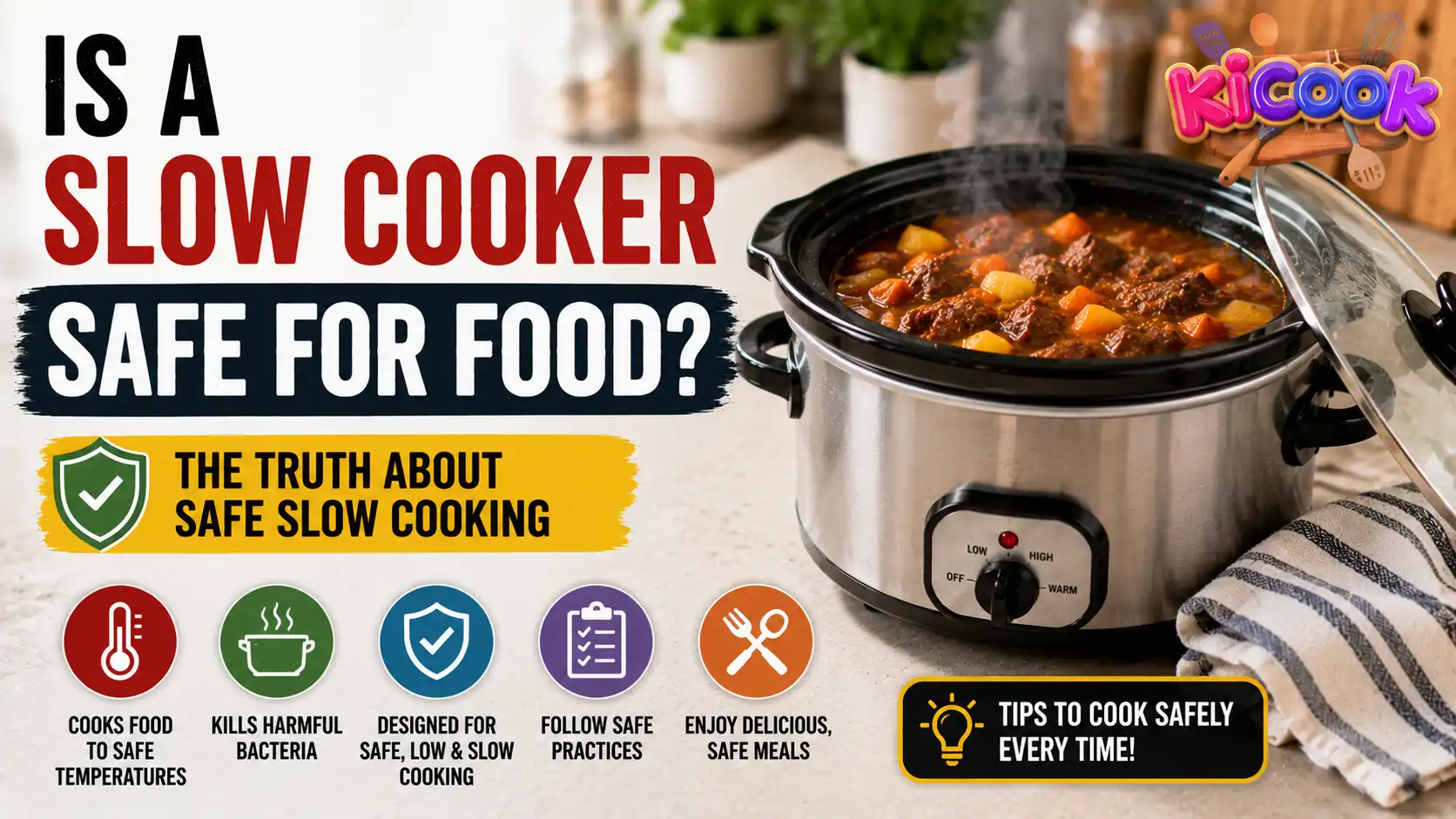
Yes, a slow cooker is generally safe for food when used correctly because it cooks at a consistent temperature high enough to reduce harmful bacteria. Problems usually happen when food is stored improperly, cooked from frozen incorrectly, or left in the “danger zone” for too long.
Personal Context
I use a slow cooker regularly for soups, shredded chicken, stews, and overnight meals. At first, I worried about leaving food cooking for hours while I worked or slept. After testing temperatures, learning safe cooking habits, and fixing a few mistakes of my own, I realized slow cookers can be very safe if you follow a few practical rules.
One mistake I made early on was adding partially frozen meat directly into the pot. The meal eventually cooked, but it took too long to reach a safe internal temperature. Since then, I’ve been much more careful about preparation and timing.
Real User Pain Points
1. Fear of Food Poisoning
Many people worry that food sits too long at unsafe temperatures.
2. Leaving the Slow Cooker Unattended
Users often feel nervous about leaving an appliance running while away from home.
3. Cooking Frozen Meat Safely
There is confusion about whether frozen meat can go directly into the slow cooker.
4. Food Spoiling During Warm Mode
People wonder how long cooked food can safely stay warm after cooking finishes.
5. Uneven Cooking in Large Meals
Big cuts of meat or overfilled pots may cook unevenly.
6. Concerns About Old or Damaged Slow Cookers
Cracked ceramic inserts, faulty lids, or damaged cords raise safety concerns.
How Each Pain Point Is Solved
Fear of Food Poisoning
Why It Happens
Bacteria grow fastest between 40°F and 140°F (4°C to 60°C). This is often called the food danger zone. If food stays in that range too long, the risk increases.
What Works in Practice
Modern slow cookers are built to rise above that temperature range safely. According to the USDA, slow cookers cook food slowly but maintain temperatures high enough to reduce bacteria growth.
I started checking my meals with a food thermometer instead of guessing. Chicken consistently reached over 165°F, and beef stews stayed safely above serving temperatures. That gave me much more confidence.
For extra safety, I also preheat liquids like broth before adding them to the cooker.
Leaving the Slow Cooker Unattended
Why It Happens
People worry about electrical safety, overheating, or fire risks while they are at work or asleep.
What Works in Practice
A properly functioning slow cooker is meant for long unattended cooking. I place mine on a flat heat-resistant counter away from curtains, paper towels, and walls.
I also avoid overfilling it. Filling between half and three-quarters full gives better airflow and safer heat circulation.
If your slow cooker has damaged cords, cracks, or strange smells, stop using it immediately.
Cooking Frozen Meat Safely
Why It Happens
Frozen meat heats slowly, especially in thick portions. The center may stay too cold for too long.
What Works in Practice
I always thaw meat in the refrigerator before slow cooking. Since I started doing that, meals cook more evenly and reach safe temperatures faster.
The USDA advises against putting frozen meat directly into a slow cooker because bacteria can grow before the center fully heats.
For busy mornings, I prepare ingredients the night before and refrigerate them separately. That saves time without risking food safety.
Food Spoiling During Warm Mode
Why It Happens
People assume “warm” mode keeps food safe forever.
What Works in Practice
Warm mode usually keeps food safe for a few hours, but not all day. I try to eat or refrigerate leftovers within two hours after cooking finishes.
I learned this after leaving chili in warm mode for nearly eight hours. The texture became dry, and the flavor changed noticeably.
Using shallow containers for leftovers also cools food faster and more safely in the refrigerator.
Uneven Cooking in Large Meals
Why It Happens
Large cuts of meat or overcrowded ingredients block heat circulation.
What Works in Practice
I cut vegetables into even pieces and avoid stacking frozen ingredients together. Root vegetables go on the bottom because they need more heat exposure.
When I cook large roasts, I leave space around the sides instead of packing everything tightly. That small change improved cooking consistency a lot.
Concerns About Old or Damaged Slow Cookers
Why It Happens
Older appliances may develop thermostat problems, loose wiring, or cracked inserts.
What Works in Practice
I inspect my slow cooker every few months for cracks, frayed cords, or loose handles. If the lid no longer fits tightly, cooking temperatures can become less stable.
Replacing a damaged slow cooker is usually safer than trying temporary fixes with electrical components.
Country-Specific Context
USA
Slow cookers are common in busy family kitchens where people leave meals cooking during work hours. Energy costs in some states make slow cookers attractive because they use less electricity than large ovens.
UK
Many homes have smaller kitchens and limited counter space. Compact slow cookers are popular for stews and soups during colder months. Keeping ventilation clear is important in tighter kitchen layouts.
Canada
Long winters make slow cookers useful for warm comfort meals. Because homes stay closed during winter, proper kitchen airflow matters when cooking for long periods.
Australia
Hot weather changes how people use slow cookers. Many prefer them over ovens during summer because they create less kitchen heat. Still, warm room temperatures mean leftovers should be refrigerated quickly after cooking.
Experience-Based Benefits
After improving my slow cooker habits, I noticed several real benefits:
- Meals cooked more evenly without dry edges or undercooked centers.
- I felt comfortable leaving meals cooking while working from home.
- Food waste dropped because leftovers stayed fresher when stored properly.
- My kitchen stayed cooler compared to using the oven for long recipes.
- Cleanup became easier because I stopped overfilling the cooker.
The biggest improvement was peace of mind. I stopped second-guessing whether meals were safe to eat.
Supporting Quotes
“Slow cookers are safe when food reaches proper internal temperatures and ingredients are handled correctly.” – Dr. Melissa Grant, Food Safety Educator
“Thawing meat before slow cooking helps food heat evenly and reduces safety risks.” – Ryan Cooper, Certified Kitchen Trainer
“Overfilling a slow cooker affects heat circulation and may lead to uneven cooking.” – Laura Bennett, Home Appliance Specialist
Practical Tips
- Thaw meat fully before slow cooking.
- Keep the lid closed during cooking as much as possible.
- Fill the cooker between half and three-quarters full.
- Use a food thermometer to check meat temperatures.
- Refrigerate leftovers within two hours.
- Keep the slow cooker away from walls and flammable items.
- Inspect cords and ceramic inserts regularly for damage.
- Cut ingredients into similar sizes for even cooking.
- Preheat broth or sauces if possible.
- Avoid using extension cords with high-powered appliances.
FAQ on Is a Slow Cooker Safe for Food
Can bacteria survive in a slow cooker?
If food reaches proper cooking temperatures, harmful bacteria are greatly reduced. Problems happen when food stays too long at unsafe temperatures.
Is it safe to leave a slow cooker on overnight?
Yes, if the appliance is in good condition and placed on a safe surface away from flammable materials.
Can I put frozen chicken in a slow cooker?
It is safer to thaw chicken first because frozen meat heats too slowly in many slow cookers.
How long can food stay on warm mode?
A few hours is usually fine, but leftovers should be refrigerated within two hours for best safety and quality.
Do slow cookers use a lot of electricity?
Most slow cookers use less electricity than full-size ovens, especially for long cooking sessions.
Is a cracked slow cooker insert dangerous?
Yes. Cracks may affect heat distribution and create safety concerns. Replacing the insert or unit is safer.
Why does my slow cooker smell hot?
A mild heating smell can happen during first use, but burning odors or smoke may indicate electrical problems. Stop using it immediately if that happens.
Conclusion
So, is a slow cooker safe for food? In most cases, yes. A properly working slow cooker can cook food safely and consistently for hours. The key is safe ingredient handling, correct temperatures, and regular appliance checks.
By thawing meat properly, storing leftovers safely, and avoiding overcrowding, you can enjoy reliable slow-cooked meals without unnecessary worry. Small habits make a big difference in both food quality and kitchen safety.
For more detailed slow cooker food safety guidance, the USDA provides excellent information here:
USDA Slow Cooker and Food Safety Guide
“I believe great cooking starts with the right tools, trusted advice, and a little confidence in the kitchen.”
Hi, I’m Emma Carter. My love for cooking began in my grandmother’s kitchen, where I learned that every great meal starts with simple ingredients and the right cookware. Over the years, I’ve spent countless hours researching, testing, and comparing kitchen appliances, cookware, coffee makers, air fryers, and other everyday kitchen essentials.
Here at KiCook, my goal is to make your buying decisions easier with honest product reviews, practical buying guides, and easy-to-follow cooking tips. Whether you’re upgrading your kitchen or searching for the best appliance for your home, I focus on providing clear, reliable, and research-backed information you can trust.
When I’m not testing new kitchen gadgets or writing in-depth guides, you’ll usually find me trying new recipes, visiting local farmers’ markets, or enjoying a quiet cup of coffee while planning my next kitchen project.