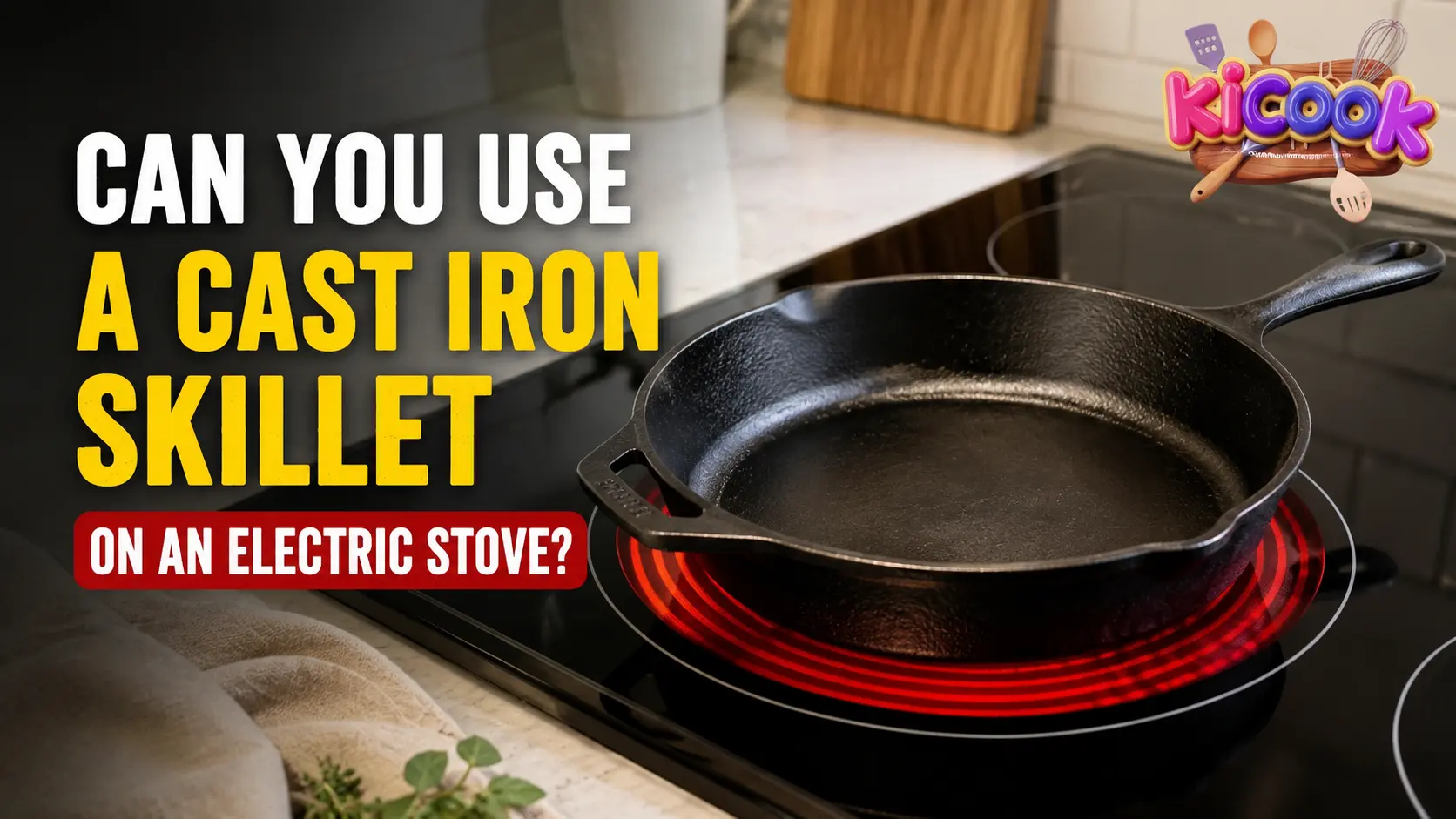
Yes, you can use a cast iron skillet on an electric stove. Cast iron works well on traditional electric coil burners, radiant glass-top stoves, ceramic cooktops, and most induction cooktops. However, you need to heat the skillet gradually, use the correct burner size, and handle it carefully especially when cooking on a glass surface.
Cast iron heats more slowly than many lightweight pans, but it retains heat exceptionally well. This makes it ideal for searing meat, frying chicken, cooking vegetables, making pancakes, and preparing one-pan meals. The same heat-retention ability can also cause food to burn when the skillet is overheated or the stove temperature is reduced too late.
The most important rules are simple: begin with low or medium-low heat, match the skillet to the burner, keep its bottom clean, and lift it instead of sliding it across a glass cooktop.
Is Cast Iron Safe for Every Type of Electric Stove?
Cast iron is compatible with most electric stoves, but the best way to use it depends on the type of cooktop you have.
| Electric Stove Type | Can You Use Cast Iron? | Main Precaution |
|---|---|---|
| Electric coil stove | Yes | Match the skillet to the coil size |
| Radiant glass-top stove | Usually | Lift the pan instead of sliding it |
| Ceramic cooktop | Usually | Check for a rough or uneven skillet bottom |
| Induction cooktop | Yes, in most cases | Use a magnetic, appropriately sized skillet |
| Solid-plate electric hob | Yes | Preheat slowly and avoid maximum heat |
Traditional electric coil stoves are generally straightforward because the cookware rests directly on a metal heating element. Smooth glass and ceramic cooktops require more care because a heavy skillet can scratch, mark, or damage the surface if it is dropped or dragged.
Induction cooktops are also electric, but they heat cookware through a magnetic field. Cast iron contains ferrous metal and is normally induction-compatible. However, you should still protect the glass surface by placing the skillet down gently.
Check Your Stove Manufacturer’s Instructions First
Although cast iron works on most electric cooking surfaces, manufacturers do not always provide identical recommendations.
Whirlpool states that cast iron can be used on a ceramic glass cooktop when precautions are taken, such as cleaning the skillet bottom and lifting the cookware instead of sliding it. Lodge also describes cast iron as suitable for electric and glass-top cooking when handled carefully.
However, GE advises against using unfinished cast iron on some radiant smooth glass cooktops because burrs or rough spots may scratch the surface. It considers fully porcelain-enamel-coated cast iron acceptable when the coating is smooth and complete.
Before using a heavy skillet on a glass or ceramic surface, find the use-and-care guide for your exact stove model. The recommendation in your appliance manual should take priority over general cooking advice.
How to Use a Cast Iron Skillet on an Electric Coil Stove
Electric coil burners are durable and work well with cast iron, but they respond more slowly to temperature changes than gas burners. Follow these steps for better results.
1. Inspect the coil burner
Make sure the coil is properly seated, stable, and reasonably level. A tilted or loose burner can prevent the skillet from sitting evenly, creating concentrated hot areas.
2. Choose the correct burner size
Select a burner that is close to the diameter of the skillet’s cooking base. A large skillet placed on a very small coil may heat mainly in the centre while the outer edges remain cooler.
For example, an 8-inch burner is generally more suitable for a 10- or 12-inch skillet than a small 6-inch burner. The exact fit does not have to be perfect, but the size difference should not be extreme.
3. Centre the skillet
Place the skillet in the middle of the coil. If it sits noticeably off-centre, one side may become hotter than the other.
4. Start with low or medium-low heat
Do not immediately turn the burner to its highest setting. Electric coils take time to heat, and cast iron continues absorbing energy while the burner warms.
Starting gradually reduces the risk of burnt seasoning, smoking oil, stuck food, and severe hot spots.
5. Allow the skillet to preheat
Give the skillet several minutes to warm before adding food. Lodge generally recommends preheating cast iron for approximately three to five minutes over medium-low heat, although the exact time depends on the pan, burner, and desired cooking temperature.
6. Add oil and begin cooking
Add a small amount of cooking oil after the skillet has started warming. The oil should become fluid and begin to shimmer slightly, but it should not produce heavy smoke.
7. Reduce heat early
When you need a lower temperature, turn down the burner before the food becomes overcooked. Both the coil and skillet retain heat, so the temperature will not fall immediately.
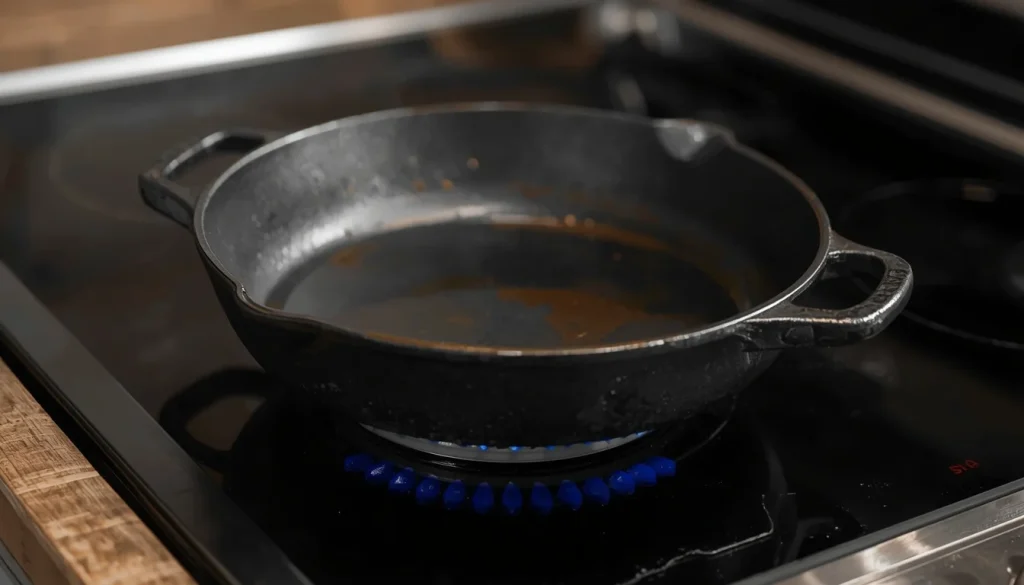
How to Use Cast Iron on a Glass-Top Electric Stove
You can use cast iron on many glass-top stoves, but handling is just as important as temperature control.
Clean the skillet bottom
Check the underside for dried food, grease, salt, grit, or other debris. Small particles trapped between a heavy skillet and the glass may leave marks when the pan moves.
The bottom should be clean and dry before it touches the cooktop.
Inspect for rough areas
Run your hand carefully over the cold skillet bottom. Look for sharp burrs, raised rust, dried residue, or severely uneven areas.
A rough, unfinished bottom creates a greater scratching risk than a smooth surface. Some manufacturers therefore prefer fully enameled cast iron for glass cooktops.
Place it down gently
Hold the skillet securely with both hands when necessary and lower it carefully onto the burner. Do not drop it, even from a short distance.
Cast iron is substantially heavier than many stainless-steel or nonstick pans. Impact, rather than normal cooking heat, is one of the greatest risks to a glass surface.
Lift instead of sliding
Never push the skillet from one burner to another. Lift it completely, move it, and gently place it down again.
Samsung advises users to lift cookware rather than slide it across electric or induction cooktops because cookware materials can damage or stain ceramic surfaces when dragged.
Remove it after cooking
When cooking is complete, lift the skillet and place it on a heat-safe trivet or cooling rack. Avoid leaving an extremely hot skillet on an inactive glass element longer than necessary.
Bare Cast Iron vs Enameled Cast Iron: Which Is Safer?
Both bare and enameled cast iron can work on electric stoves, but each has different advantages.
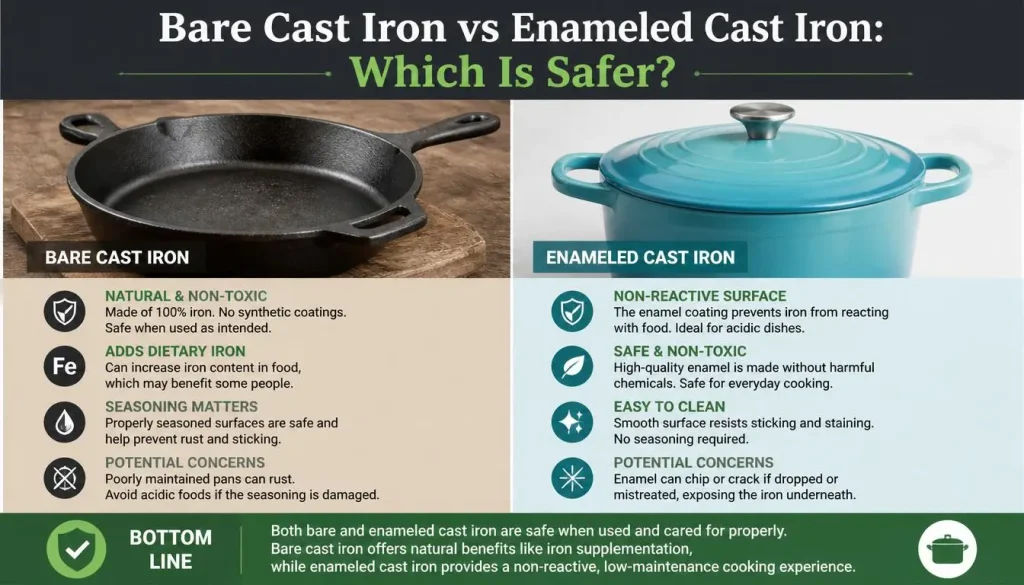
Bare cast iron
Traditional bare cast iron has a seasoned cooking surface and is suitable for frying, searing, baking, and roasting. It is durable, affordable, and compatible with most heat sources.
Its main concern on a glass cooktop is the bottom texture. A rough spot, burr, hardened residue, or rust patch can create scratches if the skillet is dragged.
Enameled cast iron
Enameled cast iron has a glass-like coating over the iron. A smooth, fully coated base may be gentler on a ceramic cooktop than rough unfinished iron.
However, enamel does not make the cookware lightweight. You must still avoid dropping or sliding it. Damaged or chipped enamel should also be inspected before use.
Which one should you choose?
For an electric coil stove, both types can perform well.
For a glass or ceramic stove, a flat skillet with a clean, smooth bottom is the safer choice. A fully enameled base may provide additional protection, but your appliance manufacturer’s instructions should determine whether it is approved.
What Heat Setting Should You Use?
You rarely need maximum heat when cooking with cast iron on an electric stove. The skillet’s heat retention allows it to maintain a strong cooking temperature after it has warmed.
| Cooking Task | Suggested Starting Setting |
|---|---|
| Eggs | Low to medium-low |
| Pancakes | Medium-low |
| Grilled sandwiches | Medium-low |
| Vegetables | Medium |
| Chicken pieces | Medium |
| Burgers | Medium |
| Steak searing | Medium to medium-high |
| Slow-cooked sauces | Low |
| Reheating food | Low to medium-low |
These settings are starting points rather than strict rules. Electric stoves vary significantly. A medium setting on one appliance may produce more heat than the same setting on another.
Start lower than you think you need. You can increase the temperature gradually, but cooling an overheated cast iron skillet takes much longer.
How Long Should You Preheat the Skillet?
A cast iron skillet usually needs several minutes to preheat on an electric stove. Lodge recommends approximately three to five minutes over medium-low heat as a general guideline.
A large or thick skillet may need longer than a small skillet. A radiant glass element may also behave differently from an exposed coil.
You can check the temperature using a few simple signs:
- The handle near the skillet body begins to feel warm.
- Cooking oil flows easily across the surface.
- The oil shimmers gently.
- A small drop of water dances briefly instead of sitting still.
Do not pour a large quantity of water into a hot skillet. A few test droplets are enough. If oil begins producing heavy smoke, the skillet is too hot.
Does Skillet and Burner Size Matter?
Yes. A burner that is close to the size of the skillet base usually provides more balanced heating.
Samsung recommends cookware with a flat bottom and a size that corresponds to the heating element. Lodge also warns that placing much larger cookware over a smaller heat source can create hot spots.
A 12-inch skillet can still be used on a slightly smaller burner, but it will need more time to heat evenly. Rotate the skillet carefully during preheating when necessary, provided that you lift it on a glass surface rather than dragging it.
Avoid placing a very wide pan over a tiny coil and turning the burner to maximum heat in an attempt to warm the edges. This may overheat the centre while leaving the outer cooking area relatively cool.
Why Does Cast Iron Heat Unevenly on an Electric Stove?
Uneven heating may occur for several reasons:
- The skillet is significantly larger than the burner.
- The pan is not centred.
- The coil is tilted or damaged.
- The skillet bottom is warped or uneven.
- The pan was heated too quickly.
- Food was added before the cooking surface warmed.
- The radiant element is cycling normally.
Cast iron retains heat well, but it does not instantly distribute heat from a small burner across a large surface. Slow preheating gives heat more time to move throughout the skillet.
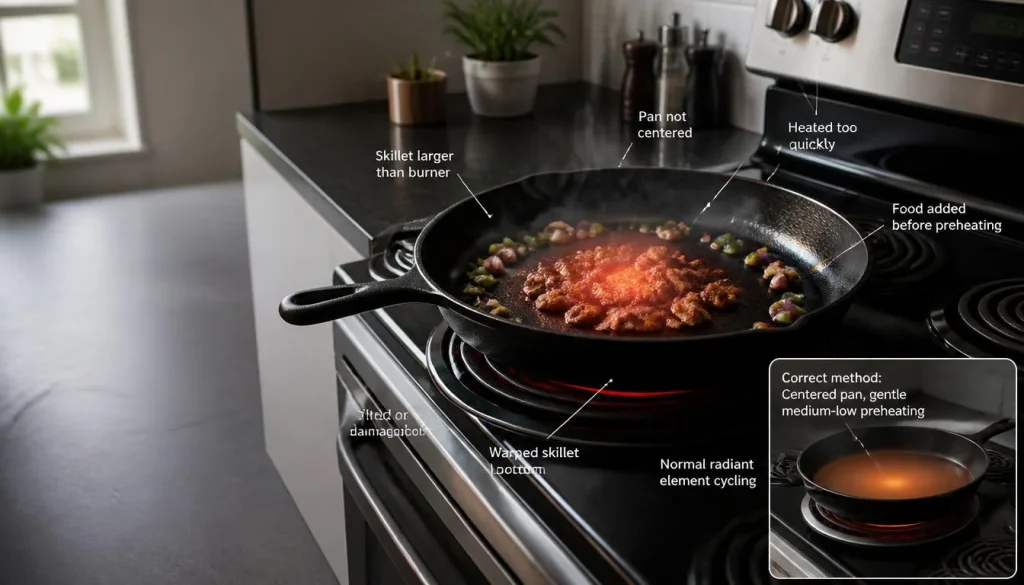
When using a large skillet, preheat it on medium-low rather than blasting the centre with maximum heat. You may also rotate it once or twice during preheating. Lift the pan before rotating it on a glass cooktop.
Why Does an Electric Burner Turn On and Off?
Radiant elements under smooth glass surfaces commonly cycle on and off during normal operation. The glowing element may become bright red and then temporarily go dark while the stove regulates temperature.
GE explains that this cycling is normal for radiant burners and that the proportion of on-and-off time changes with the selected heat setting.
Cast iron can make this behaviour more noticeable because it retains substantial heat. Even while the element is temporarily off, the skillet continues cooking the food.
You should investigate further when:
- The burner never becomes warm.
- It shuts off almost immediately while the pan remains cold.
- Only part of the element heats.
- There is sparking, a burning electrical smell, or visible damage.
- The stove displays an error code.
Stop using the affected burner and consult the appliance manual or a qualified technician when an electrical fault is suspected.
Why Does Food Burn in Cast Iron on an Electric Stove?
Food usually burns because the skillet has accumulated more heat than expected.
Electric burners do not cool immediately when you turn the control down. At the same time, cast iron continues releasing stored heat into the food. This creates a delay between changing the dial and seeing the result.
To prevent burning:
- Begin on medium-low rather than high.
- Reduce the setting before the food becomes too dark.
- Use enough cooking fat.
- Avoid overcrowding the skillet.
- Move the pan to a cold burner when rapid cooling is necessary.
- Turn the burner off slightly before the food is finished and use residual heat.
For delicate foods such as eggs, fish, and pancakes, start with a lower temperature. A properly preheated skillet does not need to be extremely hot.
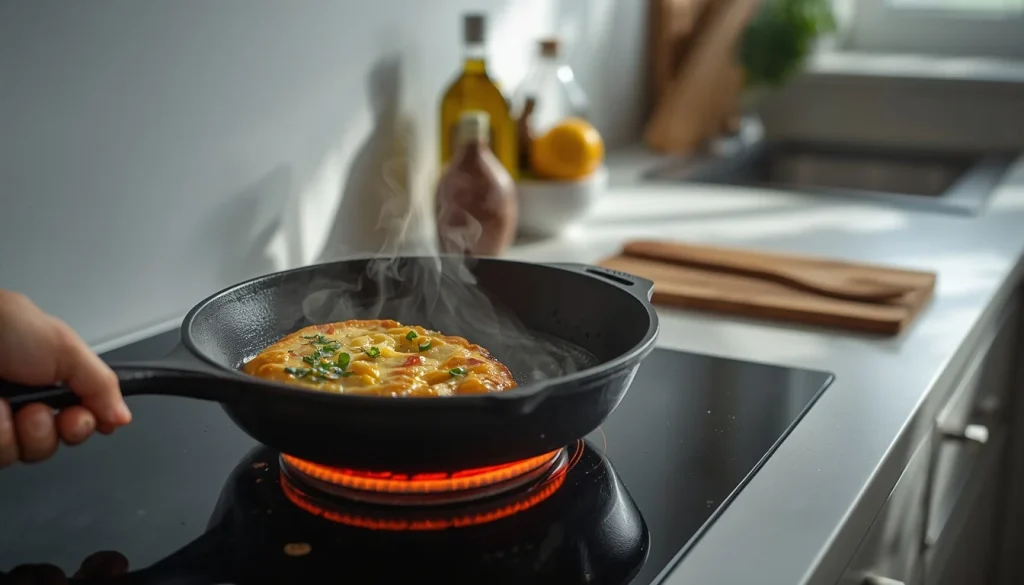
Why Is the Cast Iron Skillet Smoking?
A smoking skillet normally indicates excessive heat, overheated oil, food residue, or excess seasoning oil.
The cooking oil is too hot
Every cooking oil has a temperature at which it begins to smoke. When this happens, remove the skillet from the burner and reduce the stove setting.
Lodge advises removing an overheated skillet from the heat for a minute or two if the oil begins to smoke.
Residue is burning
Food, grease, or oil stuck to the outside or bottom of the skillet may burn when it contacts the hot element. Clean both the interior and exterior after cooking.
The seasoning layer is overheating
Very high heat can damage seasoning, particularly when the layer is thick, sticky, or uneven. Use only a thin coating of oil when maintaining the skillet.
Never cool an overheated skillet by placing it under cold running water. The sudden temperature change may damage the cookware. Move it to a safe surface and let it cool gradually.
How to Prevent Scratches, Marks, and Cracks
A glass cooktop is durable, but it is not impossible to damage. Follow these precautions:
- Inspect the skillet bottom before every use.
- Remove dried food, grease, rust, and debris.
- Place the skillet down gently.
- Lift it completely before repositioning it.
- Use a skillet you can control safely.
- Avoid striking the glass with the handle.
- Keep the cooktop free from salt, sugar, and gritty particles.
- Do not use cookware with sharp burrs.
- Avoid heating a severely warped pan.
- Follow the stove manufacturer’s cookware restrictions.
Some streaks that resemble scratches may actually be metal or mineral residue on the surface. Allow the stove to cool and clean it with a product approved by the manufacturer.
If the glass is cracked, deeply chipped, or pitted, stop using the cooktop. GE recommends arranging service when a ceramic glass surface is cracked or pitted.
Should You Put a Mat Under Cast Iron?
Do not place a towel, silicone mat, paper liner, metal plate, or unapproved heat diffuser between a cast iron skillet and an active electric heating element.
Adding material between the pan and element may interfere with heat transfer, trap heat, melt, burn, or conflict with the stove’s safety instructions.
Some induction accessories are specifically designed for particular appliances, but they should only be used when the stove manufacturer approves them. The safest default is to place compatible cookware directly on the designated cooking zone.
Common Mistakes to Avoid
Starting on maximum heat
High heat may warm the centre too aggressively before the entire skillet reaches a balanced temperature.
Using the wrong burner
A tiny burner beneath a large skillet can create a hot centre and cool edges.
Sliding the skillet
Dragging heavy cookware may scratch or mark a ceramic glass surface.
Leaving the skillet unattended
An empty cast iron skillet can become extremely hot while the cook is distracted.
Adding cold liquid to a hot pan
A sudden temperature change may cause thermal stress, damage seasoning, or create dangerous steam.
Using too much seasoning oil
A thick layer of oil may become sticky, smoky, or uneven instead of forming a hard protective layer.
Expecting instant temperature changes
Reducing an electric stove from high to low does not immediately reduce the skillet’s stored heat.
Using a dirty skillet bottom
Grease and food residue can burn onto the stove or leave marks.
How to Clean the Skillet After Cooking
Allow the skillet to cool until it is safe to handle but still slightly warm.
Remove loose food with a scraper, brush, or non-abrasive cleaning tool. Wash it with warm water and a small amount of mild dish soap when needed. Modern dish soap will not automatically ruin a well-maintained seasoning layer.
Do not leave bare cast iron soaking in water. Prolonged moisture exposure can encourage rust.
Dry the skillet immediately with a towel. You may place it over low heat briefly to evaporate remaining moisture, but stay nearby and turn the burner off once the pan is dry.
Apply a very thin coating of cooking oil to bare cast iron. Wipe away the excess until the surface does not look wet or greasy.
How to Clean the Electric Cooktop
Wait until the cooktop has cooled unless the manufacturer instructs otherwise.
Wipe away loose crumbs and grease with a soft cloth. For a glass or ceramic surface, use a cleaner and scraper approved for your appliance. Avoid steel wool, harsh abrasive powders, and tools that can scratch the glass.
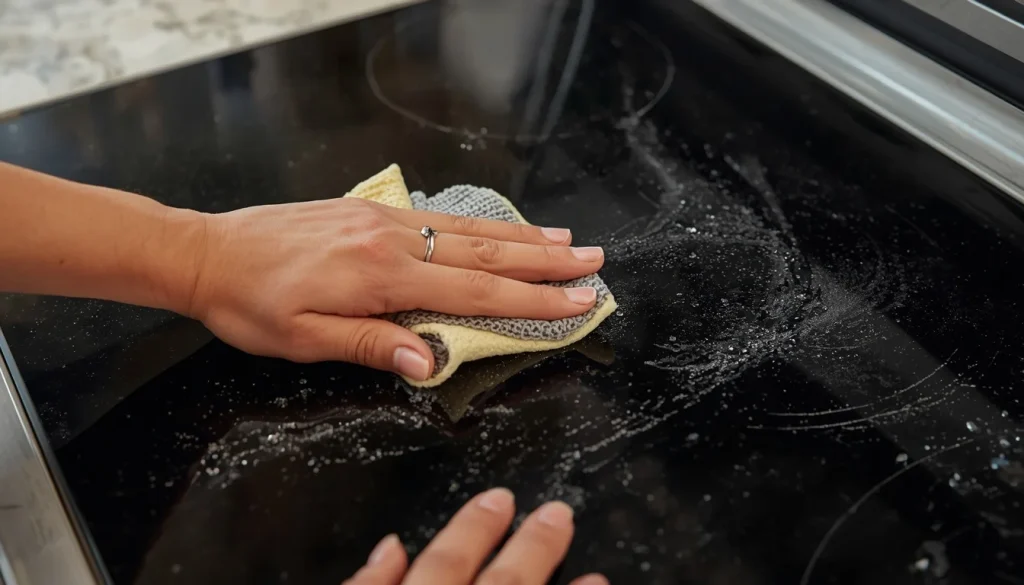
Clean sugary spills promptly and follow the stove manual because melted sugar can bond strongly to a hot ceramic surface.
Before the next cooking session, make sure both the cooktop and skillet bottom are completely clean and dry.
Frequently Asked Questions About Can You Use a Cast Iron Skillet on an Electric Stove
Can you use a cast iron skillet on an electric coil stove?
Yes. Cast iron works well on an electric coil stove. Choose a coil close to the size of the skillet base, centre the pan, and preheat it gradually on low or medium-low heat.
Can cast iron damage an electric stove?
It is unlikely to damage a traditional coil simply through normal use. On a glass or ceramic stove, however, a heavy pan may scratch or crack the surface if it is dragged, dropped, or has a rough bottom.
Will cast iron scratch a glass-top stove?
It can scratch the surface when the bottom is rough or when the skillet is slid across the glass. Keep the base clean and lift the cookware whenever you move it.
Can cast iron crack a glass cooktop?
Normal, careful cooking should not crack a compatible cooktop. Damage is more likely when heavy cookware is dropped, struck against the glass, or used contrary to the appliance instructions.
Can you use enameled cast iron on an electric stove?
Yes. Enameled cast iron works on most electric coil, radiant, and induction stoves. For glass cooktops, a fully coated, smooth bottom may be preferable to rough unfinished cast iron.
What is the best electric stove setting for cast iron?
Medium-low is a good preheating setting. Low to medium works for many everyday foods, while medium-high may be used for searing after the skillet has heated gradually.
How long should cast iron preheat?
Approximately three to five minutes on medium-low is a useful starting guideline, but large skillets and low-powered burners may need longer.
Why is my cast iron skillet not getting hot?
The skillet may be too large for the burner, the coil may not be properly seated, the pan may be off-centre, or the radiant element may be cycling. Check the burner and allow more preheating time.
Why does everything stick to my cast iron pan?
Common reasons include insufficient preheating, too little oil, damaged seasoning, adding very cold food, or attempting to turn the food before it has naturally released from the surface.
Can you use a 12-inch skillet on an 8-inch burner?
Usually, yes, but the centre may heat faster than the edges. Preheat slowly, centre the skillet, and rotate it carefully when necessary.
Can you use a cast iron griddle across two electric burners?
You can use a suitable griddle across two burners when the manufacturer permits it. Set both burners to similar temperatures and allow extra time for the centre to heat. A bridge element can improve heat distribution.
Is cast iron better on gas or electric stoves?
Cast iron works on both. Gas responds faster to control changes, while electric burners provide steady heat but take longer to warm and cool. Good results depend more on temperature management than on the fuel type.
Can you use a cast iron pan on an electric hob?
Yes. “Electric hob” is the term commonly used in the UK and other regions for an electric cooktop. The same rules apply: use a suitable zone, preheat slowly, and avoid sliding the pan on glass.
Can you cook acidic food in cast iron?
Short cooking periods are usually manageable in a well-seasoned skillet. Long cooking times with tomatoes, wine, citrus, or vinegar may weaken new seasoning or create a metallic flavour. Enameled cast iron is a better choice for long-simmered acidic dishes.
Final Verdict
You can safely use a cast iron skillet on an electric stove, including coil, radiant, ceramic, and most induction models. The key is to understand that cast iron heats gradually, retains heat for a long time, and is heavier than most other cookware.
Start with low or medium-low heat, use a burner close to the size of the skillet, and reduce the temperature before the food begins to burn. On a glass-top stove, keep the skillet bottom smooth and clean, place it down gently, and always lift it instead of sliding it.
Finally, check your appliance manual. General cast iron advice is useful, but the manufacturer’s instructions for your exact electric stove should always be followed.

“I believe great cooking starts with the right tools, trusted advice, and a little confidence in the kitchen.”
Hi, I’m Emma Carter. My love for cooking began in my grandmother’s kitchen, where I learned that every great meal starts with simple ingredients and the right cookware. Over the years, I’ve spent countless hours researching, testing, and comparing kitchen appliances, cookware, coffee makers, air fryers, and other everyday kitchen essentials.
Here at KiCook, my goal is to make your buying decisions easier with honest product reviews, practical buying guides, and easy-to-follow cooking tips. Whether you’re upgrading your kitchen or searching for the best appliance for your home, I focus on providing clear, reliable, and research-backed information you can trust.
When I’m not testing new kitchen gadgets or writing in-depth guides, you’ll usually find me trying new recipes, visiting local farmers’ markets, or enjoying a quiet cup of coffee while planning my next kitchen project.