
If your electric skillet keeps shutting off, it’s usually due to overheating protection or a faulty temperature probe. Lowering the heat and checking the probe often solves the problem.
I’ve cooked with electric skillets for years, and this is one of the most frustrating problems. You’re halfway through a meal, everything is going fine, and suddenly click the skillet shuts off.
If this keeps happening, your skillet isn’t broken by default. Most of the time, it’s doing exactly what it was designed to do.
Let me explain what’s really going on and how to fix it.
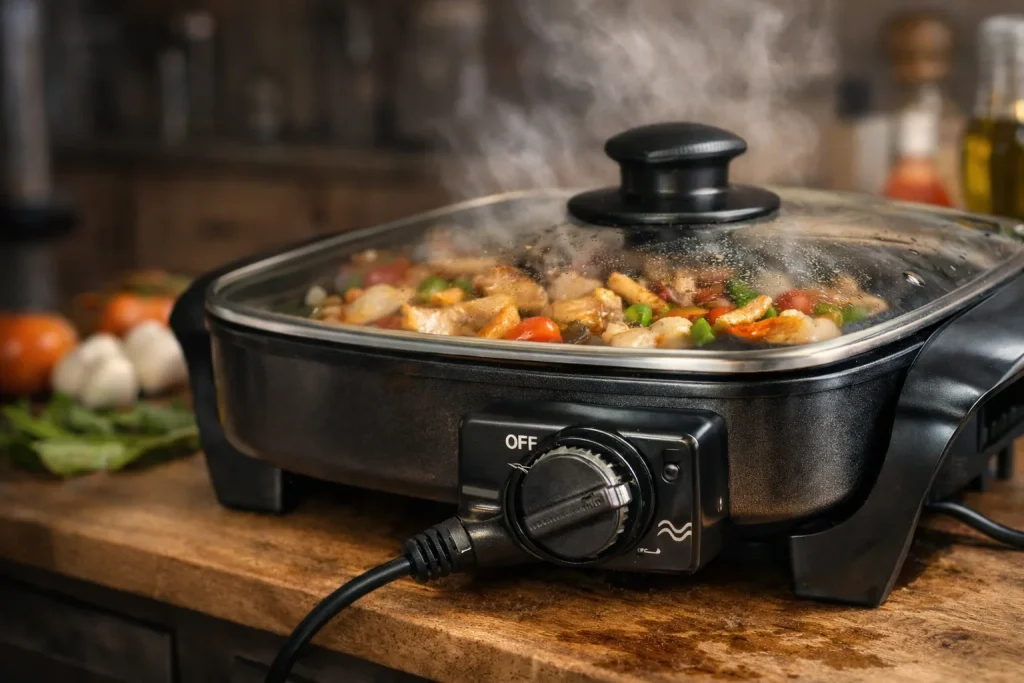
How Electric Skillets Control Heat
Before blaming the skillet, it helps to understand one thing.
Electric skillets cycle on and off by design.
They use a thermostat to hold a steady temperature.
But when a skillet shuts off too often or for too long something isn’t right.
1. Overheating Protection Is Triggering
This is the most common reason.
Electric skillets have built-in safety systems.
If the temperature gets too high, the skillet shuts off automatically.
Why overheating happens
- Cooking on maximum heat for long periods
- Not enough oil or liquid in the pan
- Cooking very thick or dry foods
What it looks like
- Skillet turns off suddenly
- Comes back on after cooling
- Repeats the cycle again and again
What I do
- Lower the temperature setting
- Add a little oil or liquid
- Avoid preheating on high for too long
2. Faulty or Worn-Out Temperature Control Probe
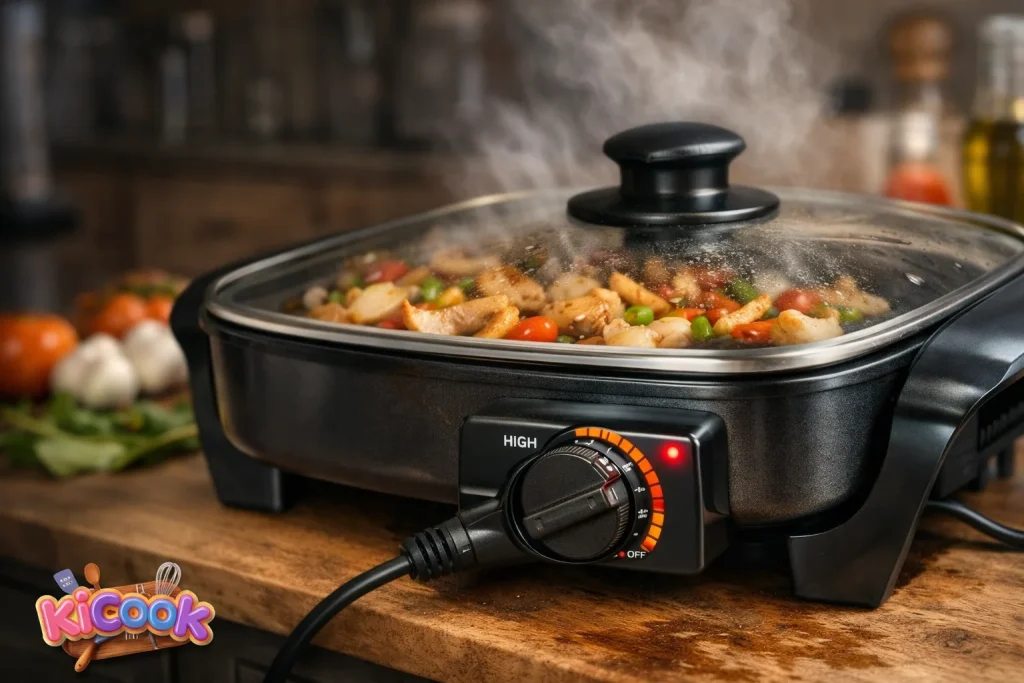
If your skillet shuts off too often, the control probe may be failing.
What happens
- Internal sensor misreads temperature
- Skillet thinks it’s overheating
- Power cuts off early
Common signs
- Shuts off even on medium heat
- Clicking sound happens too soon
- Wiggling the probe changes behavior
Solution
- Unplug and remove the probe
- Clean the metal contacts
- Replace the probe if possible
In my experience, replacing the probe fixes the problem more than half the time.
3. Poor Electrical Connection
Sometimes the skillet isn’t the real problem.
Possible causes
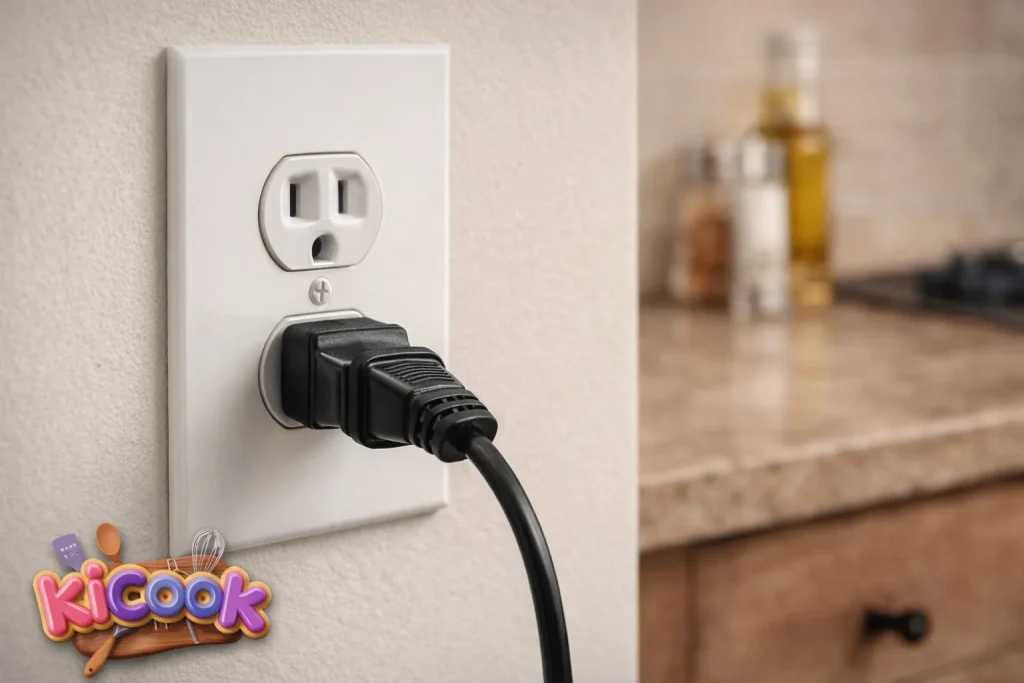
- Loose plug connection
- Worn power outlet
- Extension cord not rated for high heat
Symptoms
- Power cuts out randomly
- Light flickers before shutting off
- Skillet restarts when touched or moved
What I recommend
- Plug directly into a wall outlet
- Avoid extension cords
- Try a different socket
4. Thermostat Cycling More Than Normal
Some people think the skillet is broken—but it isn’t.
Normal behavior
- Skillet heats up
- Turns off briefly
- Turns back on to hold temperature
When it becomes a problem
- Off time is very long
- Food stops cooking
- Heat feels uneven
This usually means the thermostat is wearing out and no longer regulating heat correctly.
5. Internal Thermal Fuse Starting to Fail
This is more serious.
The thermal fuse is a safety part that shuts down power when temperatures get unsafe.
Early warning signs
- Skillet shuts off and stays off longer
- Needs long cooling time
- Eventually stops working completely
Once a thermal fuse fully fails, the skillet cannot be repaired safely.
Quick Troubleshooting Table
| Symptom | Likely Cause | Best Fix |
|---|---|---|
| Shuts off on high heat | Overheating protection | Lower heat |
| Shuts off randomly | Bad probe | Replace probe |
| Flickers and cuts power | Loose outlet | Change outlet |
| Long off cycles | Worn thermostat | Replace skillet |
| Stops working permanently | Blown thermal fuse | Replace skillet |
Is It Safe to Keep Using a Skillet That Shuts Off?
This depends on the cause.
Usually safe if:
- It restarts normally
- It only shuts off on high heat
- Food continues cooking
Not safe if:
- It shuts off without warning
- Power cuts out completely
- Burning smell or sparks appear
If safety feels questionable, stop using it.
Pros and Cons of a Skillet That Cycles Off
Pros
- Prevents overheating
- Protects from fire risk
- Saves energy
Cons
- Slows cooking
- Causes uneven results
- Signals aging components
Expert Opinion
After years of real kitchen use, here’s my honest view:
If your electric skillet keeps shutting off, it’s usually protecting itself from heat stress. Lowering the temperature solves many cases. If it still happens, the temperature probe is often the real problem—not the skillet itself.
Ignoring the issue only shortens the lifespan.
How I Prevent My Electric Skillet from Shutting Off
These habits work every time for me:
- Preheat on medium, not high
- Use oil or liquid when cooking dry foods
- Keep probe contacts clean
- Never block the vent area
- Let the skillet cool between long sessions
Small changes make a big difference.
FAQs on Electric Skillet Keep Shutting Off While Cooking
Why does my electric skillet turn off and on while cooking?
Because the thermostat cycles power to maintain a steady temperature. This is normal unless it happens too often.
Is it normal for an electric skillet to click off?
Yes. Clicking means the thermostat is regulating heat. Constant or early clicking may signal a problem.
Can I stop my electric skillet from shutting off?
You can reduce how often it shuts off by lowering heat, adding liquid, and ensuring a solid power connection.
Does shutting off mean my skillet is overheating?
Often yes. It’s a built-in safety response to excess heat.
Should I replace my electric skillet if it keeps shutting off?
If lowering heat and replacing the probe don’t help, replacement is the safest option.
Final Thoughts
When you ask, “Why does my electric skillet keep shutting off while cooking?”, the answer is usually simple.
Most of the time, your skillet is:
- Protecting itself from overheating
- Reacting to a worn temperature probe
- Responding to power issues
Start with heat control.
Then check the probe.
If problems continue, don’t push it—safety matters.
A good electric skillet should cook steadily, not fight you every step of the way.

“I believe great cooking starts with the right tools, trusted advice, and a little confidence in the kitchen.”
Hi, I’m Emma Carter. My love for cooking began in my grandmother’s kitchen, where I learned that every great meal starts with simple ingredients and the right cookware. Over the years, I’ve spent countless hours researching, testing, and comparing kitchen appliances, cookware, coffee makers, air fryers, and other everyday kitchen essentials.
Here at KiCook, my goal is to make your buying decisions easier with honest product reviews, practical buying guides, and easy-to-follow cooking tips. Whether you’re upgrading your kitchen or searching for the best appliance for your home, I focus on providing clear, reliable, and research-backed information you can trust.
When I’m not testing new kitchen gadgets or writing in-depth guides, you’ll usually find me trying new recipes, visiting local farmers’ markets, or enjoying a quiet cup of coffee while planning my next kitchen project.



2 thoughts on “Why Does My Electric Skillet Keep Shutting Off While Cooking?”