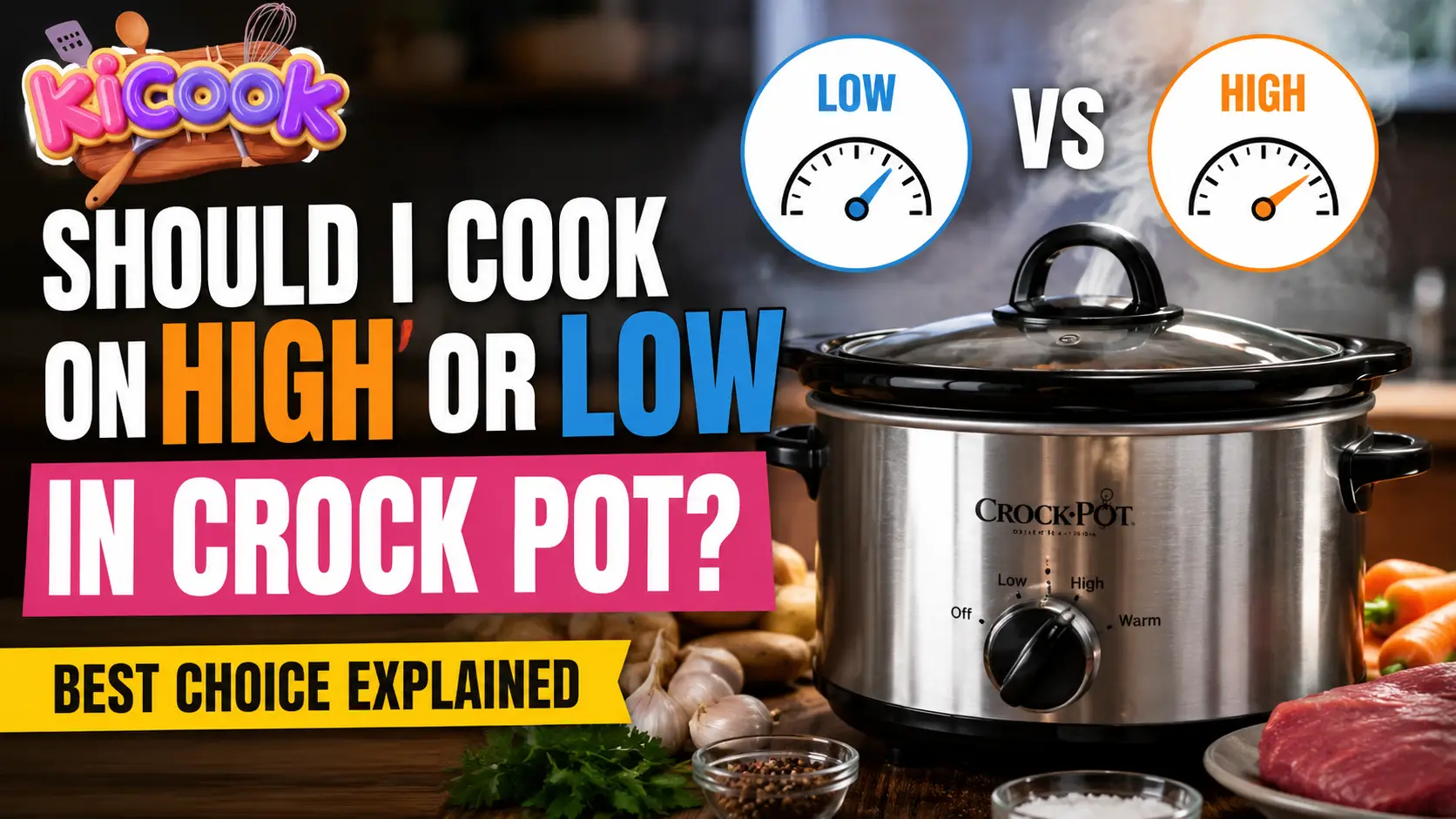
YES, choosing the right crock pot setting matters. In most cases, the crock pot low setting delivers better flavor, tenderness, and moisture because food cooks slowly over 6–10 hours. The crock pot high setting is best when you’re short on time and need meals ready in 3–5 hours.
Cooking on low and cooking on high can both produce safe, delicious meals in a slow cooker. The difference is how quickly the food reaches its final temperature and how ingredients react during cooking. Most crock pots reach a similar final temperature, often around 200°F (93°C), but they get there at different speeds.
The biggest catch is that not every recipe can simply be switched from one setting to the other. Some cuts of meat become less tender when cooked too quickly, while certain vegetables may turn mushy during extended cooking times.
In this guide, you’ll learn when to use the crock pot high setting, when the crock pot low setting is the better choice, how cooking times compare, and which setting works best for common meals. Let’s break down what actually happens inside your slow cooker.
Why This Matters — Crock Pot High Setting vs Low Setting
Choosing the wrong slow cooker setting can affect flavor, texture, food safety, and even energy use.
Many home cooks assume high and low are simply speed settings. While speed is the biggest difference, the cooking process also changes. Meat contains connective tissue made of collagen. When cooked slowly over several hours, collagen breaks down into gelatin, creating tender and juicy results.
This is especially important for tougher cuts such as chuck roast, pork shoulder, and beef brisket. A crock pot low setting gives these cuts enough time to soften naturally.
Food safety is another reason this matters. According to food safety guidelines, poultry should reach 165°F (74°C) before serving. Ground meats should reach safe internal temperatures as well. Slow cookers are designed to reach these temperatures safely, but cooking on low requires enough time to complete the process.
Energy use is another factor worth considering. A slow cooker on low typically uses 70–150 watts, while high uses
150–210 watts. For all-day cooking, low is not only better for flavor, it’s also the more energy-efficient choice for households focused on reducing electricity costs.
For soups, stews, chili, shredded meats, and meal-prep recipes, low cooking often produces deeper flavor development. High cooking can still work well but may not provide the same level of tenderness for certain ingredients.
Understanding the difference helps prevent dry meat, overcooked vegetables, and disappointing weeknight dinners.
How To Choose Between High and Low in a Crock Pot
| Setting | Typical Cook Time | Best For | Recommended? |
|---|---|---|---|
| Low | 6–10 hours | Tough meats, stews, soups, meal prep | Yes |
| High | 3–5 hours | Quick meals, last-minute cooking | Yes |
| Warm | Holding food after cooking | Serving only | No for cooking |
| Low Overnight | 8–10 hours | Pulled pork, roasts, beans | Yes |
| High for Start, Low to Finish | Mixed timing schedules | Flexible cooking days | Yes |
Note: Actual cooking times vary by crock pot size, food quantity, and brand. Always verify doneness with a food thermometer.
Use Low for Tough Cuts of Meat
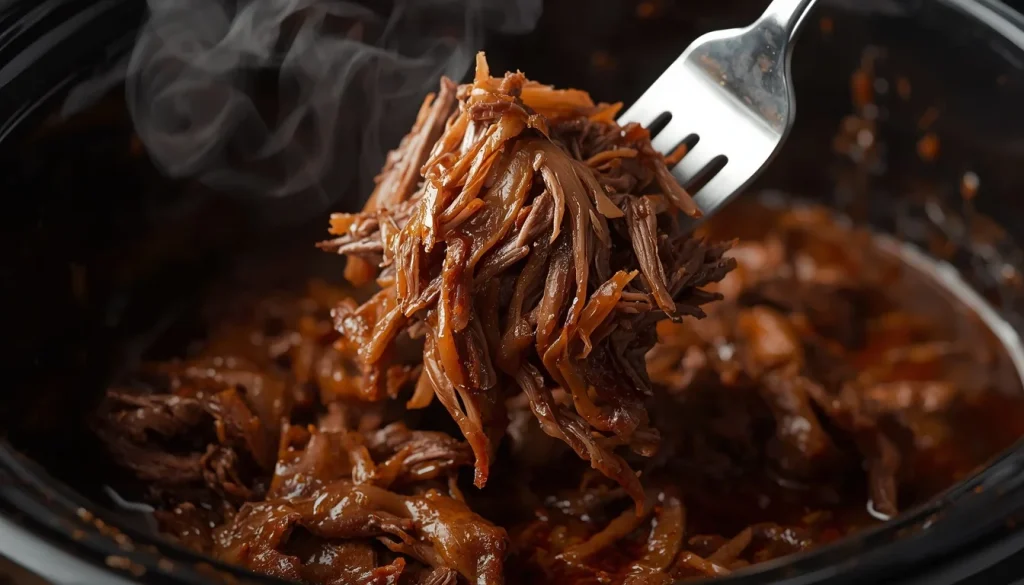
Long cooking times allow collagen to break down gradually. This creates fork-tender beef, pork, and lamb.
Use High When Time Is Limited
If dinner needs to be ready in a few hours, high is a practical option. The meal will still cook safely and thoroughly.
Consider Vegetable Texture
Potatoes and carrots hold up well during long cooking. Softer vegetables may become overly tender on low for extended periods.
Match the Setting to the Recipe
Recipes designed for all-day cooking generally perform best on low. Shorter recipes often use high.
Use a Thermometer for Accuracy
Instead of relying solely on time, check internal temperatures. This prevents undercooked or overcooked food.
Think About Flavor Development
Longer cooking often creates richer flavors because ingredients have more time to blend and release natural juices.
Step-by-Step Guide
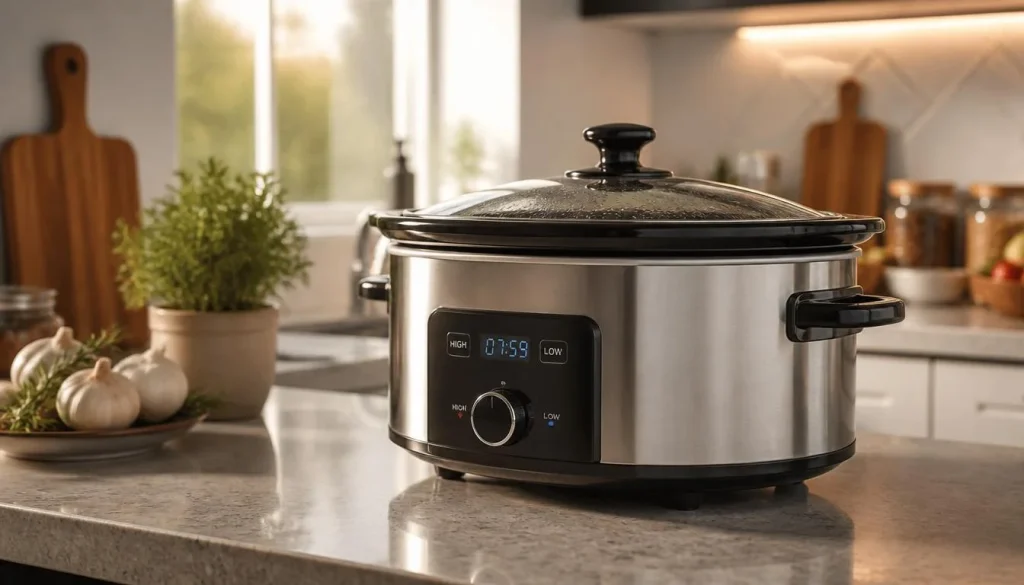
- Choose the recipe and identify its recommended cooking time. Recipes requiring 8–10 hours generally perform best on low.
- Trim excess fat from large cuts of meat. Leave enough for flavor but avoid excessive grease buildup during cooking.
- Fill the crock pot between one-half and two-thirds full for the most consistent heating performance.
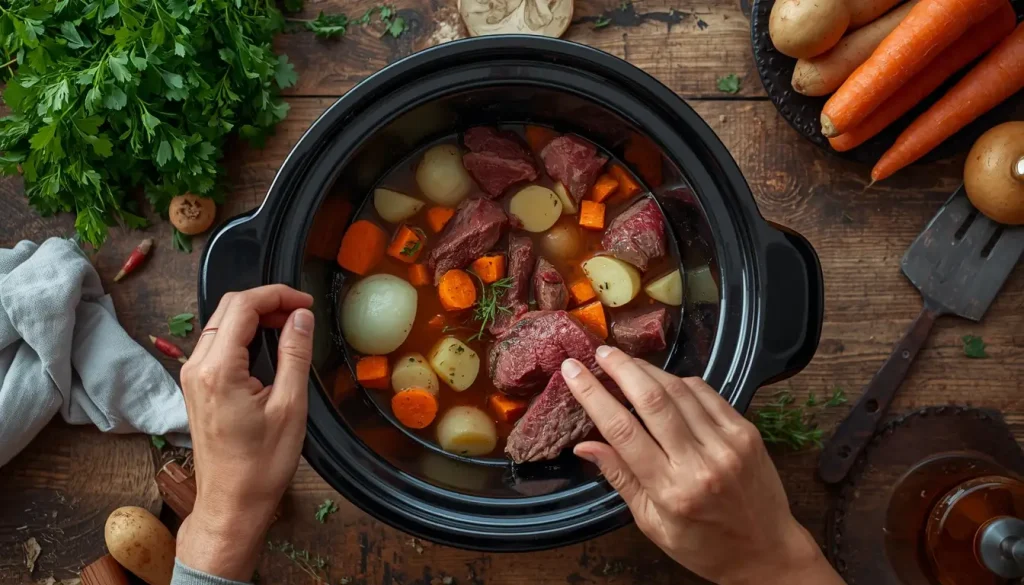
- Add root vegetables such as potatoes and carrots to the bottom of the cooker because they require more heat exposure. Pro tip: Cut potatoes into similar-sized pieces for even cooking.
- Place meat on top of the vegetables and add cooking liquid according to the recipe.
- Select low for cooking times of 6–10 hours or high for 3–5 hours. Pro tip: If using high, reduce the amount of delicate vegetables to prevent overcooking.
- Avoid lifting the lid repeatedly. Each lid opening can add approximately 15–20 minutes to cooking time.
- Check that meat reaches the proper internal temperature before serving. Poultry should reach 165°F (74°C), while larger roasts should be tender enough to shred easily.
Expert Tips & Common Mistakes
Pro Tips
- Cook beef chuck roast on low for 8–10 hours for the most tender texture.
- Use at least 1 cup of liquid for most slow cooker recipes unless the recipe states otherwise.
- Keep the lid closed during cooking to maintain stable temperatures.
- For chicken, check for an internal temperature of 165°F (74°C) before serving.
- Cut vegetables into pieces approximately 1–2 inches wide for even cooking.
- Add dairy products – cream, milk, sour cream, or cheese – only during the last 15–30 minutes of cooking. Added too early, dairy separates and curdles during long cooking cycles.
Common Mistakes
- Cooking delicate seafood too long can cause it to become dry and rubbery.
- Overfilling the crock pot reduces heat circulation and may lead to uneven cooking.
- Switching from low to high too late can result in undercooked meals because temperature recovery takes time.
- Adding dairy products too early may cause curdling and texture problems, especially during long cooking cycles.
Temperature and time are the two most important ingredients in cooking.” — Thomas Keller, Chef and Culinary Author
For a deeper look at how heat affects texture and moisture retention, the cooking science resources at Serious Eats provide excellent explanations and tested techniques.
FAQs on Should I Cook on High or Low in Crock Pot
Should I cook chicken on high or low in a crock pot?
Low is usually the better choice for chicken when time allows. Cooking on low helps retain moisture and reduces the risk of dry meat. For boneless chicken breasts, 4–6 hours on low often produces the best results.
Can I cook a roast on high instead of low?
Yes, but results may differ. A roast cooked on high can become tender, but low cooking generally creates a softer texture because connective tissues have more time to break down gradually.
Why is my crock pot meat tough on high?
Toughness often occurs when collagen has not had enough time to fully convert into gelatin. The meat may be cooked safely but still needs additional cooking time to become tender.
Is it safe to leave a crock pot on low overnight?
Yes, most modern slow cookers are designed for extended cooking. Many recipes such as pulled pork, beef stew, and large roasts are specifically developed for overnight low-temperature cooking.
Does food taste better on the crock pot low setting?
Many home cooks believe it does. The extended cooking period allows flavors to blend more completely and often results in richer soups, stews, and braised meats.
What happens if I cook a roast on high for too long?
The meat may become dry and stringy rather than tender. High heat speeds up cooking but doesn’t allow enough time for collagen to fully convert into gelatin. If you overshot the time on high, add a splash of broth and switch to warm to prevent further drying.
Should I cook chili on high or low in a crock pot?
Low is usually preferred for chili. An extended cooking time of 6–8 hours allows spices, tomatoes, beans, and meat to develop a deeper, more balanced flavor.
Can I switch from high to low during cooking?
Yes. Many cooks start on high for the first hour to accelerate heating and then switch to low for the remainder of the cooking time. This can be useful on busy days when schedules change.
Conclusion
If you’re wondering should I cook on high or low in crock pot, the answer depends on your schedule, but low is usually the better option for flavor and tenderness. The crock pot low setting gives tough cuts of meat enough time to break down properly, creating juicy and tender results. The crock pot high setting works well when you’re short on time and need dinner ready faster.
The most important takeaway is that both settings can cook food safely, but low cooking often delivers superior texture for roasts, stews, pulled pork, and other slow-cooked favorites.
Set your next slow cooker meal on low whenever possible and compare the results for yourself—you may never go back.

“I believe great cooking starts with the right tools, trusted advice, and a little confidence in the kitchen.”
Hi, I’m Emma Carter. My love for cooking began in my grandmother’s kitchen, where I learned that every great meal starts with simple ingredients and the right cookware. Over the years, I’ve spent countless hours researching, testing, and comparing kitchen appliances, cookware, coffee makers, air fryers, and other everyday kitchen essentials.
Here at KiCook, my goal is to make your buying decisions easier with honest product reviews, practical buying guides, and easy-to-follow cooking tips. Whether you’re upgrading your kitchen or searching for the best appliance for your home, I focus on providing clear, reliable, and research-backed information you can trust.
When I’m not testing new kitchen gadgets or writing in-depth guides, you’ll usually find me trying new recipes, visiting local farmers’ markets, or enjoying a quiet cup of coffee while planning my next kitchen project.