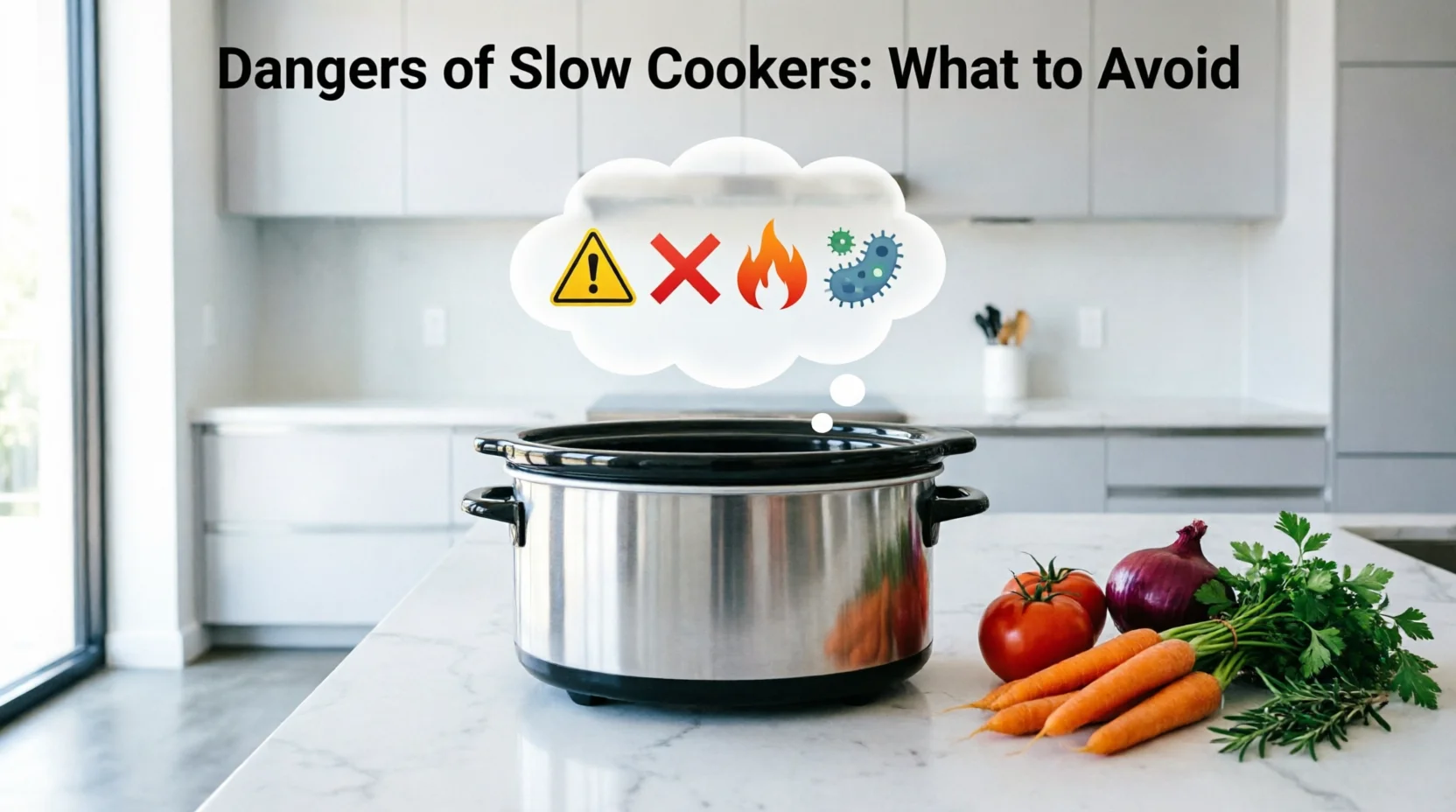
The dangers of slow cookers mostly come from food safety mistakes, not from the appliance itself. If food stays too long in unsafe temperatures or is cooked the wrong way, it can make people sick.
I get why slow cookers are so popular. They save time, cut stress, and make dinner feel almost automatic. But the dangers of slow cookers usually show up when people assume they can use them with zero care.
I’ve seen the same pattern again and again: people want convenience, so they skip a few safety steps. That is where trouble starts. In this article, I’ll walk you through the real risks, the most common mistakes, and the simple habits that make slow cooking much safer.
Common problems people run into
Food stays too long in unsafe temperatures
The biggest problem is food sitting in the temperature range where bacteria grow fast. That can happen if the cooker is too full, the lid is opened too often, or the ingredients go in while still frozen.
The fix is simple. Thaw meat in the fridge first, preheat the cooker if the recipe calls for it, and avoid loading it with frozen blocks. If you live in the USA, UK, Canada, or Australia, the same rule applies: convenience should never replace safe handling.
Meat looks cooked but is not safe yet
Another danger is trusting appearance instead of temperature. Chicken can look done on the outside while the inside is still unsafe. Thick stews and roasts can do the same thing.
The practical solution is to use a food thermometer. A cheap thermometer removes guesswork and helps you confirm that the center of the food is actually safe. For example, if you’re making pulled pork for a family meal in Toronto or Birmingham, checking the temperature gives you far more confidence than guessing by texture alone.
Leftovers are handled the wrong way
People also use slow cookers to reheat leftovers, which sounds convenient but can be risky. A slow cooker warms food slowly, and that slow rise in heat can let bacteria grow before the food gets hot enough.
A safer choice is to reheat leftovers on the stove or in the microwave first. Then you can move them into the cooker only if you need to keep them warm for a short time. This matters especially for busy homes in Sydney, Melbourne, New York, or Manchester where food may sit out while everyone gets ready to eat.
Why slow cookers go wrong
Frozen ingredients create delays
Frozen chicken, beef, or vegetables may seem harmless, but they can slow the whole cooking process. While the center is thawing, the outer layers may sit too long in unsafe conditions.
I always tell people to think ahead by one night. That simple habit avoids a lot of risk. If you plan dinner before bed instead of at 8 a.m., you can thaw ingredients properly and start with a safer base.
Lifting the lid hurts cooking time
Every time you open the lid, heat escapes. That means the cooker has to rebuild temperature again, and food may not cook evenly.
This is a common mistake during the first few hours because people want to “check on it.” I understand the habit, but it does more harm than good. Trust the process, keep the lid closed, and check only near the end of cooking.
Recipe shortcuts create food safety gaps
Not every recipe found online is written with safety in mind. Some skip key steps, use frozen food, or push cooking times too low.
That is why trusted guidance matters. A recipe should tell you how long to cook, what ingredients to use, and when to check doneness. If it does not, I would treat it carefully rather than assume it is safe.
“The direct heat, lengthy cooking time, and steam created within these tightly covered containers combine to prevent foodborne illness.” — Colorado State University Extension, Food Safety Educators
How to use a slow cooker more safely
Start with the right ingredients
The safest slow cooker meals begin with fresh or fully thawed ingredients. That gives the food a better chance to heat evenly and quickly enough.
I also recommend cutting large pieces of meat into smaller chunks when possible. Smaller pieces warm faster and more evenly, which lowers the chance of unsafe cold spots in the middle.
Use a thermometer
A thermometer is one of the best tools you can own for slow cooking. It tells you what the food is actually doing, instead of what it looks like.
This is especially useful for chicken, pork, and beef. A stew may look rich and bubbling, but the center still needs to reach a safe temperature. That small check protects your household far better than guesswork.
Do not overload the pot
A slow cooker works best when it is filled properly, not packed to the top. If it is overfilled, heat cannot circulate well.
At the same time, too little food can dry out and cook unevenly. A middle ground is best. For most meals, filling it around halfway to two-thirds full works well.
Cool leftovers quickly
Once the meal is done, do not leave leftovers sitting in the cooker for hours. Move them into shallow containers and put them in the fridge as soon as you can.
That step matters because warm food sitting too long can become unsafe. If you batch cook soup or chili, portion it out right away so it cools faster and stores better.
Real-life examples that make this clearer
A busy weekday dinner
Imagine a parent in Chicago or Glasgow leaving for work in a rush. They toss frozen chicken, sauce, and vegetables into the slow cooker and hope it will sort itself out.
That may seem efficient, but it can keep the food in unsafe temperatures for too long. A better plan is to thaw the chicken overnight and start the meal with ingredients that cook evenly from the beginning.
Family meal prep
A family in Vancouver or Perth may use a slow cooker to make meals for several days. That can work well if the food is handled carefully.
The safer routine is to cook fresh ingredients, check temperatures, and cool leftovers in shallow containers. That makes meal prep both practical and safer for the whole week.
Cooking for older adults
If you are cooking for older adults, food safety matters even more. Their bodies may be less able to handle foodborne illness.
That is why I would be extra careful with temperature checks, thawing, and leftovers in homes where seniors live. The same applies when cooking for young children or anyone with a weaker immune system.
“Avoid foodborne illness with these tips.” — AARP, Consumer Health Editors
A trusted source to follow
If you want a clear, official guide, I recommend reviewing the USDA’s food safety advice through the Food Safety and Inspection Service. It offers plain-language guidance that helps home cooks avoid the most common mistakes.
Frequently Asked Questions on Dangers of Slow Cookers
Are slow cookers safe to use often?
Yes, slow cookers are safe for regular use if you follow food safety basics. The main risks come from poor ingredient handling, unsafe reheating, and not checking temperatures.
Can I put frozen meat in a slow cooker?
I would avoid that. Frozen meat warms too slowly and may spend too long in unsafe temperature ranges before it is fully cooked.
Is it okay to leave a slow cooker on while I’m out?
Usually, yes, as long as the recipe is meant for slow cooking and the food starts out safely. Many people use them this way during the workday.
Can I use a slow cooker to reheat leftovers?
That is not the best choice. Leftovers are safer when reheated quickly on the stove or in a microwave before being kept warm.
What foods are risky in a slow cooker?
Frozen meat, large dense cuts, and leftovers that have sat out too long are the biggest concerns. Foods that need fast heating or special preparation should be handled with extra care.
Conclusion
The main dangers of slow cookers come from food safety mistakes, not from the appliance itself. If you thaw ingredients first, avoid overfilling, and check temperatures, you can use one with much more confidence.
The three habits I want you to remember are simple: keep food out of unsafe temperature ranges, cook proteins fully, and handle leftovers the right way. With those basics in place, your slow cooker becomes a helpful kitchen tool instead of a risk.
“I believe great cooking starts with the right tools, trusted advice, and a little confidence in the kitchen.”
Hi, I’m Emma Carter. My love for cooking began in my grandmother’s kitchen, where I learned that every great meal starts with simple ingredients and the right cookware. Over the years, I’ve spent countless hours researching, testing, and comparing kitchen appliances, cookware, coffee makers, air fryers, and other everyday kitchen essentials.
Here at KiCook, my goal is to make your buying decisions easier with honest product reviews, practical buying guides, and easy-to-follow cooking tips. Whether you’re upgrading your kitchen or searching for the best appliance for your home, I focus on providing clear, reliable, and research-backed information you can trust.
When I’m not testing new kitchen gadgets or writing in-depth guides, you’ll usually find me trying new recipes, visiting local farmers’ markets, or enjoying a quiet cup of coffee while planning my next kitchen project.