
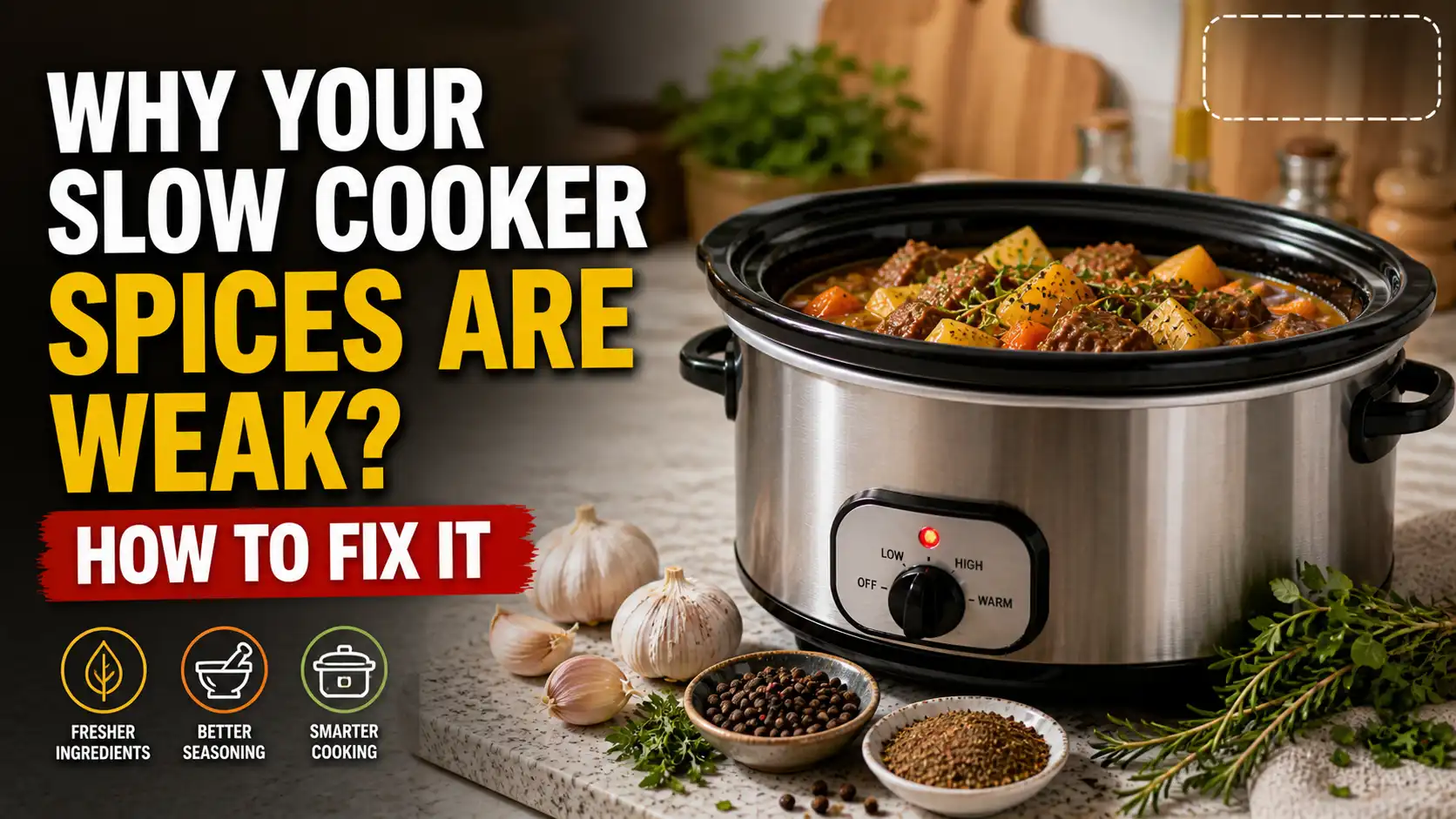
Slow cooker spices often taste weak because long cooking times break down delicate flavor compounds, while excess moisture dilutes the seasoning. To fix this, use whole spices, toast them first, or add fresh herbs during the final 30 minutes of cooking.
Why Your Slow Cooker Meals Taste Bland
We have all been there. You spend fifteen minutes prepping a beautiful beef stew in the morning, set it to low, and head out for the day. You expect to walk back into a home smelling like a five-star kitchen, but instead, the flavor is flat, muted, and underwhelming. It feels like the machine just steamed the life out of your ingredients.
I have spent over a decade testing kitchen gear and developing recipes, and I can tell you that “crockpot fatigue” is the most common complaint I hear from home cooks in the USA, UK, and beyond.
In this guide, we will look at why your spices are not hitting the mark and how you can transform your slow cooker into a flavor powerhouse. You will learn the exact techniques I use to ensure every bite is as punchy and vibrant as a stovetop meal.
3 Common Reasons Your Slow Cooker Spices Are Not Strong
1. The Steam Dilution Trap
The very thing that makes a slow cooker great—its sealed environment—is also its biggest flavor killer. Unlike a pot on a stove in a London or New York kitchen where steam escapes and flavors concentrate, a slow cooker traps every drop of moisture.
Why it happens: As the meat and vegetables cook, they release juices. Since the lid stays on, this liquid has nowhere to go. It builds up and washes away the spices you carefully measured out.
The Solution: Use about 20% less liquid than a standard recipe calls for. If you find the sauce is still too thin at the end, remove the lid and turn the heat to high for the last 40 minutes to allow some evaporation.
2. Flavor Fatigue from Long Cook Times
High heat for a short time is great for some spices, but eight hours of low heat can literally vibrate the flavor right out of certain herbs.
Why it happens: Delicate dried herbs like basil, parsley, and cilantro have volatile oils that evaporate quickly. By the time the timer dings, the “fresh” notes are long gone, leaving behind a dusty or bitter aftertaste.
The Solution: Use the “Two-Step Seasoning” method. Put your hardy spices in at the start, but wait until the last 30 minutes to stir in your delicate herbs. This keeps the bright, top-layer flavors intact.
3. Using Old or Pre-Ground Spices
If you bought that jar of cumin three years ago at a supermarket in Sydney or Toronto, it probably does not have much left to give.
Why it happens: Spices begin to lose their potency the moment they are ground. In a slow cooker, where flavors need to be extra resilient, “dead” spices simply cannot stand up to the long cooking process.
The Solution: Buy whole spices and crush them yourself, or “bloom” your ground spices in a pan with a little oil before adding them to the pot. Boldly flavoring your base oil helps the spices survive the long haul.
The Art of Blooming Your Spices
One of the most effective ways to ensure your spices remain strong is a technique called blooming. This is a staple in Indian cooking, but it works wonders for any slow-cooked meal. Before you throw your ingredients into the ceramic insert, heat a small amount of oil or butter in a skillet.
Add your ground spices and stir them for about 60 seconds until they become fragrant. This heat “wakes up” the oils inside the dried plant matter. When you transfer that spiced oil into the slow cooker, the flavors are already active and are more likely to permeate the meat and vegetables.
“The slow cooker is an excellent tool for convenience, but it requires a different approach to seasoning. You cannot simply dump and hope; you must build layers of flavor through browning and late-stage additions.” — J. Kenji López-Alt, Chef and Food Scientist
Whole vs. Ground: Which Wins the Long Game?
When a recipe calls for a teaspoon of ground black pepper or a cinnamon stick, the whole version almost always wins in a slow cooker. Whole peppercorns, cloves, and cinnamon sticks release their flavor much more slowly.
Because they aren’t broken down into tiny particles, they don’t get “lost” in the sauce as easily. If you are making a broth or a heavy stew, try using a spice bag or a tea infuser with whole spices. You will notice a much cleaner, deeper flavor profile that doesn’t taste muddy.
Regional Salt and Acid Adjustments
Sometimes, what we perceive as “weak spices” is actually a lack of balance. If your dish tastes flat, it might not need more oregano; it might need a hit of acid or salt.
- In the USA and Canada: We often reach for apple cider vinegar or a splash of hot sauce.
- In the UK and Australia: A dash of Worcestershire sauce or a squeeze of fresh lemon can brighten a heavy beef roast instantly.
Salt is also a flavor magnifier. If you are using low-sodium stocks (which I recommend so you can control the salt yourself), you must season at the end. Adding a pinch of high-quality sea salt or kosher salt just before serving can “lift” the spices that are already there, making them taste twice as strong.
Why Searing Your Meat Matters for Flavor
I know the appeal of a “dump meal” where you just throw everything in and walk away. However, if you want flavor that lasts, you have to sear your meat first. The Maillard reaction—the browning of the meat—creates complex flavors that a slow cooker simply cannot replicate.
When you sear your beef or pork, those caramelized bits (the “fond”) get mixed into the liquid. This provides a savory backbone that supports your spices. Without that base, your spices are trying to do all the work on their own, and they usually fail.
“A common mistake with slow cooking is over-reliance on the machine to do the flavoring. It is a heat source, not a magic wand. Searing and proper seasoning timing are essential.” — Nigella Lawson, Cookbook Author
Choosing the Right Spices for the Long Haul
Not all spices are created equal when it comes to heat resistance. Think of spices in two categories: the “Marathon Runners” and the “Sprinters.”
The Marathon Runners (Add at the Start)
These spices are tough. They can handle 8 hours of heat and actually improve as they mellow out:
- Cinnamon sticks and Star Anise
- Dried Bay Leaves
- Whole Peppercorns
- Cumin and Coriander seeds
- Dried Oregano and Thyme (though fresh is better at the end)
The Sprinters (Add at the Finish)
These will vanish if added too early. Stir these in about 15–30 minutes before you eat:
- Fresh Basil, Parsley, and Chives
- Garlic (adding some at the start is fine, but fresh garlic at the end adds a sharp bite)
- Garam Masala or fine Curry Powder
- Lemon or Lime zest
Using High-Authority Guidelines for Food Safety
When you are adjusting your cooking methods, such as reducing liquid or adding ingredients later, always keep food safety in mind. According to the USDA Food Safety and Inspection Service, you should always ensure your slow cooker reaches a safe internal temperature to kill bacteria, even if you are opening the lid to add spices at the end.
Every time you lift the lid, the temperature drops significantly, so try to be quick when adding your finishing herbs and spices.
The Secret of the “Finishing Touch”
If you have finished the cook and the flavor still feels “thin,” there is a professional trick I use: the finishing oil or butter. Stirring in a tablespoon of cold butter or a drizzle of high-quality olive oil right before serving does two things.
First, it adds fat, and fat is a carrier for flavor. Many of the aromatic compounds in spices are fat-soluble. By adding a little fat at the end, you “coat” those flavors so they linger on your tongue longer. Second, it gives the sauce a glossy, professional look that makes the meal feel more satisfying.
“Flavor is a multi-sensory experience. If your slow cooker meal lacks punch, look to add texture or a hit of fresh acidity right before the plate hits the table.” — Gordon Ramsay, Chef and Restaurateur
Frequently Asked Questions on Why Your Slow Cooker Spices Are Weak
Why do my spices taste bitter after slow cooking?
Bitter flavors usually happen when dried herbs like oregano or sage are cooked for too long (over 8 hours). It can also happen if you use too much of a “woody” spice like cloves. Try using whole spices instead of ground, or reduce the cooking time.
Can I use fresh herbs instead of dried?
Yes, but they behave differently. Fresh herbs are best added at the very end of the cook. If you put fresh cilantro or basil in at the start, they will turn grey and lose all flavor. Hardy fresh herbs like rosemary or thyme can go in halfway through.
Does the brand of slow cooker affect spice strength?
Some newer models run hotter than older ones, even on the “Low” setting. If your machine runs hot, it may boil the liquid, which destroys delicate flavors faster. Use a meat thermometer to see if your “Low” setting is actually simmering.
How much extra spice should I add for a slow cooker?
A general rule is to increase your spices by about 25% compared to a stovetop recipe, as the long cooking process mutes them. However, it is always better to add more at the end than to over-season at the beginning.
Why does garlic lose its flavor in the crockpot?
Garlic contains a compound called allicin which is very heat-sensitive. Long cooking makes garlic sweet and mellow but removes that “zing.” For a stronger garlic flavor, mince a fresh clove and stir it in 15 minutes before serving.
Summary of Key Takeaways
To ensure your slow cooker meals are never bland again, remember these three steps:
- Bloom your spices in a pan with oil or sear your meat before adding it to the pot to build a flavor foundation.
- Layer your seasoning by adding hardy whole spices at the start and delicate fresh herbs in the final 30 minutes.
- Brighten the finish with a splash of acid (vinegar or citrus) and a pinch of salt to wake up the existing flavors.
Stop settling for “okay” meals and start using these professional techniques to make your slow cooker the most flavorful tool in your kitchen. You have the power to create bold, restaurant-quality dishes with just a few simple timing adjustments. Happy cooking!

“I believe great cooking starts with the right tools, trusted advice, and a little confidence in the kitchen.”
Hi, I’m Emma Carter. My love for cooking began in my grandmother’s kitchen, where I learned that every great meal starts with simple ingredients and the right cookware. Over the years, I’ve spent countless hours researching, testing, and comparing kitchen appliances, cookware, coffee makers, air fryers, and other everyday kitchen essentials.
Here at KiCook, my goal is to make your buying decisions easier with honest product reviews, practical buying guides, and easy-to-follow cooking tips. Whether you’re upgrading your kitchen or searching for the best appliance for your home, I focus on providing clear, reliable, and research-backed information you can trust.
When I’m not testing new kitchen gadgets or writing in-depth guides, you’ll usually find me trying new recipes, visiting local farmers’ markets, or enjoying a quiet cup of coffee while planning my next kitchen project.