
Dishwasher maintenance tips are simple habits that keep your dishwasher clean, efficient, and long-lasting. Regular cleaning improves wash performance and helps prevent bad smells and breakdowns. The main caution is skipping small tasks neglecting filters or seals can slowly cause costly problems.
Most people only think about their dishwasher when it stops cleaning properly. Plates come out cloudy. There’s a bad smell. Or water pools at the bottom. I’ve been there myself, wondering if the machine was already “too old.”
From my experience, most dishwasher problems are not about age, they’re about poor maintenance. A dishwasher handles grease, food scraps, and hard water every day. If we don’t care for it, performance drops fast.
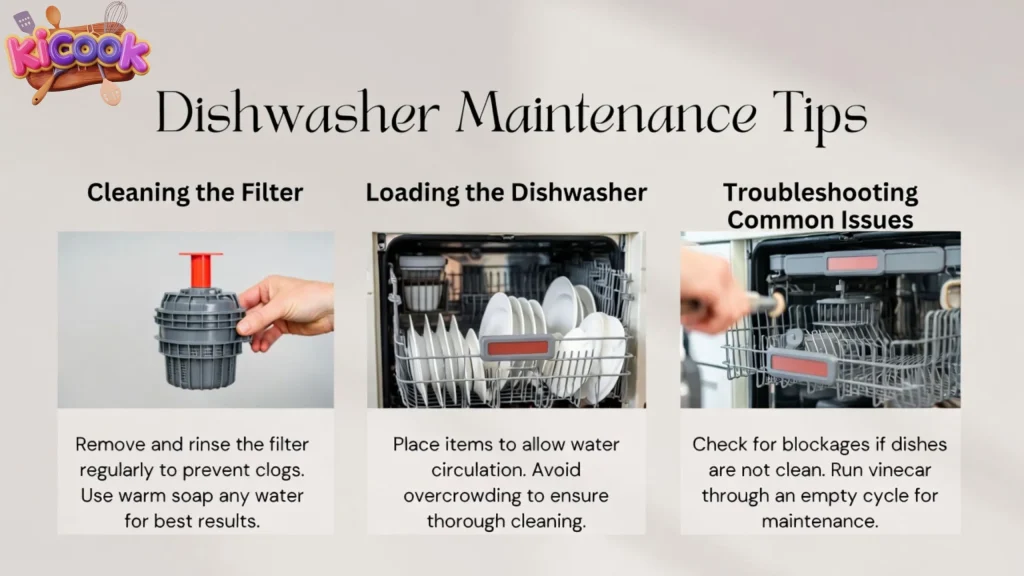
In this guide, I’ll share practical dishwasher maintenance tips that actually work. No technical jargon. No complicated tools. Just simple steps I personally follow to keep dishwashers running smoothly for years.
Why This Topic Actually Matters
Many people assume dishwashers are “self-cleaning.” That’s one of the biggest misconceptions.
Here’s why maintenance really matters:
- Food particles build up quietly
- Grease sticks to filters and spray arms
- Hard water leaves mineral deposits
- Small issues slowly turn into big repairs
When maintenance is ignored, dishwashers use more water, more electricity, and clean less effectively. According to the U.S. Department of Energy, a poorly maintained dishwasher can lose efficiency over time and increase household energy use.
Skipping care doesn’t save time it shortens the machine’s life.
My Real Experience
In my own kitchen, I noticed my dishwasher started leaving a faint smell after about a year. At first, I blamed the detergent. That didn’t fix it.
Once I checked the filter, I understood the real issue. Grease and food residue were trapped there. After cleaning it, the smell disappeared instantly.
What surprised me most was how many people don’t even know their dishwasher has a removable filter. That small detail alone makes a huge difference in cleaning results and machine lifespan.
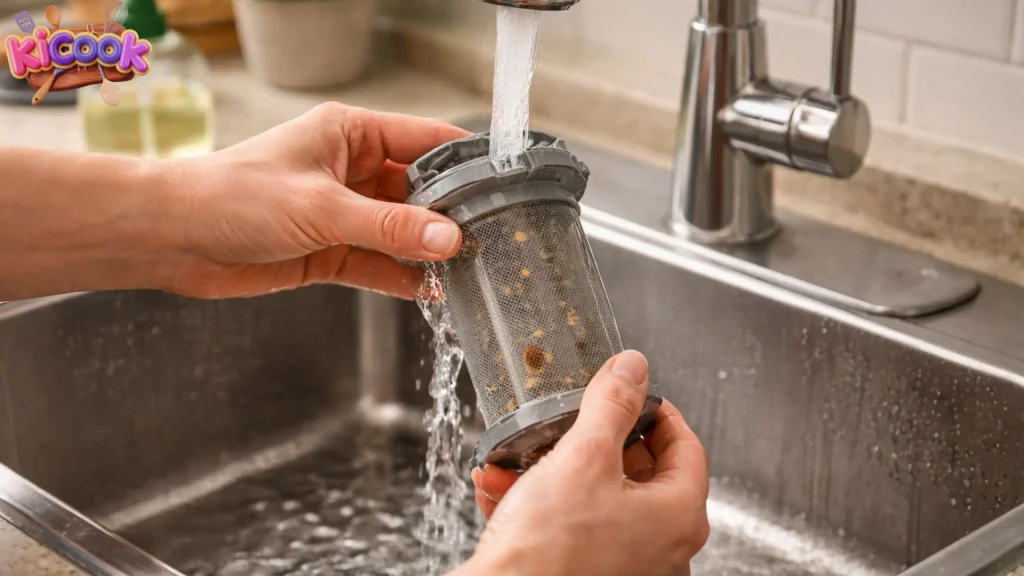
Clean the Dishwasher Filter Regularly
Most modern dishwashers have a filter at the bottom. Its job is to trap food particles.
If it’s dirty:
- Water flow drops
- Smell builds up
- Dishes stay greasy
What I recommend:
- Check the filter every 1–2 weeks
- Rinse with warm water
- Use a soft brush if grease is stuck
If you use a small unit, this matters even more. I explain the cleaning process step by step in my guide on how to clean a countertop dishwasher.
Wipe Door Seals and Edges
Rubber door seals trap moisture, soap, and food.
Neglecting them can cause:
- Mold growth
- Leaks
- Bad odors
Simple habit:
- Once a week, wipe seals with a damp cloth
- Use mild vinegar for buildup
“Moist environments with food residue are ideal for mold growth,” says Dr. Charles Gerba, microbiologist at the University of Arizona.
Run a Monthly Deep Cleaning Cycle
Even if dishes look clean, grease hides inside the machine.
Best approach:
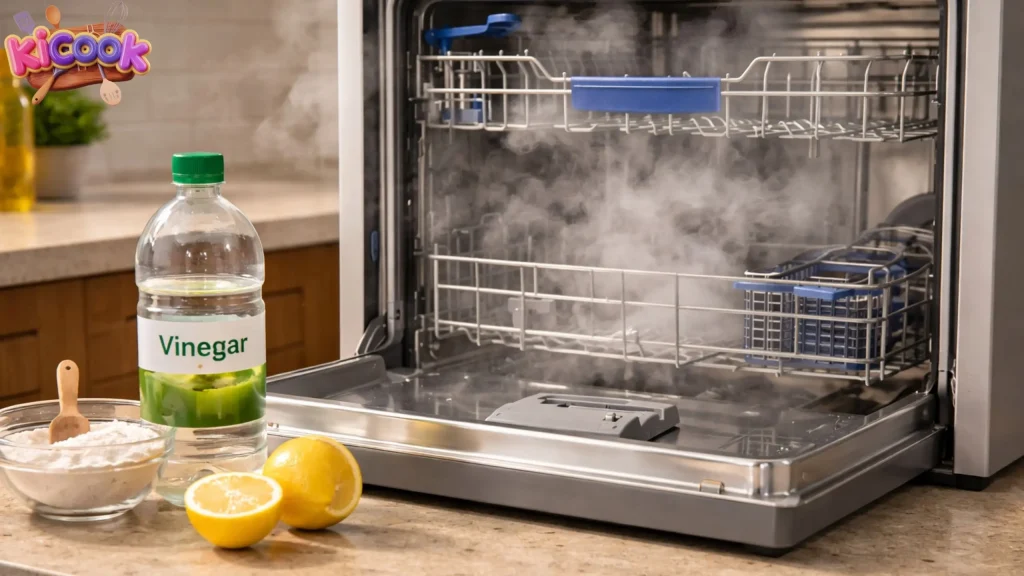
- Run an empty hot cycle once a month
- Use dishwasher cleaner or white vinegar
- Avoid mixing vinegar with bleach
This step keeps spray arms, pipes, and the drain clean.
If you’re curious how water and energy efficiency are affected, this guide on what is an energy efficient dishwasher explains it well.
Check and Unclog Spray Arms
Spray arms spin and push water through tiny holes.
When clogged:
- Water pressure drops
- Dishes don’t rinse properly
What I do:
- Remove spray arms every 2–3 months
- Rinse under water
- Use a toothpick for blocked holes
This is especially important if you live in a hard-water area.
Use the Right Detergent
More detergent does not mean cleaner dishes.
Too much detergent causes:
- Soap residue
- Cloudy glassware
- Buildup inside the dishwasher
Consumer Reports recommends using only the amount specified by the detergent brand and adjusting for water hardness.
Pros & Cons of Regular Dishwasher Maintenance
| Pros | Cons |
|---|---|
| Better cleaning performance | Requires small time commitment |
| Fewer bad smells | Easy to forget without reminders |
| Lower repair costs | Some parts need manual cleaning |
| Longer dishwasher lifespan | Needs consistency |
My Honest Take After Researching This
My honest opinion is simple: dishwasher maintenance is easier than most people think.
The biggest caution is ignoring the filter, it’s the number one cause of poor performance. My recommendation is to set a monthly reminder. Ten minutes of care can easily add years to your dishwasher’s life.
Common Mistakes to Avoid
- Never cleaning the filter
→ Check it at least twice a month. - Using too much detergent
→ Follow package instructions carefully. - Skipping deep cleaning cycles
→ Run one hot empty cycle monthly. - Ignoring door seals
→ Wipe them weekly to prevent mold. - Overloading dishes
→ Leave space for water circulation.
Who This Is Best For / Not Ideal For
Best for:
- Busy households
- Families using the dishwasher daily
- Apartment renters with compact or portable units
Not ideal for:
- People who rarely use their dishwasher
- Homes without regular access to hot water
If you’re still deciding, comparing dishwasher vs hand washing water usage can help you choose wisely.
FAQs for Dishwasher Maintenance Tips
How often should I clean my dishwasher?
Light cleaning weekly, deep cleaning once a month.
Can I use vinegar in my dishwasher?
Yes, but only alone—never mix with bleach.
Why does my dishwasher smell even after washing?
Dirty filters and door seals are common causes.
Do dishwashers need professional servicing?
Usually only after several years or if problems persist.
Is maintenance different for countertop dishwashers?
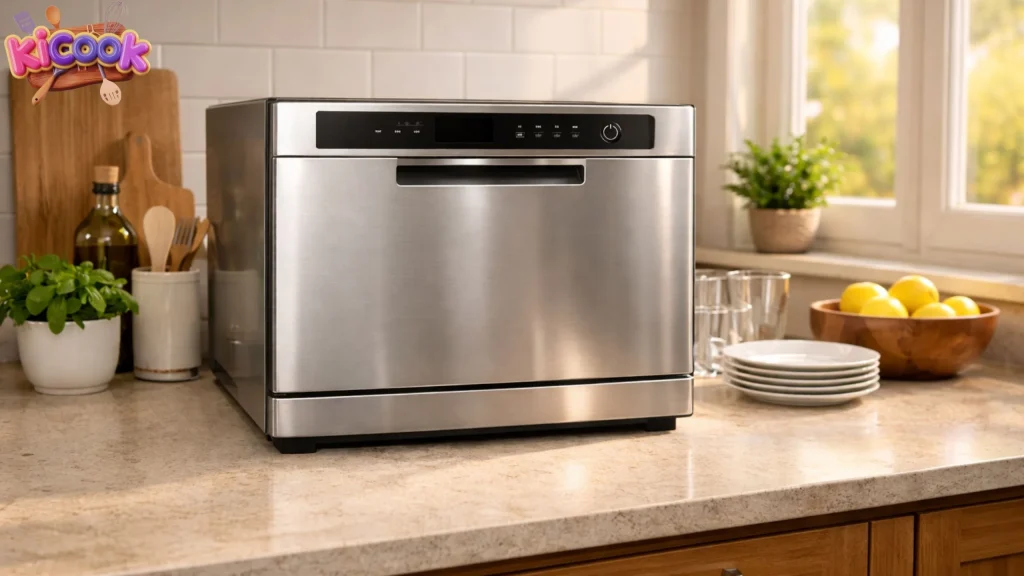
They need more frequent filter cleaning due to size. Learn more in what is a countertop dishwasher.
Conclusion
Dishwasher maintenance tips don’t need to be complicated or time-consuming. Small, regular habits make a huge difference in cleanliness, efficiency, and lifespan.
From my experience, the dishwasher rewards the care you give it. Treat it well, and it quietly saves you time, water, and stress every single day.

“I believe great cooking starts with the right tools, trusted advice, and a little confidence in the kitchen.”
Hi, I’m Emma Carter. My love for cooking began in my grandmother’s kitchen, where I learned that every great meal starts with simple ingredients and the right cookware. Over the years, I’ve spent countless hours researching, testing, and comparing kitchen appliances, cookware, coffee makers, air fryers, and other everyday kitchen essentials.
Here at KiCook, my goal is to make your buying decisions easier with honest product reviews, practical buying guides, and easy-to-follow cooking tips. Whether you’re upgrading your kitchen or searching for the best appliance for your home, I focus on providing clear, reliable, and research-backed information you can trust.
When I’m not testing new kitchen gadgets or writing in-depth guides, you’ll usually find me trying new recipes, visiting local farmers’ markets, or enjoying a quiet cup of coffee while planning my next kitchen project.