
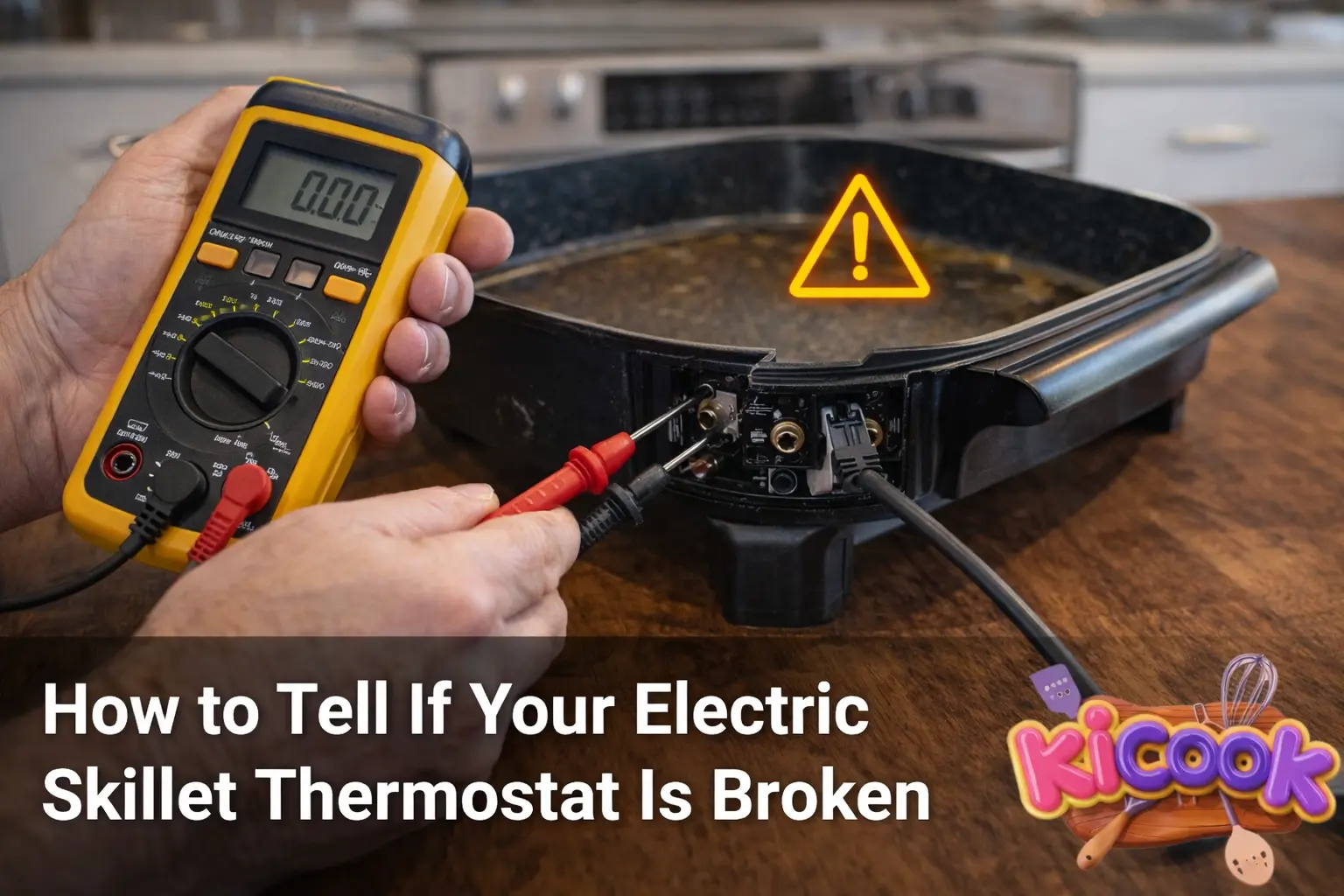
You can tell if your electric skillet thermostat is broken if the temperature does not match the dial setting, the skillet overheats or fails to heat, or the indicator light behaves inconsistently. Testing with a food thermometer and checking the probe connection are the quickest ways to confirm the issue.
I use my electric skillet several times a week for pancakes, stir-fries, and one-pan dinners. A while ago, I noticed food burning even on “Low,” and other times it barely cooked on “Medium.” After testing the temperature and checking the control probe, I realized the thermostat was failing.
Since then, I’ve learned how to spot thermostat problems early before they ruin meals or create safety risks.
Real User Pain Points
1. Food Burns Even on Low Heat
You set the dial to low, but your eggs brown too fast or chicken scorches.
2. Food Takes Too Long to Cook
Even on medium or high, the skillet feels weak and underpowered.
3. Temperature Dial Feels Inaccurate
Turning the dial doesn’t seem to change the heat at all.
4. Indicator Light Acts Strange
The power light flickers, stays off, or never cycles properly.
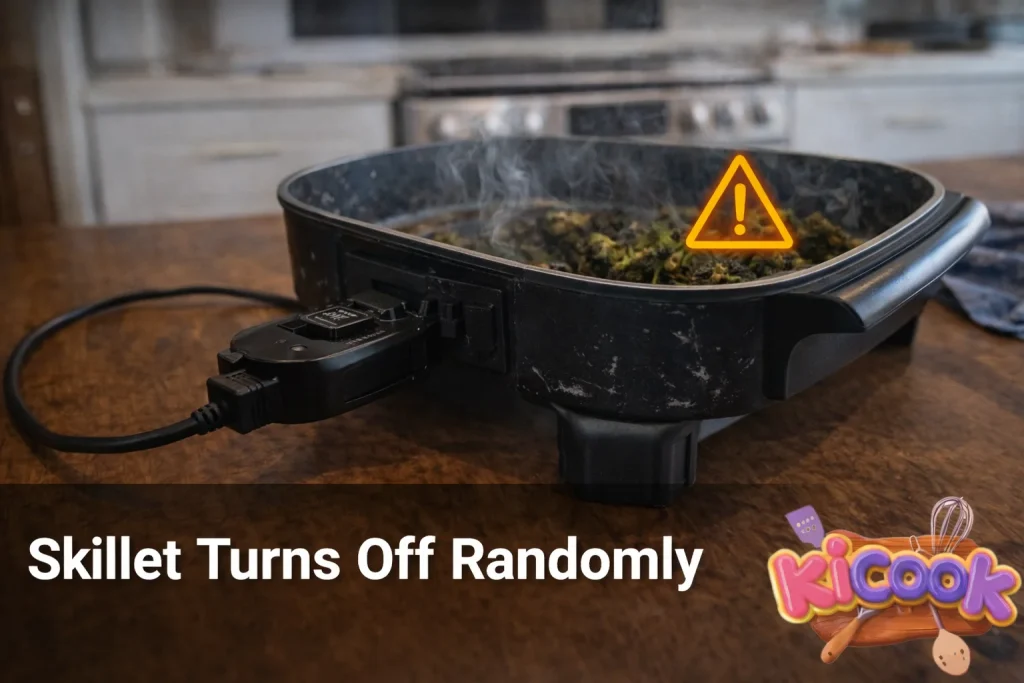
5. Skillet Turns Off Randomly
The unit heats for a few minutes, then shuts down unexpectedly.
6. Inconsistent Cooking Results
One day it cooks perfectly; the next day everything is overdone.
How Each Pain Point Is Solved
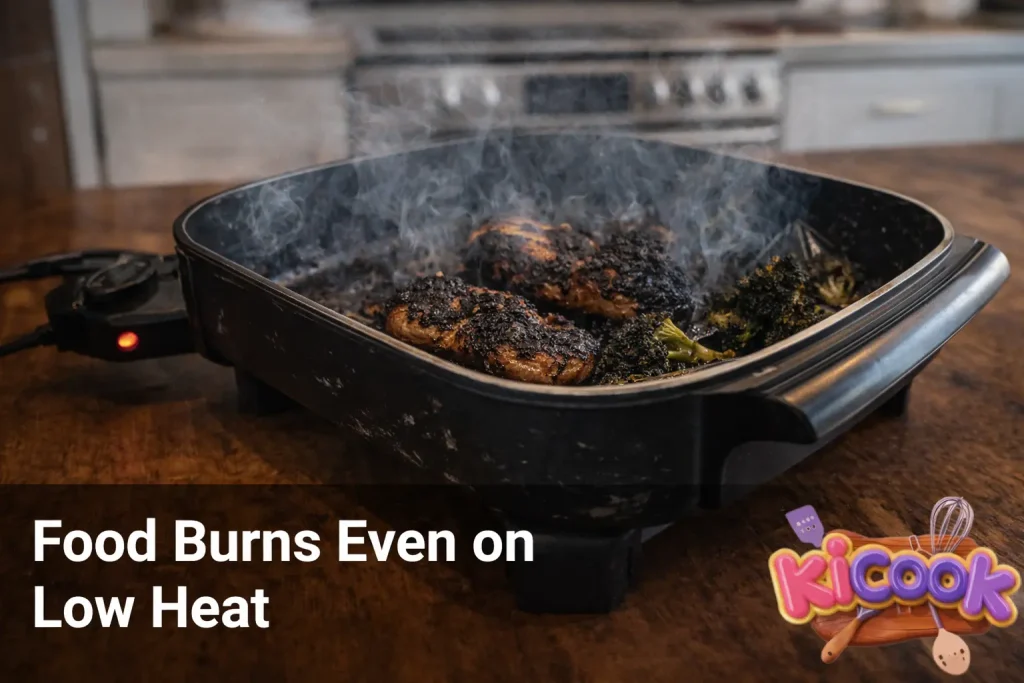
Food Burns Even on Low Heat
Issue:
If food burns quickly at low settings, the thermostat may be stuck in a higher heat cycle.
Solution in Practice:
Use a kitchen thermometer. Set the skillet to 250°F (120°C) and let it preheat. Check the actual surface temperature after 5–7 minutes.
In my case, the skillet showed 250°F but measured nearly 325°F. That confirmed the thermostat was misreading.
If this happens, replacing the detachable temperature probe often fixes the issue. If the thermostat is built-in and not removable, replacement may be more practical.
For broader causes of overheating, this guide explains more: 15-common-electric-skillet-problems
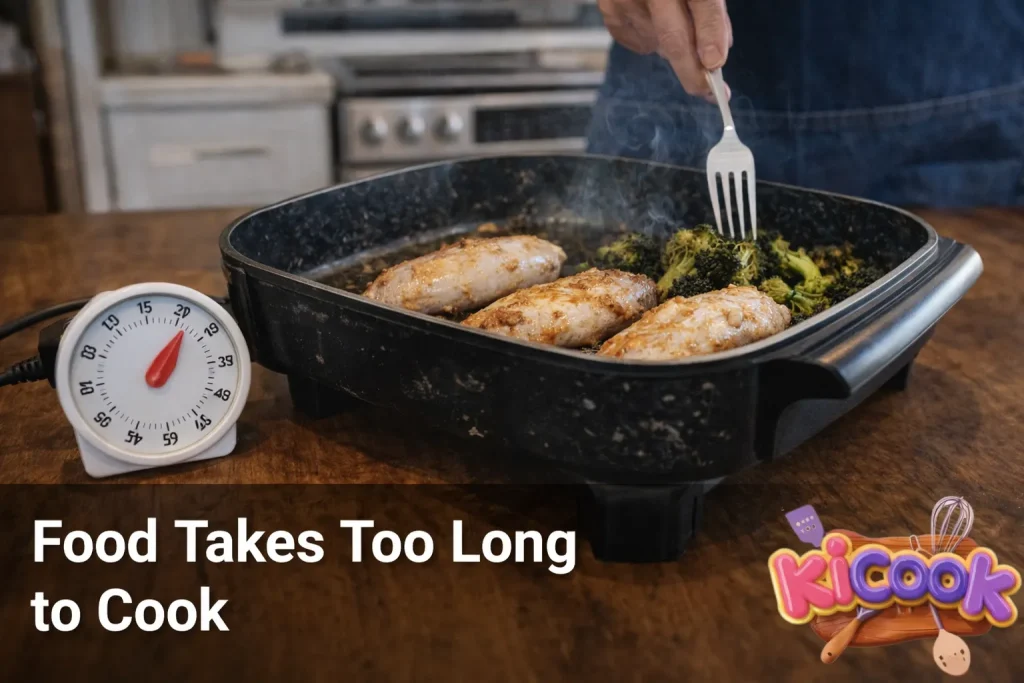
Food Takes Too Long to Cook
Issue:
The skillet never reaches the desired temperature.
Solution in Practice:
Again, use a thermometer to verify. If the dial says 350°F but the surface stays under 275°F, the thermostat may not be delivering enough power.
Also check that the probe is firmly inserted. I once thought my thermostat failed, but it was just slightly loose.
If the skillet won’t heat at all, review this resource: electric-skillet-not-working
Temperature Dial Feels Inaccurate
Issue:
Turning from low to high produces little difference in heat output.
Solution in Practice:
Test in small increments. Increase the dial slowly and monitor temperature changes every 3–4 minutes.
If there is no noticeable change, the thermostat sensor inside may be damaged. This is common in older skillets used frequently over several years.
I noticed mine stopped responding properly after heavy weekend use for family breakfasts.
Indicator Light Acts Strange
Issue:
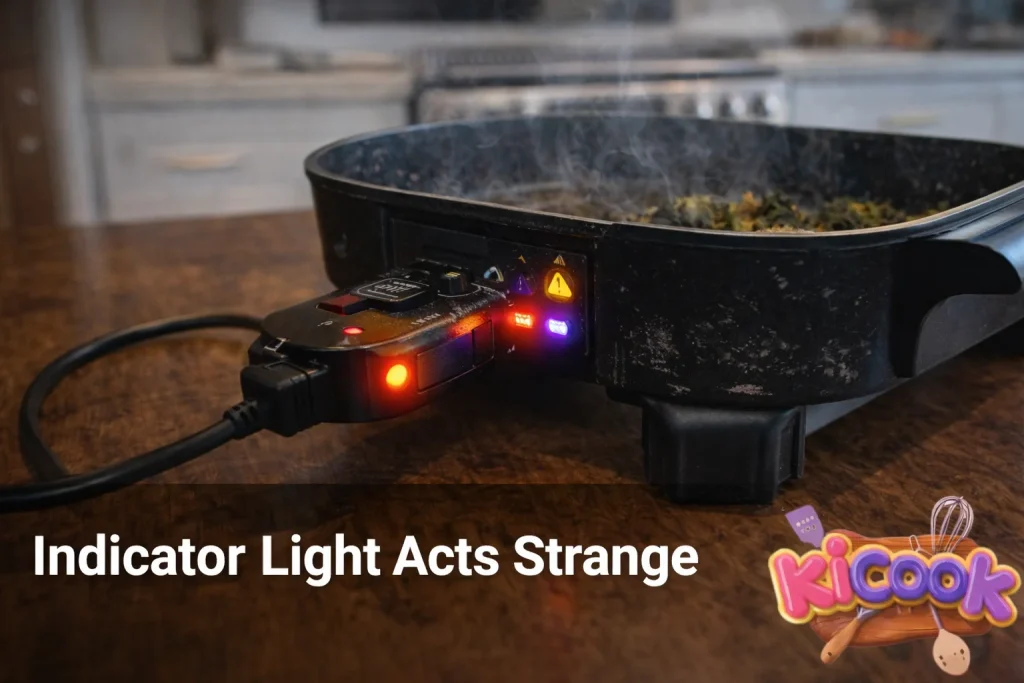
The power light never turns off, or it cycles too fast.
Solution in Practice:
The indicator light reflects thermostat cycling. If it stays on constantly while the skillet overheats, the thermostat may not be regulating properly.
If it never turns on despite being plugged in, inspect the outlet and cord first.
Electrical irregularities should never be ignored. For safety concerns, see: electric-skillet-safety-issues
Skillet Turns Off Randomly
Issue:
The skillet heats briefly, then shuts down.
Solution in Practice:
This can indicate thermostat overheating protection activating incorrectly. It may also signal internal wiring wear.
Unplug immediately and allow full cooling before testing again. If it repeats, replacement is usually safer than internal repair.
For detailed troubleshooting steps, I recommend reviewing: electric-skillet-troubleshooting-guide
Inconsistent Cooking Results
Issue:
Some days your skillet performs normally; other days it does not.
Solution in Practice:
Thermostats can degrade gradually. Test at multiple temperature points (250°F, 300°F, 350°F) and record results.
If readings vary widely each time, the thermostat sensor may be unstable. That was the final sign I needed before replacing mine.
Country-Specific Context
USA
Electric skillets are widely used for family cooking and RV travel. Affordable replacements are easy to find, so if thermostat repair costs too much, replacement often makes sense. Energy prices vary by state, so efficiency matters.
UK
Smaller kitchens mean compact appliances are common. Many users rely on electric skillets as secondary cooking tools. Inaccurate thermostats can lead to higher electricity usage in already energy-conscious households.
Canada
Long winters increase indoor cooking. Cold kitchens can affect initial heating performance, so preheating and accurate thermostat control are important for consistent results.
Australia
Warm climates may cause appliances to overheat faster. A faulty thermostat combined with high room temperature can increase overheating risk, so early detection is important.
Experience-Based Benefits
After replacing a faulty thermostat probe, I saw clear improvements:
- Pancakes browned evenly instead of burning on one side.
- Stir-fries cooked at predictable speeds.
- I stopped wasting food due to overheating.
- My electricity use felt more consistent because the skillet cycled properly.
Most importantly, I regained confidence in my cooking process.
Supporting Quotes
“If the surface temperature doesn’t match the dial setting, the thermostat sensor is likely failing.” – Daniel R., Appliance Repair Technician
“Testing with a food thermometer is the simplest way to confirm thermostat accuracy.” – Emma L., Culinary Instructor
“Irregular cycling or overheating is a sign that temperature regulation is compromised.” – Karen M., Home Appliance Safety Advisor
Practical Tips
- Always test with a kitchen thermometer before replacing anything.
- Check that the detachable probe is fully inserted.
- Avoid bending or twisting the thermostat cord.
- Clean grease buildup near the probe connection.
- Store the skillet flat to prevent internal stress.
- Replace detachable probes if available before replacing the whole unit.
- If overheating continues, unplug immediately.
If you’re wondering whether it’s worth keeping your unit long term, this guide may help you decide: are-electric-skillets-worth-it
FAQ on Electric Skillet Thermostat Is Broken
Can a broken thermostat cause burning on low heat?
Yes. If the thermostat is stuck or miscalibrated, it may deliver higher heat than indicated.
How do I test my electric skillet thermostat?
Use a reliable food thermometer to compare the actual surface temperature with the dial setting.
Can I repair a built-in thermostat myself?
In most models, built-in thermostats are sealed and not designed for home repair.
Is replacing the probe expensive?
Detachable probes are often affordable and easy to replace.
How long does an electric skillet thermostat last?
With regular use, 3–5 years is common, depending on quality and frequency of cooking.
Should I keep using it if it overheats?
No. Continued overheating can create safety risks and damage the skillet further.
Conclusion
If you’re wondering how to tell if your electric skillet thermostat is broken, focus on temperature accuracy, heating consistency, and cycling behavior. Simple testing with a thermometer often reveals the problem quickly.
By checking connections, measuring real temperatures, and paying attention to warning signs, you can decide whether to replace a probe or invest in a new unit. Acting early protects your meals, your budget, and your kitchen safety.

“I believe great cooking starts with the right tools, trusted advice, and a little confidence in the kitchen.”
Hi, I’m Emma Carter. My love for cooking began in my grandmother’s kitchen, where I learned that every great meal starts with simple ingredients and the right cookware. Over the years, I’ve spent countless hours researching, testing, and comparing kitchen appliances, cookware, coffee makers, air fryers, and other everyday kitchen essentials.
Here at KiCook, my goal is to make your buying decisions easier with honest product reviews, practical buying guides, and easy-to-follow cooking tips. Whether you’re upgrading your kitchen or searching for the best appliance for your home, I focus on providing clear, reliable, and research-backed information you can trust.
When I’m not testing new kitchen gadgets or writing in-depth guides, you’ll usually find me trying new recipes, visiting local farmers’ markets, or enjoying a quiet cup of coffee while planning my next kitchen project.