
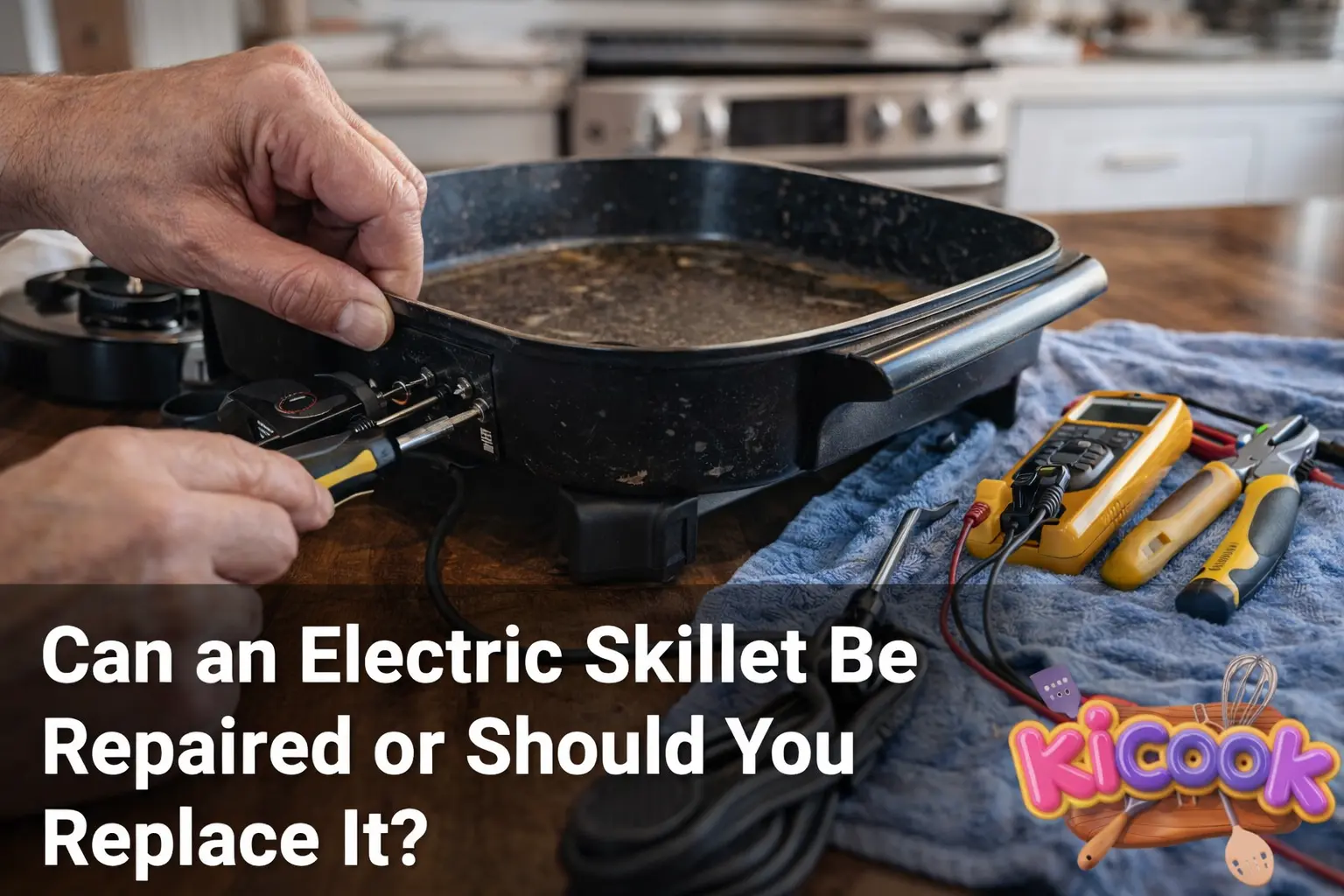
Yes, an electric skillet can often be repaired if the issue is minor, such as a faulty power cord, loose thermostat probe, or surface buildup. However, if the heating element fails, the body warps, or repair costs approach the price of a new unit, replacement is usually the smarter and safer choice.
I’ve used electric skillets for years in my own kitchen, especially for family breakfasts, stir-fries, and batch cooking. Over time, I’ve faced heating failures, temperature control issues, and even one skillet that stopped working completely. Instead of replacing every time something went wrong, I learned which problems were worth fixing and which were not.
That experience saved me money and helped me avoid unnecessary waste.
Real User Pain Points
1. The Skillet Suddenly Stops Heating
You plug it in, turn the dial, and nothing happens. No heat. No indicator light.
2. Temperature Control Stops Working
The skillet overheats or doesn’t respond to dial changes. Food burns or stays undercooked.
3. Uneven Heating Across the Surface
One side cooks fast while the other side barely warms up.
4. Damaged Nonstick Coating
The coating peels, flakes, or scratches, making cooking frustrating.
5. Loose or Faulty Power Cord
The cord wiggles, sparks slightly, or works only in certain positions.
6. Safety Concerns
You worry about overheating, electrical smells, or fire risks.
How Each Pain Point Is Solved
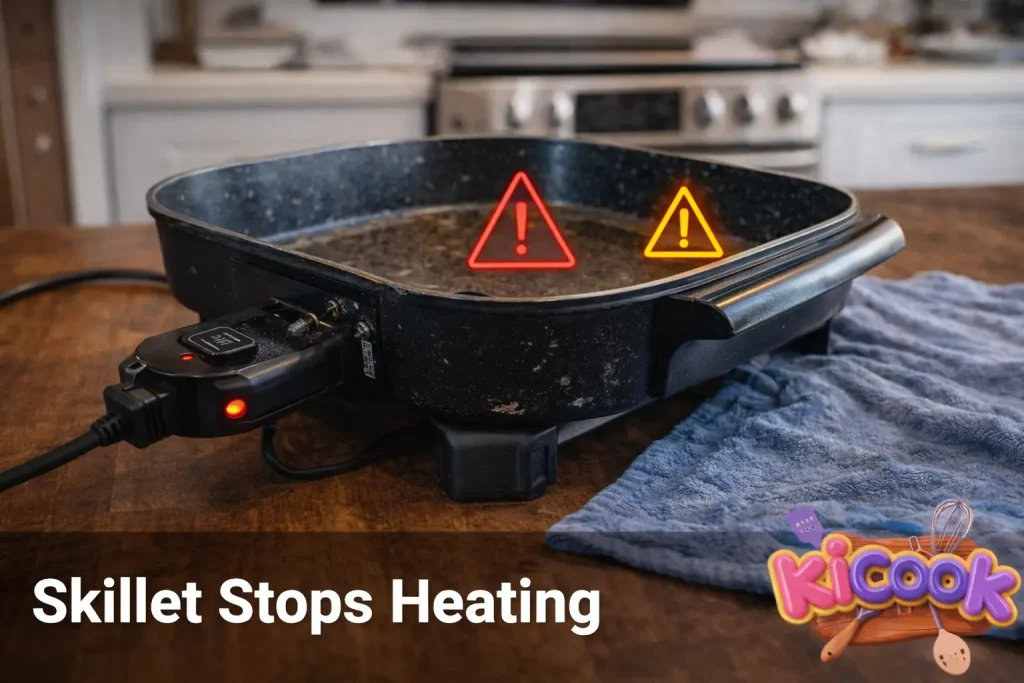
Skillet Stops Heating
Issue:
If your electric skillet won’t heat at all, the problem is often the detachable power cord or thermostat probe.
Solution in Practice:
First, unplug and let it cool. Remove and reconnect the temperature control probe firmly. Many times, it simply isn’t seated correctly.
I once thought my skillet had died, but after checking the probe connection, it worked immediately.
If that doesn’t help, check outlets and extension cords. For deeper guidance, I’ve found this troubleshooting guide helpful: electric-skillet-not-working
If the internal heating element is burned out, replacement is usually more practical than repair.
Temperature Control Stops Working
Issue:
The dial says “Low,” but the skillet behaves like “High.” Or it doesn’t change temperature at all.
Solution in Practice:
Temperature control probes can wear out. In some models, replacing the probe is affordable and easy.
I tested mine with a simple cooking thermometer and noticed a 40°F difference from the dial setting. Replacing the probe fixed it completely.
You can also explore common causes here: electric-skillet-troubleshooting-guide
If the thermostat is built into the body and not removable, replacing the whole unit may cost less than repair.
Uneven Heating
Issue:
Hotspots develop, causing partial burning.
Solution in Practice:
Check if the skillet base is warped. Place it on a flat counter; if it rocks, the metal may have distorted.
Warping usually cannot be repaired safely. In that case, replacement is safer.
More details on heating problems can be found here: 15-common-electric-skillet-problem
Damaged Nonstick Coating
Issue:
Peeling coating can mix into food and create sticking problems.
Solution in Practice:
Unfortunately, nonstick coating cannot be safely repaired at home. Once it peels, it’s time to replace the skillet.
Scratches also reduce cooking performance. I replaced one skillet after noticing food sticking constantly despite proper oiling.
Loose or Faulty Power Cord
Issue:
The cord connection feels unstable or intermittently cuts power.
Solution in Practice:
If your skillet has a detachable cord, you can often replace it separately at low cost.
However, if sparks or burning smells occur, stop using it immediately. Safety comes first.
For safety-related concerns, this guide is useful: electric-skillet-safety-issues
Safety Concerns
If your skillet emits smoke without food inside, smells like burning plastic, or trips breakers repeatedly, replacement is the safer route.
According to the U.S. Consumer Product Safety Commission (CPSC), small appliance electrical faults are a common source of household fires. You can read general safety advice here:
Country-Specific Context
USA
Electric skillets are common in family kitchens and RV travel. Replacement units are widely available at affordable prices, so repair only makes sense for minor issues. Energy costs vary by state, so efficient heating matters.
UK
Smaller kitchens mean compact appliances are popular. Replacement cords and parts may be harder to source locally. Users often replace instead of repair due to limited repair services.
Canada
Cold winters mean heavy indoor cooking use. Frequent use increases wear. Replacement may be more practical if heating performance drops significantly.
Australia
Higher summer temperatures can stress electrical appliances. Warped bases from heat exposure are more common in hot climates. If structural damage occurs, replacement is safer.
Experience-Based Benefits
After learning when to repair and when to replace, I noticed real benefits:
- I saved money by replacing a $15 probe instead of buying a new skillet.
- I avoided safety risks by replacing a warped unit immediately.
- My cooking became more predictable with accurate temperature control.
- I reduced waste by repairing small issues instead of discarding appliances too quickly.
Most importantly, I felt confident making decisions instead of guessing.
Supporting Quotes
“If the thermostat probe is detachable, replacing it is often the simplest fix.” – Mark D., Appliance Repair Technician
“Peeling nonstick coating is a clear sign that replacement is safer than repair.” – Linda R., Kitchen Equipment Specialist
“Electrical smells or sparking should never be ignored in countertop appliances.” – Sarah P., Home Safety Consultant
Practical Tips
- Always unplug before inspecting.
- Check detachable probe connections first.
- Use a thermometer to test temperature accuracy.
- Avoid metal utensils to extend nonstick life.
- Store the skillet flat to prevent warping.
- Clean thoroughly after each use to prevent internal stress from residue buildup.
- Compare repair cost to replacement price before deciding.
If you’re unsure whether electric skillets are worth repairing long term, this guide may help: are-electric-skillets-worth-it
FAQ on Can an Electric Skillet Be Repaired
Can I replace an electric skillet heating element?
In most models, the heating element is sealed inside and not replaceable. If it fails, replacement is usually more practical.
Is it safe to repair an electric skillet at home?
Minor fixes like replacing a probe or cord are safe if done properly. Internal electrical repairs are not recommended without training.
How long should an electric skillet last?
With regular use, many last 3–5 years. Heavy use may shorten that lifespan.
Is it worth fixing a cheap electric skillet?
If repair costs exceed half the price of a new one, replacement often makes more sense.
Can a faulty thermostat cause burning?
Yes. A malfunctioning thermostat can cause overheating even on low settings.
What are warning signs I should replace it immediately?
Burning smell, sparks, cracked base, exposed wires, or repeated breaker trips.
Conclusion
So, can an electric skillet be repaired or should you replace it? The answer depends on the problem. Minor issues like loose probes or cords are often easy and affordable to fix. Structural damage, peeling coating, or internal electrical failure usually means replacement is the safer option.
By checking the real cause first, you can avoid wasting money while keeping your kitchen safe and efficient.

“I believe great cooking starts with the right tools, trusted advice, and a little confidence in the kitchen.”
Hi, I’m Emma Carter. My love for cooking began in my grandmother’s kitchen, where I learned that every great meal starts with simple ingredients and the right cookware. Over the years, I’ve spent countless hours researching, testing, and comparing kitchen appliances, cookware, coffee makers, air fryers, and other everyday kitchen essentials.
Here at KiCook, my goal is to make your buying decisions easier with honest product reviews, practical buying guides, and easy-to-follow cooking tips. Whether you’re upgrading your kitchen or searching for the best appliance for your home, I focus on providing clear, reliable, and research-backed information you can trust.
When I’m not testing new kitchen gadgets or writing in-depth guides, you’ll usually find me trying new recipes, visiting local farmers’ markets, or enjoying a quiet cup of coffee while planning my next kitchen project.