
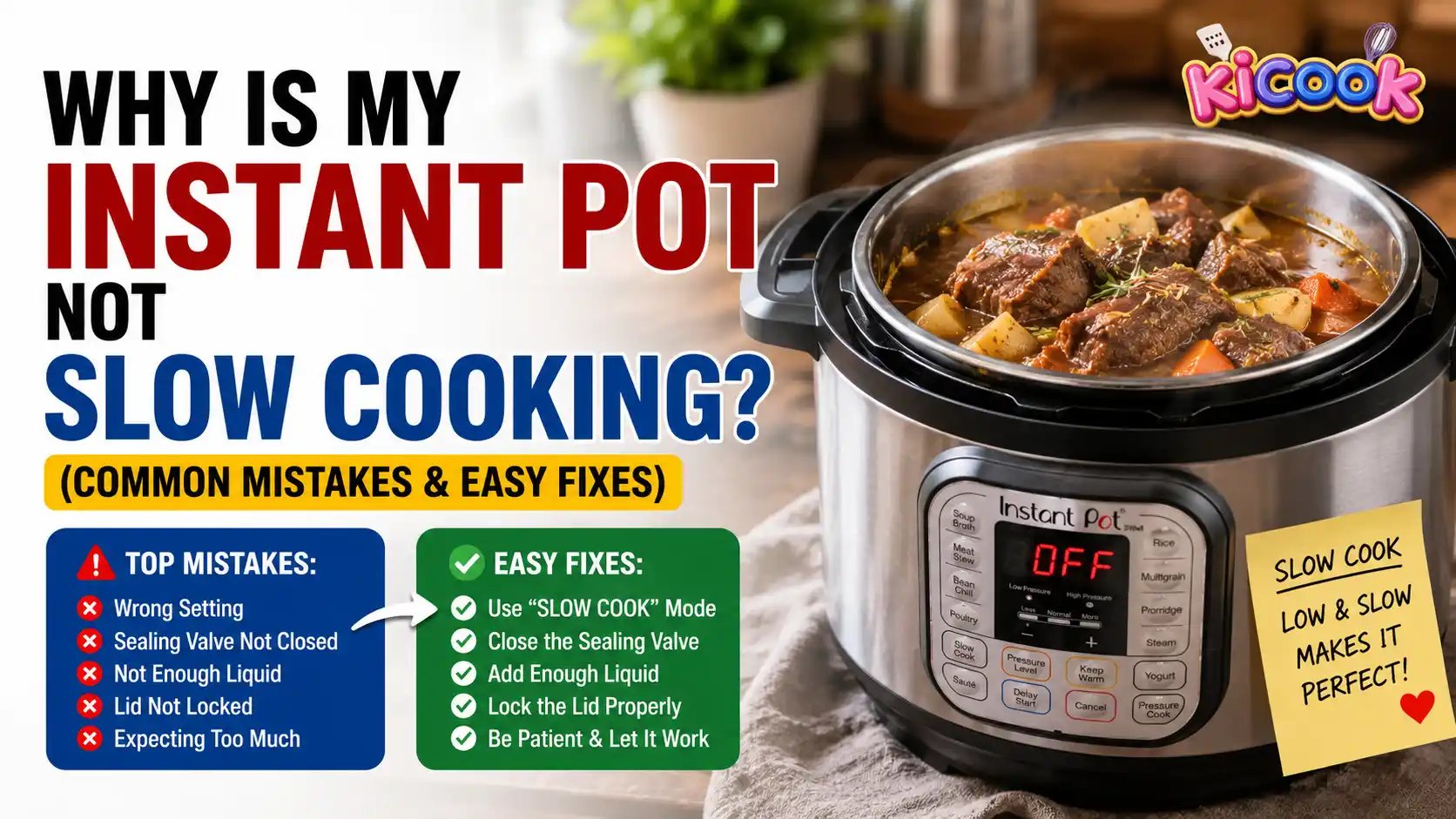
If you poured your ingredients into your Instant Pot, set it to “Slow Cook,” and returned hours later only to find a lukewarm, undercooked meal, you are not alone. This is one of the most frustrating experiences for multi-cooker owners.
The quick answer: Your Instant Pot isn’t slow cooking properly because its heating mechanism is entirely different from a traditional Crockpot. A traditional slow cooker heats from the sides and bottom, whereas an Instant Pot only heats from the very bottom. To fix this, you must adjust your temperature settings (always use ‘Normal’ or ‘More’), ensure your lid is venting correctly, and use the appropriate amount of liquid to prevent undercooking or the dreaded “Burn” error.
In this comprehensive guide, we will break down exactly why your Instant Pot behaves differently, analyze the 4 most common user mistakes, and give you step-by-step troubleshooting fixes to ensure your meals come out perfectly tender every single time.
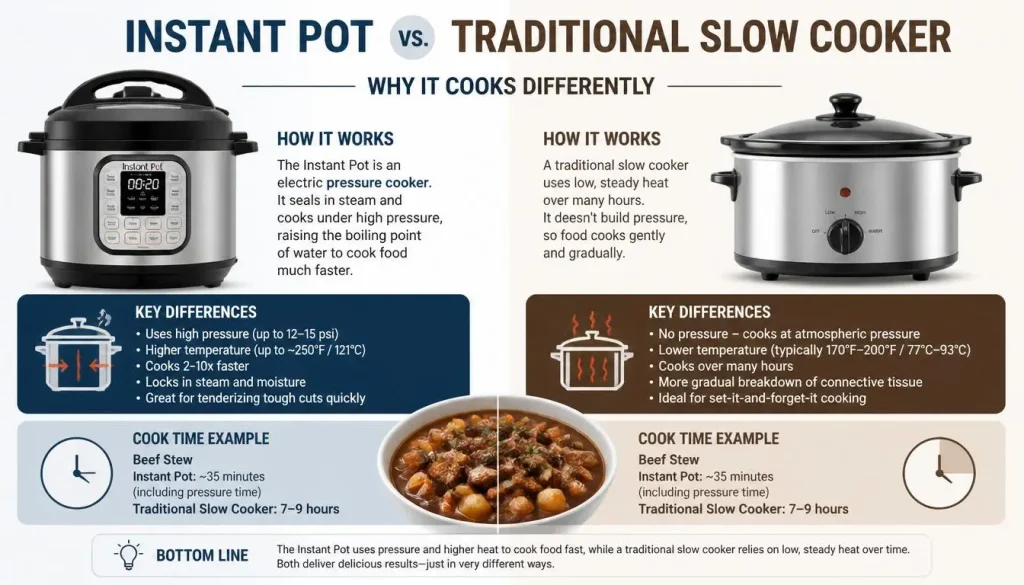
Instant Pot vs. Traditional Slow Cooker: Why It Cooks Differently
To understand why your Instant Pot is failing to slow cook your favorite stew or pot roast, you need to understand the structural and thermal differences between these two appliances.
A traditional slow cooker (like a Crockpot) features a heavy stoneware ceramic pot wrapped in heating elements that distribute heat evenly across the bottom and all around the sides. This creates an enclosed, ambient low-heat environment that gently breaks down tough connective tissues in meat over several hours.
An Instant Pot, however, is a thin stainless-steel inner pot sitting directly on top of a single, highly concentrated heating element located at the base of the machine. Because there are no heating elements in the walls of the pot, heat distribution is less uniform during non-pressure cooking tasks. If the settings or fluid levels are slightly off, the unit will fail to simulate the wrap-around heat of a traditional slow cooker, leaving your food raw or tough.
4 Main Reasons Your Instant Pot Is Not Slow Cooking Properly
Let’s look at the specific mistakes that lead to slow cooking failures in an Instant Pot and how you can fix them immediately.
1. Misunderstanding the Temperature Settings (Less, Normal, vs. More)
The absolute biggest mistake users make is assuming that the Instant Pot’s “Low” and “High” match a standard slow cooker. They do not. On an Instant Pot, the slow cook settings are labeled as Less, Normal, and More.
If you set your Instant Pot to “Less” thinking it equals the “Low” setting on a Crockpot, your food will never cook. The “Less” setting on an Instant Pot barely reaches a simmer and is functionally just a “Keep Warm” setting.
To help you visualize this, here is a direct temperature comparison table:
| Instant Pot Slow Cook Setting | Traditional Slow Cooker Equivalent | Ideal Use Case |
| Less | Keep Warm (approx. 160°F / 71°C) | Keeping already-cooked food warm before serving. |
| Normal | Low Setting (approx. 190-200°F / 88-93°C) | Cooking soups, stews, or delicate meats over 8–10 hours. |
| More | High Setting (approx. 200-210°F / 93-99°C) | Cooking dense root vegetables or pot roasts in 4–5 hours. |
- The Fix: Never use the “Less” setting to actually cook raw food. Always set your Instant Pot to Normal if your recipe calls for “Low”, and use More if your recipe calls for “High.
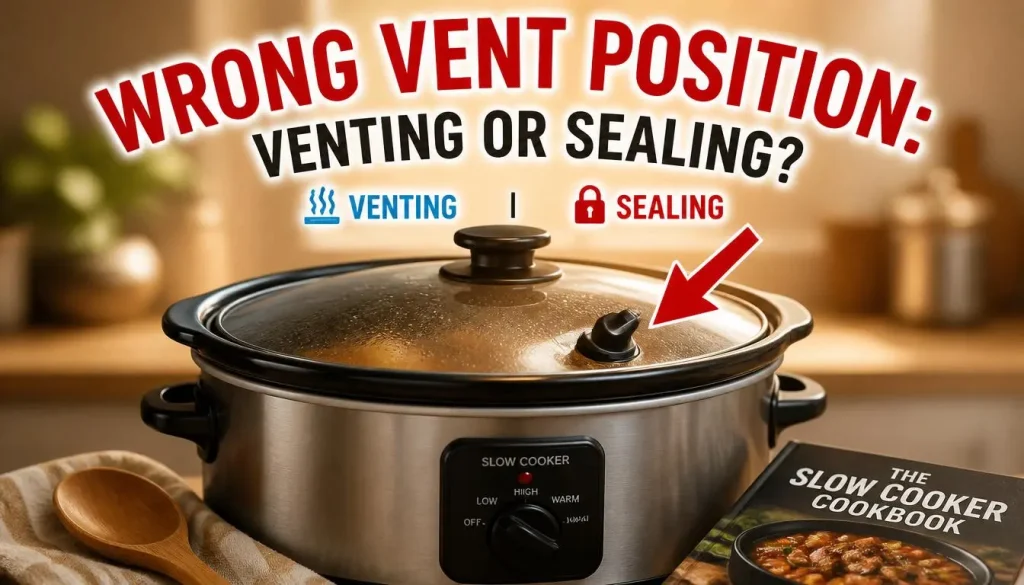
2. Wrong Vent Position: Venting or Sealing?
When you use the pressure cooking functions, the steam release valve must be set to “Sealing.” However, when slow cooking, the rules change completely.
If you leave the valve in the Sealing position while slow cooking, the Instant Pot will trap moisture and build up a small amount of residual pressure. This alters the internal temperature profile and can trigger the automated thermal sensors to cycle the heat off prematurely, leaving your meal completely undercooked.
- The Fix: Always turn your steam release knob or switch to the Venting position when using the slow cook function. This allows steam to escape naturally, mimicking the looser environment of a standard slow cooker lid.
3. Not Using the Right Lid (Glass Lid vs. Pressure Lid)
The heavy, insulated locking lid that comes standard with the Instant Pot is designed to withstand massive pressure, not to radiate or manage ambient heat smoothly. When you slow cook with the heavy pressure lid on, it locks in too much top-heavy heat and moisture, which confuses the base sensors.
- The Fix: For the best slow cooking results, use a tempered glass lid with a small steam vent hole. You do not need to buy the official Instant Pot branded glass lid; any standard glass lid from your kitchen pots that fits snugly over the rim of the inner stainless steel liner will work perfectly. This allows proper evaporation and prevents heat from cycling incorrectly.
4. Insufficient Liquid at the Bottom
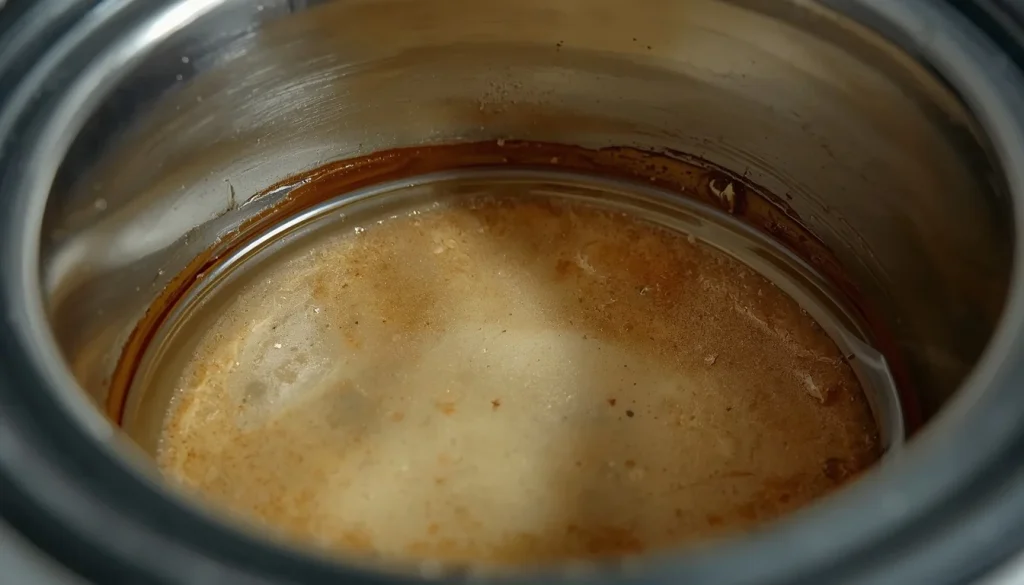
Because the Instant Pot only heats from the bottom plate, it relies heavily on liquid to transfer heat upward through the food via convection. If you place a large, dry roast with minimal liquid at the bottom, the bottom layer will overheat rapidly, triggering the Instant Pot’s safety sensors to throw a “Burn” error or shut down completely to prevent damage.
- The Fix: Ensure there is a minimum of 1 cup of thin liquid (water, broth, or wine) at the bottom of the pot before adding your main ingredients. Do not use thick sauces like BBQ sauce or tomato paste directly on the bottom; stir those in near the end or layer them on top of the meat.
How to Adapt Slow Cooker Recipes for the Instant Pot
If you have a favorite family recipe designed for a traditional Crockpot, you can still make it in your Instant Pot by following this quick, step-by-step adaptation strategy:
- Elevate the Meat: Use a silicone or metal trivet to elevate large pieces of meat (like pork shoulder or beef chuck) off the direct-heat bottom plate. This prevents the bottom from scorching.
- Adjust the Cooking Time: Because the Instant Pot transfers heat slower through its stainless steel liner than ceramic stoneware does, add 1 to 2 hours to the total cooking time if you are using the “Normal” (Low) setting.
- Layer Wisely: Place hard root vegetables (potatoes, carrots) at the very bottom where the heat is strongest, and lay your seasoned meat on top.
Troubleshooting: Why Is My Meat Still Tough in the Instant Pot?
If your slow-cooked meat is still tough and rubbery after 8 hours on the “Normal” setting, it simply hasn’t reached a high enough internal temperature to melt the collagen and fats.
The Emergency Pivot Solution: If it’s dinner time and your slow-cooked meal is still tough, do not panic. You can save your dinner by utilizing the Instant Pot’s primary strength: Pressure Cooking.
- Remove the glass lid (if using) and place the heavy pressure cooking lid on the unit.
- Lock the lid and turn the steam valve to the Sealing position.
- Cancel the slow cook program and select Manual/Pressure Cook on High Pressure.
- Set the timer for 15 to 20 minutes, followed by a 10-minute natural pressure release (NPR).
- This intense heat and pressure will instantly break down the stubborn muscle fibers, saving your meal in under half an hour.
Frequently Asked Questions (FAQs) on Why Is My Instant Pot Not Slow Cooking
What is the slow cook setting on an Instant Pot Duo?
On the Instant Pot Duo and most other standard models, press the “Slow Cook” button, then use the “Adjust” or “Temp” button to toggle between Less, Normal, and More. Ensure the display shows Normal for low-cook recipes and More for high-cook recipes.
Can I leave my Instant Pot on slow cook while at work?
Yes, the Instant Pot is designed with multiple built-in safety sensors, making it completely safe to leave unattended on your counter while you are at work. Just ensure the cord is safely tucked away and the unit is on a flat, heat-resistant surface.
Do I need a glass lid to slow cook in my Instant Pot?
While you can technically use the standard pressure lid set to “Venting,” using a clear glass lid provides significantly better results. It allows proper evaporation, maintains an accurate low temperature, and lets you monitor your food without opening the pot and losing critical heat.
Conclusion
The Instant Pot is an incredibly versatile appliance, but its slow cooking function requires a slight learning curve. By treating the Normal setting as your true low, switching the valve to Venting (or using a glass lid), and ensuring your recipe has adequate bottom-level liquids, you can easily match the performance of any traditional slow cooker. Keep these adjustments in mind, and you will never have to face an undercooked or tough meal again.

“I believe great cooking starts with the right tools, trusted advice, and a little confidence in the kitchen.”
Hi, I’m Emma Carter. My love for cooking began in my grandmother’s kitchen, where I learned that every great meal starts with simple ingredients and the right cookware. Over the years, I’ve spent countless hours researching, testing, and comparing kitchen appliances, cookware, coffee makers, air fryers, and other everyday kitchen essentials.
Here at KiCook, my goal is to make your buying decisions easier with honest product reviews, practical buying guides, and easy-to-follow cooking tips. Whether you’re upgrading your kitchen or searching for the best appliance for your home, I focus on providing clear, reliable, and research-backed information you can trust.
When I’m not testing new kitchen gadgets or writing in-depth guides, you’ll usually find me trying new recipes, visiting local farmers’ markets, or enjoying a quiet cup of coffee while planning my next kitchen project.